… we updated the “About the Crew” (us) and the “Guest Crew” (people who did passages with us) pages on the blog. First time in 18 months.
We also created a new “Visitors” page to celebrate everyone who has flown out to spend time with us. Enjoy!
… we updated the “About the Crew” (us) and the “Guest Crew” (people who did passages with us) pages on the blog. First time in 18 months.
We also created a new “Visitors” page to celebrate everyone who has flown out to spend time with us. Enjoy!

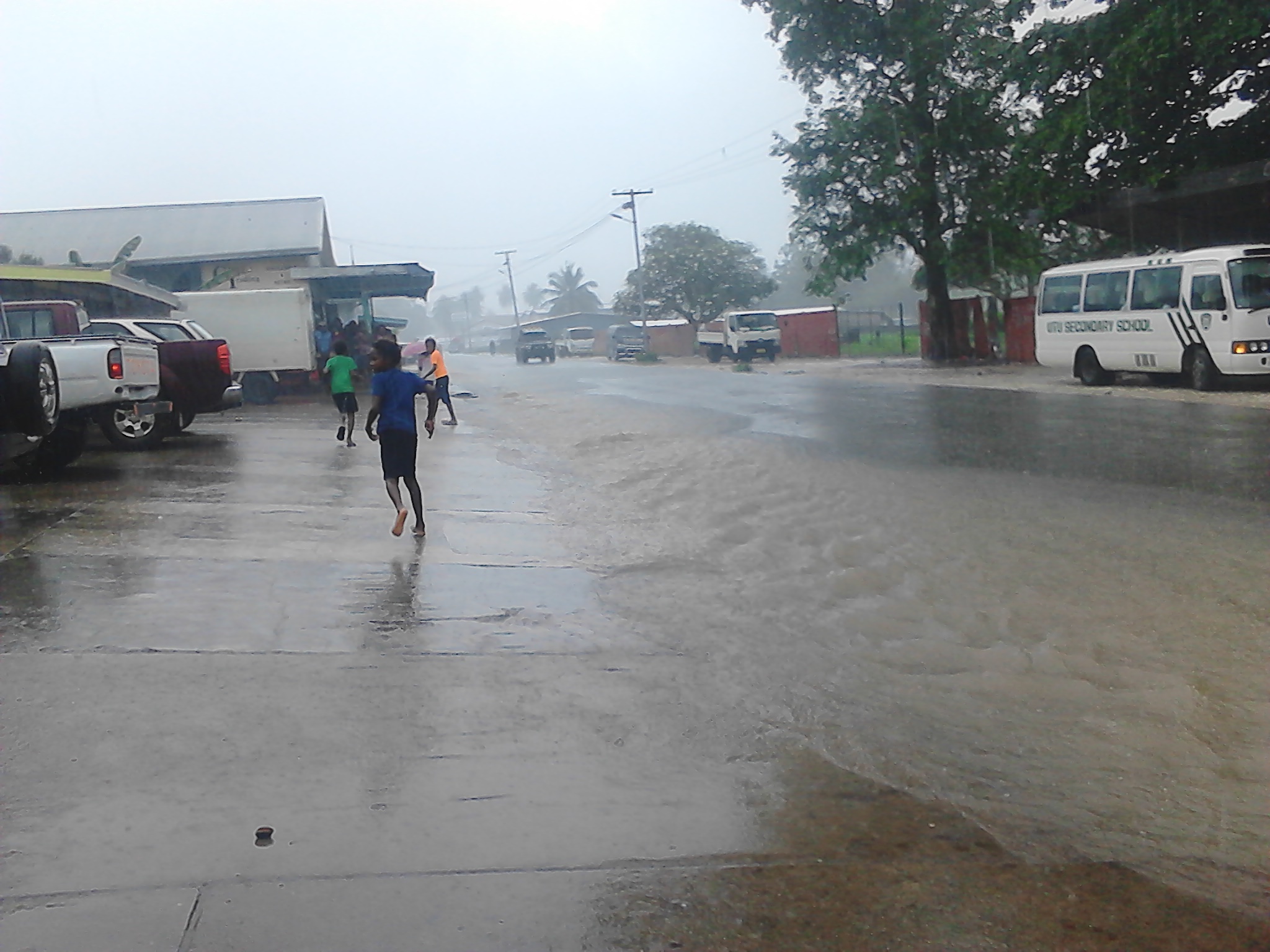
We’re still in Kavieng, just 120 miles south of the equator, and we’ve had a lot of rain recently. I mean a LOT of rain. In Fiji it didn’t rain once from the beginning of August through the middle of September. We’ve had 4 multi-inch dumps in the last 3 days here in Papua New Guinea. These showers last less than an hour, giving us time to swim and explore. But when it rains here, it rains.
The hose on our water maker remains broken, and we believe that its replacement is on the plane from Lae that lands in Kavieng within an hour. If that does happen, we will leave for Indonesia tomorrow.
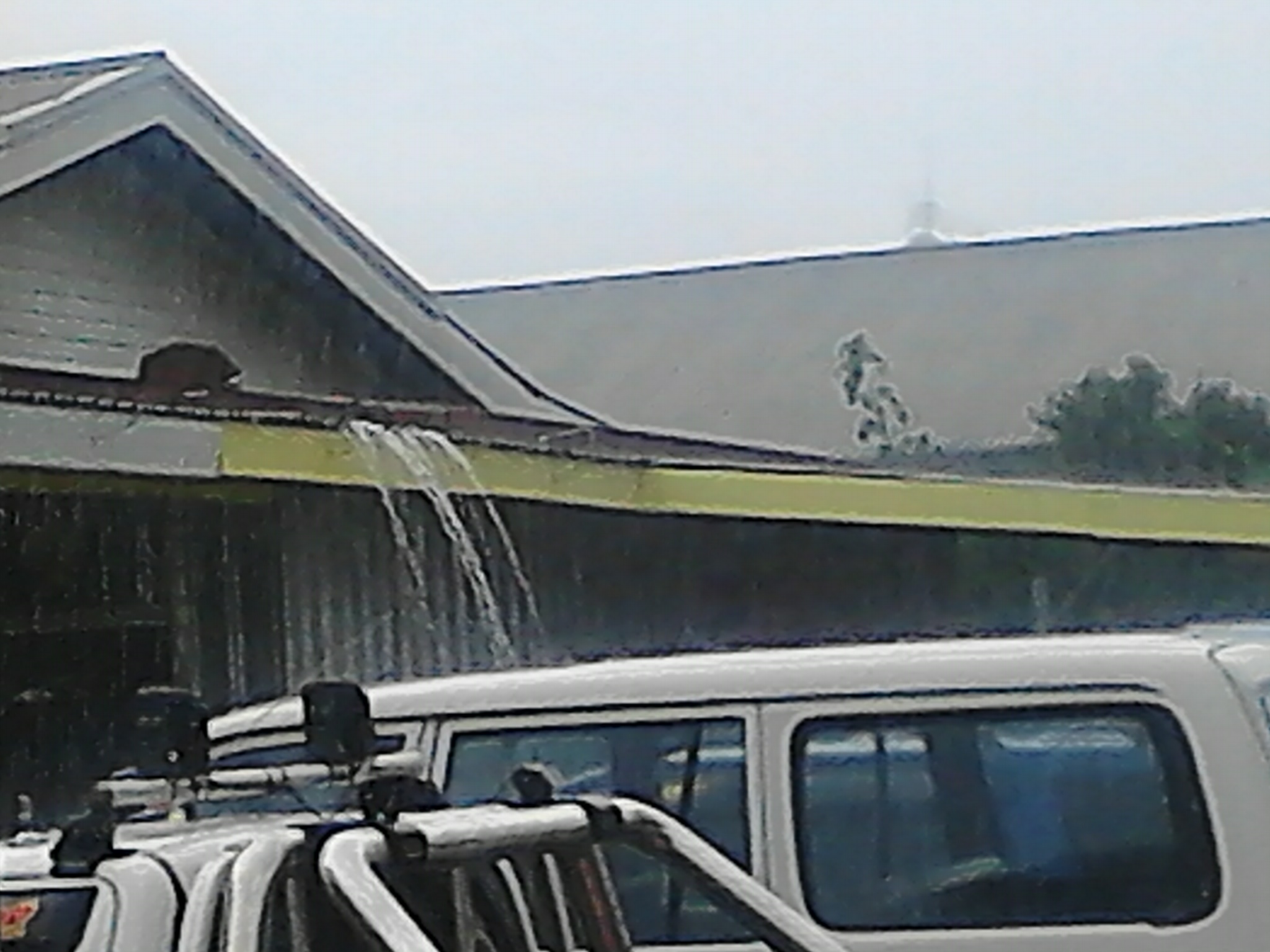
But in the meantime, all of this rain everywhere in Kavieng has made us rethink how we go about getting water on Sophie. As an experiment, we tried our hand at building dams on deck to capture rainwater into our water tanks.
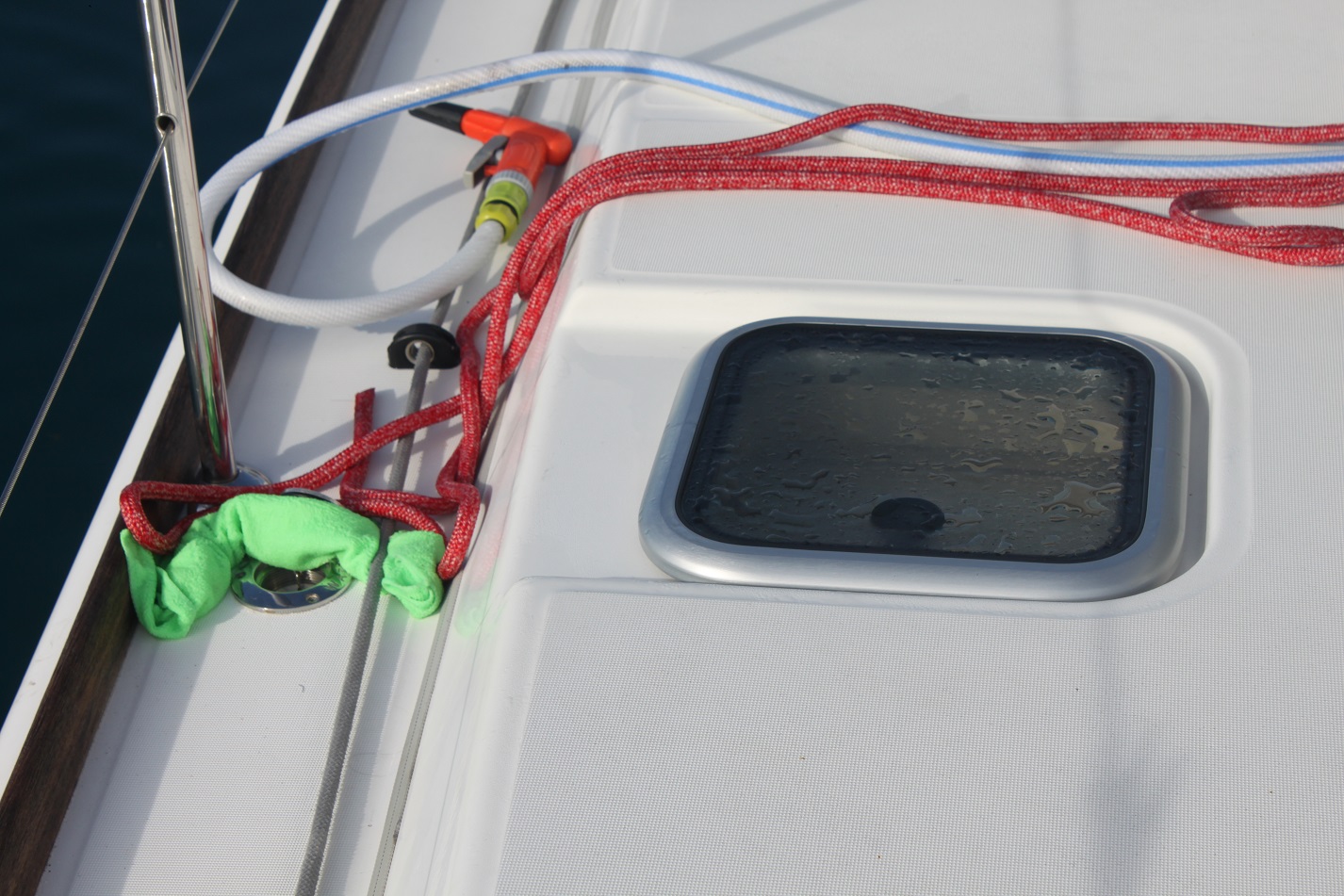
We didn’t get vey sophisticated here. Our deck fittings for the water tanks are located in gutters along the side of our foredeck. We simply rolled up some towels and placed them right behind the tank openings. We also laid out some sheets and hoses on the deck and coach roof to direct water towards the general direction of the tank openings.

The result? This water tank was empty 3 days ago, and it now has over 100 gallons of rain water in it. The other tank caught a similar amount. The decks were clean before the experiment, and the water goes through a carbon filter before we use it. So we feel better about drinking this water than water we would load from sources on shore.
The water maker will continue to be our primary source of fresh water moving forward, but its good to know we have a working alternative, at least when we are in rain country.
It also means that when we are in rain country, we can turn on the air conditioners instead of the water maker when we are charging our batteries with our generator.
No one on Sophie is complaining about that right now.
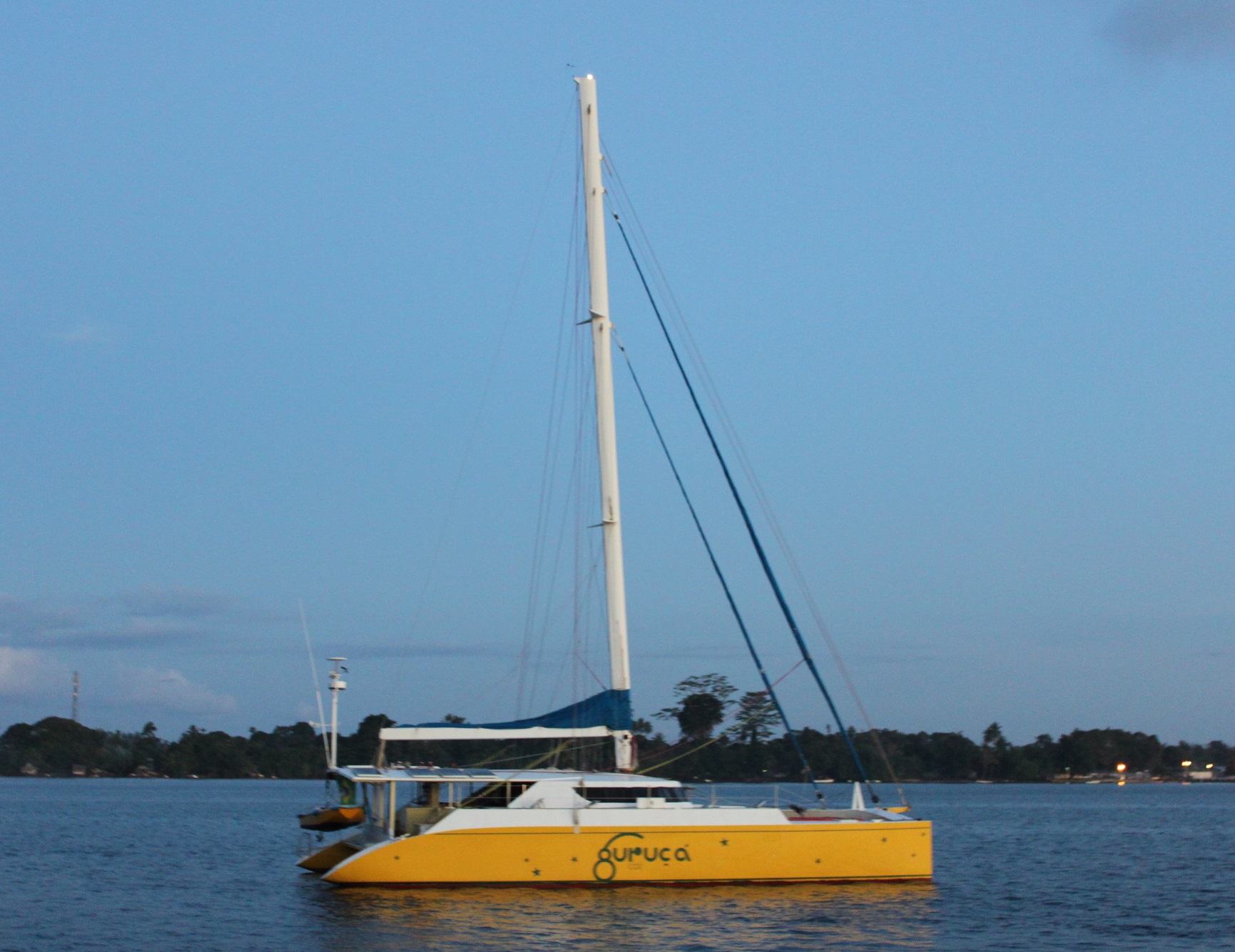
We’ve been out cruising for 2 years now, and we have seen many interesting boats, but we haven’t seen many that are cooler than the Brazilian cat Guruca. Guruca is Portuguese for “little crab”, and she was hand-built out of wood in a little over 2 years by Fausto and Guta, a couple that has sailed her from Brazil. Fausto also designed her. She’s 54 feet long, weighs 12 tons, and has some design features that I could see on our next cat if we ever decide to upgrade Sophie.
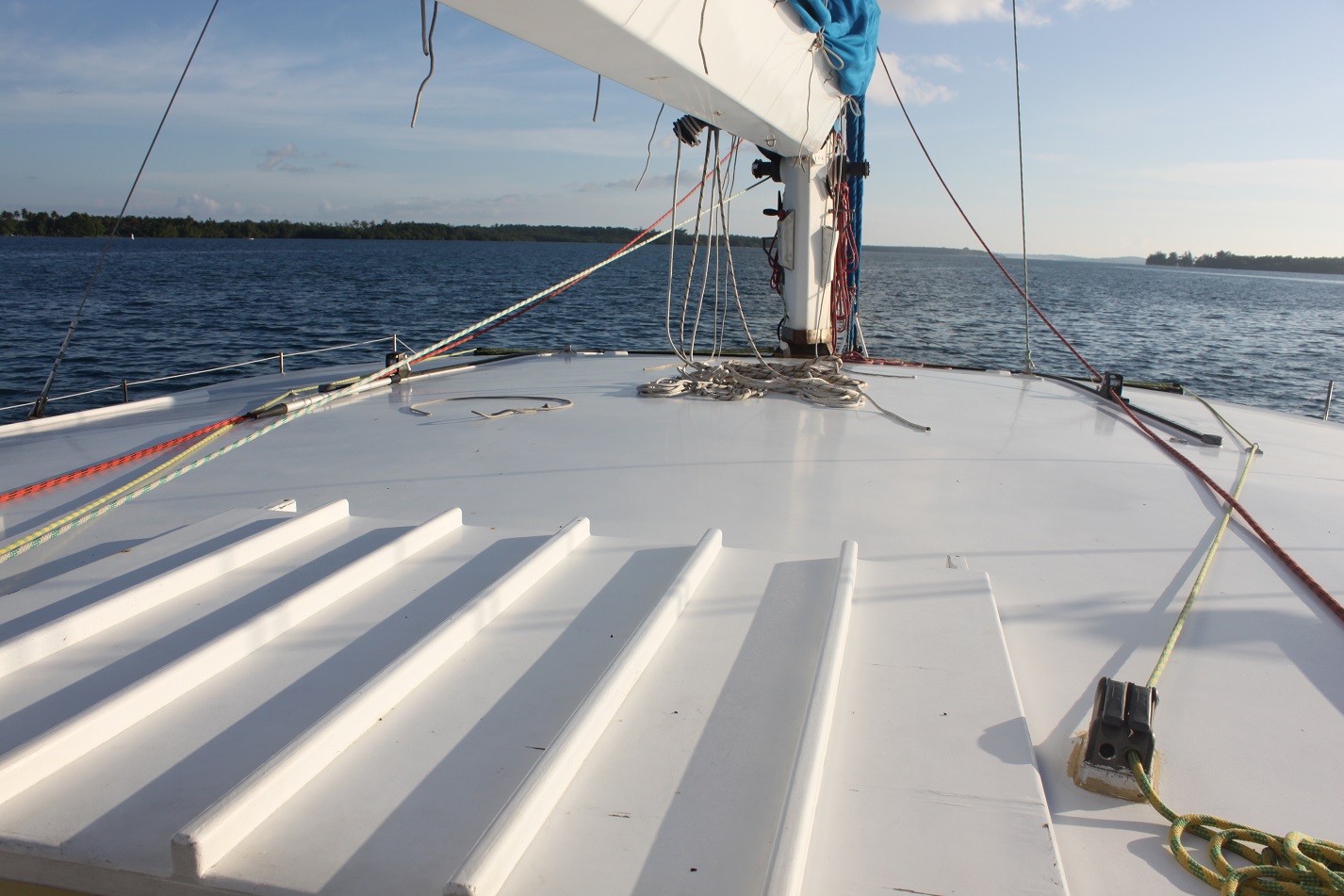
As you can see from the photo above, she has a roof that extends from the dinghy davits forward to the mast, creating a living space that is over 25 feet long.
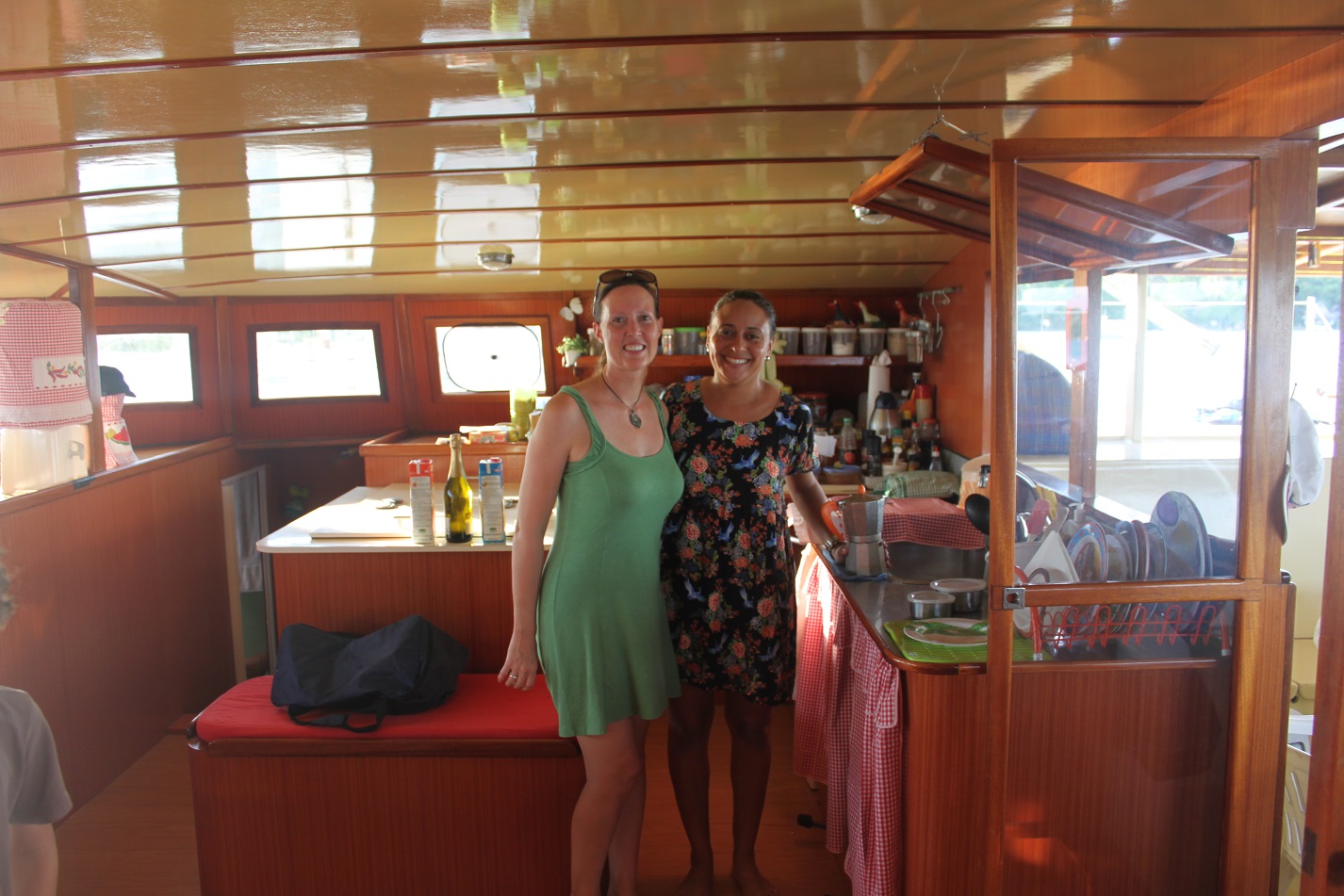
Since the boat is made from wood, it results in a warm interior that Fausto and Guta have left relatively uncluttered. Here is a shot of Jenna and Guta in the galley. We have always liked the idea of aft-facing galleys on cats, because it can create a connection between the inside and outside living areas. The island behind Jenna contains a deep fridge and freezer.

There is a table and benches in the forward part of the salon, including a duplicate set of instruments for when you are doing watches inside. There is a lot of room under the benches for food storage. And yes, Leo got a haircut.
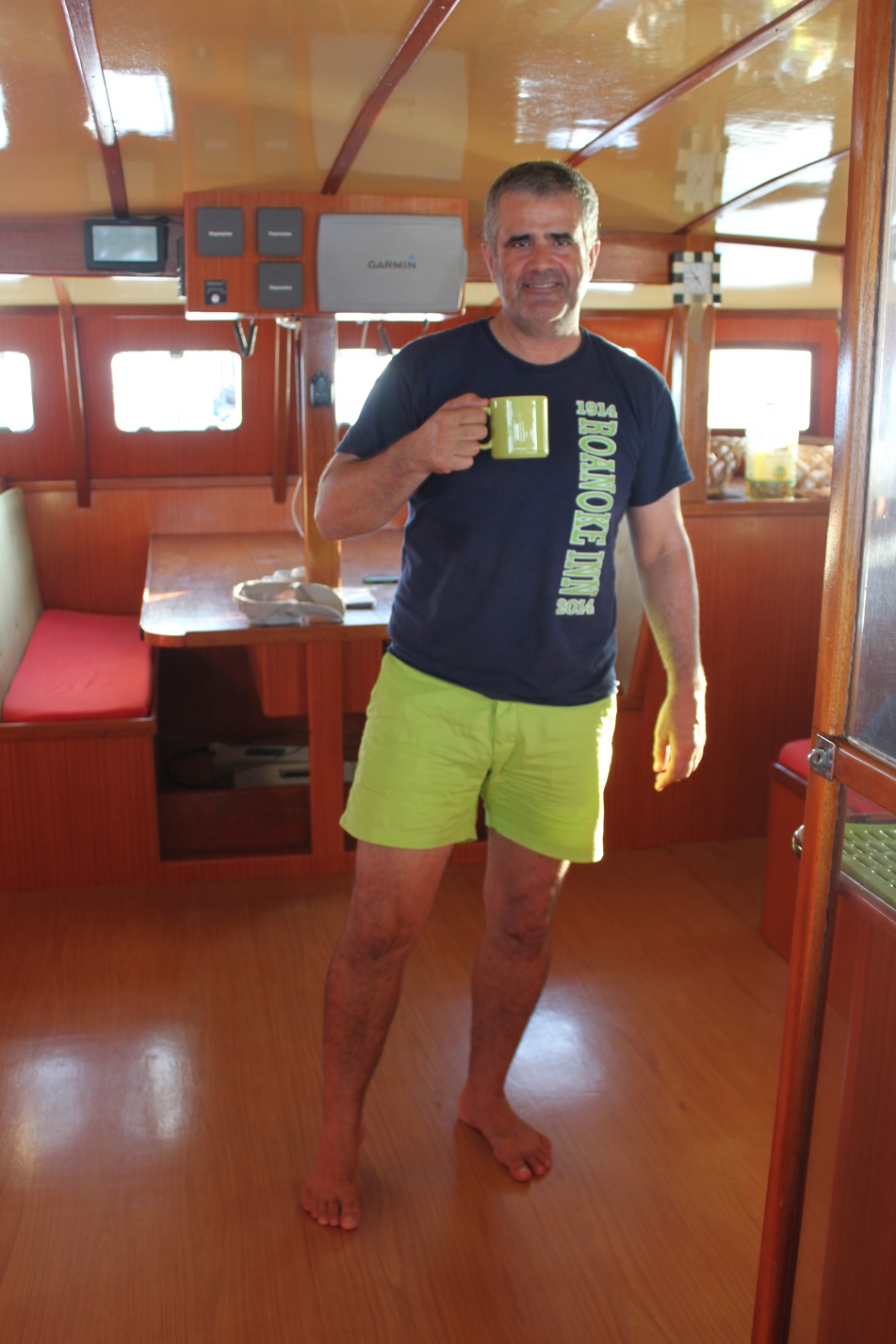
The main part of the salon is open, creating a space that is large enough to host 20 people for an indoor dance party. All that is missing here is a disco ball. For Fausto, that is not a problem, because in his view when you build in wood, you can change anything whenever you want to. And yes, my outfit matches my Brazilian coffee cup.
A big challenge for the designers of large cats is the decision about where to put the wheel. Lagoon chose the approach of building a flybridge and putting the wheel up top. This creates a great and social sailing area but separates the helm from the salon and the aft cockpit. Chris White and the Gunboat designers put it in a small cockpit directly behind the mast. Catana puts a wheel out on each transom, which I assume gives you a great view but can also get you wet. Other designers put a bench on the front of the salon where the hemsman sits and drives.
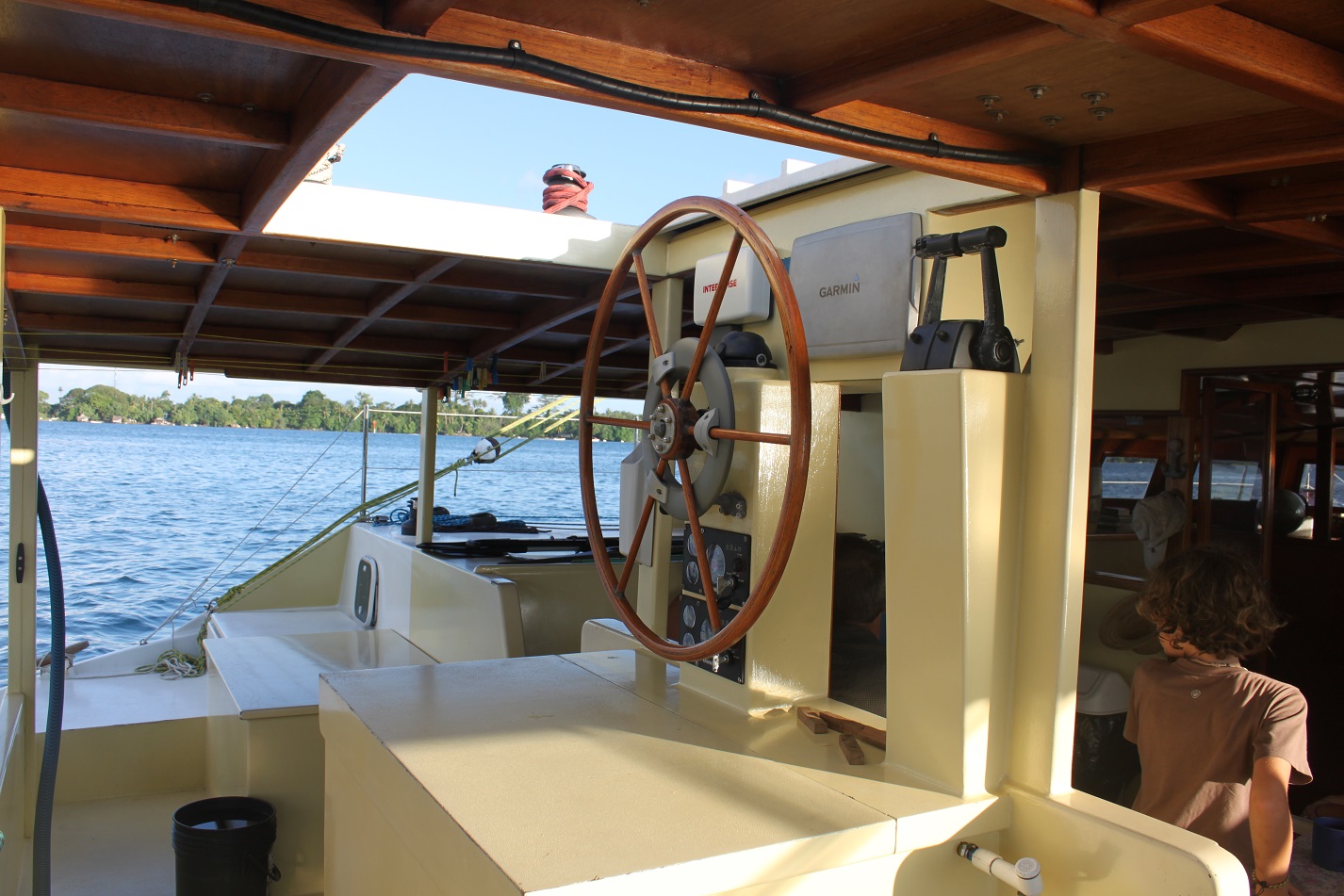
Fausto solves this problem by putting the wheel on a platform in the center of the aft cockpit, with a sliding hatch that gives the helmsman access to all of the sail controls. When I first saw this, I didn’t think it would work. But the more I think about it, the more I like it, especially for distance cruising.
You have an excellent view of the sails.
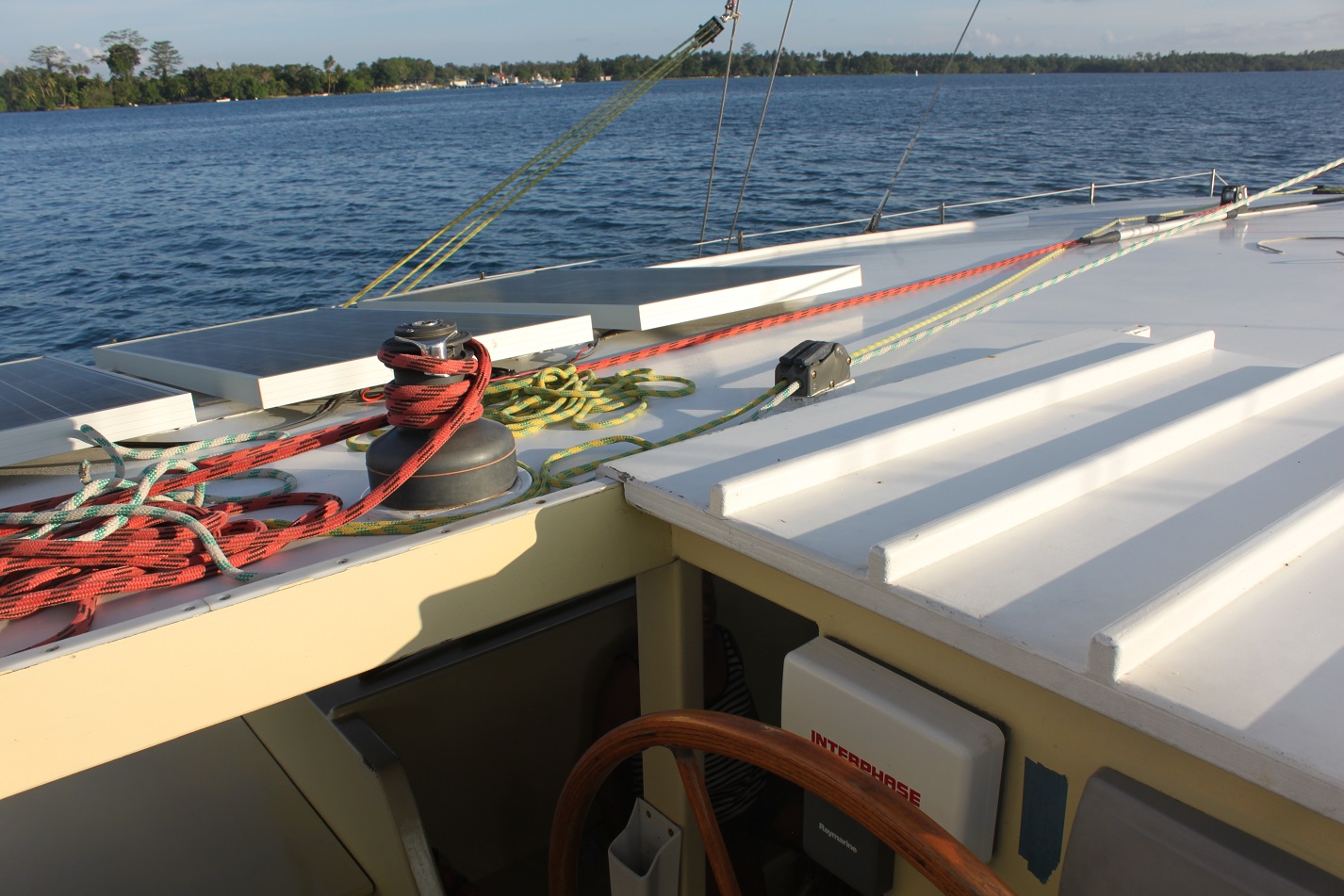
And easy access to the sail controls.
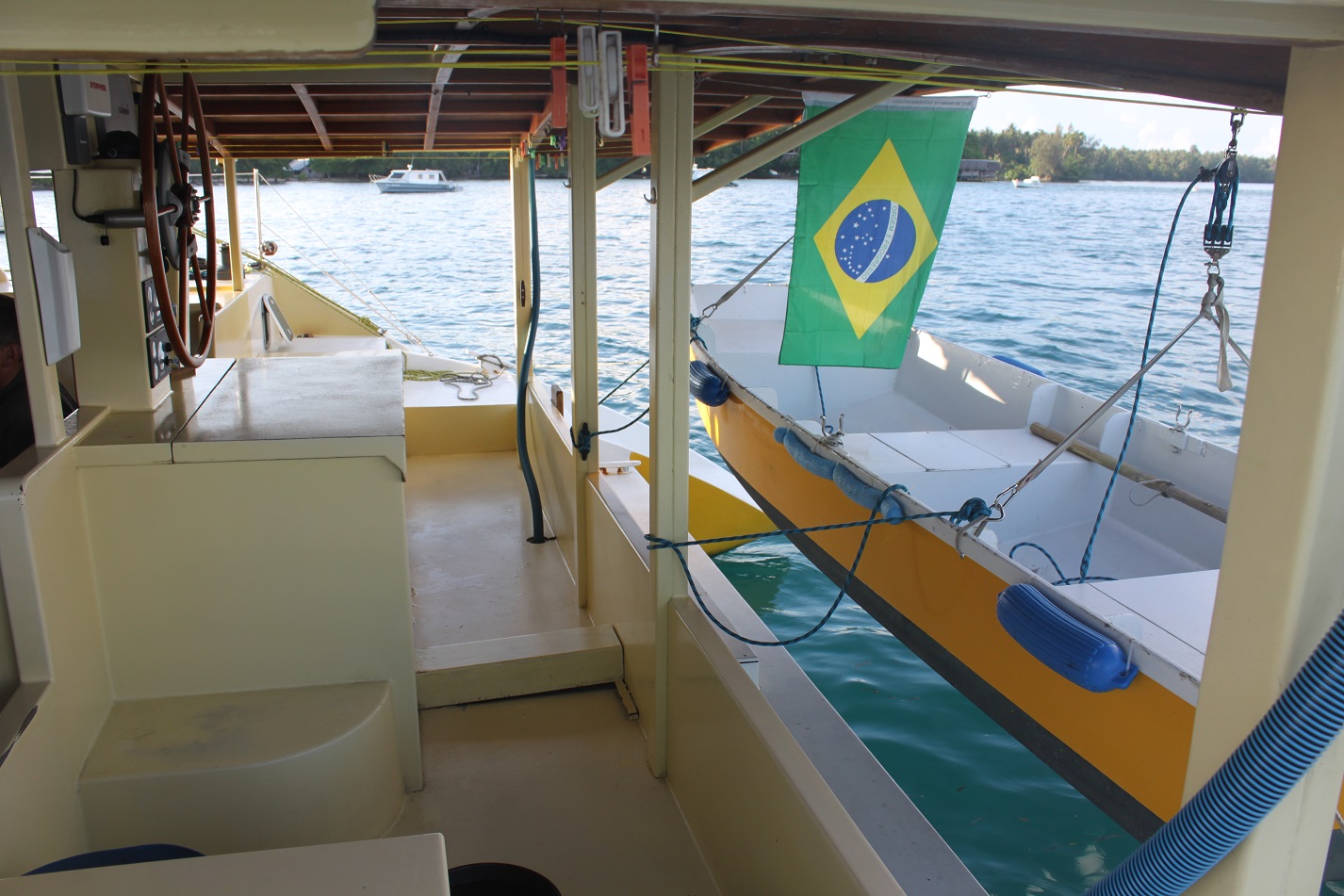
Once you’ve made your sail adjustment, you just close the hatch and continue with your day. The roof must be close to 600 square feet, and Fasuto built rain gutters around its edge to fill his 2,200 liters of water storage. He doesn’t need a watermker or a genset. The helm platform also contains the clothes washing machine, which is a setup that would be perfect for me.
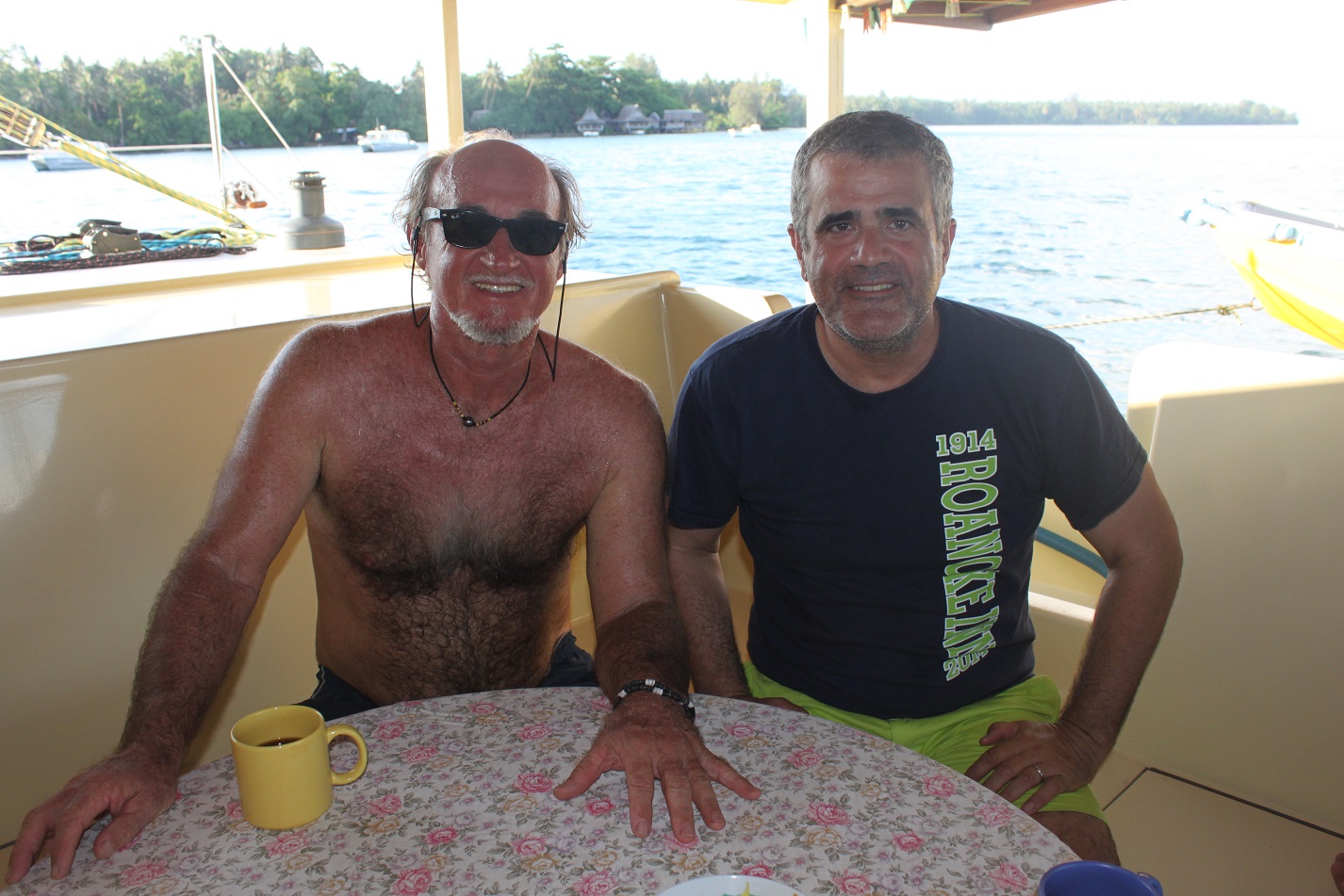
Here is a photo of me and Fausto enjoying his aft cockpit. They spend most of their time here.
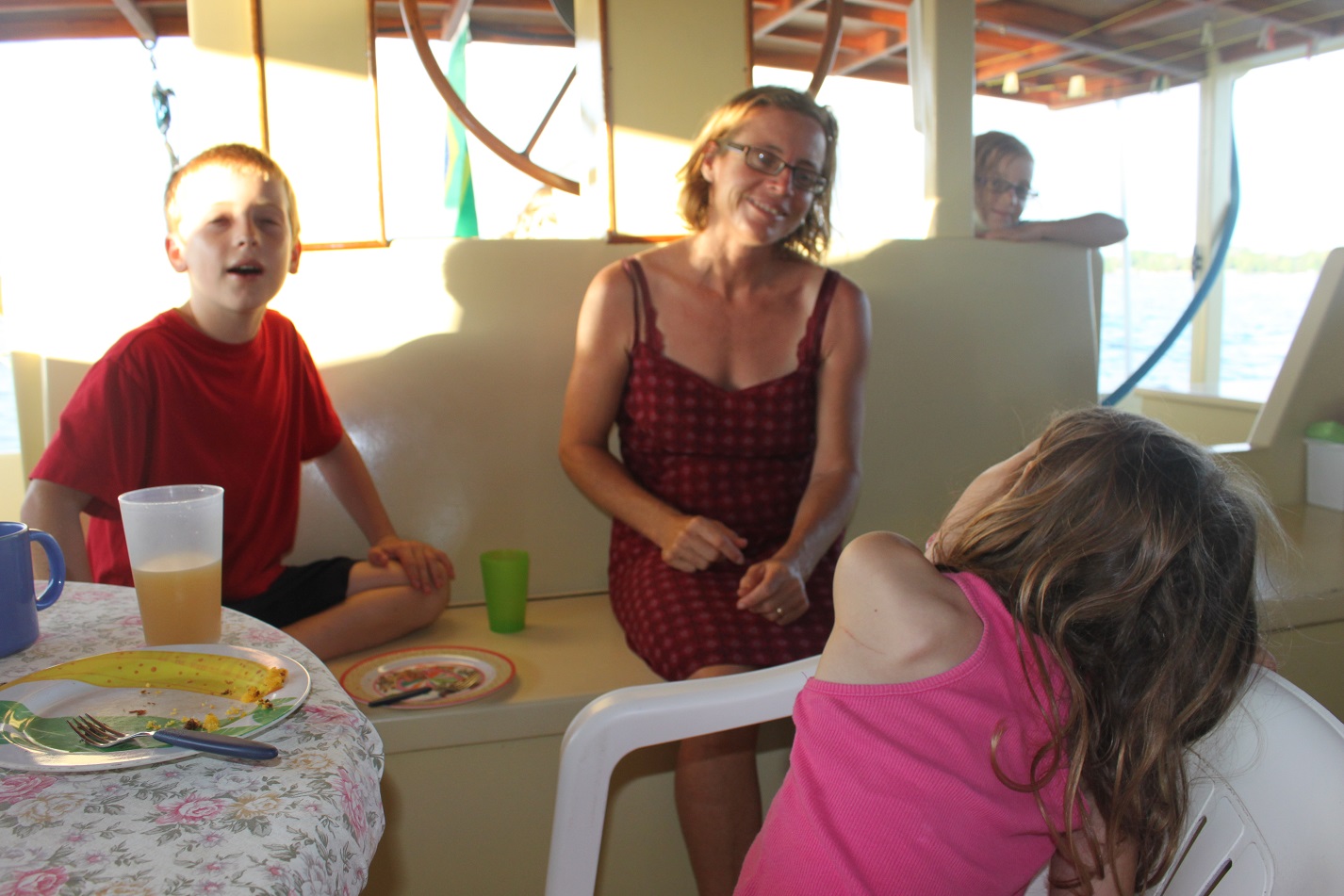
Fausto and Guta invited the crews of Sophie and Per Ardua over for coffee and cake yesterday afternoon, and the kids spent all of their time playing in the aft cockpit as well.
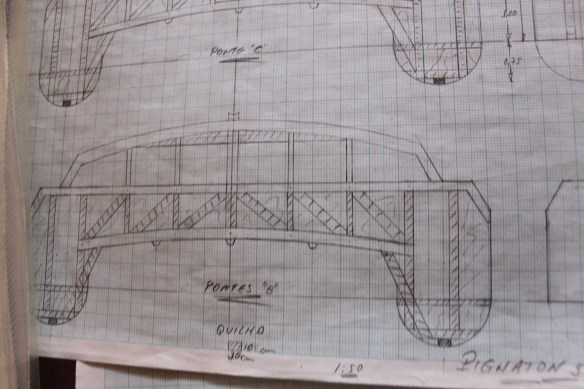
It was clear that they were both very proud of their beautiful boat. Fausto spent an hour showing us his rigging, hulls, mast, engine rooms, and various pieces of joinery. At one point he even broke out his line drawings of the boat and walked us through his equations for various stress loads and righting angles. It was a wonderful experience.
One final observation. We have written a bit about the potential crime issues in the Solomons and PNG, and we are feeling very safe in Kavieng right now. But Guruca has just about the best crime deterrent we’ve seen on any cruising boat: a Size 1, 2 kilo alpha male Miniature Pinscher named Faisca. No one is going to mess with this guy.
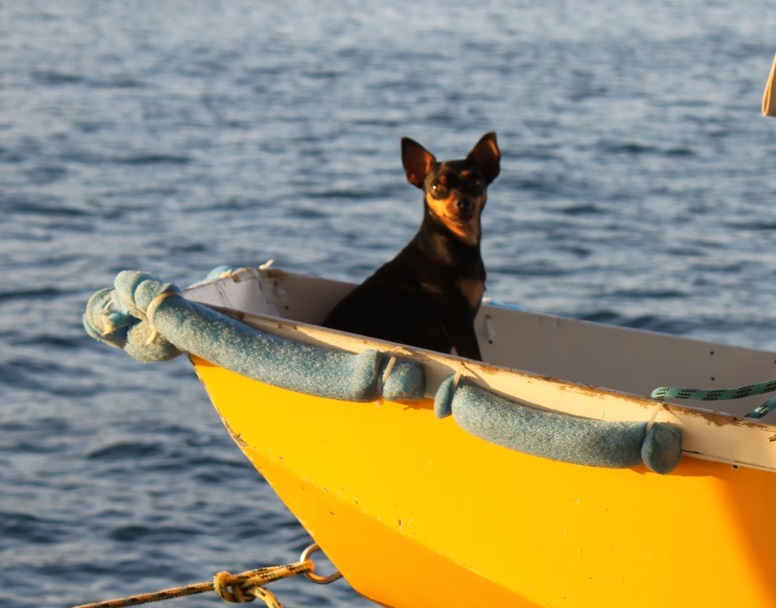
I guess we are not the only lucky ones out here right now. Fausto and Guta plan to sell Guruca when they return to Brazil next year so they can build a new boat. She would make an excellent day charter boat for an exotic location somewhere, like, say, Montenegro.
Here are some pictures from our trip to Vanuatu in September and October 2014. As I reflect on our time there, I am overwhelmed by the incredible opportunity we had to connect with so many local people and so many cruisers, new and old friends. We loved sharing this special place with all of you.
Port Resolution, Tanna

Rest stop in the village

School’s out for the day. Everywhere we went kids mugged for the camera. I loved to watch their faces as I showed them photos of themselves. Giggles and grins.

Kids carry firewood home to prepare dinner while one team warms up for the afternoon’s soccer game.
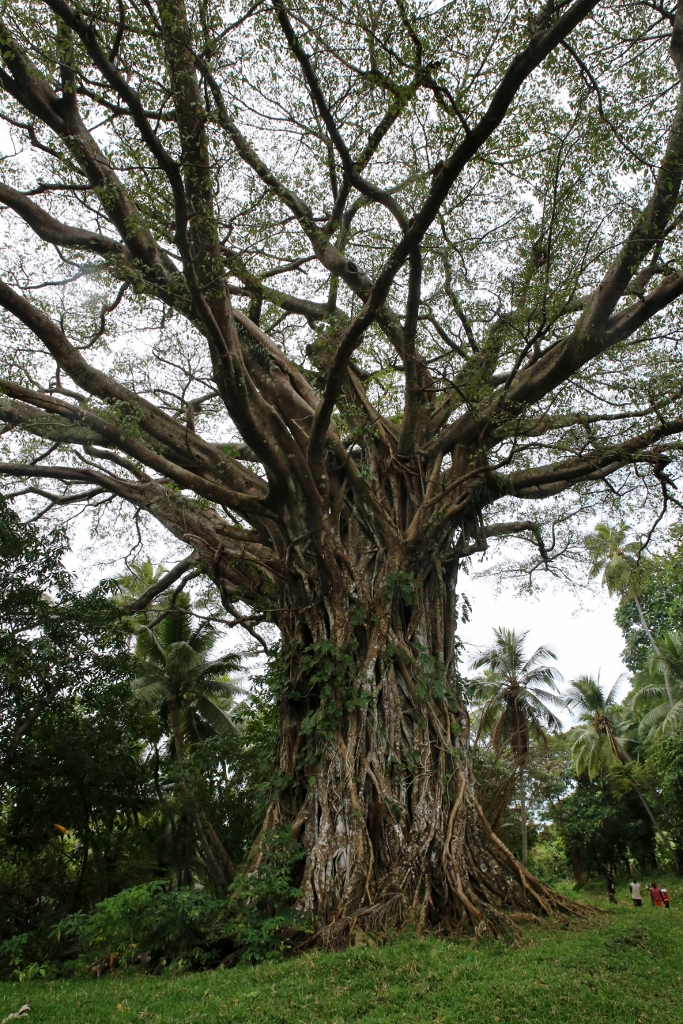
Immense trees lined the road in Port Resolution.
Mount Yasur, Tanna
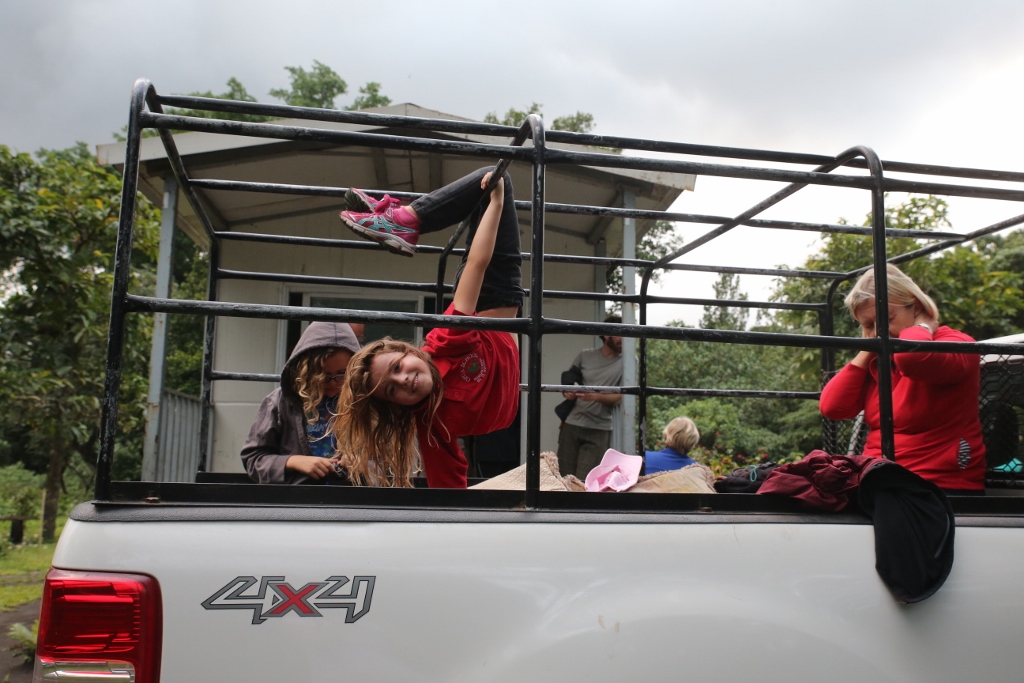
14 of us piled into a pickup for the hour-long bumpy ride up the volcano. Hazel thoroughly tested the roll cage.

The ground rumbled as loud explosions and steam erupted above us. Walking towards the danger felt counterintuitive, terrifying and thrilling all at once.
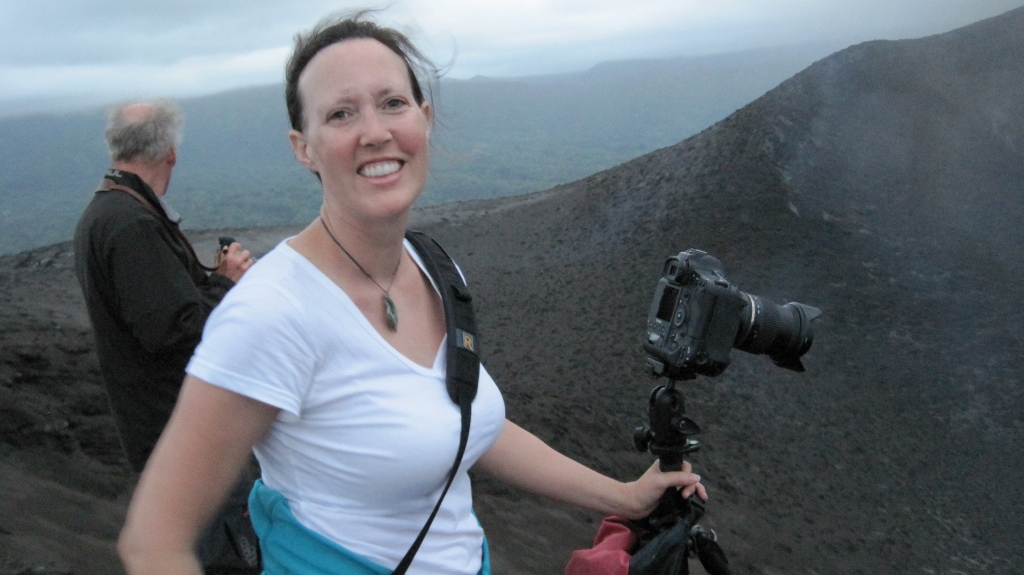
Waiting for sunset at the rim.
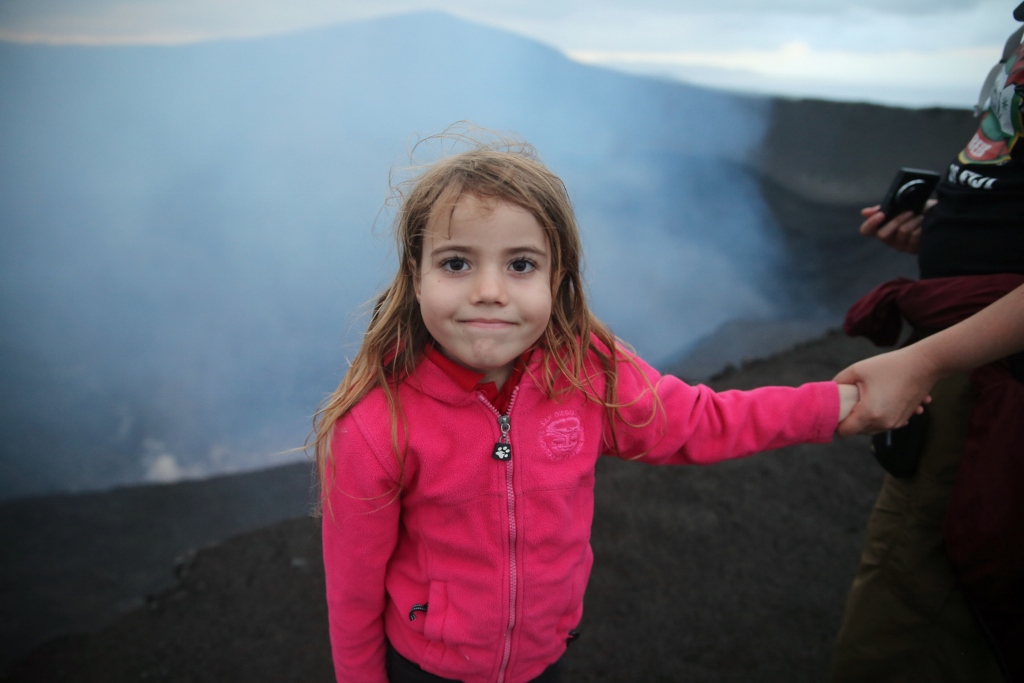
We kept a friendly death grip on Hazel’s wrist at the edge of the crater.

Every minute or two another burst of lava and ash spews up.
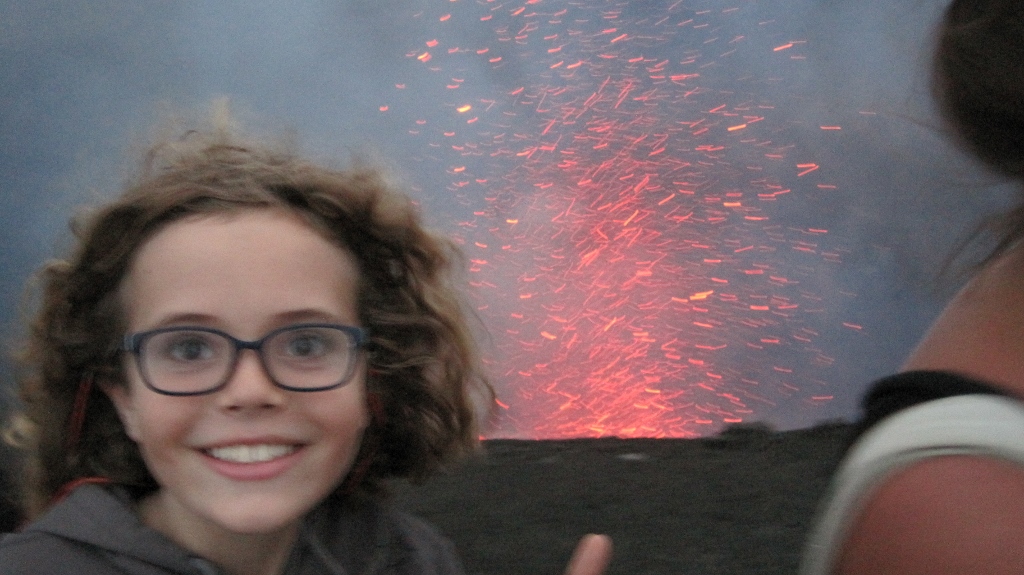
“This is awesome!”
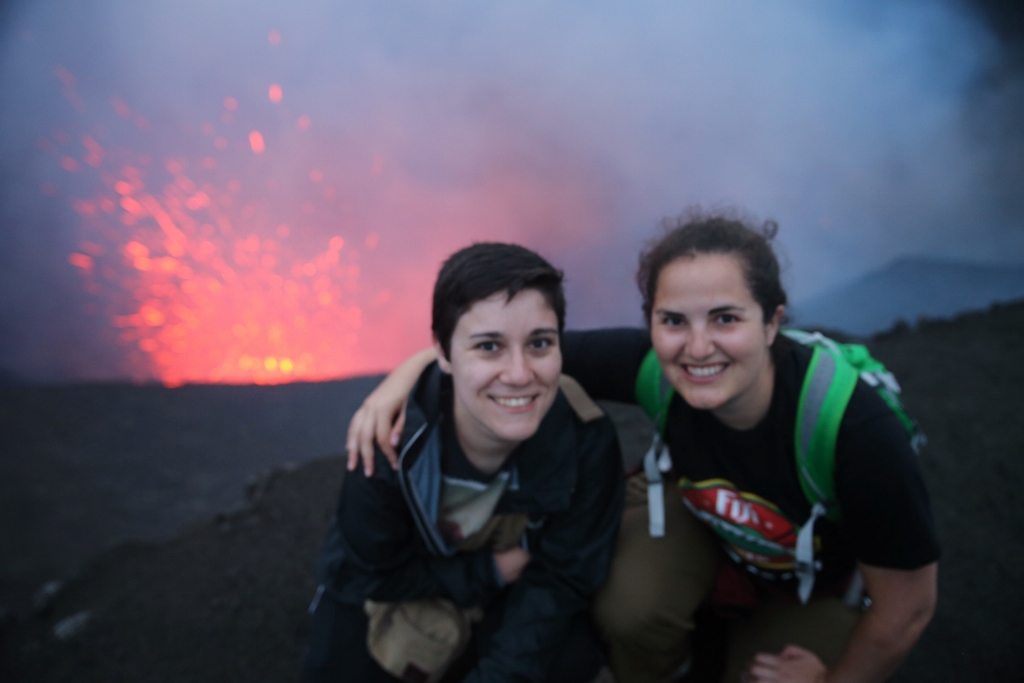
Sara and Julie.

Leo.

Jenna and Jamie.
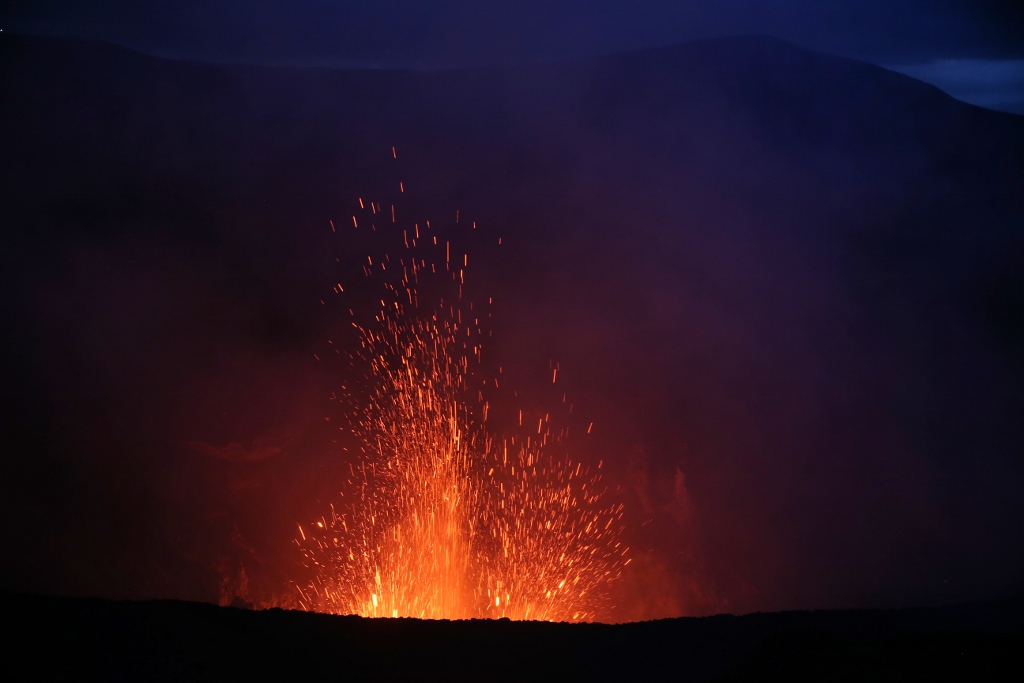
Mt. Yasur in the twilight.
Erromango Island
Our next stop Dillon’s Bay on the west side of Erromango. David, our local village guide took us on a hike to some nearby skull caves.

On the beach by the first trailhead. Bush climb may be a more apt description. We scrambled over rocks, crossed a stream and through the forest on a steep ascent for fifteen minutes to reach the cave.
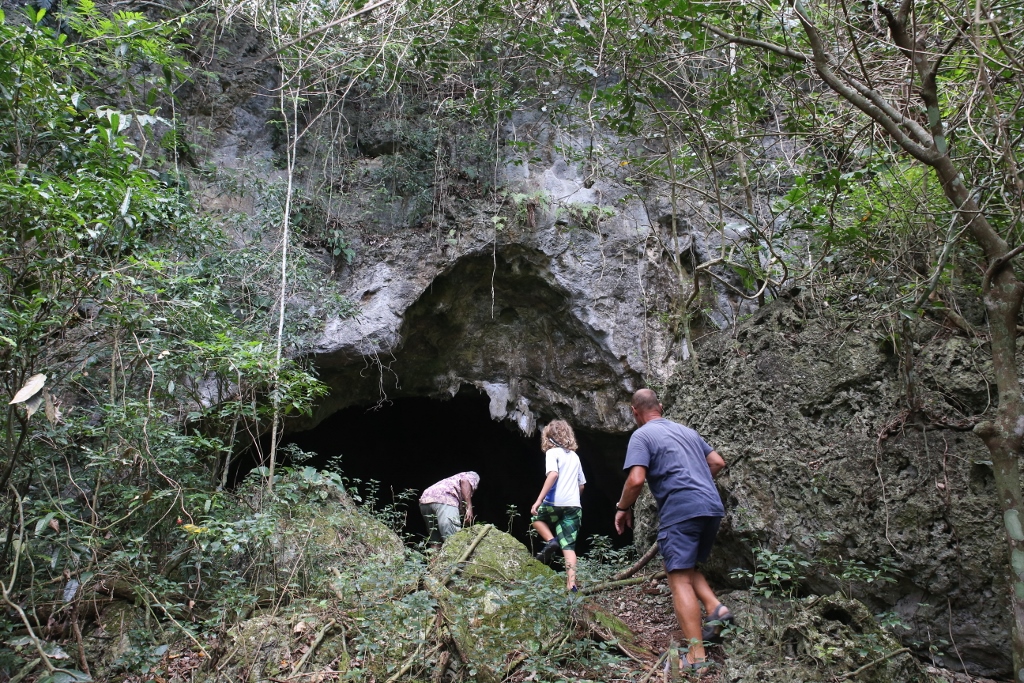
Cave entrance. This is the oldest cave, by the former site of the village, where women and children would stay in the event of any danger or where everyone would ride out storms.

Handprints are painted all around the cave, with human remains at the end of one of the passages.

The second cave was a more sacred burial site for chiefs. David stopped for a prayer and then showed us the original location that is now too difficult and dangerous to enter following a landslide that destroyed most of the cave. We climbed up a banyan tree to a small opening in the rock where the skulls of chiefs and their wives have been relocated.

Skulls of two chiefs and their wives. David told us one of the chiefs was his mother’s grandfather. The area around the cave is a special family place where they often come on Sunday afternoons to relax and barbecue around a firepit.
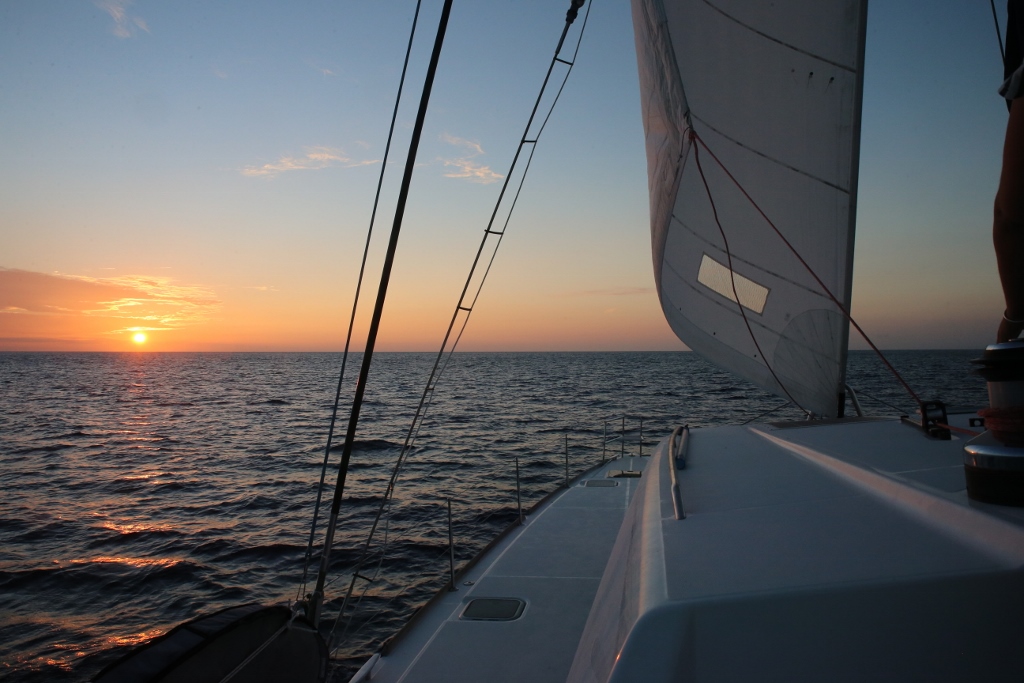
Evening departure for an overnight sail from Erromango to Efate.
Port Vila, Efate Island
We spent a few days at Port Vila, the capital in order to provision and a little R&R.
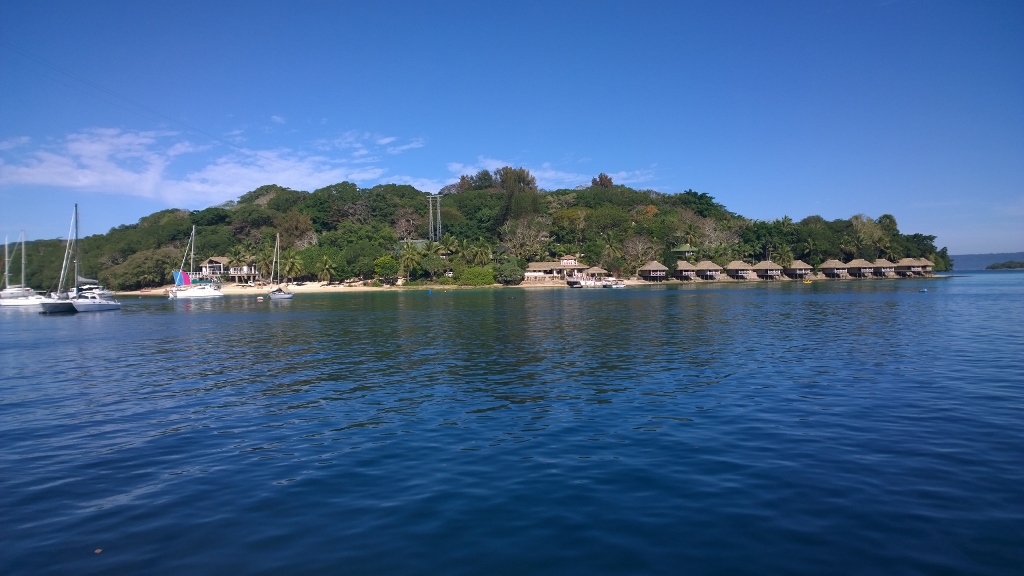
Looking out from the dock.
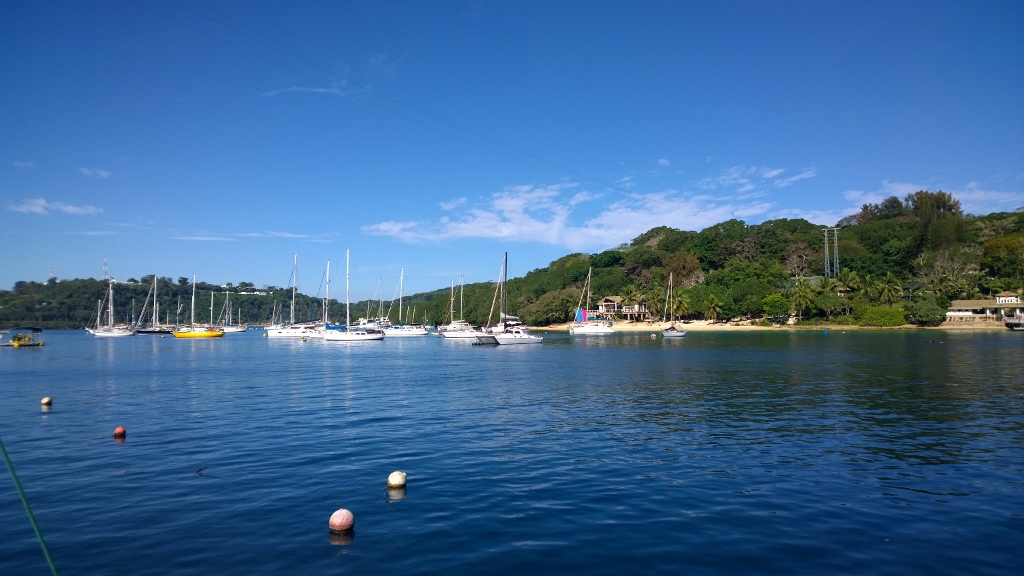
The mooring field.

It was weird to be in the tropics and have cars drive on the right.
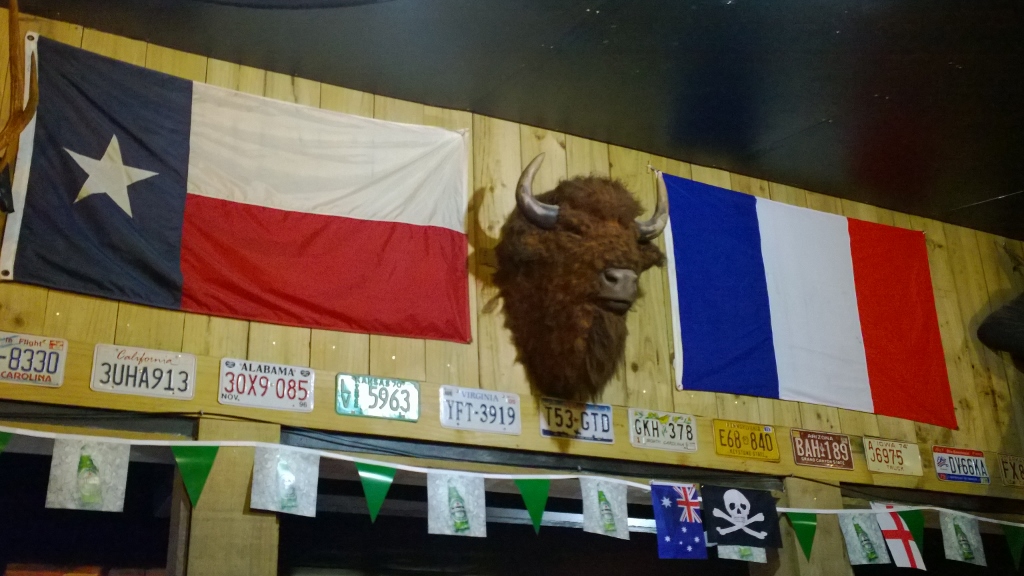
We stopped at this Aussie biker bar owned by a Texan. I can’t remember ever seeing the Texas and French flags side by side before.

The kids loved how the electric deer head moved its mouth to sing along to the music.

We played darts for hours.

By far, the highlight of this place was the women’s patriotic bathroom.
Leo’s 10th Birthday

Fulton Bay, Lelepa Island. A wicked awesome place to turn ten!

Happy hugs for the birthday boy.
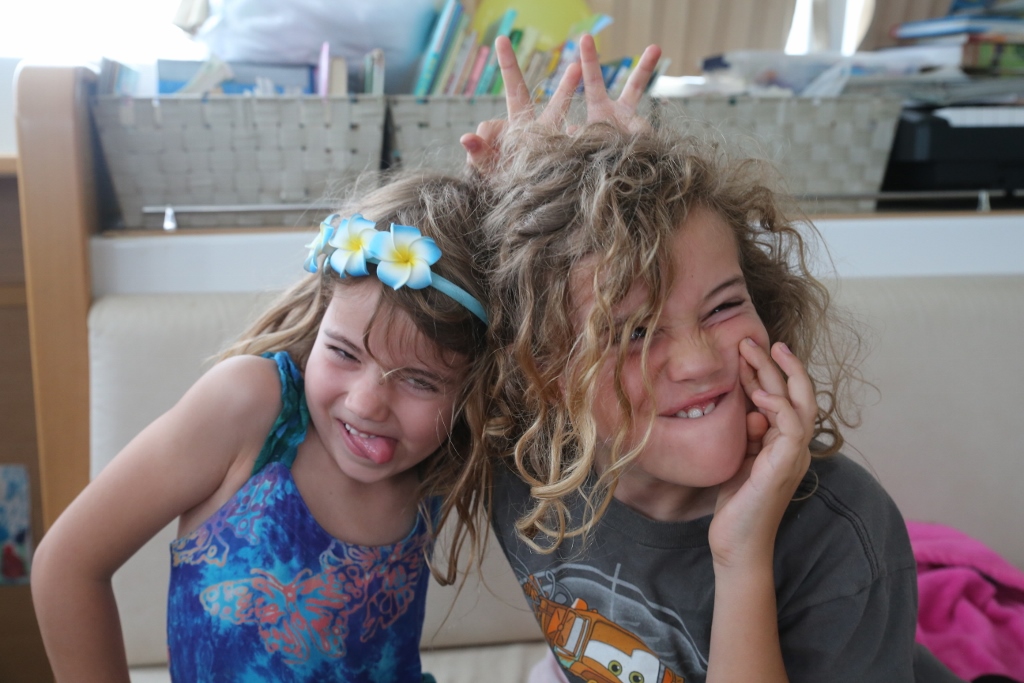
No celebration is complete without silly faces.

Leo requested birthday cherry pie instead of cake. We were happy to oblige.

Leo’s first surfboard. Mahalo!

As part of birthday week, Leo made a piñata that we filled with candy. Nothing like paper maché and decoupage on a boat!

Hazel made this patchwork cat, just a statue, not a piñata.
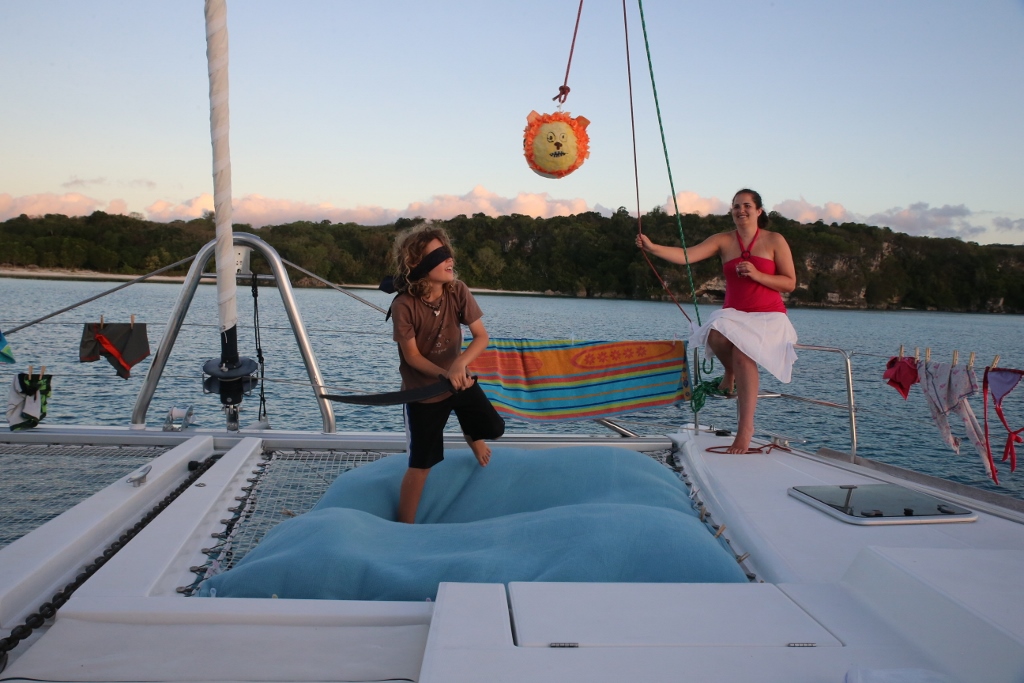
The trampolines made an excellent piñata stadium. The kids attached a blanket to trap the candy so it wouldn’t spill overboard.
Hawksbill Turtle Sanctuary, Moso Island
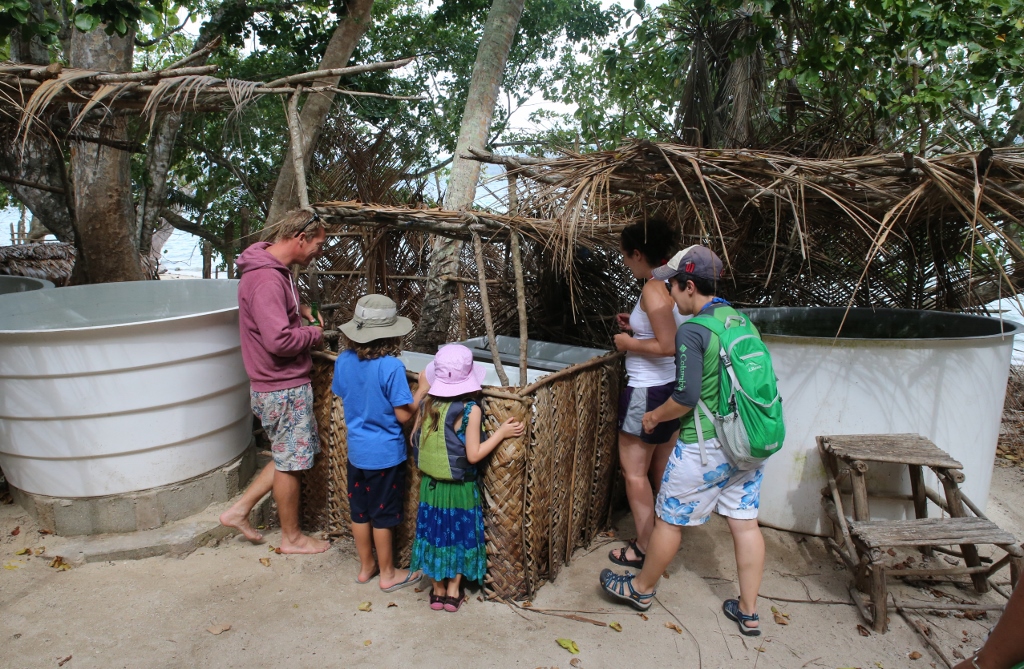
Sara, Julie and I brought the kids to the Hawksbill Turtle Sanctuary at Tranquility Eco Resort on Moso Island in Havannah Harbor. They collect baby turtles and nurture them for up to a year until they are big enough and can be released back into the wild.

Like all baby animals, the hawksbills were adorable.
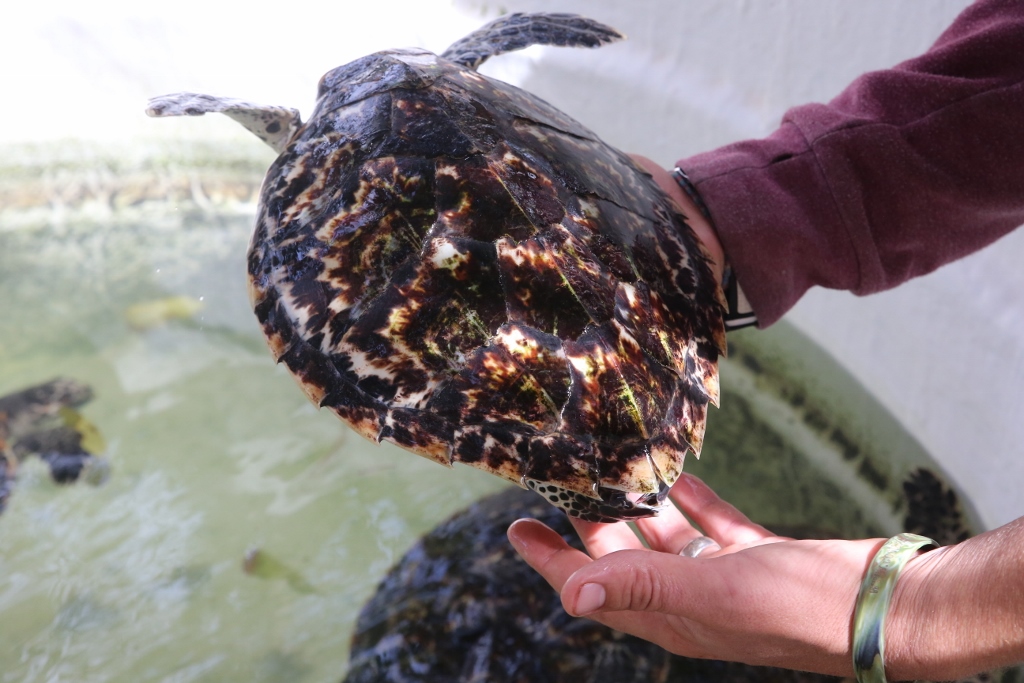
Bigger turtles have a much higher survival rate, but at more risk of people collecting them as trophies for their beautiful shells.
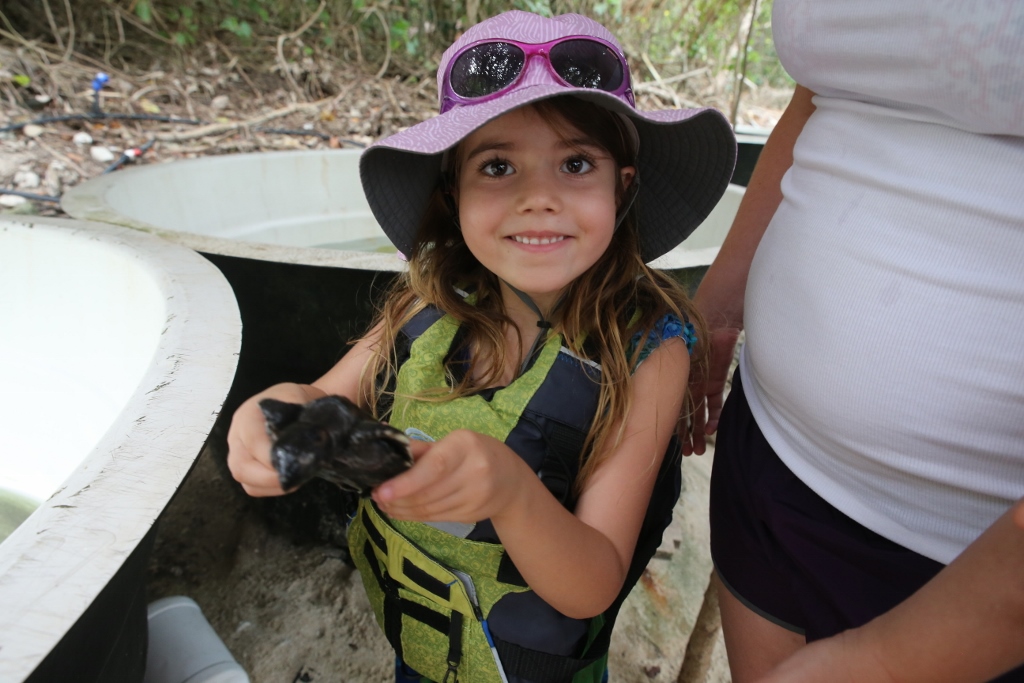
The kids loved holding the turtles.
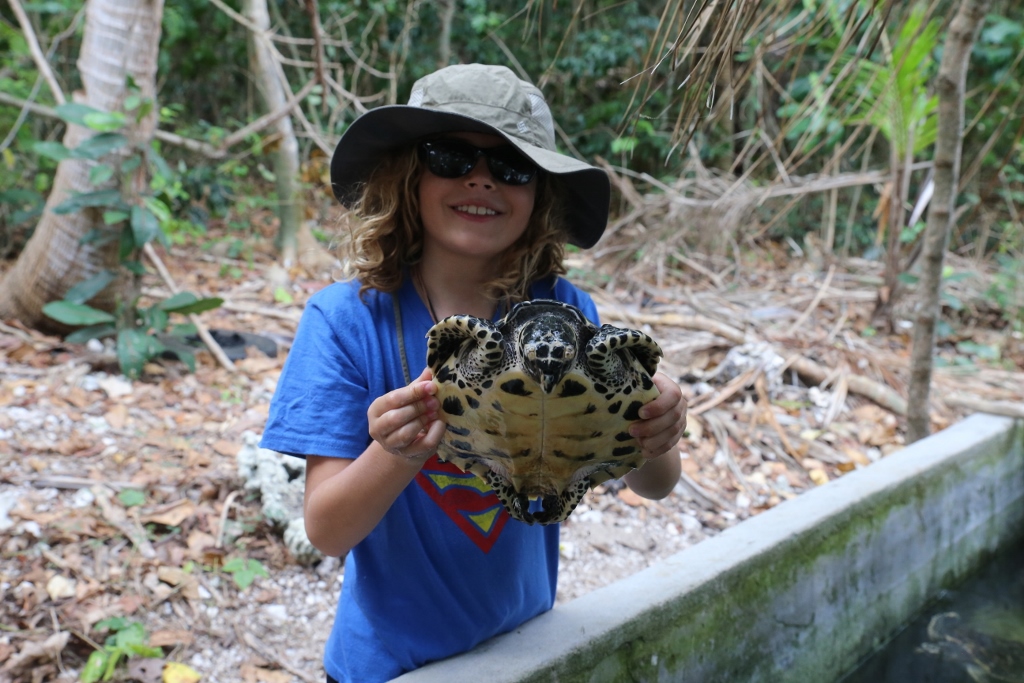
This one was quite heavy and almost ready for release.

We had so much fun with Sara and Julie and were sad to see them go.
Exploring Efate
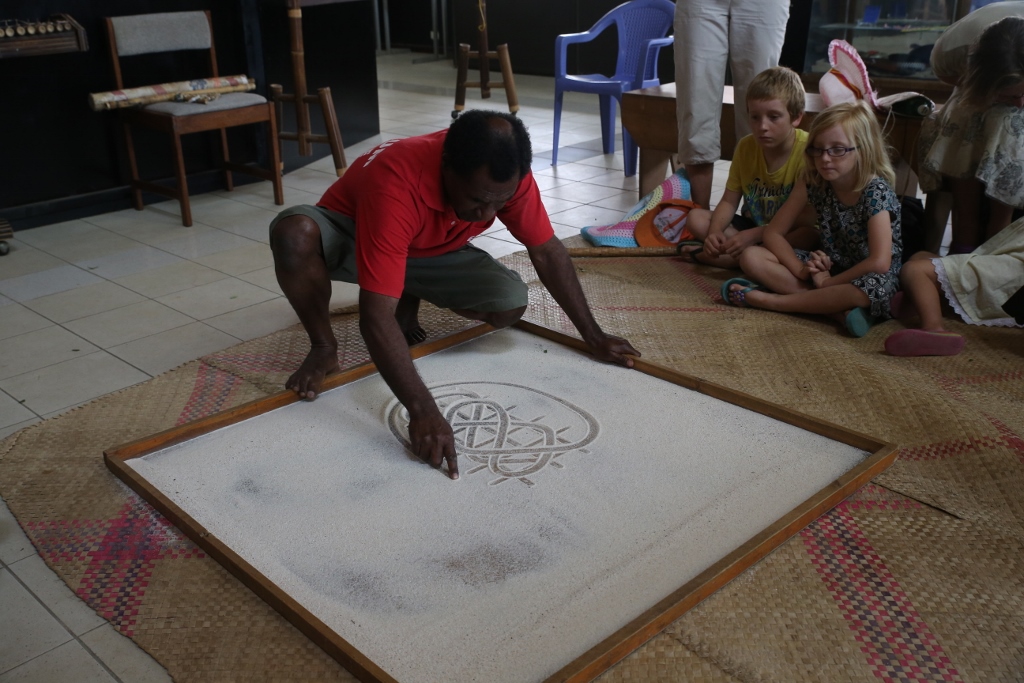
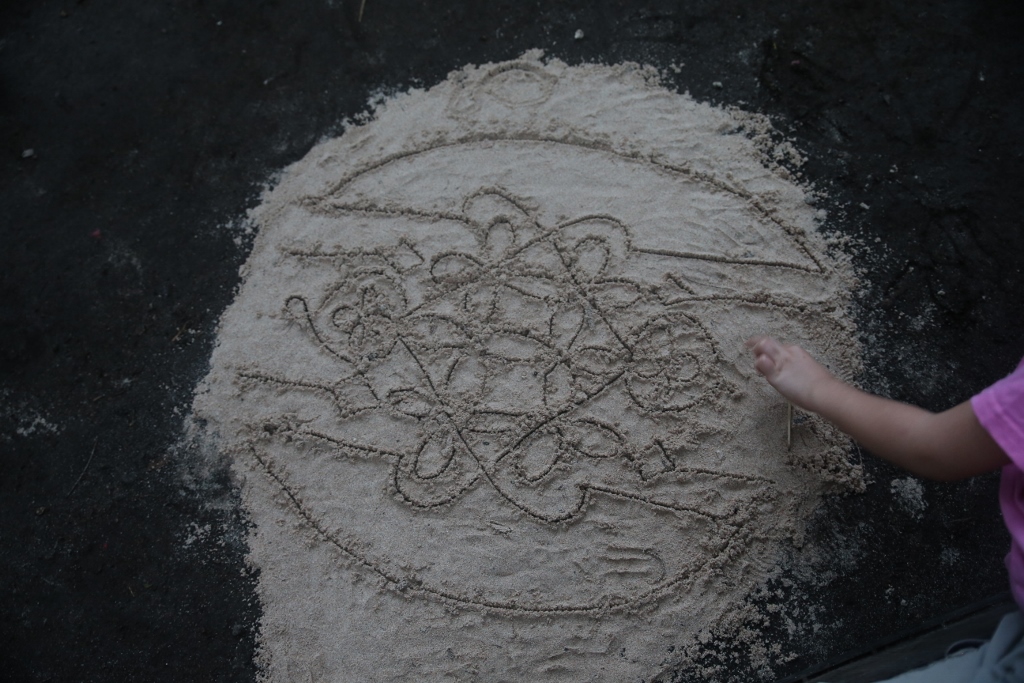
We learned about the art of sand drawing at the national museum in Port Vila. After making a tic tac toe series of guide lines, the entire drawing is done in one fluid line. Each picture has a corresponding legend and it is said that the steps of the drawing help the storyteller remember each part of the story.

The completed turtle.

We rented a car and circled Efate with our friends Mercedes and Colin from Segue. One stop was a World War II museum that has an intact submerged Corsair nearby.

Coke bottles are the most frequent artifact to wash up on the beach.

Sipping drinks at Wahoo in Havannah Harbor.
Epi Island
We visited the village and local elementary school at Lamen Bay on Epi Island.

One family’s kitchen. The stove is a wood fire just inside the doorway and there is a big wood pile inside. Kitchens are built as separate structures from the rest of the house because they frequently burn down.

Girls walking to school.

These boys were giggling up in a tree by the playground.

Preschool classroom.
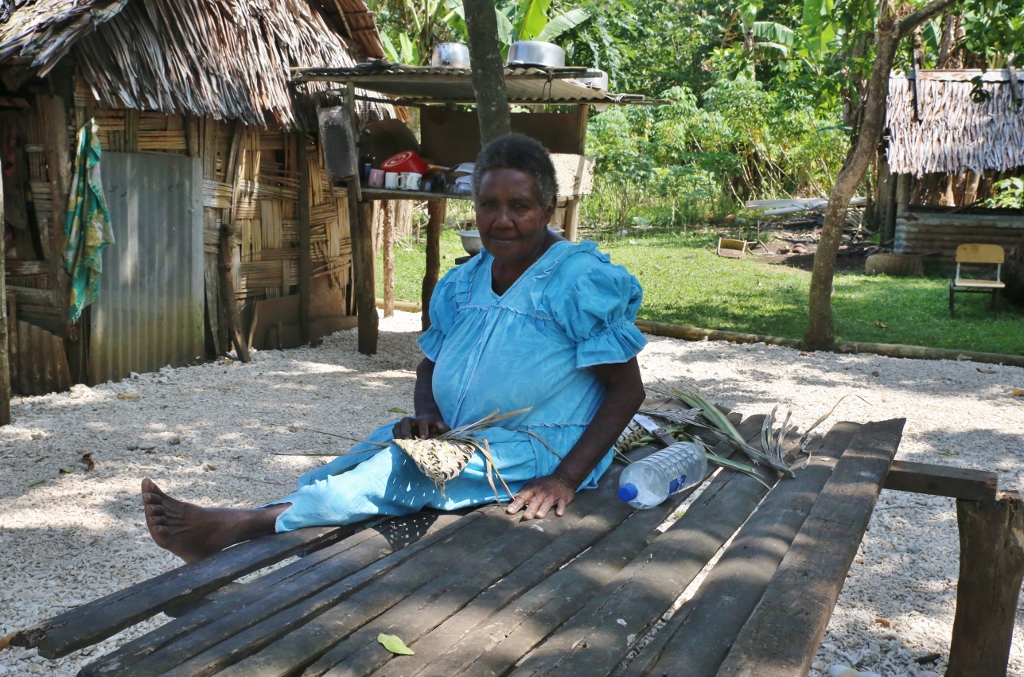
“Mama” weaving in the shade.

Waving mats. They dye some of the pendants strips different colors before weaving patterns into the mats.
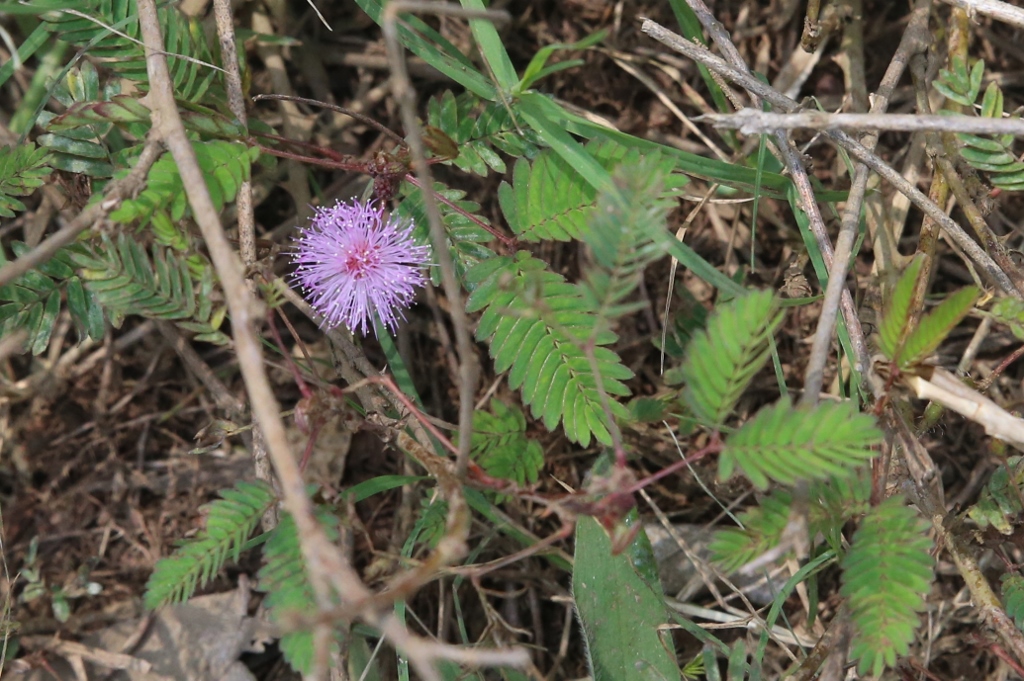
This plant’s leaves fold up when touched. We also saw these in the Marquesas. Our guide told us that these plants are a reminder for husbands to humble themselves before their wives rather than getting into arguments, and wives should do the same.

Sophie and Arcturus II at anchor, Lamen Bay

Houses in Vanuatu are some of the most colorful we’ve seen.
The Maskelynes
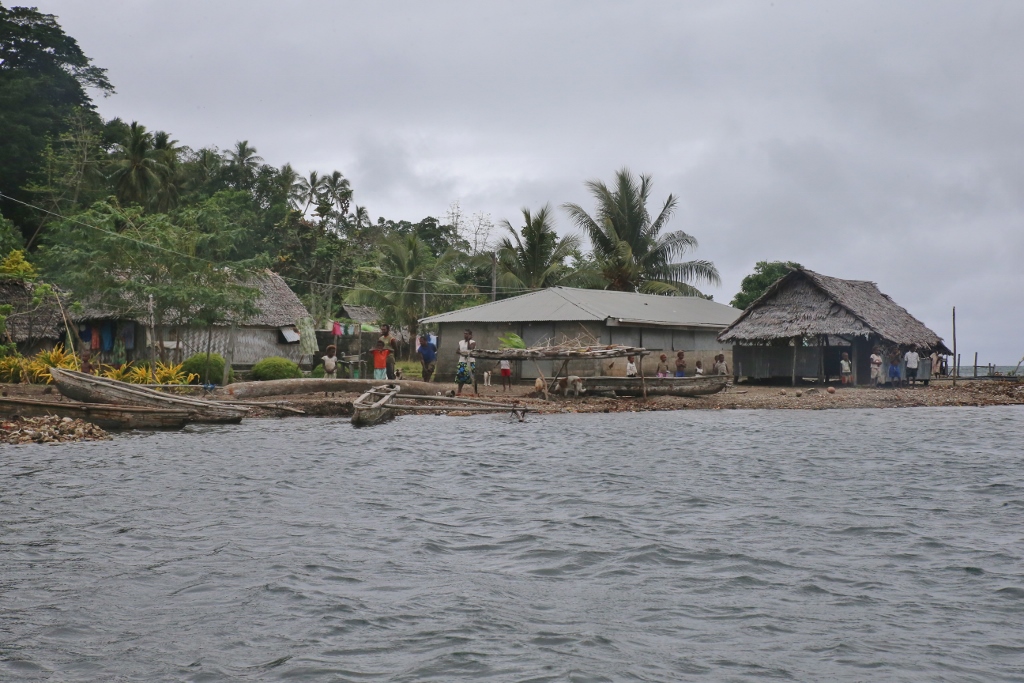
Joined by our friends from Arcturus II and Flour Girl, we made a trip to Avokh Island in the Maskelynes.
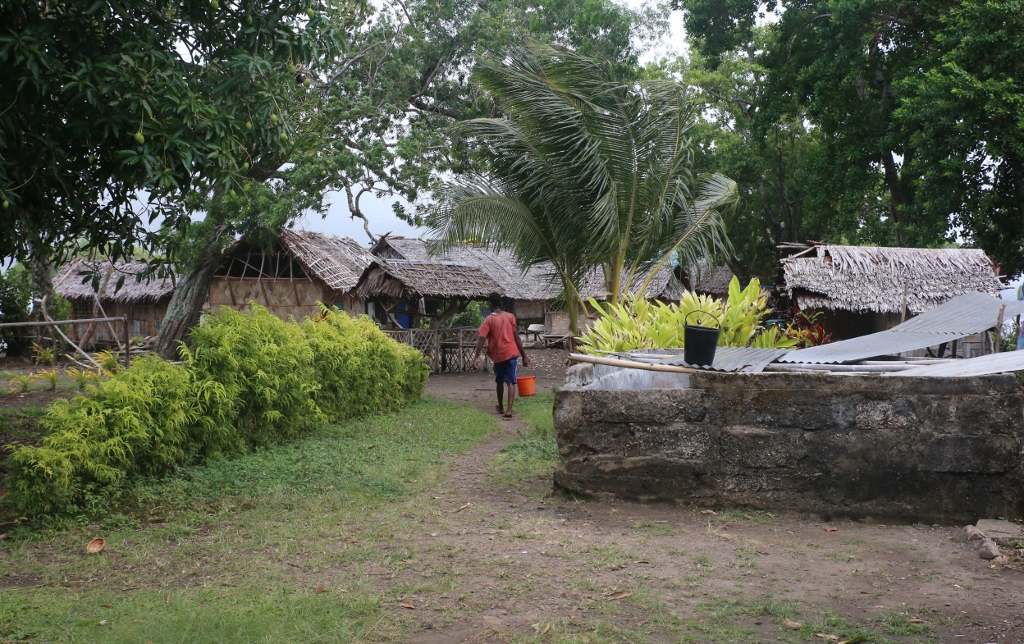
Fetching drinking water from the well. Villagers keep a few small fish in their wells who eat mosquito eggs and help keep malaria from spreading.

Clean laundry hanging under the eaves.

This was our first experience seeing Kastom Dancing by the Small Nambas.

Men and women dance separately and observe different rituals through their dance.

One of their special dances is the Bird Dance. The dancer on the left is the bird who swoops around the other dancers.

Leo, Zach, Khan and Jarah pose with the bird man, chief and some of the dancers.
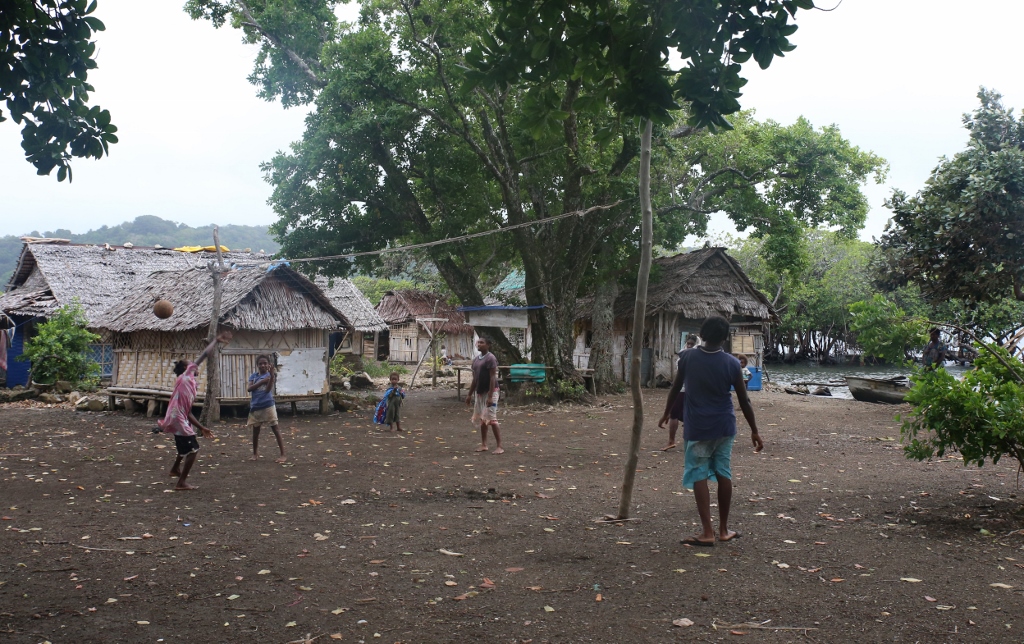
There was no school on the day we visited. Some of the older kids played volleyball.

Another colorful house.
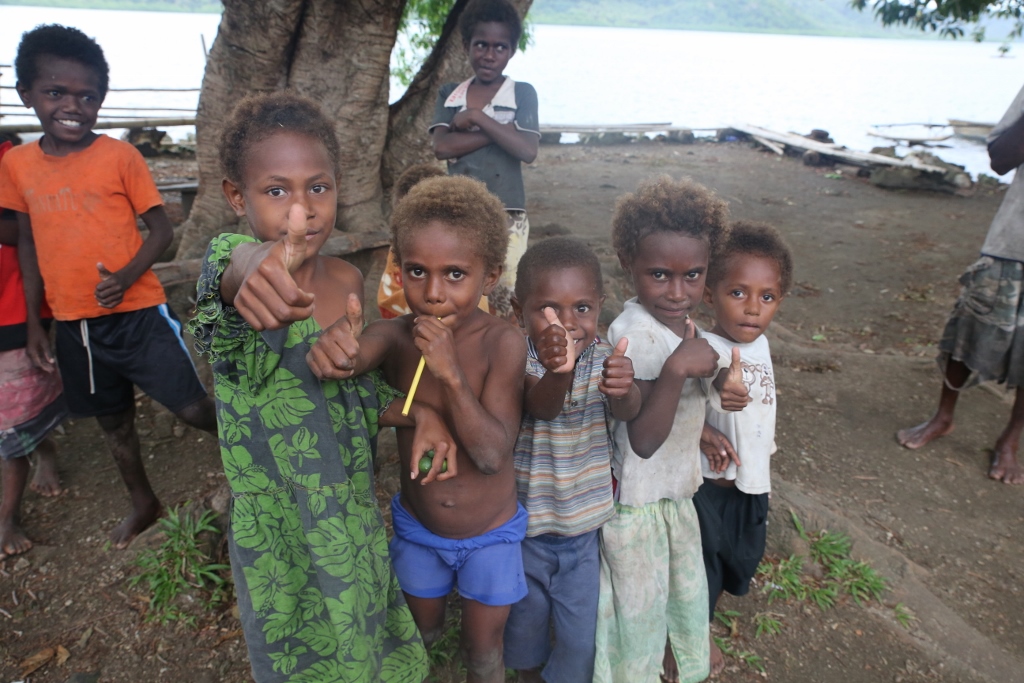
A troupe of kids followed us through the village.
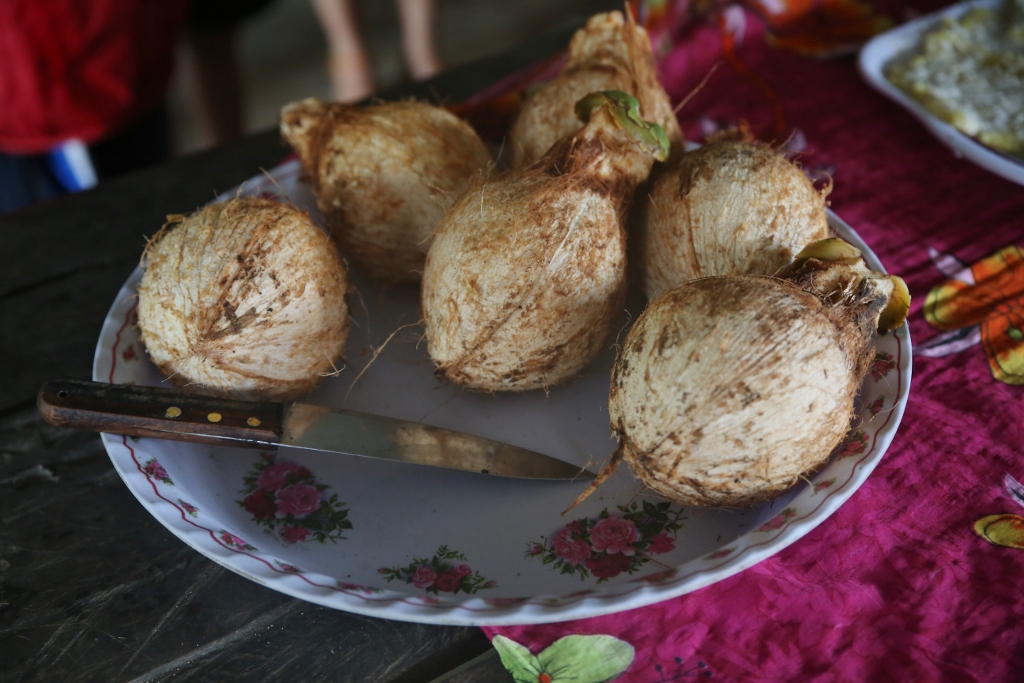
After the dancing, we were treated to a feast of local dishes. These are some fresh drinking coconuts.
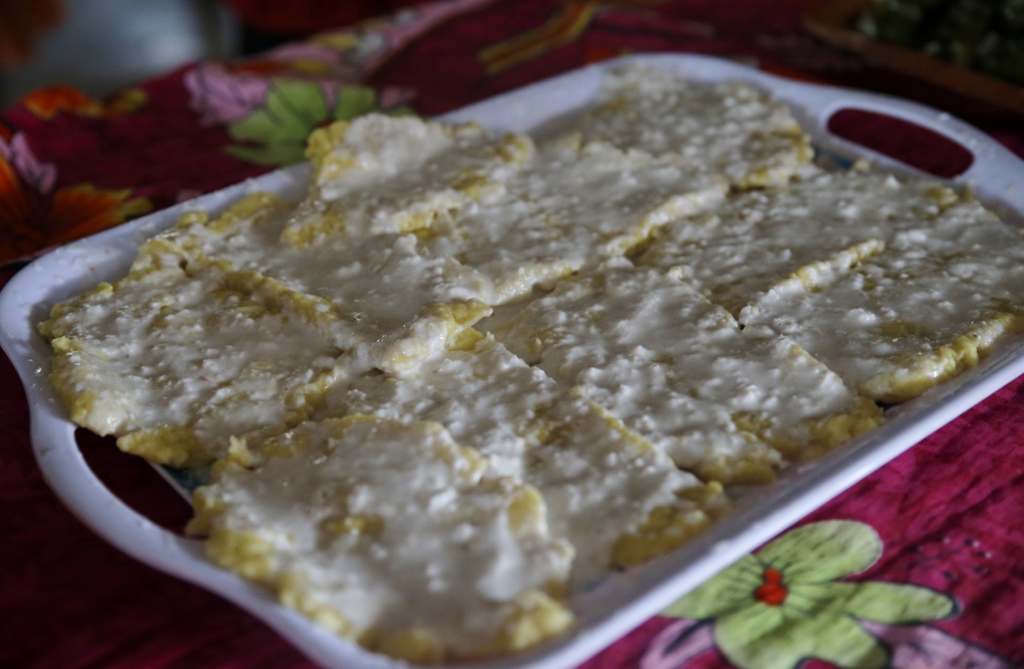
Manioc with coconut milk.

Island cabbage stuffed with cassava.

I can’t remember the name of these nuts, but they were tasty. You peel off the outer brown peel and just eat the meat.

Many villagers stopped to peek in through the window while we ate.

Saying our goodbyes.

This cutie loved seeing her picture on my camera.
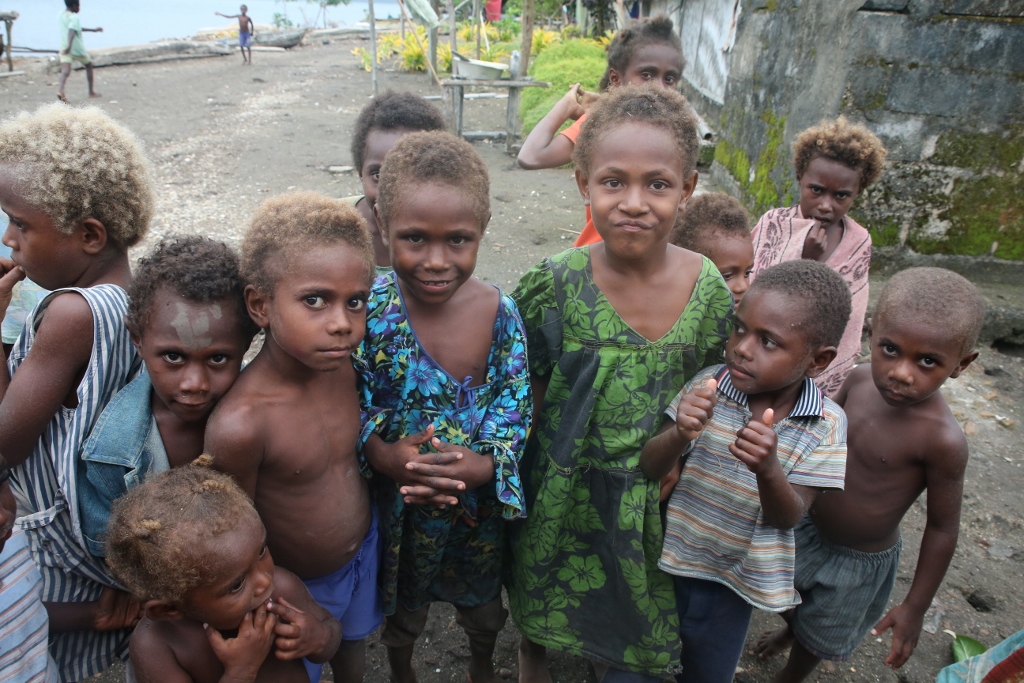
So did this crowd.

Leo and Hazel got a ride home in the kid dinghy courtesy of Kim from Flour Girl.

We were overwhelmed by the friendliness, hospitality and generosity of the villagers. Later that day, the chief stopped by with some mahi mahi lap lap, a traditional Vanuatan dish that his wife had made. What a delicious dinner!

One of the best parts of our time in the Maskeleynes was spending time with cruising families from Flour Girl in and Arcturus II. The kids loved playing together.

We hadn’t played Monopoly since our hotel in Dunedin, New Zealand last year, so the kids were thrilled when Zach brought it over.
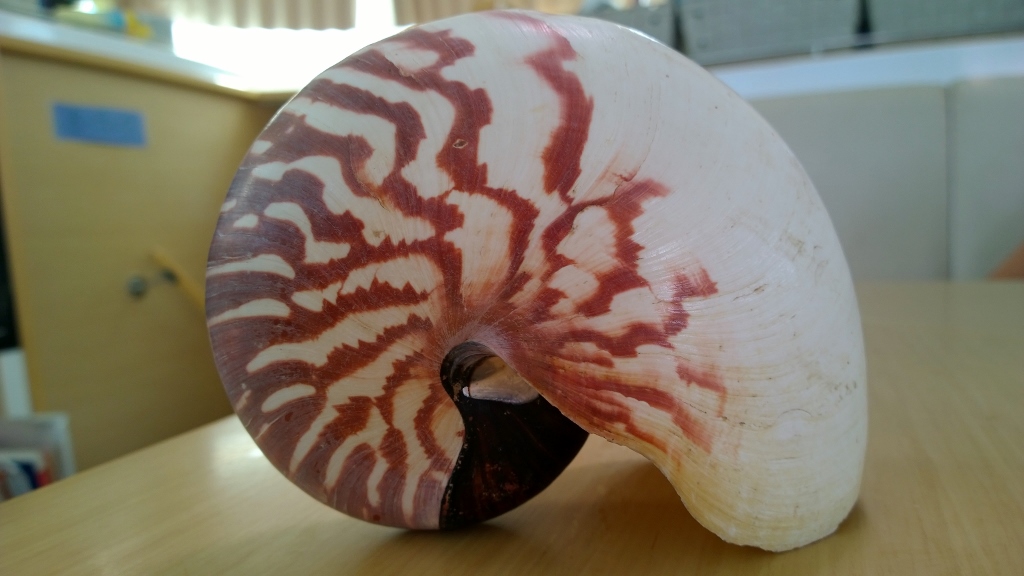
The kids also explored the beach and Leo found this gem.
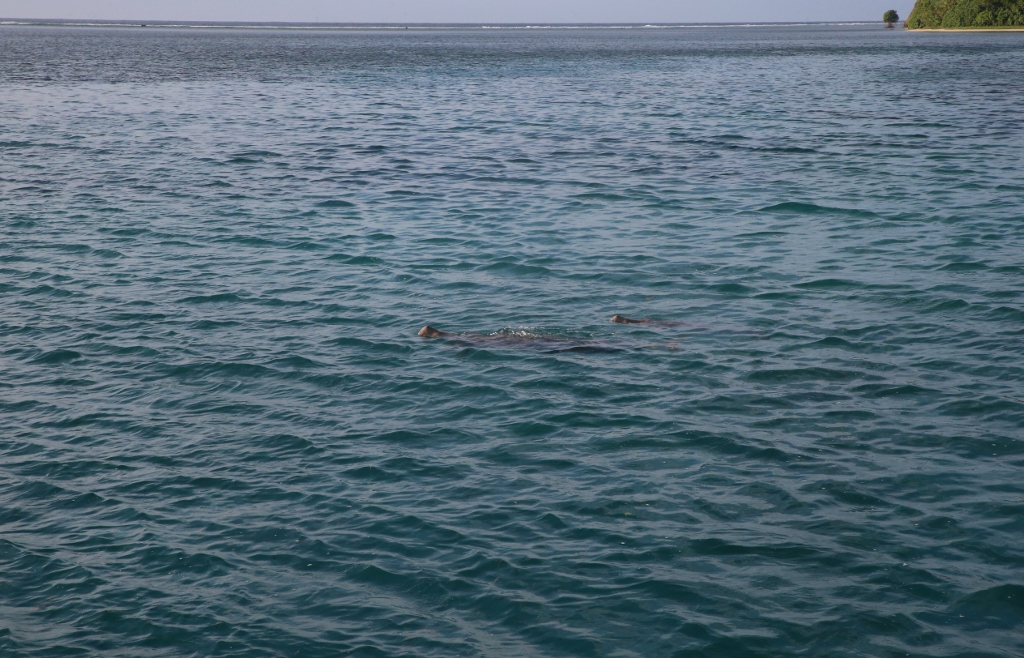
We had been on the lookout for dugongs, cousin of the manatee that has a dolphin tail, who live in this area of Vanuatu, but they kept evading us. Finally on our last morning in the Maskeleynes a mom and baby swam by Sophie.
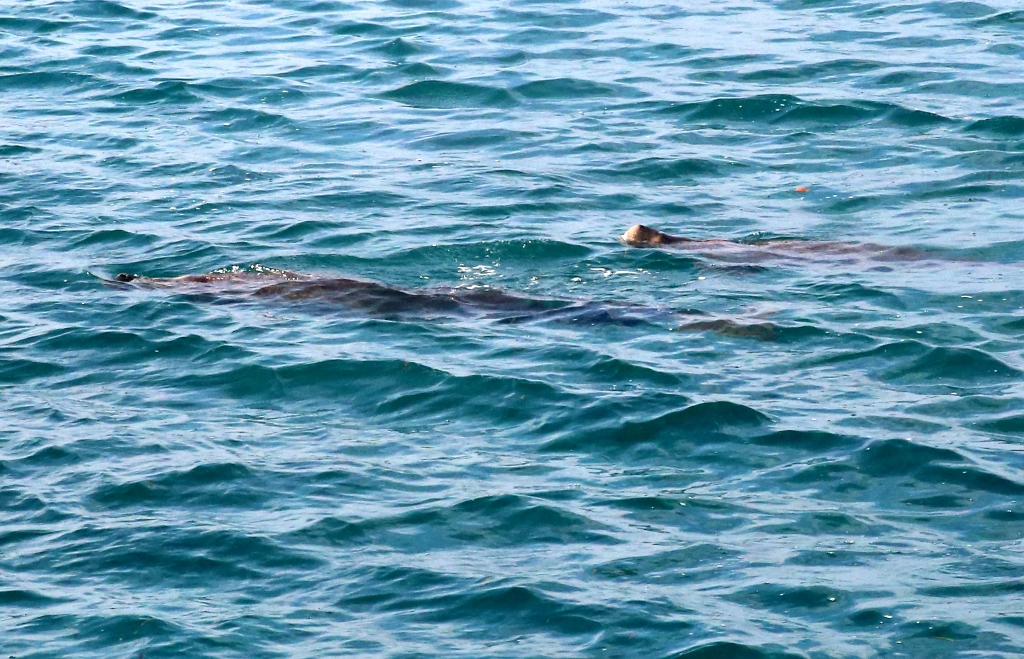
They didn’t get very close but we were excited to finally see some.

Looking across the Maskeleynes from the northeast channel.

On our way north we caught another Mahi Mahi and Jamie tried out his new fish immobilization technique. It worked!
Malekula, Wala and Rano
From the Maskeleynes, we proceeded north to an anchorage just inside Wala Island, on the west coast of Malekula Island.

As soon as we anchored, a man paddled up asking if we wanted him to catch us some coconut crabs. We said ok and agreed he would return in the morning. Here’s what he brought back.

They made a delicious breakfast and lunch!
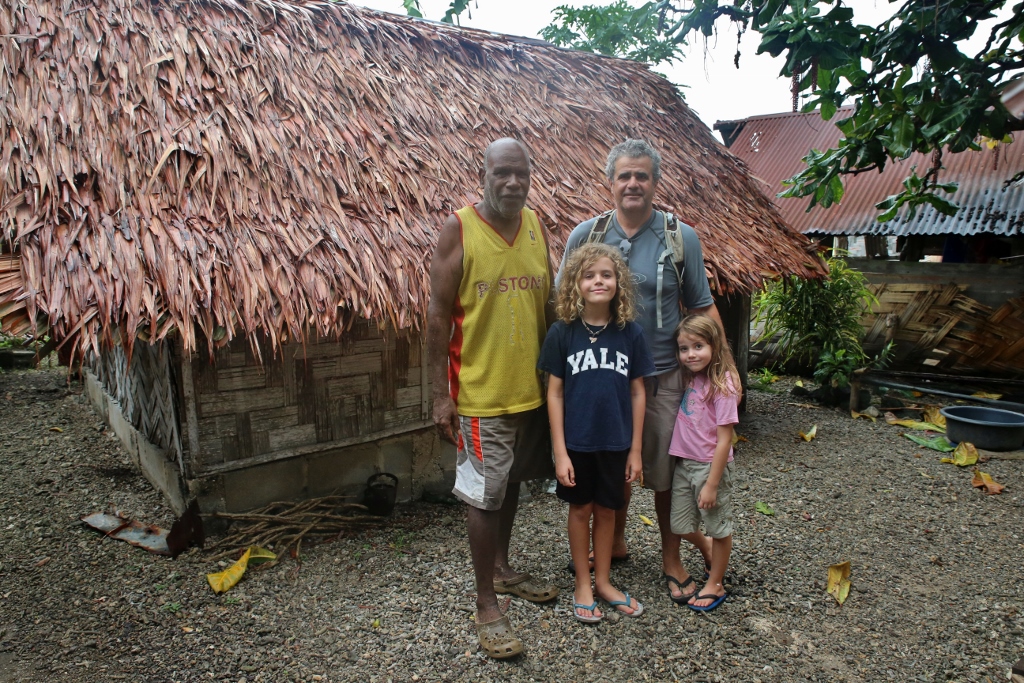
Standing outside his house with George, our local guide.
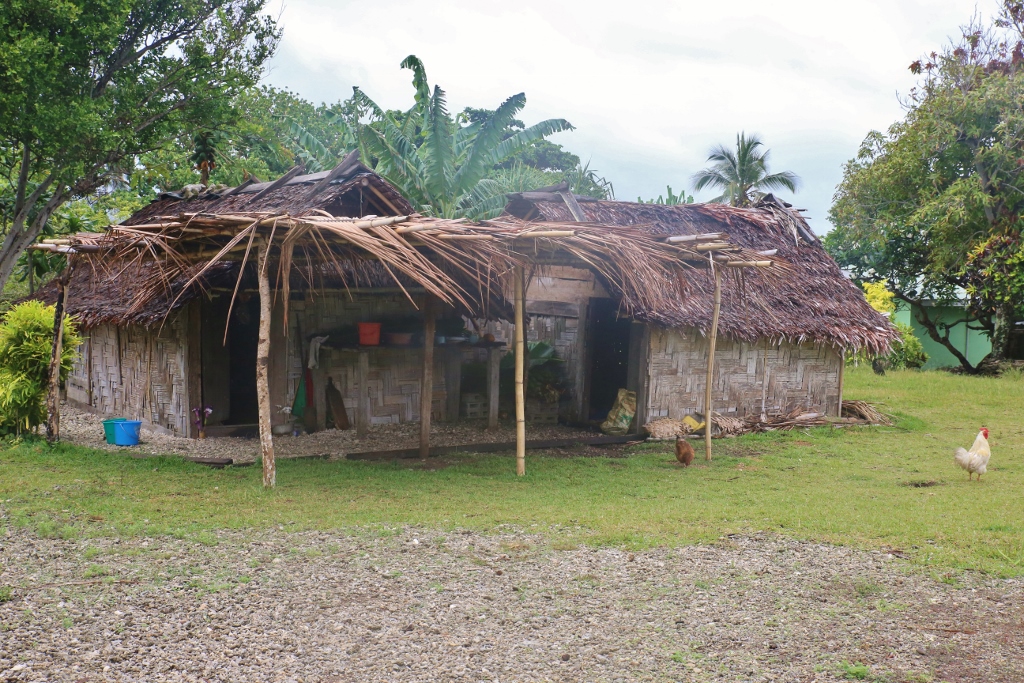
House on Wala. Chickens ran all around.

The women were hard at work making palm frond roof tiles.

On the beach at Wala.
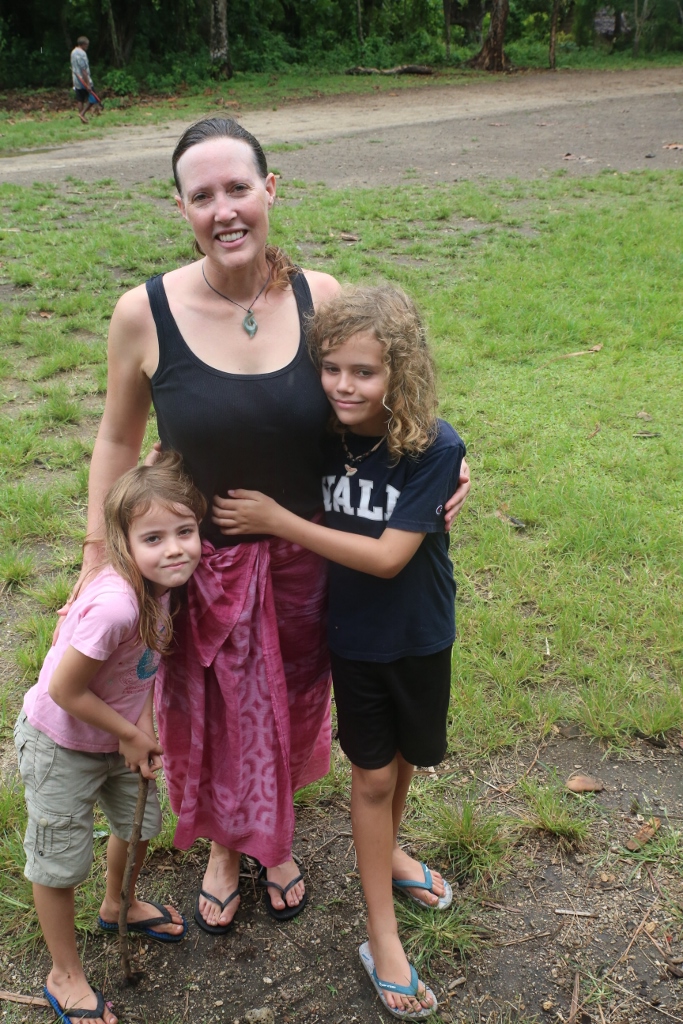
The next morning we visited a village on Malekula.

Fetching water during a rainstorm.

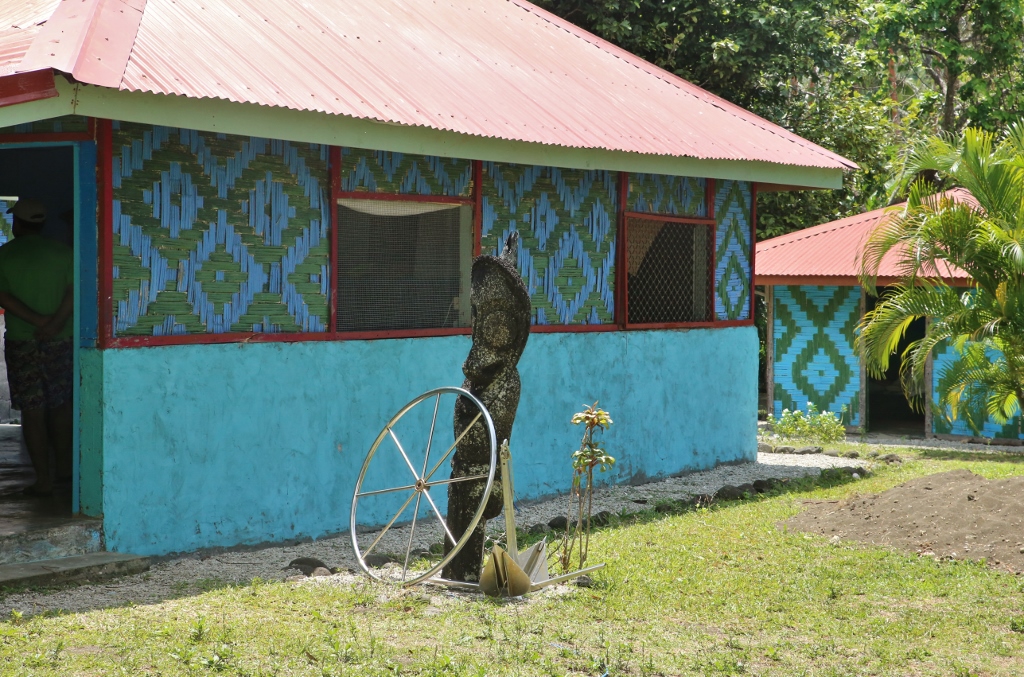
The blue and green house belongs to the school teacher.

Getting ready for a Small Nambas dance.
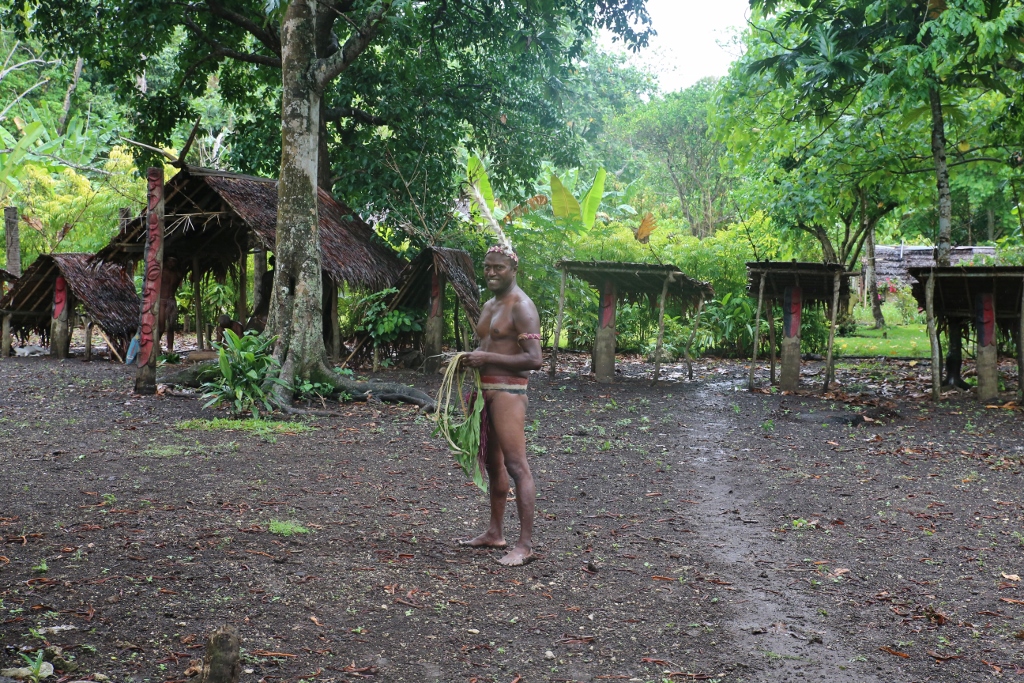
Raymond, the chief prepares for kastom dancing.

Small Nambas.

The women perform a song, stamping and passing fruit on the ground to the beat.

Another Small Nambas dance. The little kids did every step of the routine.

Each village does a local variation of the bird dance.

The women had beautiful singing voices.
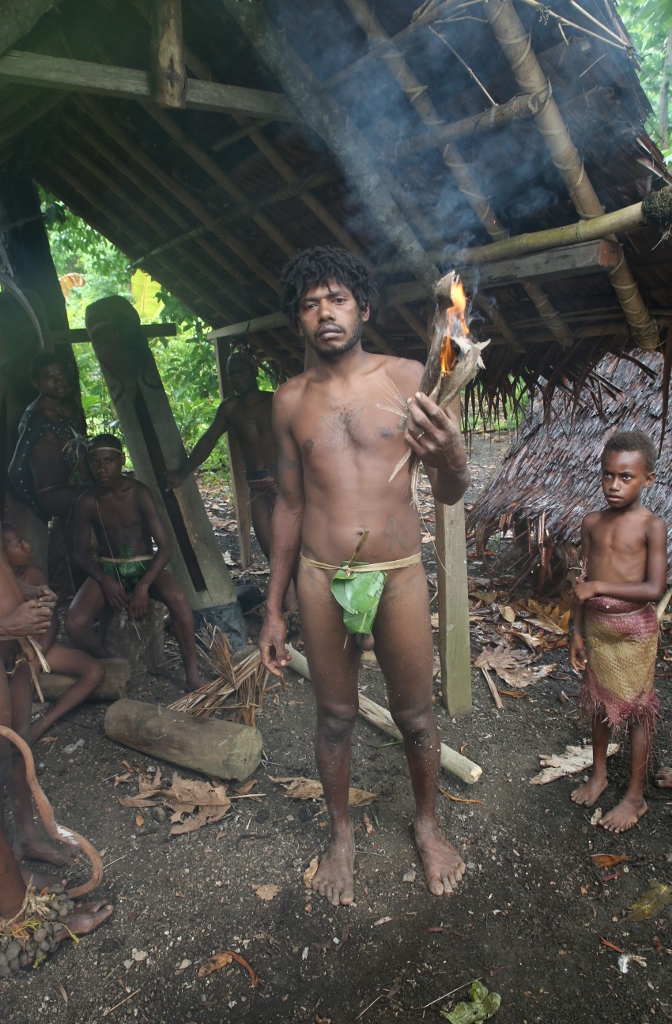
Fire making demonstration.
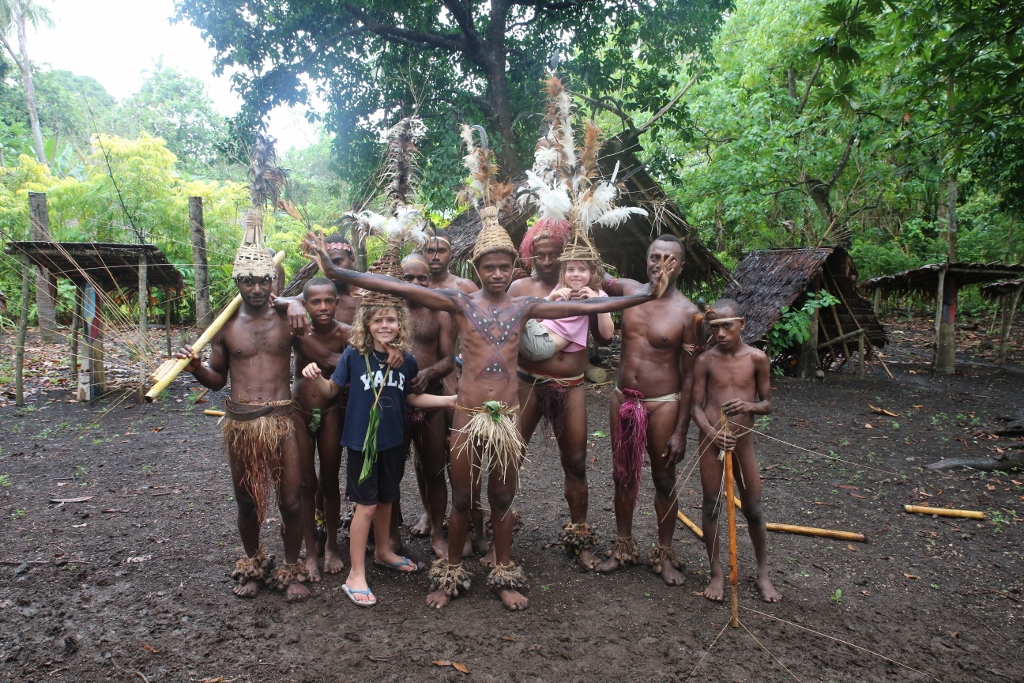
Fancy hats after the performance.

The ladies.

Back in the village on Wala, George’s daughter Ley gives the kids a lesson in sand drawing.

Leo’s bird masterpiece.
Hazel puts finishing touches on a canoe.

We sailed to the west coast of Malekula to visit a spirit cave. It was a short walk up the road from the beach to the chief’s house to ask permission.

Main cave entrance.

The first pat of the cave is open to the sky.
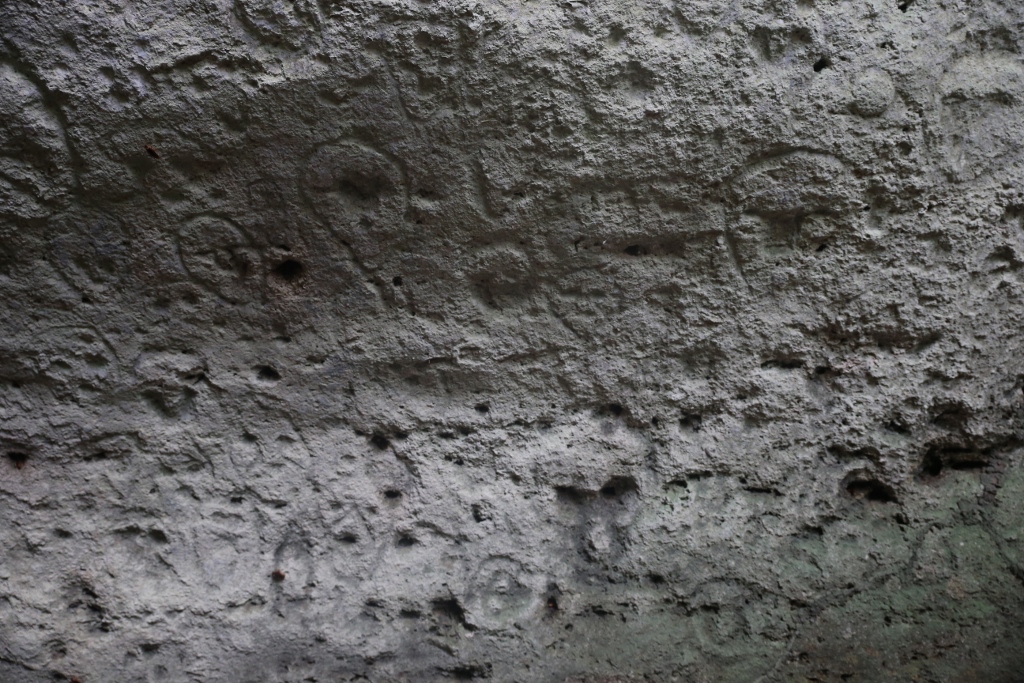
Faces of the dead are carved along the walls.
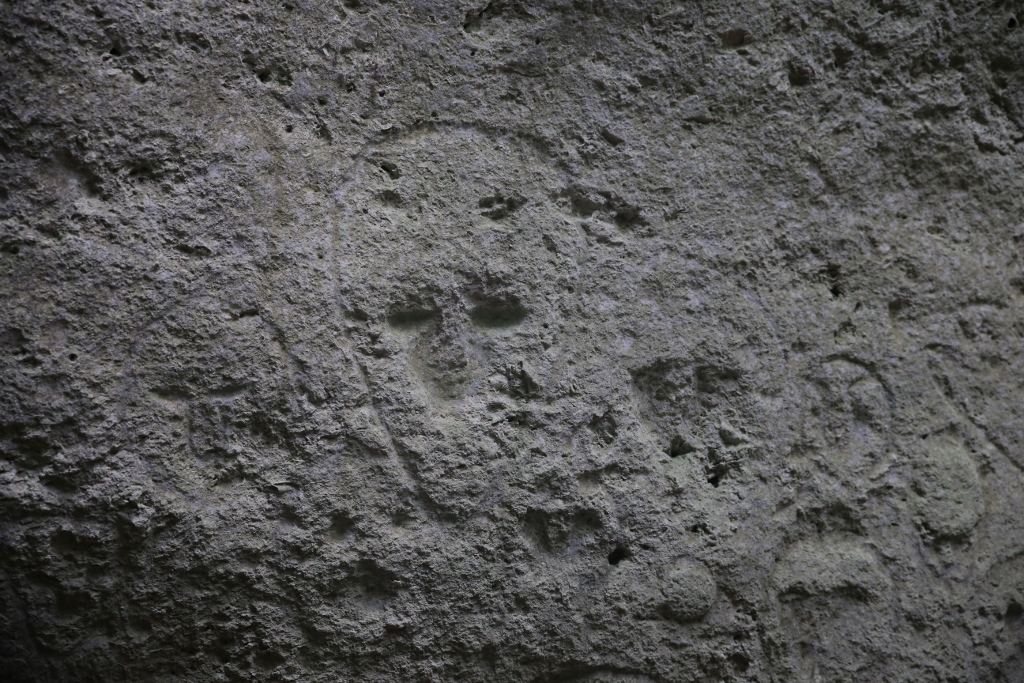
The oldest carvings are more than 2,000 years old. Our local guide claimed that this is the oldest cave on Vanuatu, where the first human inhabitants arrived in Vanuatu landed and took shelter, The chief’s family still uses the cave for protection during cyclones.

Hazel got a little scared and wanted to wait in the light while Leo and I explored inside.

Anchored off Malekula.
Espiritu Santo
Our next stop north was the island of Espiritu Santo, or Santo for short. We moored at the Aore Resort for the first couple nights and then swapped to an anchorage by the Beachfront Resort in Luganville.
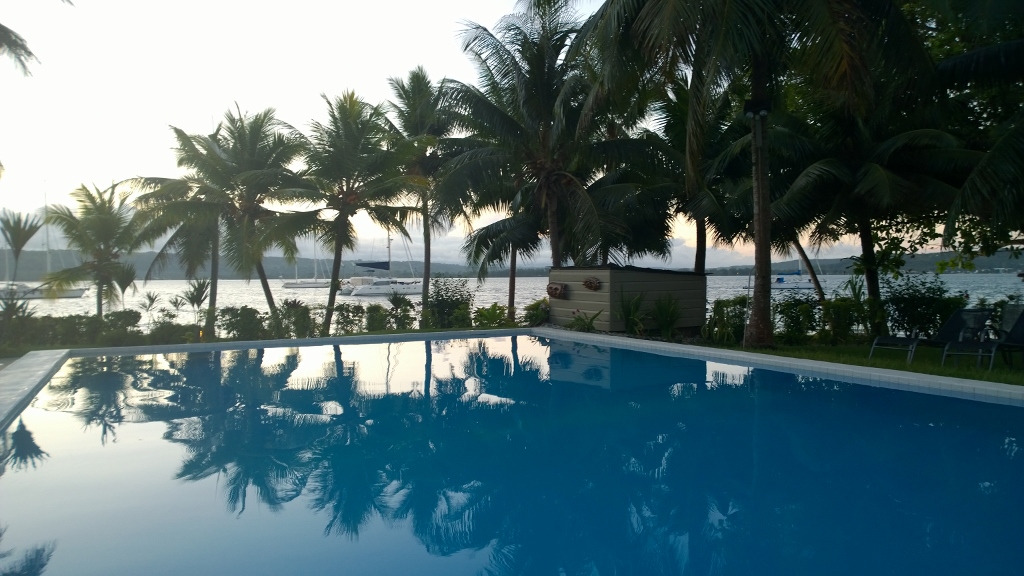
Aore pool.
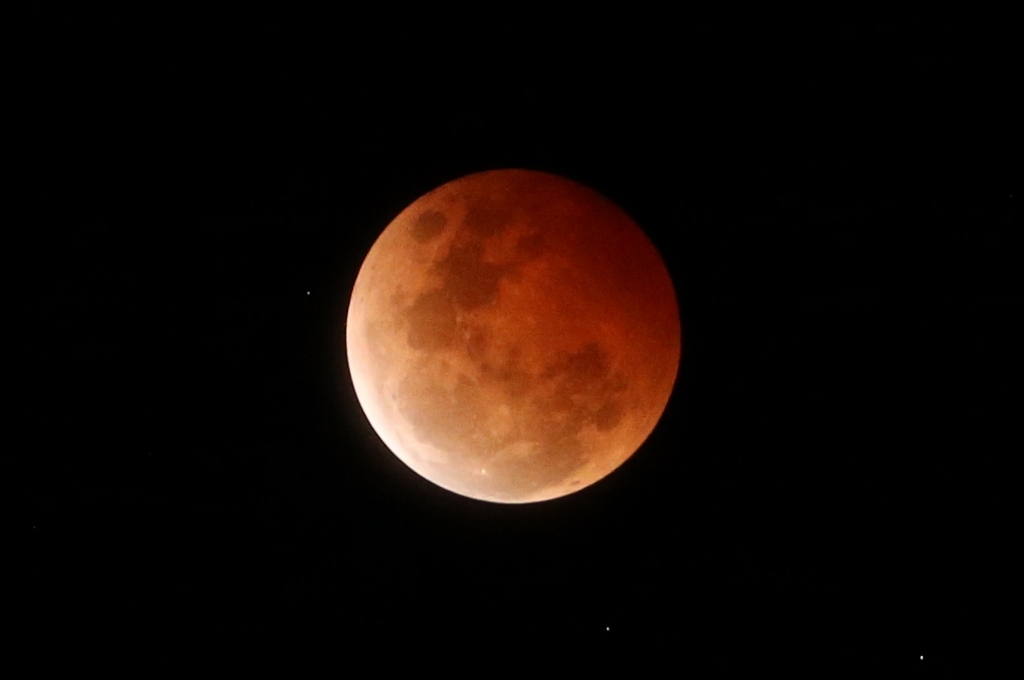
We were also at Aore for the full lunar eclipse. Leo joined me for a spectacular beach photo shoot.

Approaching the full eclipse.
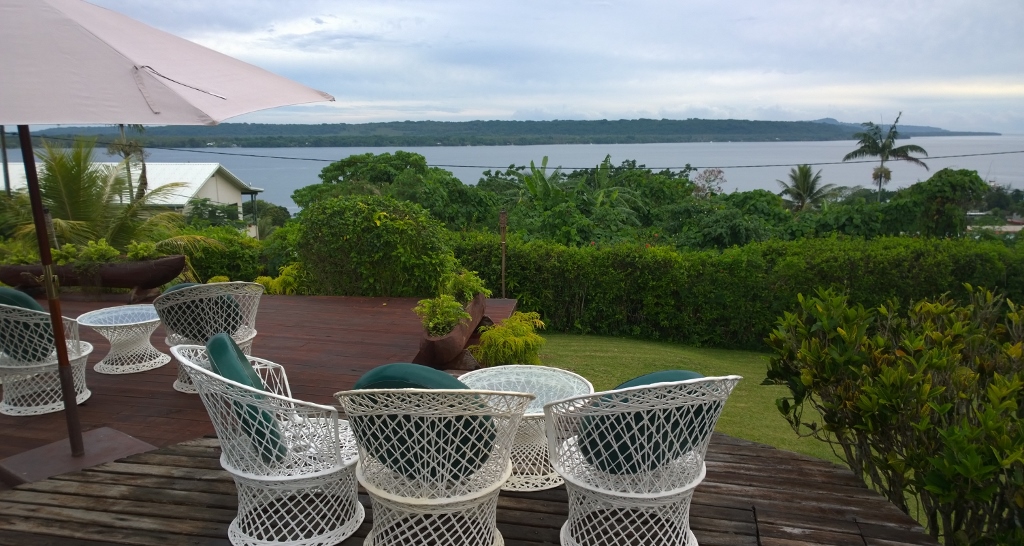
View from Deco Stop, a surfer resort on the hills above Luganville.
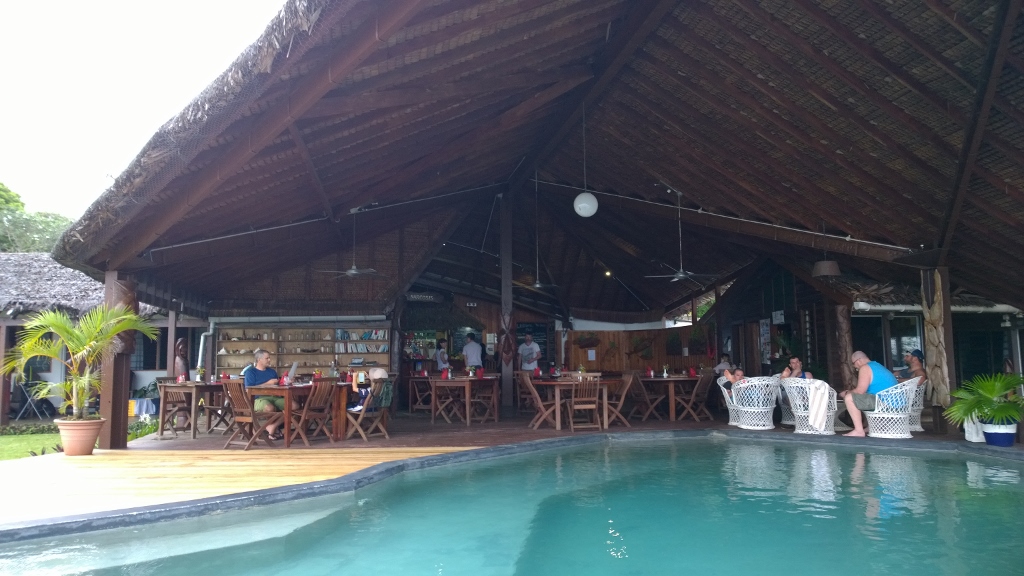
Deco Stop restaurant.

This looks fancy, but was one of the most delicious margaritas we’ve ever tasted.

Cheers!
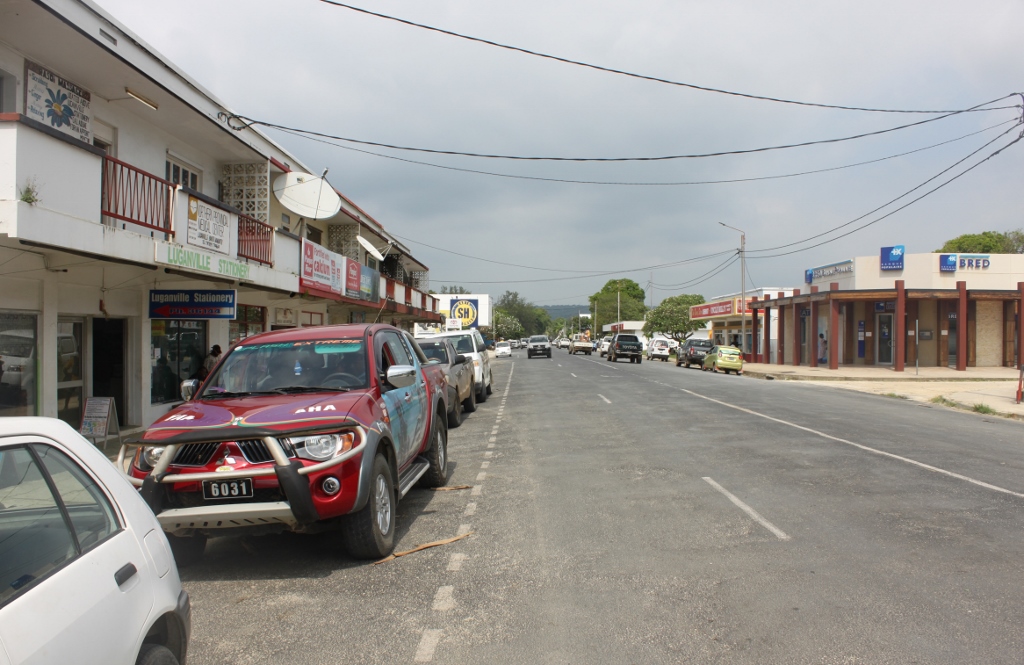
Luganville resembled other small cities we’ve seen across the pacific but with a four lane road.
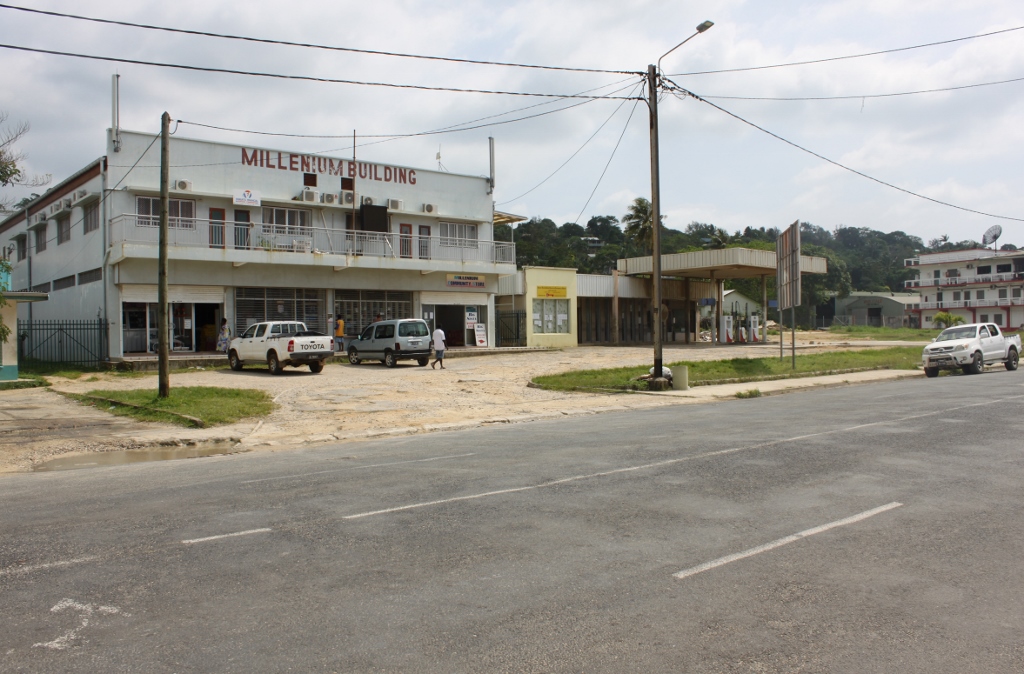
US troops built the wide main road during WWII so they could drive through with four vehicles across.
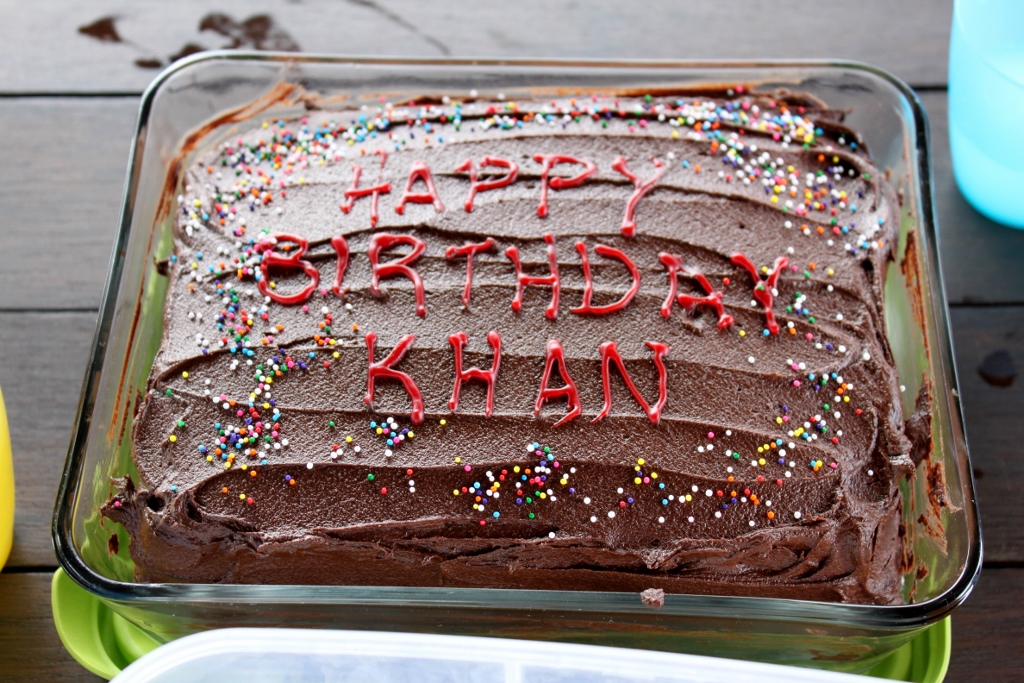
The kids had fun celebrating Khan from Arcturus II’s 9th birthday with a pool party at the Beachfront Resort.

Army soldiers, always a favorite.
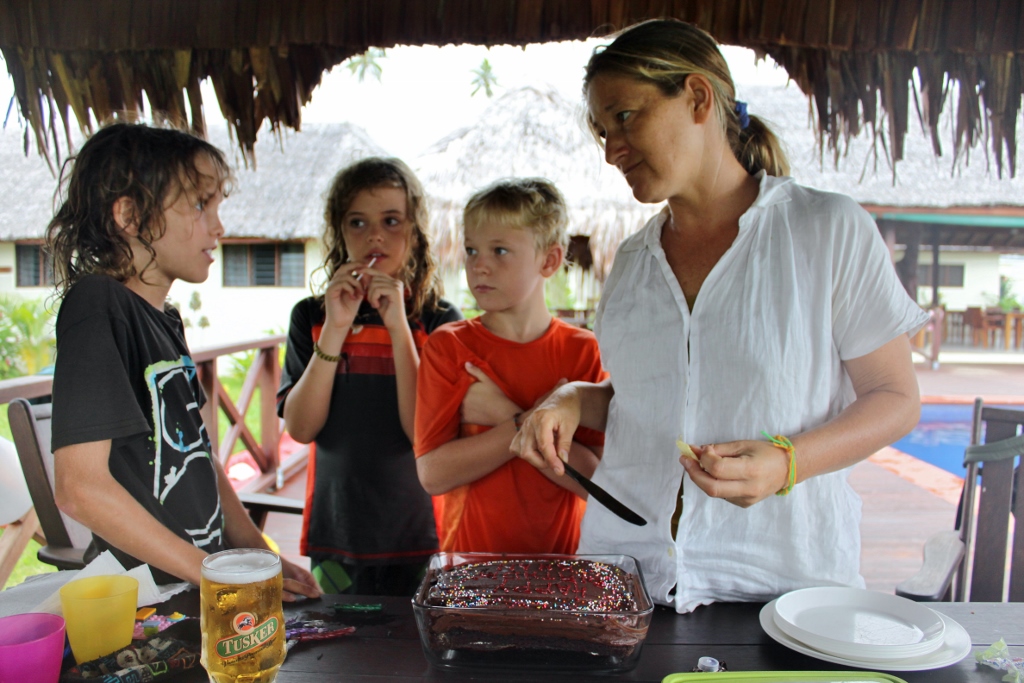
Kim from Flour Girl baked an outstanding chocolate cake with coconut cream filling.
Millennium Cave
One of the highlights of our entire journey was visiting the Millennium Cave on Santo. IT turned out to be a much more aggressive hike than we anticipated, but we had an incredible time. The tour is run by the local village near the cave and they were well organized and professional.

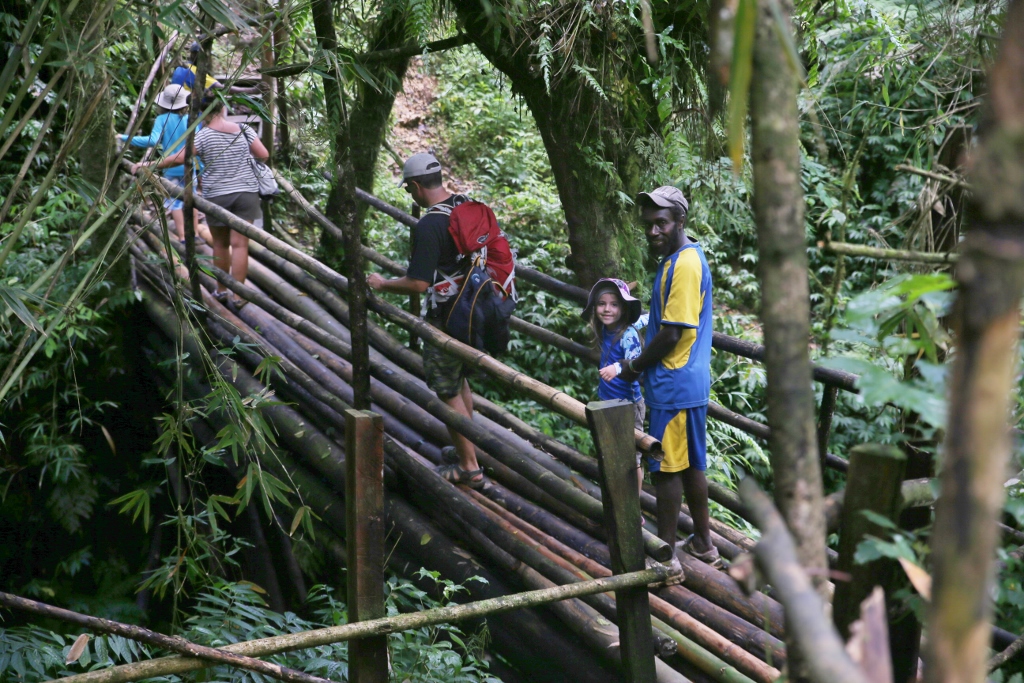
Crossing the bamboo bridge.
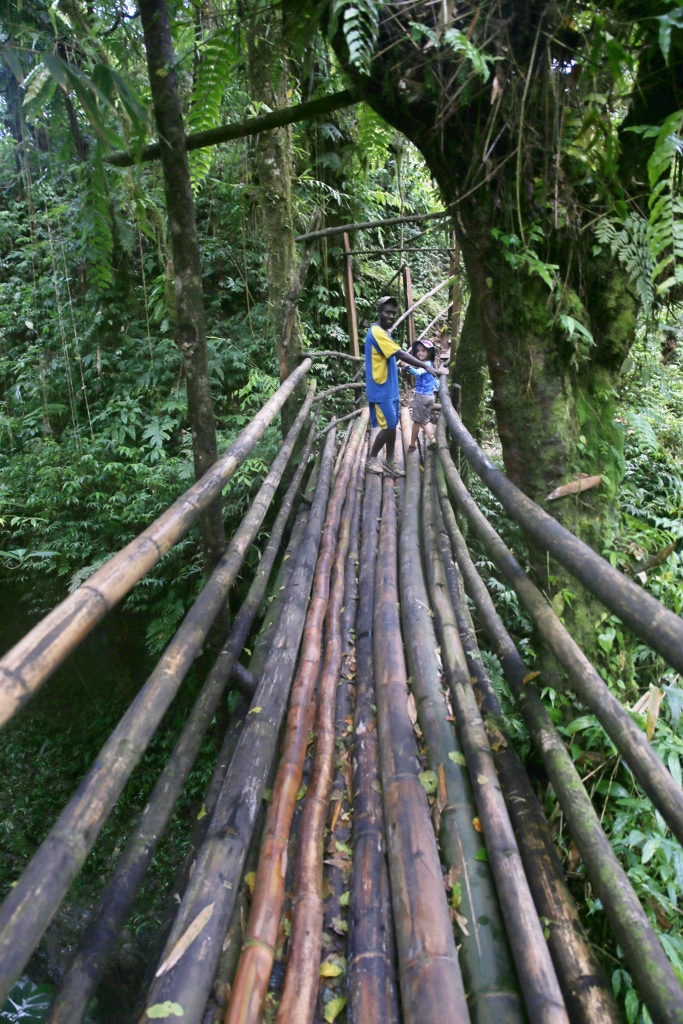
Each kid had their own personal guide.
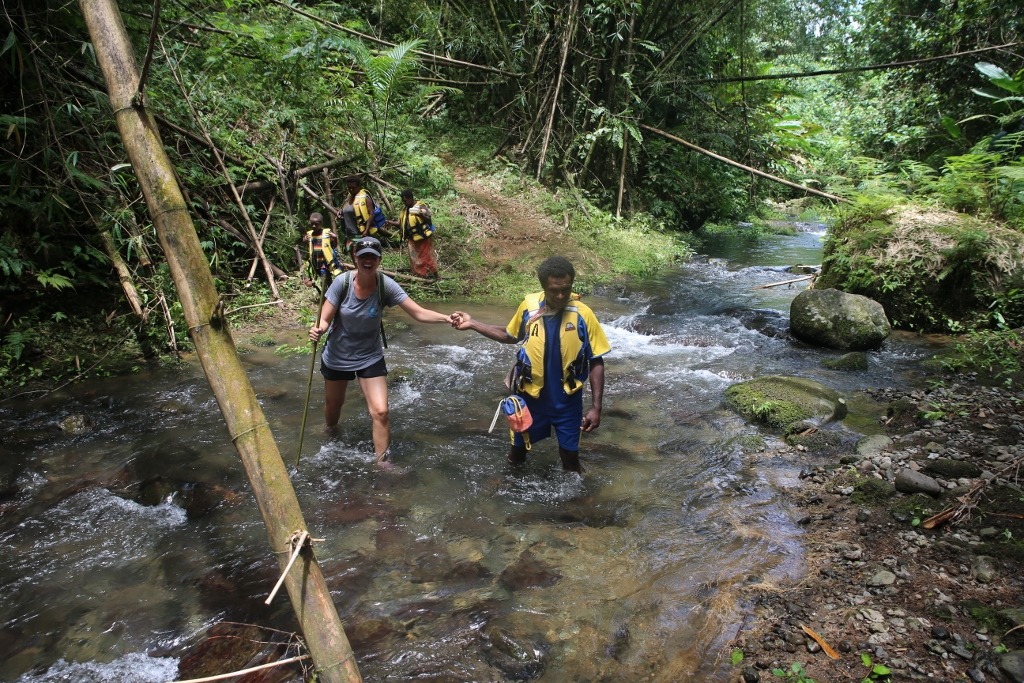
Crossing one of many streams. We joined fiends from Morrigan for the cave tour.

It’s customary for everyone to have their face painted, symbolizing birds, bats, rocks and more, before entering the cave.
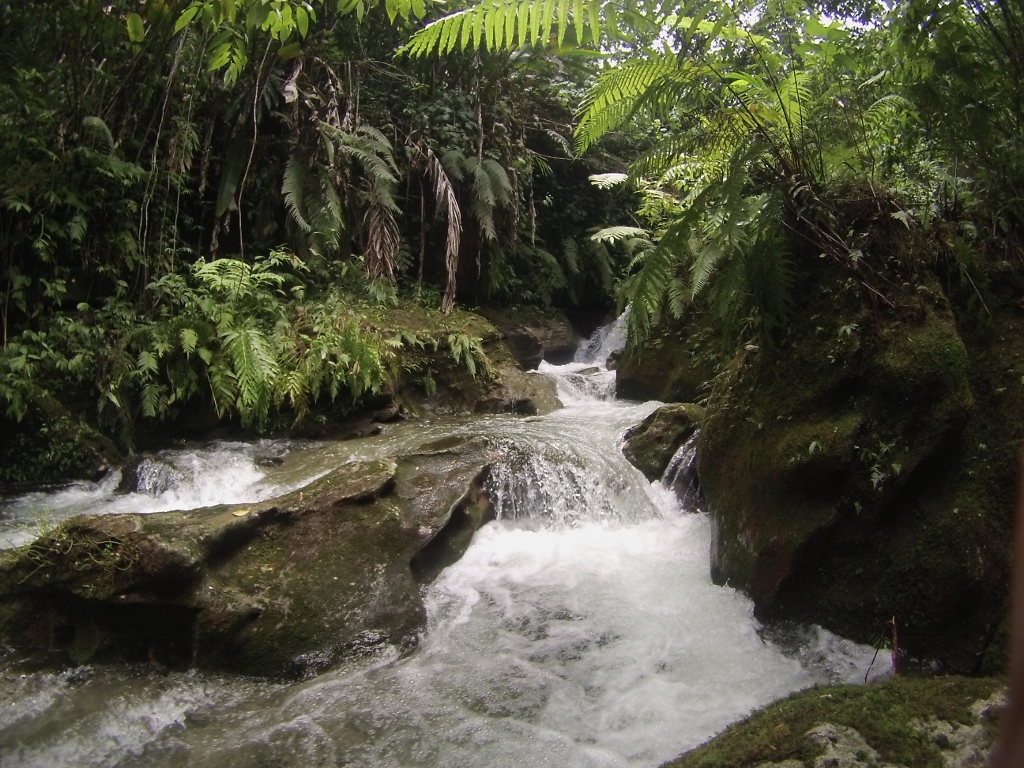
We passed so many cascades like this one.

Ready for the cave.
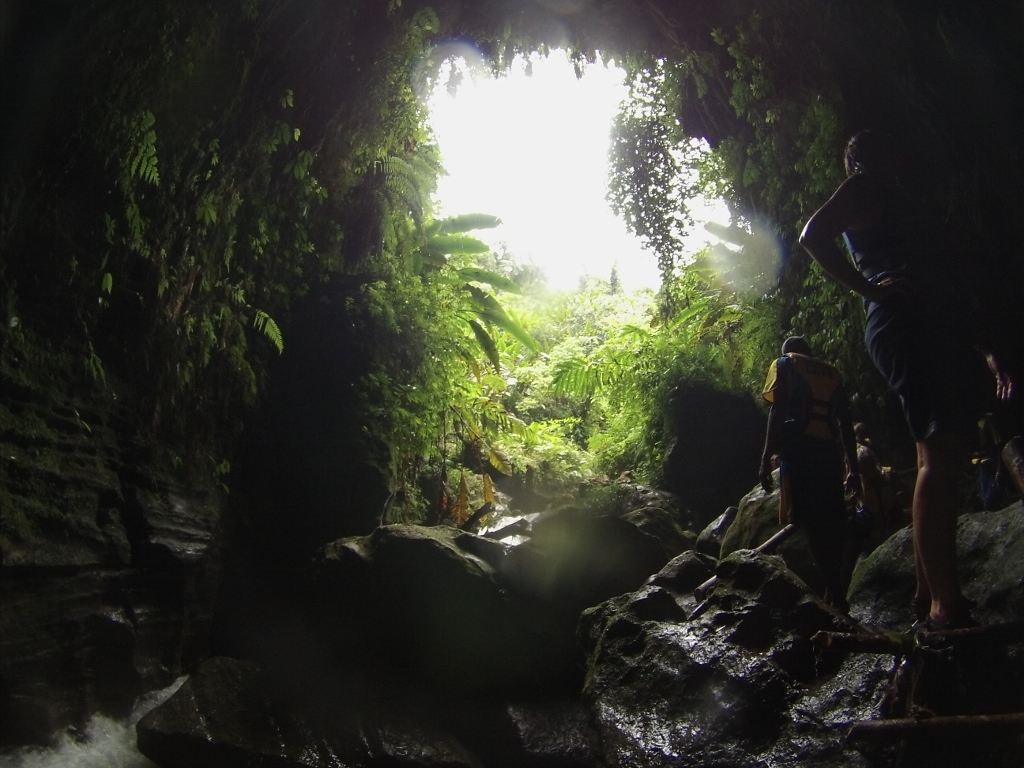
Looking back up through the cave entrance. It had started to rain by the time we stepped into the knee to thigh deep stream and we all wondered how much deeper the water might get.
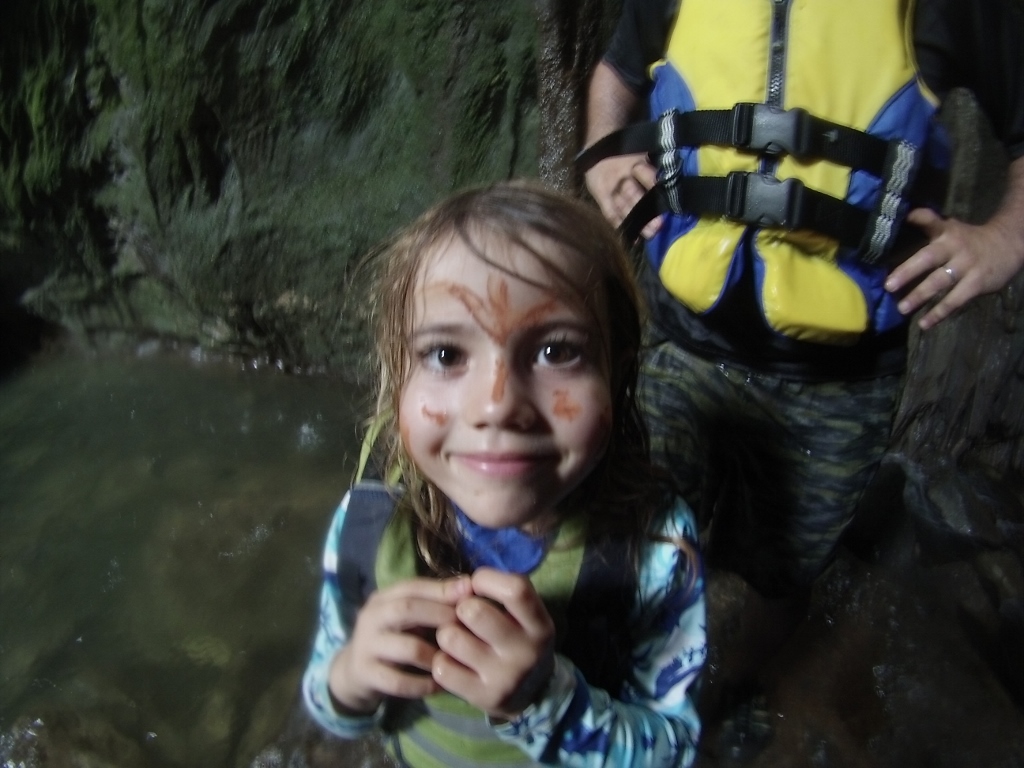
Our happy little fish. In the black tunnel Hazel kept trying to escape her guide so she could splash through rapids and slide down boulders.
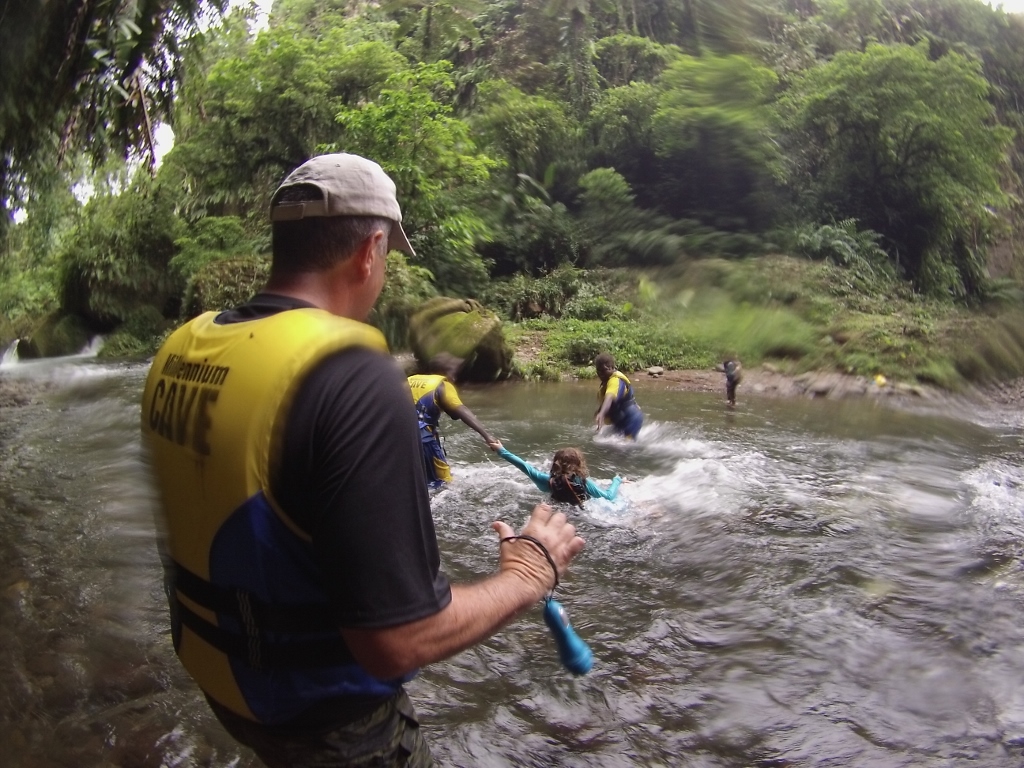
On the other side of the cave, the rain continued and our guides asked us to pick up the pace due to the threat of severe flooding.

The water level rose quickly and we began taking a higher route through the canyon. I was so thankful for the chains and foot scoops cut into the slippery green rocks.

Beginning of the river swim.
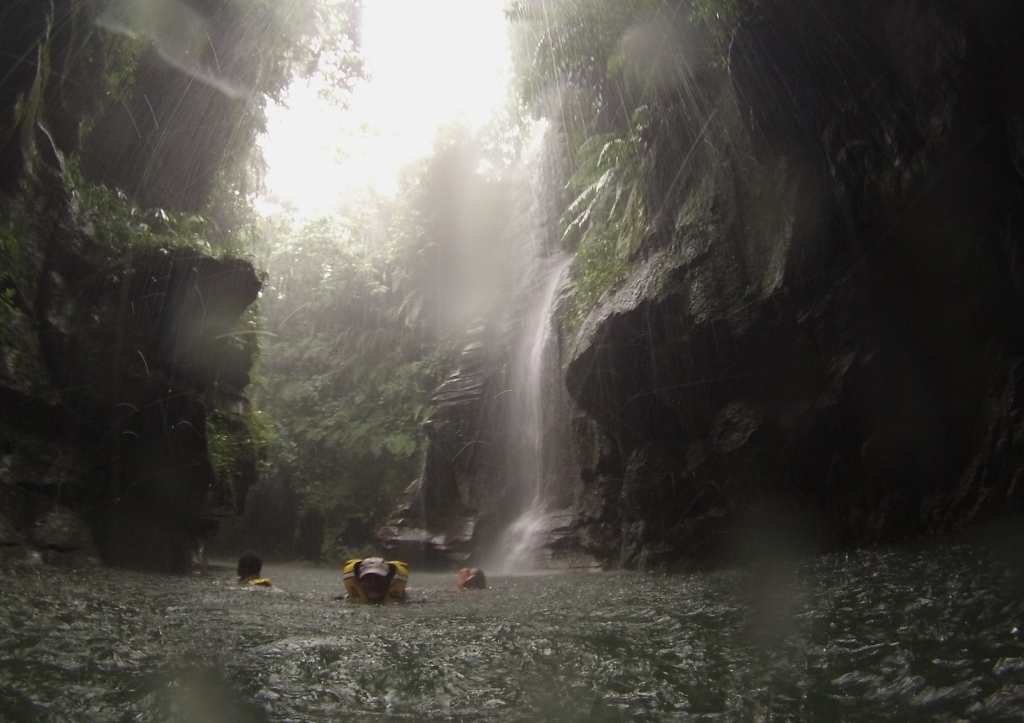
The torrential downpour made our lazy river float more of an aggressive rapids ride, but we loved the waterfalls streaming down all around us.

Nothing better than riding piggy back across the water.

The last portion of the trek was a twenty minute climb out of the canyon up ladders like this.
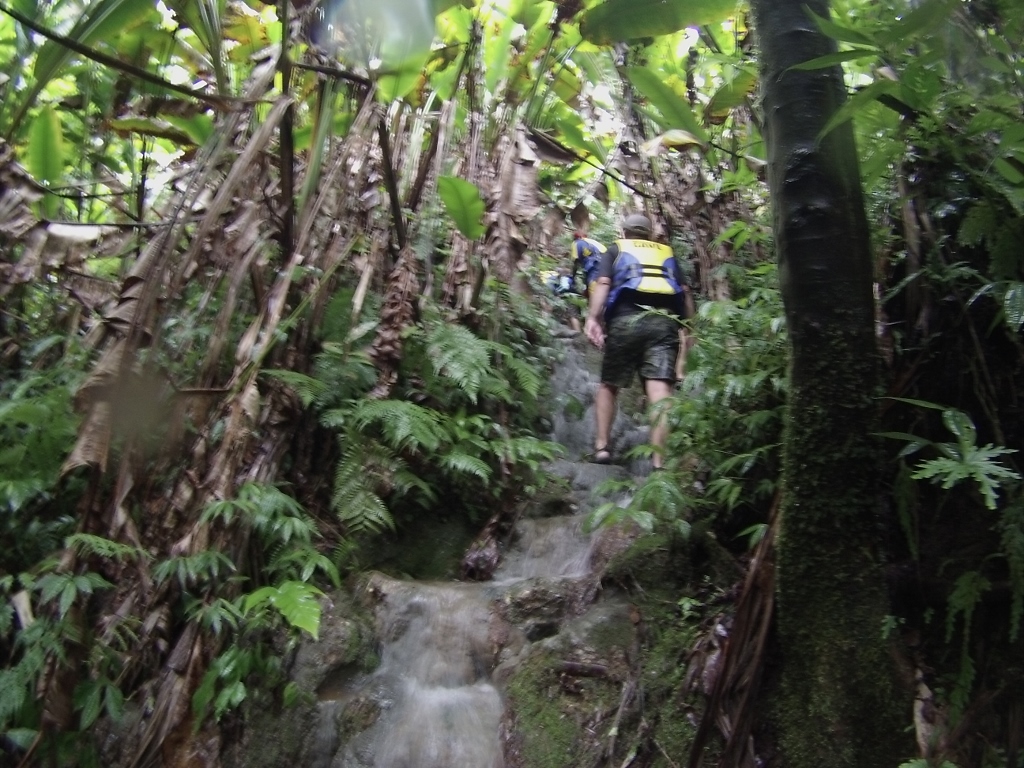
We also hiked up waterfalls.

Hazel’s guide made her a fairy rain hat.

Leo’s rain hat.
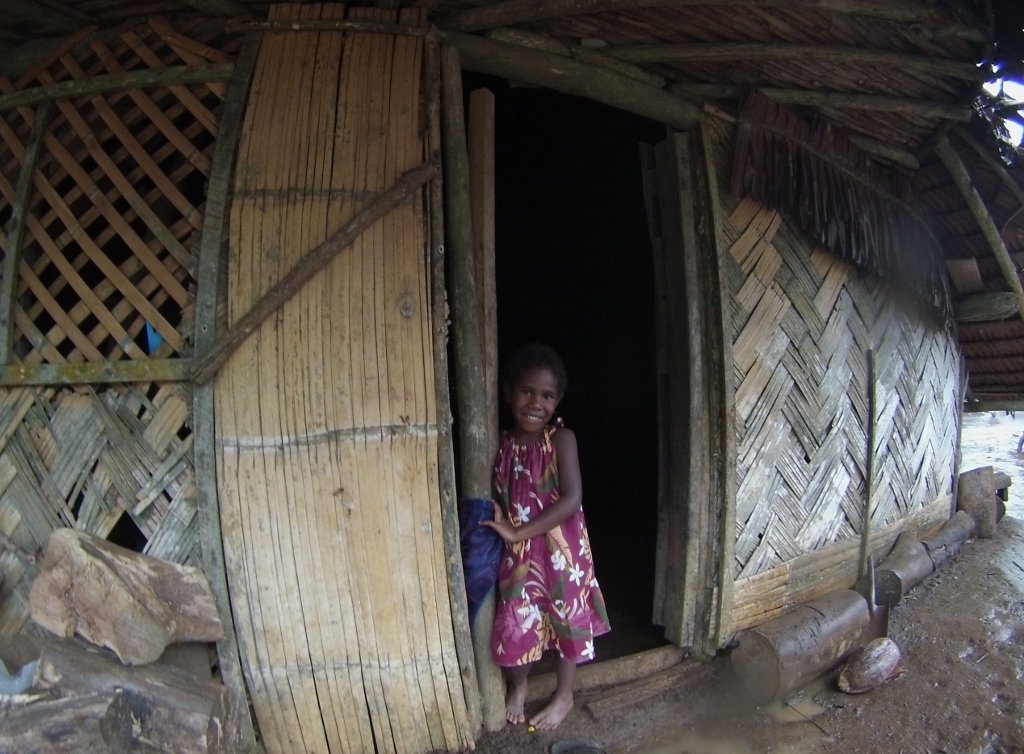
Smiles in the village.
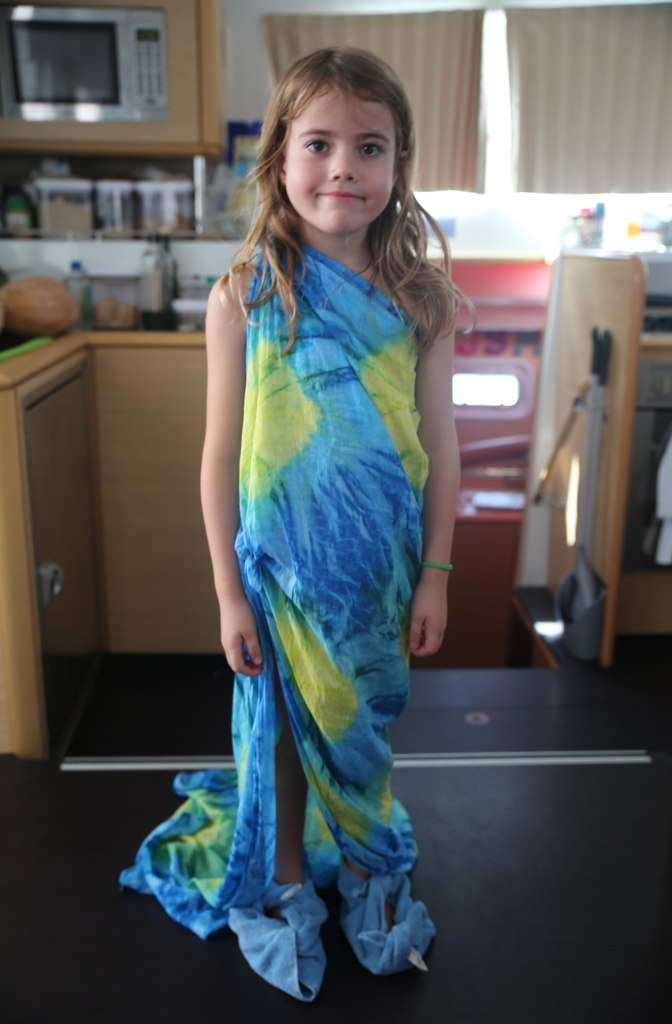
Another big milestone for us in Vanuatu was that Hazel lost her first tooth. She wrote a lovely note to the tooth fairy, who managed to find us here on Sophie, and left her 1,000 vatu along with a cheery reply. Tooth fairies write in very small letters. Hazel used the money to buy her first pareo at the village market following our hike to the Millennium Cave. She spent hours designing various outfits with it for the rest of the day. Note, blue rags make excellent shoes. And they match!
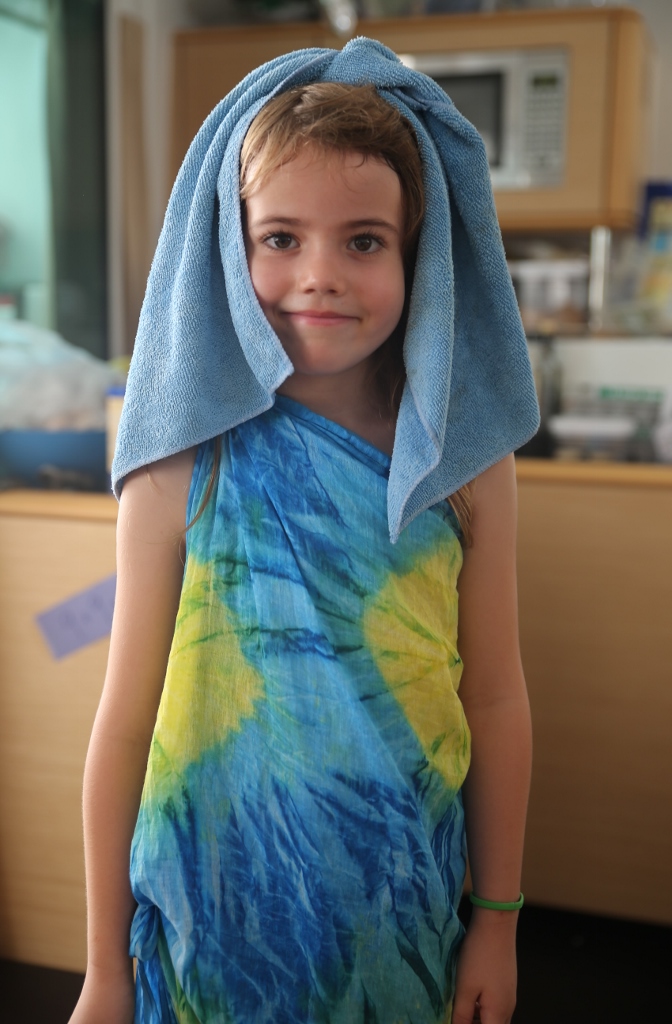
Modeling another fashion sensation with her new pareo.
Million Dollar Point
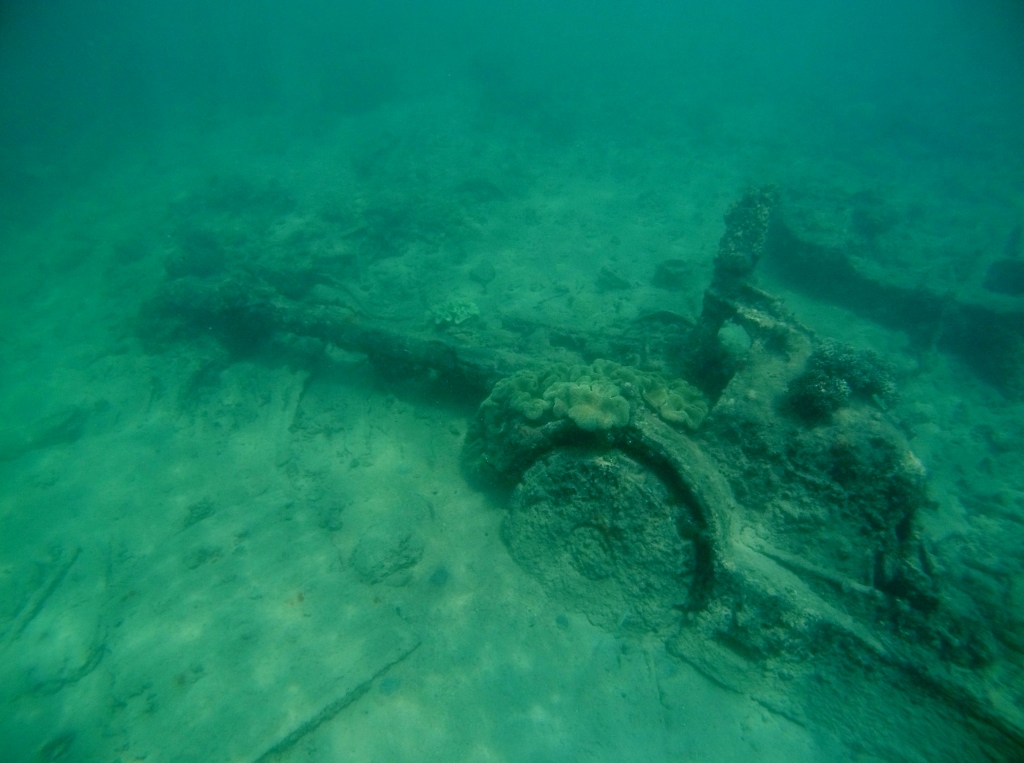
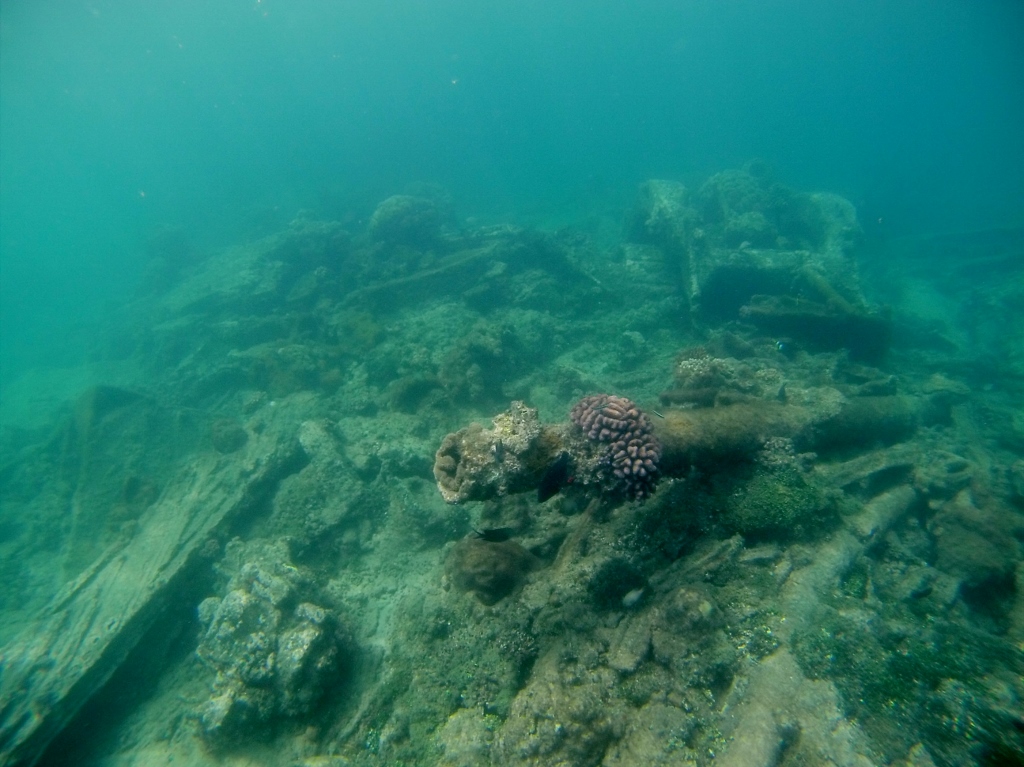
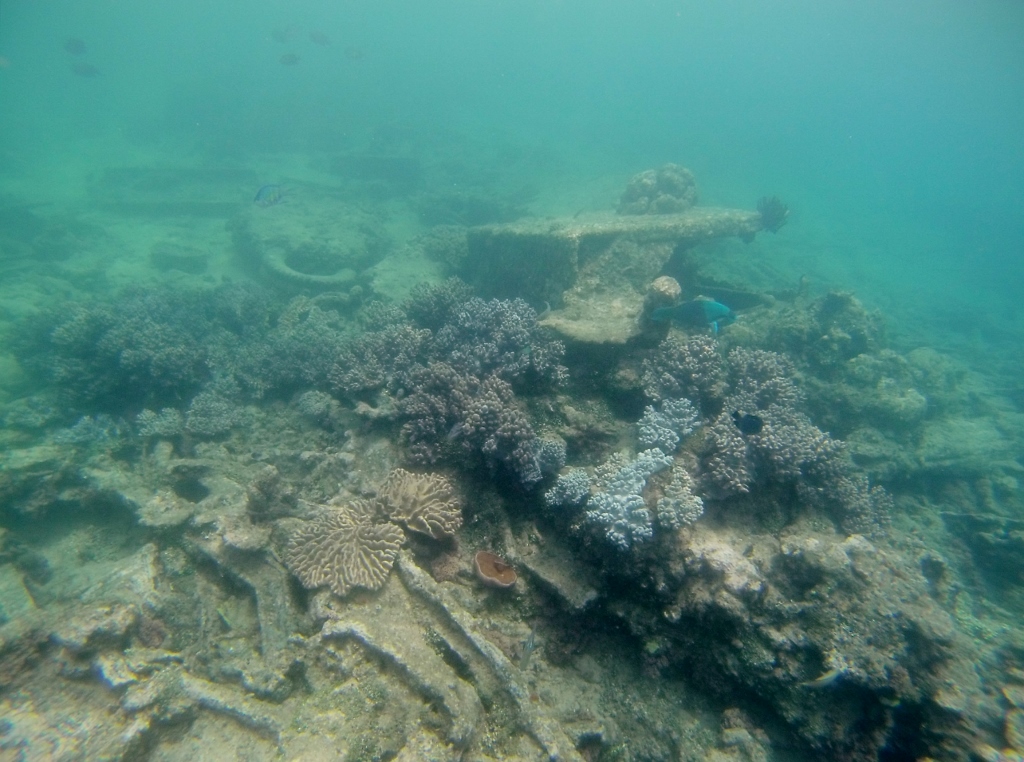
We snorkeled Million Dollar Point on Santo, where the US military dumped tons of equipment following World War II.

Rusting parts lay half buried across the beach.

Everywhere you look underwater are more pieces of equipment.

Leo found this WW II Coke bottle sea glass, a little slice of home from the past.

The kids had fun collecting sea glass.

Oyster Island
Our last stop around Santo was this perfect little anchorage at Oyster Island. The charts here are off a bit so according to our electronics, we anchored on land. Glad we have eyes and traveled during daylight!
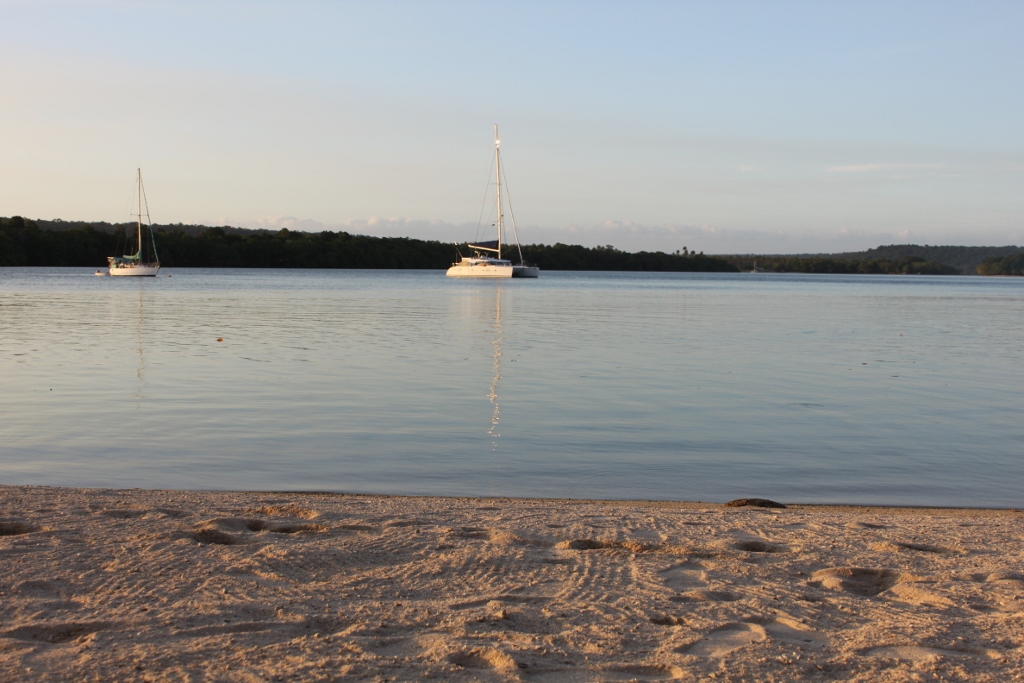
Safe on the hook.

Beach karate to round out the day.
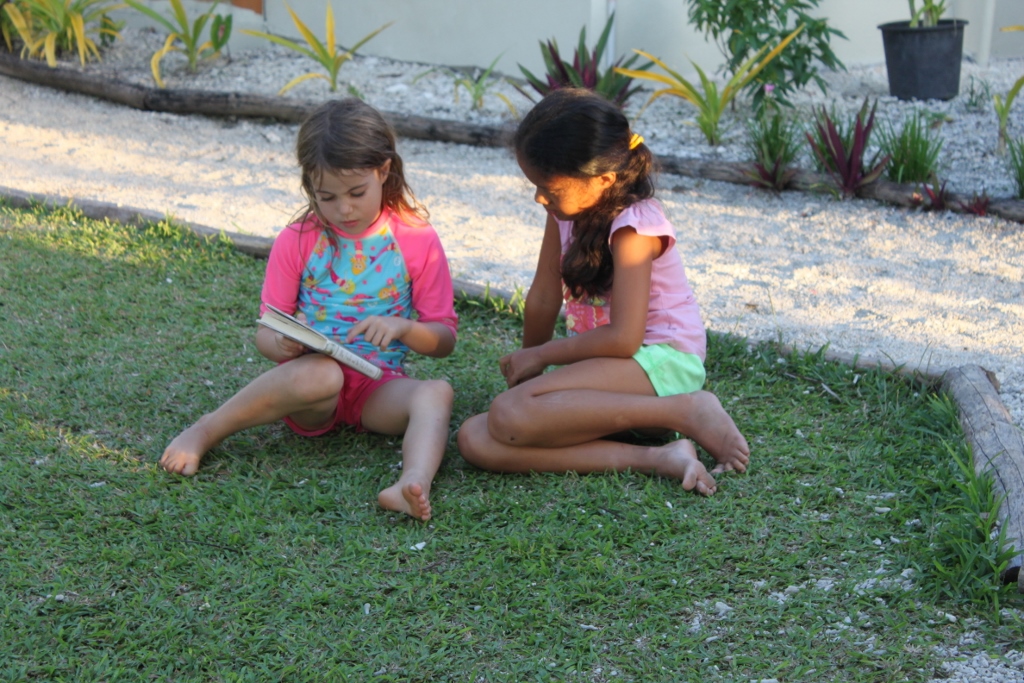
Hazel met a local girl who had lived in New Zealand for two years.

They read Mrs. Frisby and the Rats of NIMH together.
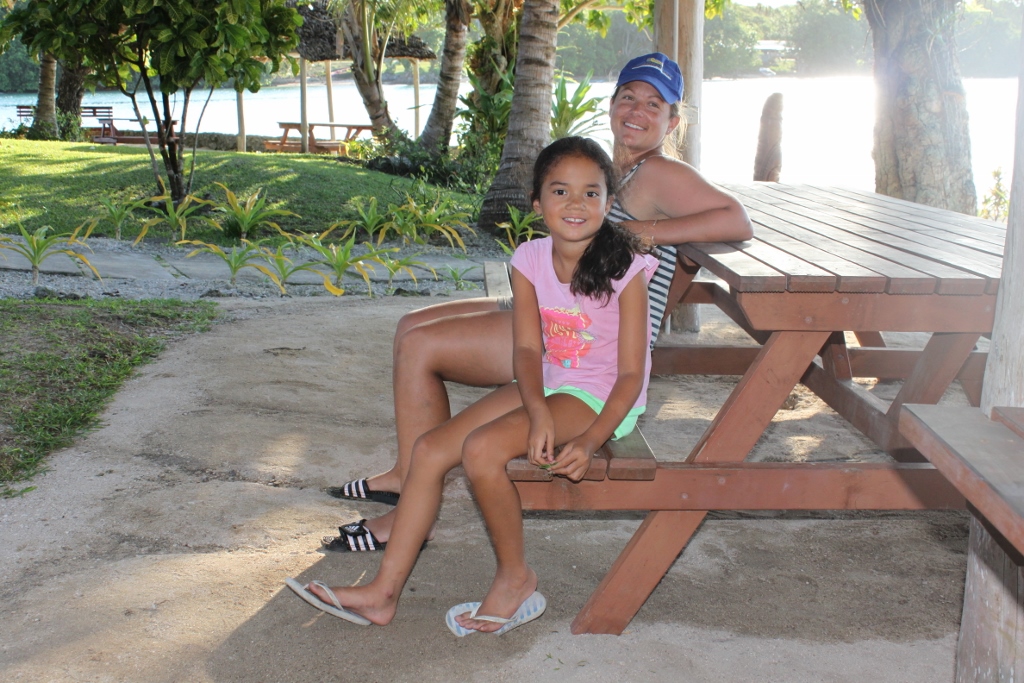
Lauren and I timed the kids while they raced around the lawn.

The resort had a fancy outdoor toilet inside a walled garden.
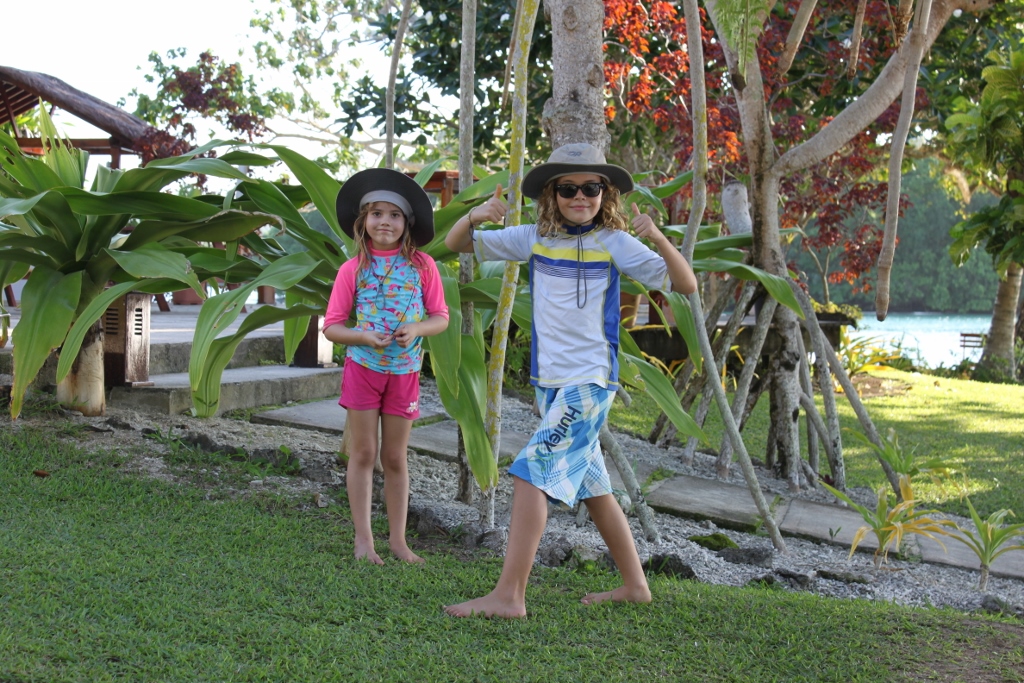
Ready for racing.

Sunset over Espiritu Santo
Gaua and Vanua Lava
The Banks Islands are gorgeous, with some of the most Gaua. As soon as we anchored, people started paddling up looking to trade with us.

Gaul, Vanuatu

Matanda Bay, Gaua Island

Sea stacks lined the west coast.
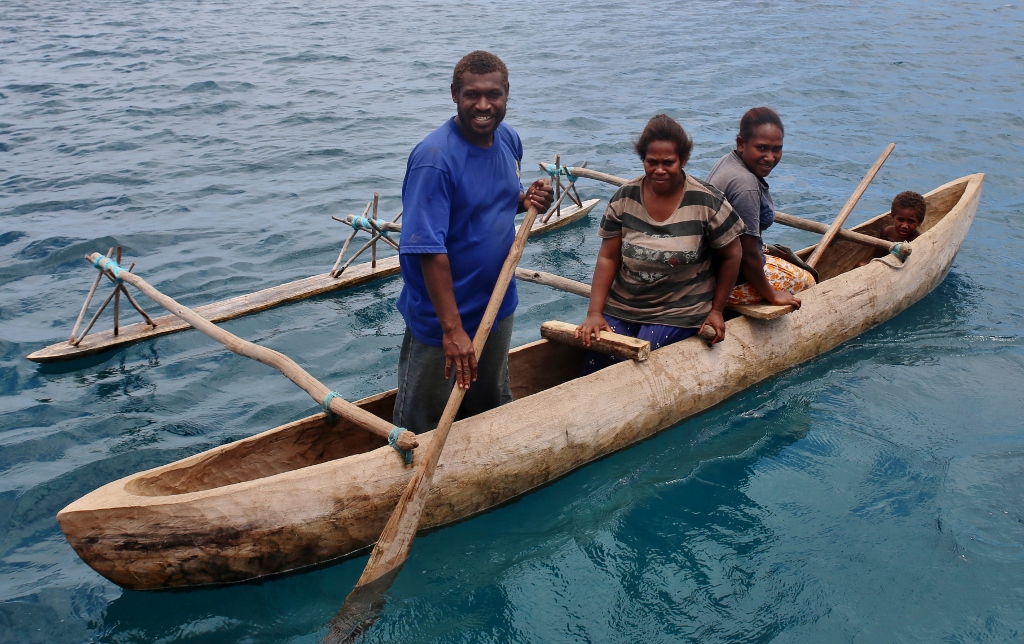
Our new best friend, “Elvis Presley,” his wife, the chief’s daughter, and some of their family. We traded some kids shoes and food for fresh vegetables and fruit.
Lauren and I took the kids snorkeling on one of the healthiest reefs we saw in Vanuatu. Parts of it reminded me of the coral gardens in Tonga. We spied a pufferfish too, but he hid out in the deep shadows of the reef so we don’t have a good photo.

We were happy to see what looked like recent growth on this reef.
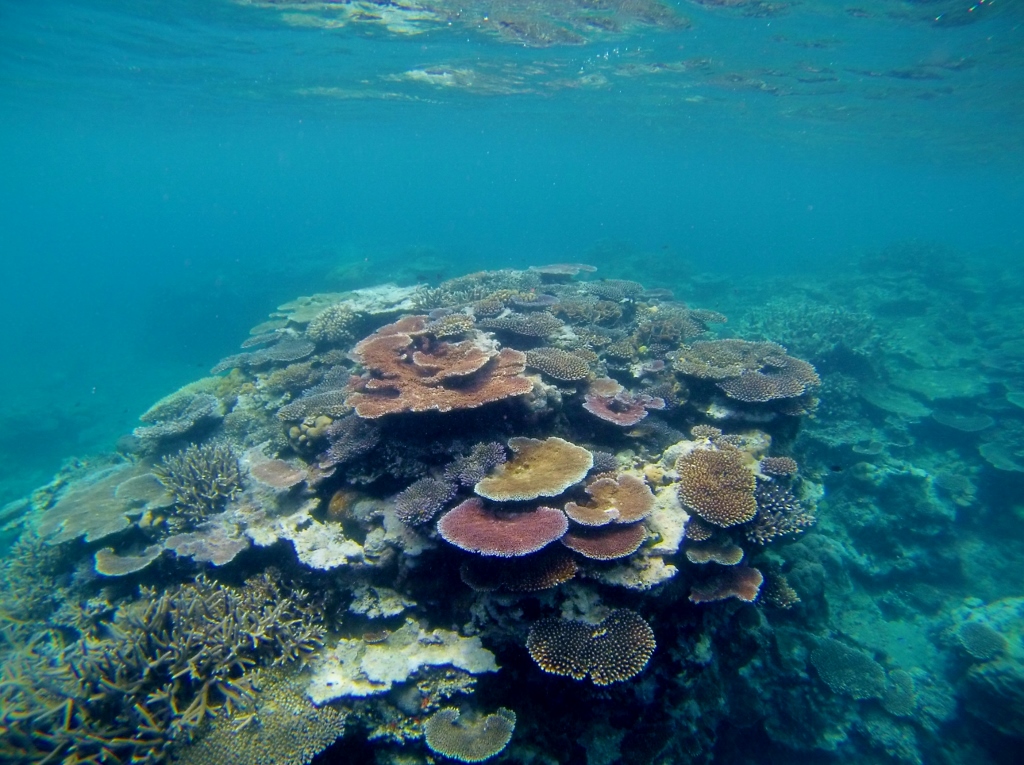
So many colors.

This spiral was my favorite.
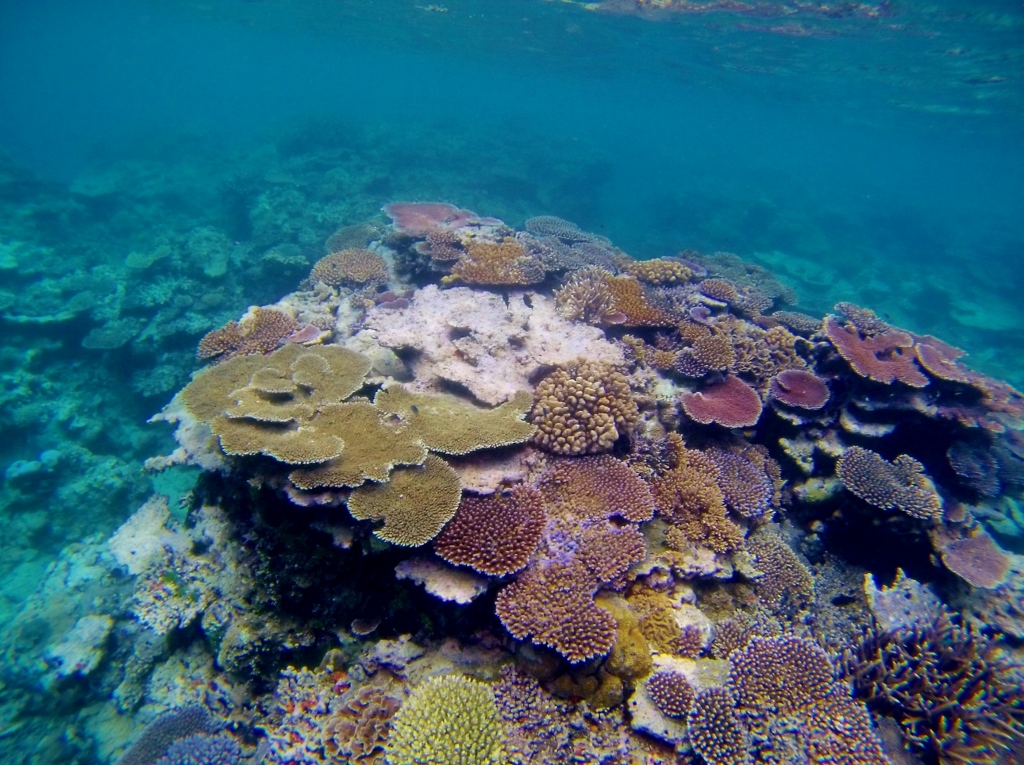
Hazel swam the entire length of the reef with me almost to where the waves were breaking. Tough girl!
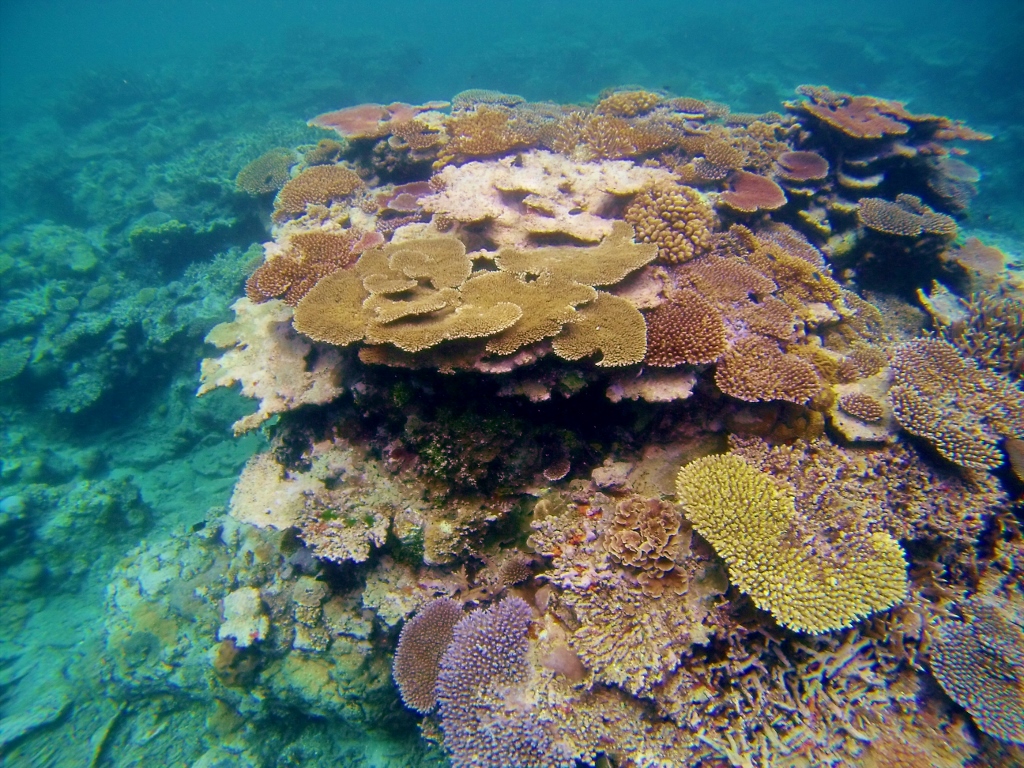
Meanwhile, Leo kept diving deep to explore and take pictures on Lauren’s camera.

The next morning we sailed fifteen miles north to Vanua Lava.
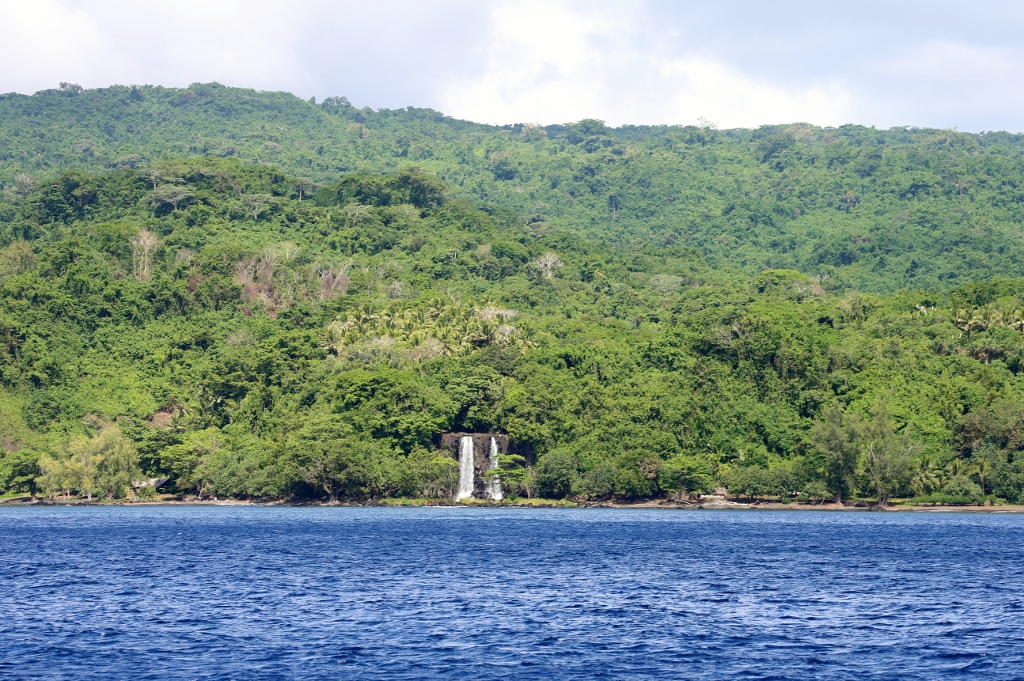
Approaching Waterfall Bay, Vanua Lava

The village sits above twin waterfalls that land in a natural oceanside pool.

Trading with local families.
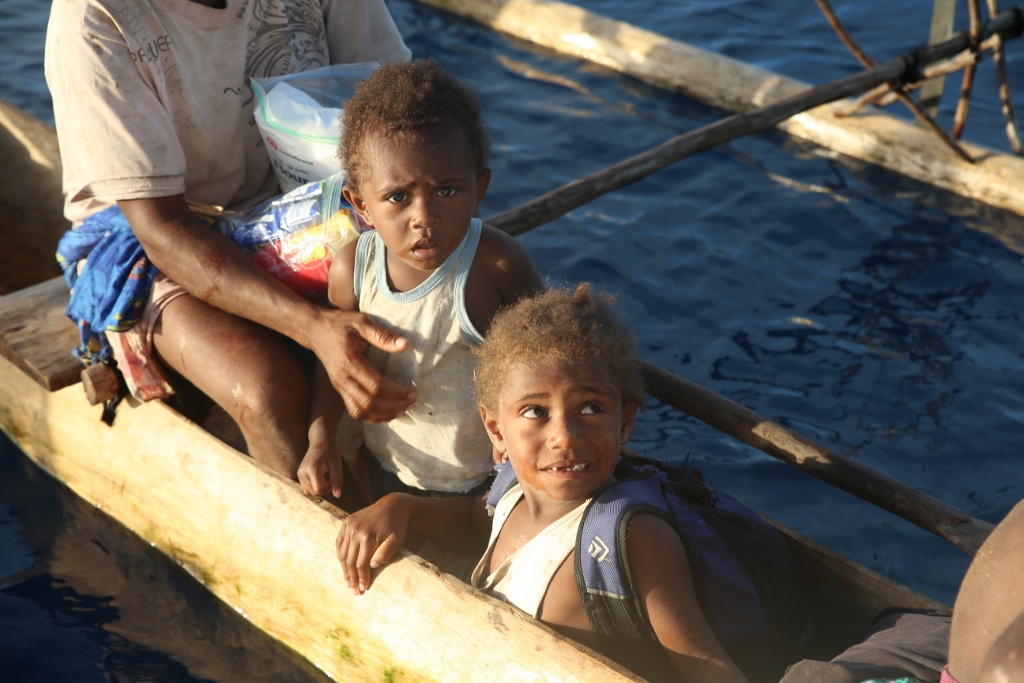
The kids were so cute and very curious about Leo and Hazel.

More traders.
We had hoped to spend at least a few days on Vanua Lava and maybe stop in the Torres Islands too, but a quick check of the weather showed a perfect weather window for sailing to the Solomon’s with wind so we pulled up first thing the next morning, checked out of customs in Solar, and headed on our merry way.

Another waterfall on the west coast of Vanua Lava we passed on the way to Sola.

Looking north toward Uruparapara Island at the beginning of our passage to the Solomon Islands.
Vanuatu is a stunning, magical place and we hope to go back some day. We are so thankful to have shared this time with so many wonderful cruisers and some of the most generous and welcoming local people we have ever met. It is so incredible to explore remote corners of the planet, one island at a time. Have we mentioned lately how lucky we are?
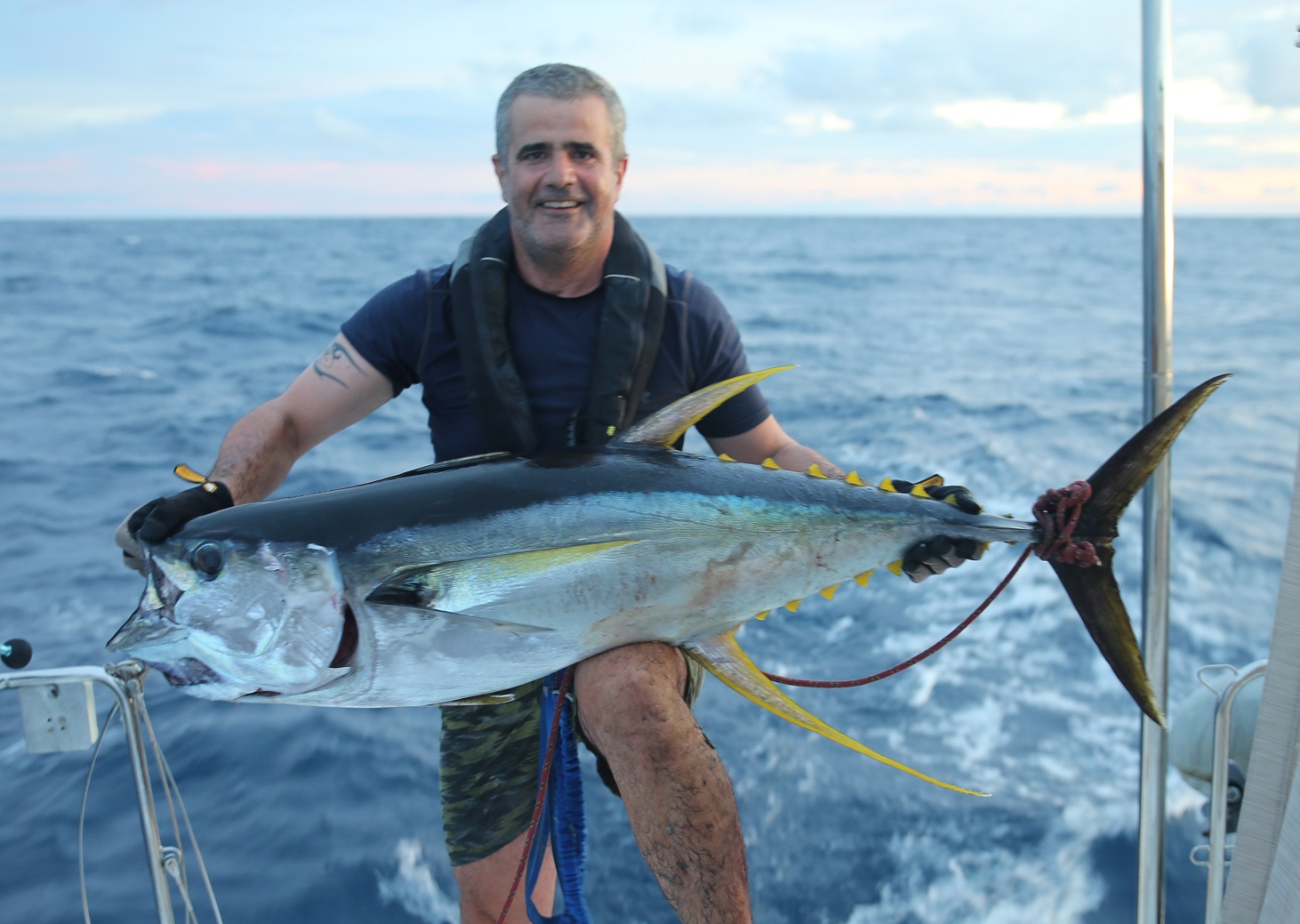
You asked for it, you got it! Here is a shot of me and my little 65 pound friend.
We arrived safely in Kavieng at 8:30 this morning. Yesterday was a spectacularly boring day. A high settled in, and we motored under the stars. I had to slow the boat down at 4:00 AM so we wouldn’t enter the passage in the reef in the dark. I turned the motors off and unfurled the jib, but then the wind kicked up and I actually had to reef the jib to keep us under 2 knots SOG.
We never unzipped the mainsail cover during the entire trip.
Kavieng was a major Japanese naval base during World War II. Our chart had the following warning for boats entering Kavieng from the south, which we did on Sophie at sunrise this morning:
FORMER MINED AREA
THE APPROACHES TO KAVIENG HAVE BEEN SWEPT AND ARE OPEN TO SURFACE NAVIGATION ONLY. THEY ARE NOT SAFE FOR ANCHORING, BOTTOMING BY SUBMARINES.
Word.
Jenna will be posting photos to the blog soon. Please stay tuned.
Well, it’s kind of hard for us to top yesterday’s adventure. Right now we are cruising through the flat Bismarck Sea along the sunny New Ireland coast, enjoying a quiet 24 hours since our last blog update.
Sophie’s current position is 03.40.452 South, 151.48.232 East. We’ve covered 137 nautical miles in the last 24 hours, almost all of it motoring under one engine. Kavieng is 90 miles away, and we are now just 220 miles south of the equator. We are officially north of the South Pacific tropical cyclone belt.
People on the boat are tired. I just completed my longest morning nap of the trip after doing a 5 1/2 hour night shift. The kids and Jenna are working hard at school, and Lauren is up top, seeking a combination of shade and breeze under the bimini. Leo is taking a regular afternoon shift now, which means regular afternoon naps for the grownups. It helps a lot. On my shifts I am watching movies (King Kong, Fight Club, Planet of the Apes, Braveheart, Talladega Nights) and listening to music (Matthew Sweet, Roxy Music, Beyonce, Macklemore and Ryan Lewis.) And playing Tetris. Lots of Tetris.
Last night we motored through Saint Georges Channel, which separates New Britain from New Ireland. The volcano that erupted in Rabaul in September is located here, but it was dormant. We could see the glow from two separate magma fields on the horizon as we ghosted through the strait in the dark. Combined with the vivid starlight and flashes of lightning in the distance, it made for quite a view.
In the afternoon we were briefly joined by either a VERY LARGE dolphin or a small, curious whale. It had dark skin, a blunt nose, and was 12-15 feet long. It swam under the boat the way dolphins do. But it was big. Really big. Jenna has a couple of good photos.
For dinner, Jenna made penne in a red sauce with tuna, olives, and parmesan. It was delicious. Tuna is definitely on Sophie’s menu for the next couple of months.
Given our current weather, it appears that a high pressure system has settled in. I personally can do without another rain squall until we are anchored in the lagoon at Kavieng. Then it can rain intensely once a day. Preferably in the afternoon, during my nap.
We still have half of our diesel left even though we have motored 400 miles. Good thing we don’t have a fuel nozzle that we can accidentally leave in the water. We have other things we can do to accidentally spill diesel. 🙂 We did a load of laundry and ran the dish washers a few times, and I am currently operating the water maker/bilge waterfall to top off the tanks given the calmness of our passage.
Hopefully we’ll be writing to you tomorrow from Kavieng.
I was in a grumpy mood yesterday afternoon, failing in my attempt to fix a broken high pressure hose for the water maker, when Lauren suggested I come up and check out a bait ball she was steering Sophie towards. “I will in a minute,” I snapped. “I’m still focused on trying to fix this right now.”
The day hadn’t been totally bad so far. We had seen some dolphins earlier, the first we had seen in months. But the water maker had me down. Again.
I should have listened to Lauren right away. Soon all five of us were up on the flybridge, confronting a spectacle unlike anything any of us had ever seen before.
There were three large whales, a school of tuna, and a towering column of a hundred birds, all attacking a boiling frenzy of white bait fish on the surface of the water, just 300 meters away from Sophie. We quickly joined in on the attack. I took the wheel, Lauren went to the lines, Jenna grabbed her camera, and the kids grinned while watching it all. The tuna were bunching the bait fish into a tight circle, and the whales were swimming straight through it, sometimes rolling on their sides with their jaws open, sucking fish into their mouths. The whales were big and could have been over 40 feet long. We initially mistook the black backs of the tunas for dolphin, but once we saw them in profile we knew they were yellowfin or big eye.
As we steered towards the frenzy, the frenzy turned and steered towards us. Jenna was a little scared we were going to hit a whale, but I trusted they were smart enough to avoid Sophie. There was simply too much food present to be messing around with boats. It all was happening very quickly. As we entered the boil, one of our meat lines just snapped right off. 400 pound test line? Gone. A moment later the fishing pole went horizontal with a big hit. The fish fought hard for 15 minutes. I reeled, Jenna drove, and Lauren gaffed. Soon we had a 30 pound yellowfin – the biggest tuna we’ve ever caught on Sophie – secure on our back steps. We trussed it up with the Melissa rope so it would bleed out.
But we weren’t done.
The frenzy was still taking place only 400 meters away from Sophie. I asked Jenna if we could go get another fish. “Absolutely!” I love my wife.
So Leo took the wheel and pointed Sophie back towards the boil. Jenna was on camera. Lauren was taking care of the first fish, and Hazel was splayed out on the trampoline, looking straight down into the water. It was a little hectic as we re-entered the scene of food chain carnage. As we hit the boil, it spread out around us with the big whales swimming on either side of Sophie. I ran up to help Leo with the wheel and assumed Lauren would grab the pole for the next fish. We could see 40 yellowfins hurtling across our stern, about 20 meters away, when the pole exploded with its second hit of the day. This time time it was pointing down into the water. I could barely get the pole out of the rod holder as 300 meters of line ripped off the reel in 5 seconds. This fish was clearly much bigger than the first one.
The fight took 30 minutes. I had to use low gear on the reel, and my arms kept cramping up. There was a beautiful orange glow in the air as the sun began to set. The frenzy was still taking place just 200 meters away from us, and I was scared it would drift into the area of our fight. The big whales were not quite as welcome any more. The tower of birds occasionally left the boil and flew over to check us out. We were scared they were looking for a place to poop, but they left our decks clean.
In the end, it all worked out. Jenna took photos, Lauren once again did the gaffing, the kids handed over tools, and we collectively landed a 65 pound yellowfin tuna on Sophie’s starboard transom steps.
Please let me say that again. A 65 pound yellowfin tuna. I am complete.
The rest of the details of the day don’t really matter too much compared to yesterday’s transcendent ecstasy of glorious fishing awesomeness.
Our noon position is 05.23.367 South, 153.18.291 East. We covered another 137 miles in the last 24 hours, motoring through light air using just one engine at a time. Kavieng is 226 miles away, and we should get there Tuesday morning local time. The water maker was out of action because the high pressure hose between the pump and the membrane sprung a leak. It’s a relatively standard part that we’ll either find in Kavieng or have shipped up via DHL from New Zealand. When we went to bed we had over 100 gallons of water on the boat, which should have been enough for to get us to our destination.
We had to clear out our fridges and freezer to make space for the tuna, so among other things we had beer and chocolate ice cream for dinner last night. I know, I know, we don’t drink on passages, but yesterday was a special day, we could see Bougainville 35 miles away, and we were motoring across a glassy sea in the warm summer night.
What a day. What a spectacular, wonderful day.
Today? It’s still all good, despite a bit of a hiccup. Early this morning during my shift I realized we actually had no water at all on the boat. During our evening double takedown we had inadvertently left the starboard swim step shower loose on the deck, and overnight it had fallen into the water and drained out 100 gallons of fresh water into the sat water of Planet Deep. The port water tank, which we normally keep full in anticipation for exactly this type of situation during passages, had very little water in it because we used it to clean bird poop off the deck before we realized our water maker was not functional.
So what did we do? Panic? Nah. We had enough bottled water, juice, milk, and beer to keep us from getting thirsty over the next 2 days. We also have an emergency hand held watermaker in our ditch bag. But I pulled off one of my best boat hacks, ever. I took the broken high pressure hose for our water maker, covered the leaking area with rescue tape and hose clamps, and swapped it out with its partner hose which runs from the desalinator membrane back into the pump, putting the good hose from the pump going into the membrane. When I turned everything on, the leaking hose still leaked a tremendous amount of water into the engine room’s bilge, but the watermaker could produce 30 gallons per hour. Our starboard bilge pump could keep up with the leaking water flow. For most of the morning we closely monitored the leaking hose in our engine room, the draining water from our starboard bilge, and the slowly moving needle on our water tank gauge. Within a few hours we had replaced the 100 gallons of water in the tank.
Meanwhile, multiple squalls passed over Sophie, dumping water on the boat. Lauren was out on the back deck, getting soaked as she carved up the 65 pounder. We made a little dam on the foredeck and diverted another 25 gallons of rain water to the port tank. Jenna and Hazel each took rain showers up top as the rain dumped and the thunder boomed all around us.
Spectacular fishing days and then subsequently figuring out how to solve problems any way you can seem to go together hand in hand on this little family adventure of ours. It’s what we do. We also have a freezer full of sashimi grade yellowfin tuna today, and we can see the southern tip of the island of New Ireland off in the distance. Kavieng is located at its northern tip. We will be in sight of land for the remainder of this passage.
Have I told you lately how lucky we are?
It’s noon Saturday local time, and Sophie left Gizo 21 hours ago. We have covered 132 nautical miles during that time. Current position is 07.00.816 South, 154.54.437 East. All of this distance has been covered while running on just one of the engines at a time @ 2200 RPM. We seem to have a bit of a current pushing us and are averaging above 6 knots. Our fuel consumption is low, and the ride is quite comfortable. There is no wind to speak of.
Our planned highlight for yesterday was trolling directly over an underwater volcano. The water around here is quite deep, but we were told of an underwater volcano that is on the charts 26 miles north of Liapari. It’s summit is just 100 feet below the surface, and it spews warm water that makes the local fish go crazy. Our goal was to troll directly over it and land a nice yellowfin. Unfortunately, since we cleared out of Gizo at 3:00 PM, it was 8:30 and after dark by the time we reached the volcano, so we trolled over its alleged location in the dark. Leo and Hazel stayed up for the event, there was lightning flashing in the distance, and we had no idea what to expect. Would we see a red glow beneath us? Plumes of steam? What if there had been a recent magma buildup and the summit was just 5 feet beneath the surface instead of 100? What if we caught a mako shark in the dark?
So what happened? Nothing. Charts here are a little off, and we never saw the volcano on the depth sounder. We must have just missed it it. No disturbance on the surface. No magma. No fish.
But it was nice to hang out after dark up top with Leo and Hazel, listening to them read to each other in the early moonlight. And Lauren had just made a curry with coconut crab and mahi mahi that was spectacular. So we are not complaining.
This morning was dark and squally, and the wind was too variable to keep a sail up for any length of time. Jenna directed the kiddies in Sophie school, I installed a new bilge pump and float switch, and also did some water maker maintenance. Lauren drove the boat while scrubbing bird poop off the deck in the rain. (She’s a rock star.) In other words, another normal passage day.
Our last few days in Liapari were quite relaxing. We got to know Noel and Rose, the couple who run the little shipyard there. The two cats from Africa were there as well. We even all hung out for an impromptu Halloween party on Thursday night.
Our highlight for today will be when we pass over an area on the chart labeled “Planet Deep”, which apparently has 25,859 feet between Sophie’s keel and the ocean floor. Unfortunately we won’t get there until after dark and I will be a little reluctant at that time to hop into the water for a quick dip once the sun is down. Sharks, you know. But I will definitely toss something (organic) into the water.
The adventures continue.
It’s Tuesday here, and Sophie finally left Gizo this morning and motored the 14 miles north to the boatyard island of Liapari, where we are currently stern-tied to a dock.
It took me until 1:30 yesterday afternoon to finish up all of the government paperwork required to check into this country, and by the time I was done we think the outside temperature was touching 100 degrees F with very high humidity. Much of that time was spent waiting in line at banks to get cash to pay the government and to buy diesel. By the time I finished up all of the government work and shoreside errands on Monday, it was too late to head up to Liapari. So the rest of the crew joined me on shore for lunch, and then Jenna and Lauren hit the market while the kids and I hit returned to the boat and hit the air conditioner button on Sophie’s electrical panel. We ran the AC for over 4 hours and then slept soundly through the night.
There were 5 other catamarans anchored in Gizo when we arrived on Saturday morning, and all of them are eventually heading up to Kavieng, Papua New Guinea. That is where we are planning to go on Friday so we seem to be on a popular route right now. We’ve been told that only 50 cruising boats visit the Solomon Islands every year, so over 10% of them are here right now. We definitely feel like we have left the popular “coconut milk run” cruising route between the Americas and Australia/New Zealand.
And that case of beer I bought Saturday morning? It seemed to go away very quickly and I had to go into town to buy 2 more cases to last us through this week. We were tired and thirsty and hot.
A Hans Christian cutter arrived in Gizo Saturday evening, and they had just sailed south from Kavieng. They said the town was lovely but that their passage was awful. All of those strong southeast breezes that gently pushed Sophie up from Vanuatu smashed into the nose of this poor boat as it headed 480 miles into the wind to get to Gizo. Timing is everything when it comes to cruising.
We met the couples sailing three of our neighborhood cats over the weekend. Roland and Micky are South Africans on a Fontaine Pajot that they have been cruising since they took delivery of the boat from the factory in France in 2008. They rounded South America to reach the Pacific. We spent a couple of meals with them talking about how to cruise to South Africa. Their recommended route, which was one we were considering, was to head across the Indian Ocean from Thailand to Sri Lanka to India to the Maldives to the Seychelles, then turn south to the northwest coast of Madagascar and then Mozambique and then hop the coast of South Africa around to the Atlantic. They were especially keen on Madagascar and Mozambique, which they described as lovely, safe, and full of friendly people. And what about the dreaded Argulas current, which cruising websites describe as a place that produces steep 20 meter waves that smash your boat into waiting schools of great white sharks? “South Africans love the Argulas current … it pushes your boat south at 4 knots!” said Micky as Hazel lay her head on her lap. “You just need to make sure you don’t get too deep into it so you can get out when you need to.” They also described how we can go about going on safaris while visiting their country.
We’ve made new friends, and they could very well be crossing the Indian Ocean when we are doing so.
Another highlight of the weekend was buying stone carvings from dugout canoes that paddled up to the boat. Most were carved from river stone similar to the stone used for carvings in New Zealand. Jenna and Lauren bought about 10 pieces between them, including carvings of the local fishing god (body of a man, head of a bird, tuna in his hand) and carved wall hangings of “Gasere”, the local worship octopus that grabs your enemies to prevent them from harming you.
Our Gaseres must have worked, because we went into shore on Saturday and Sunday nights for dinner at waterfront restaurants and we were not bothered by the local gangsta boys on either night. Plates of local lobster ranged between $8-$10 at each restaurant, and they were delicious. We did, however, lock the boat up tight each night and slept soundly in the heat.
There was no rain on Sunday, and we were able to get 8 loads of laundry done, dried, folded, and put away. The local heat seems to dry wet clothing very quickly.
Yesterday while I was dealing with the government, Jenna was back on Sophie supervising the loading of 600 liters of diesel onto the boat. It was delivered in 200 liter drums on a long boat and then hand pumped into our tanks. During this procedure, Jenna’s sunscreen must have sweated off, because yesterday was the first day in our entire 2 year trip where she got a sunburn. I thought she was impervious to that sort of thing, but she simply takes really good care of her skin and the Solomons climate got the better of her.
Liapari is very hot and humid. Spirit of Africa is docked next to us, and they will be leaving their boat here for the cyclone season while they go back to Africa. Our friends on Per Ardua were here 8 days ago before they left for Kavieng, and we hope to catch up with them there. It would be nice for the kids to once again have some playmates their own age.
Finally, the manager of the shipyard here, a man from the Solomons, asked me where we were from. I told him. He then said “when someone from a yacht says they are from Australia, we say ‘Welcome to the Solomons.’ When someone from a yacht says they are from England, we say ‘Welcome to the Solomons.’ But when someone from a yacht says they are from America, we say “WELCOME TO THE SOLOMONS MY FRIEND. THANK YOU THANK YOU THANK YOU” as he dropped to his knees and spread his arms wide, a big smile on his face.
We are feeling very welcome, indeed.
Hello everyone. Sophie dropped anchor in Gizo, Solomon Islands at 8:15 local time this morning. We have good news, bad news, and good news in regard to this.
The good news is that we safely completed another long passage. Sophie traveled around 740 miles in 5 days, almost all of it straight downwind. Our current position is 08.05.840 South, 167.35.521 East, which is the farthest north we’ve been since we arrived in the Marquesas on my brother Richy’s birthday in March of 2013. Nothing broke during the trip, we caught some fish, and at one point crossed over the South Solomons Trench, which is 23,000 feet deep. Everyone on Sophie is happy and a little tired.
The bad news? It’s Saturday here, and the folks from Customs, Immigration, Quarantine, and Health are all gone for the weekend. Legally we need to stay on the boat under a yellow quarantine flag until Monday when they are all back in the office. We had pushed to get here on a Saturday morning because we had hoped that government offices here were open on Saturday mornings like they are in Vanuatu. No such luck. I went into town when we arrived and was directed to the local police station, where an officer named Hilton took me under his wing and walked me down the street to the customs office. Hilton was wearing an Australian bush hat and a sleeveless cowboy shirt. He had the deep, gentle voice of an English butler, and his teeth and gums were stained bright red from chewing the local leaf. After he tried the door to the Customs Office, he turned to me and politely said that we really needed to stay on the boat until Monday. I asked him if it was safe in the harbor for us to do so, and he apologized and said that unfortunately there are some bad boys in town and that if we stayed on the boat and kept it locked we’d be fine. This wasn’t a surprise to us, but I was bummed that we were not able to head directly to the marina at Lamieng.
The other good news? Hilton also said that if we needed anything from a shop this weekend, it was OK for us to come into town to get what we needed. That was nice to know. Every store on the main drag of Gizo had a sign for something called “SolBrew”, the local beer, so I went into a bottle shop and asked how much did a cold bottle of beer cost. The response? “$1”. I asked how much was a case of 24 bottles. “$24” was the answer. I smiled and bought a case on the spot.
Throughout the last 18 months, the price of local beer has ranged from $3 to $8 per bottle, depending on the country. SolBrew is far and away the most inexpensive local beer we’ve encountered on the entire trip. Once we got the case back on board we realized that it tasted like a real German lager! Jenna’s verdict? “This is some of the best beer we’ve had!” Also, we are anchored off of something called the Gizo Yacht Club, which is also called the “PT 109 Bar and Grill” (JFK served here in WWII.) I spoke with the owner when I first arrived on shore, and he apologized that they do not yet have the capability to prearrange yacht clearance into the country. He had just bought the place and was trying to get it back on its feet. He also insisted that we all come in for dinner tonight, he would deal with any issues that arose from customs, and that Sophie would be perfectly safe while we were gone as long as we locked it. We are anchored 150 meters from his bar, and we are very much looking forward to a local meal on shore.
But first? Long naps. And school. And some laundry.
Have I mentioned how lucky we are?
 sailing sophie