Kicking Off the 2014 Season of “Sophie Adventure Cruises”

IMG_0550

Jenna and I drove out to the Auckland International Airport last night to pick up our friend Maureen and her kids Cole and Cora. They flew 20 hours from Seattle in order to join us for a vacation on Sophie in New Zealand.

With this airport pickup, the 2014 season of “Sophie Adventure Cruises” has begun.

Readers of this blog know that for me and Jenna, one of the best things in our life these days are the times when we can host friends and family from back home on our cruise around the world. We jokingly refer to this as “Sophie Adventure Cruises” because for our guests it’s like going on an exotic luxury vacation, and for us it’s an opportunity to throw lots of energy into swimming, fishing, exploring, cooking, drinking, dancing, and celebrating the overall sense of joy in our lives on the water with the people we love.

2014 is filling up fast! We plan to remain in New Zealand through the end of April. Maureen and kids will be joined by her husband Troy at the end of the week and will cruise with us off and on through the end of this month. Troy and Maureen joined us sans kids in Fiji in September, making them our first repeat couple on the cruise! My college friends James and Maureen will then join us in the first week in March for a week, and Seattle friends Ravi and Alison will cruise on Sophie later that month.

Towards the end of April, Dan (the famous tattoo dude from our crossing to the Marquesas) will fly to New Zealand and help us sail Sophie the 1,000 miles back up to Fiji. We’ll be greeted there in May by Ian and Becky, who had so much fun getting hooked in the Bay of Islands that they are coming back for more punishment, this time in an area with much warmer water.

Later on in May I will fly to Boston to attend my son Max’s graduation from law school, and Max will return with me to spend the month of June studying for the bar exam while watching every World Cup soccer match from various backpacker beachfront bars throughout western Fiji. Later on in June, we will be joined by Jenna’s sister Julie and her husband Silas for a couple of weeks. Julie and Max spent a summer working together in a boat cleaning business back at Elliot Bay Marina in Seattle, and even though they are now (or soon will be) respectively a physician and an attorney, Jenna and I both hope they have not walked away from their past and still remember how to properly apply wax to fiberglass and metal polish to stainless steel.

In July, we will all fly back to the United States to reconnect with friends and family in Seattle, New England, Pennsylvania, and Michigan. There will be a family wedding in Maine as part of the trip. For Jenna and the kids, it will be their first visit back to the US since we left San Diego almost a year ago.

In August it’s back to Fiji, and our Seattle friends Mark and Cathy will join us for a week or two. In September, my daughter Sara and her friend Julie will join us and we will finally resume our westward journey and head to Vanuatu and it’s volcanoes. From there we are thinking we’ll head to the Solomon Islands and then to Indonesia. We are not sure how much time we will spend in Papua New Guinea on the way. But that is over a half a year out, and if there is one thing we’ve learned from cruising so far, it’s that plans rarely remain firm when they are a half a year away.

Except, of course, when it involves family and friends traveling halfway around the world to join us.

That pretty much summaries our thinking of how we plan to spend our next year. There is some talk of Jenna organizing a “Girl’s Week” in Bali. We also hope that more folks from back home take advantage of the few remaining slots in our calendar in 2014 and join us. But overall we have a pretty good sense of where we are going, and who will be joining us.

In terms of last night, all four of us get pretty excited when our visitors are about to arrive.

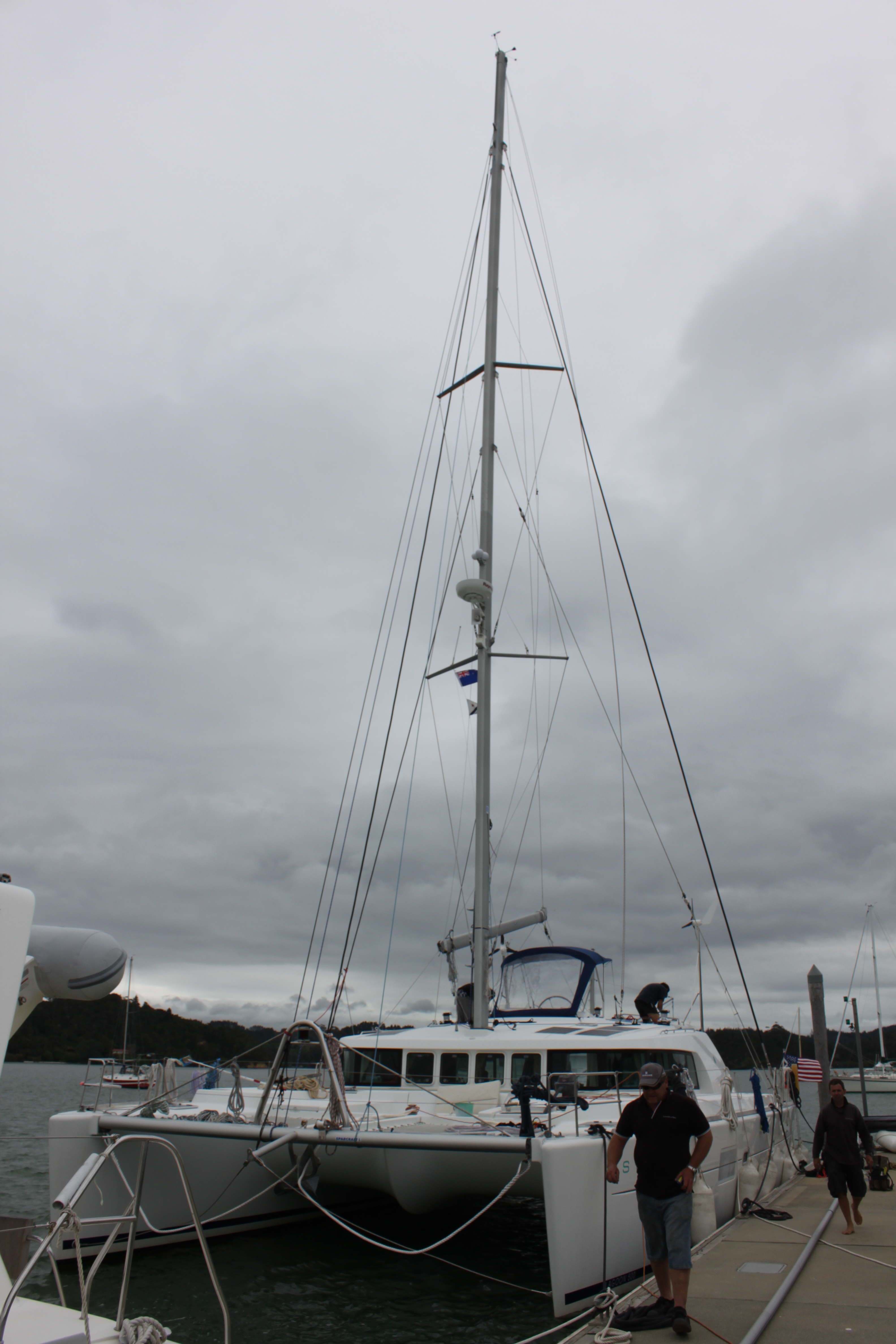
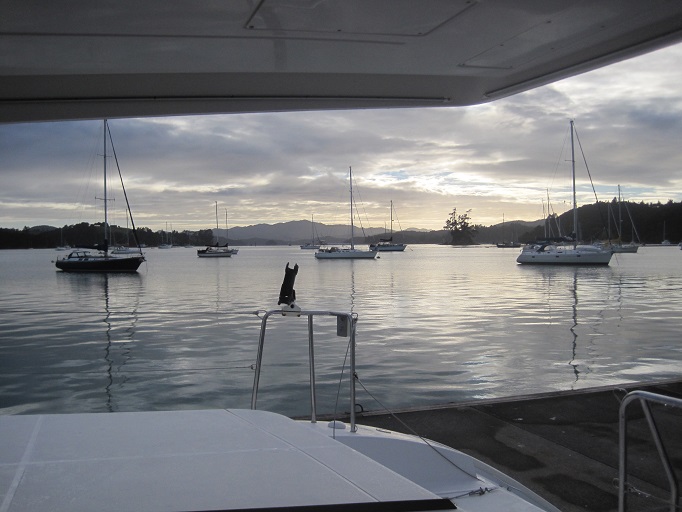
For starters, it gives us an excuse to clean up Sophie, both on the outside (here is a shot of Sophie back at Auckland’s Viaduct Marina)…
IMG_0535

… and on the inside.
IMG_0547

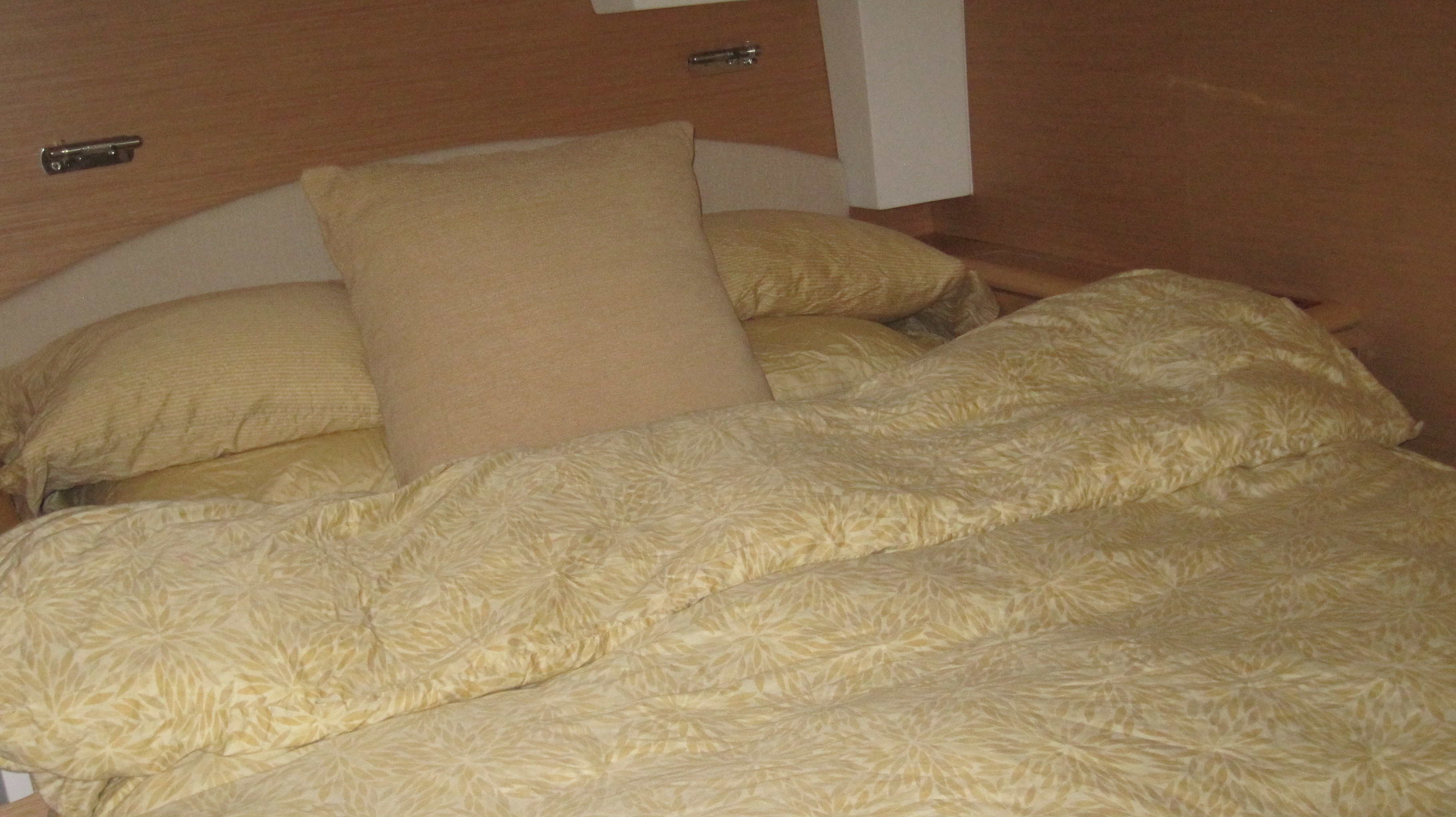
Most of our guests stay in “The Yellow Room” — formerly “Julie’s Room”, “Holly’s Room”, “Sara’s Room”, then “Richy’s Room”, then “Max and Becca’s Room” etc. — the list of names of that room has turned into an honor role of guests that goes back to the beginning of Sophie.
IMG_0544

And the aura of that room continues to grow, because in the process of cleaning it this week I discovered a Victoria’s Secret black bra — size 36 C — lodged underneath one of the drawers at the foot of the bed. It was right next to a kid’s swim diaper. Every woman who has slept in that room since we left Seattle in September 2012 denies ownership of the bra. For all we know it may have been there for years. We used to have some pretty fun times hosting friends on Sophie for the Thursday night “Downtown Sailing Series” races back in Seattle, but Jenna and I never realized some of our crew had that much fun.

picture006

So if you happen to have spent some time on Sophie and inadvertently misplaced this bra, please let me and Jenna know. We will handle all inquiries with the appropriate level of discretion.

Leo got into the cleaning act and actually cleaned his room because he will be sharing it with Cole for the next week.
IMG_0529

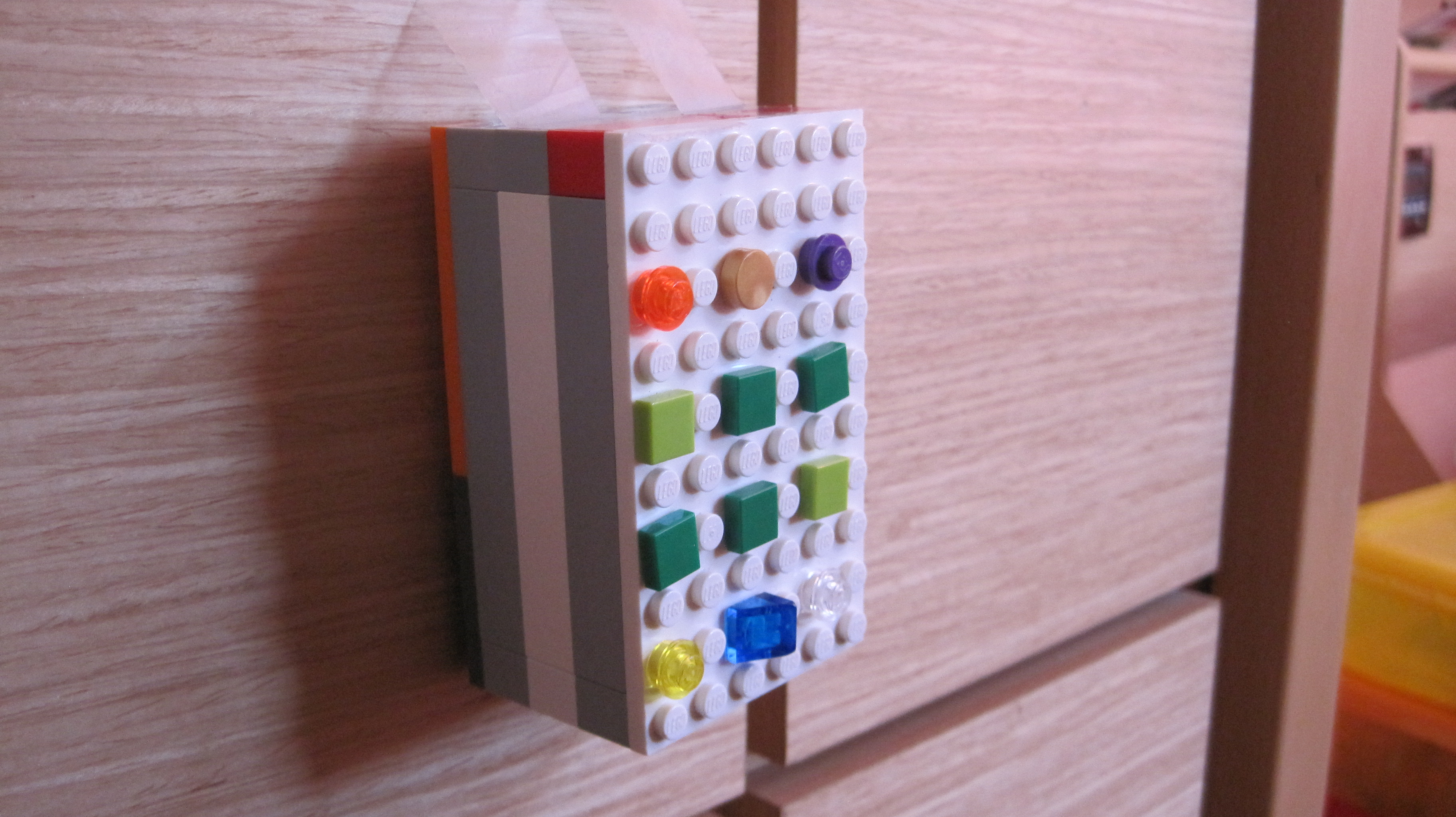
However, in order to protect his stuff he built a Lego security keypad, which he mounted on the wall.
IMG_0530

He also posted the appropriate warnings on his door, for safety purposes of course.
IMG_0532

IMG_0531

Not all of the preparation we do in advance of visits is skin deep. I spent 5 hours troubleshooting the lighting in Maureen’s Room (formerly “The Yellow Room”) because the darn lights wouldn’t go on. I assumed that since the French builders used an orange (meaning protected) cable, there was a hidden fuse somewhere behind the walls. There wasn’t, it was a bad connection on the switch by the bed, a switch I had completely forgotten about. But it’s fixed, and that’s what counts.

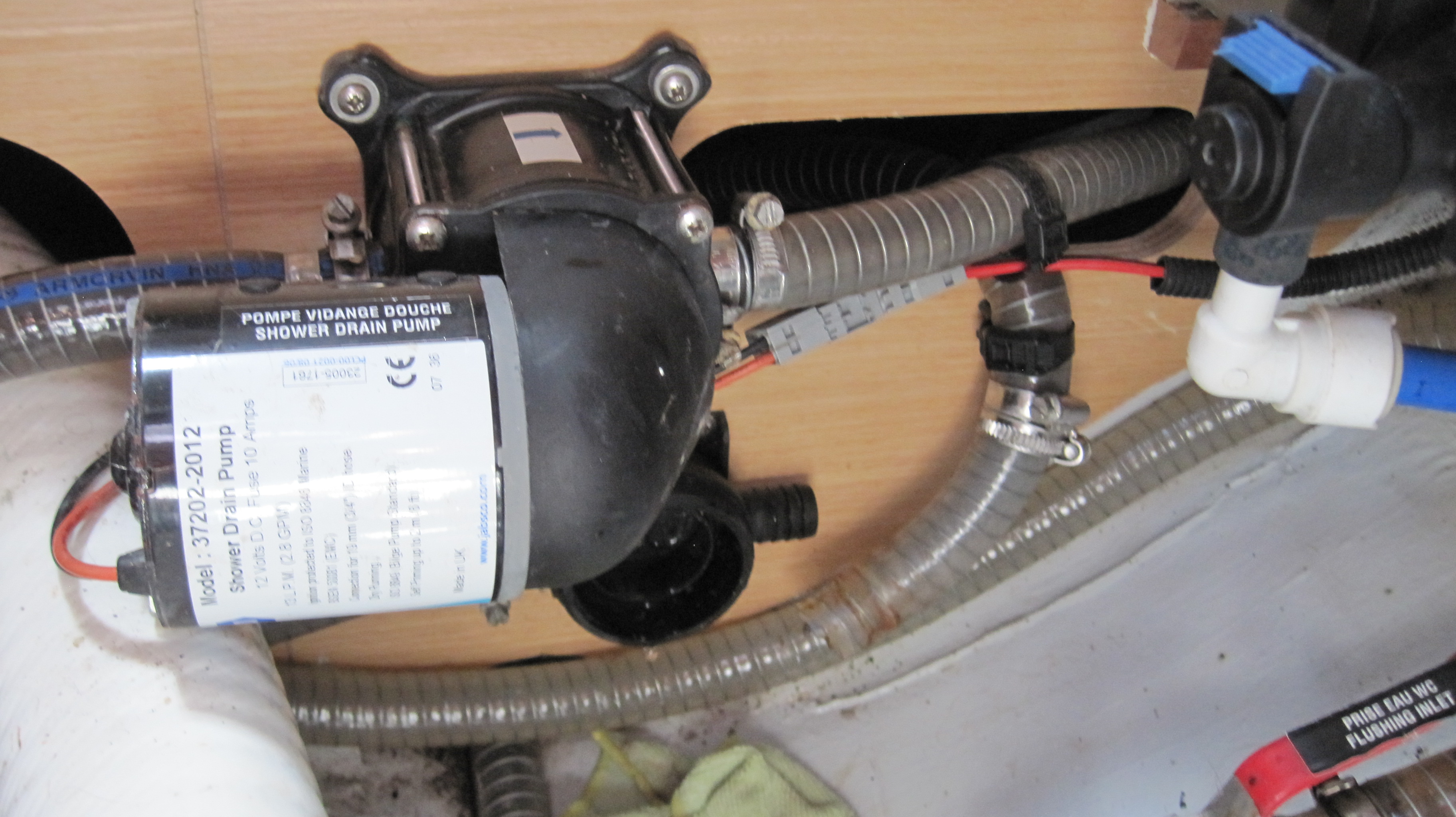
I also usually have to clean out all of the filters in the head (bathroom) sump pumps, which in Hazel’s case involved extricating a cocktail of ponytail rubber bands, necklace beads, and glittery hair from the spot where the drainage hose enters the sump pump filter. In other words, another hour or two of bilge yoga, just to make the sinks work.
IMG_0533

This is a photo of the sump pump with the filter below it. The hose going into the filter is not attached, due to the need to remove the aforementioned cocktail.

But there is a quid pro quo involved in our hosting friends and family from back home, because they usually carry with them A LOT of stuff that we need. In Maureen’s case, she carried two duffle bags weighing 100 pounds in total — in addition to her own luggage, two young children and their respective car seats — on her flights halfway around the world.

For Sophie and her crew it was a nice hall. Christmas presents, school books, spare parts, cleaning supplies, and stuff you just can’t easily get in New Zealand.

IMG_0554

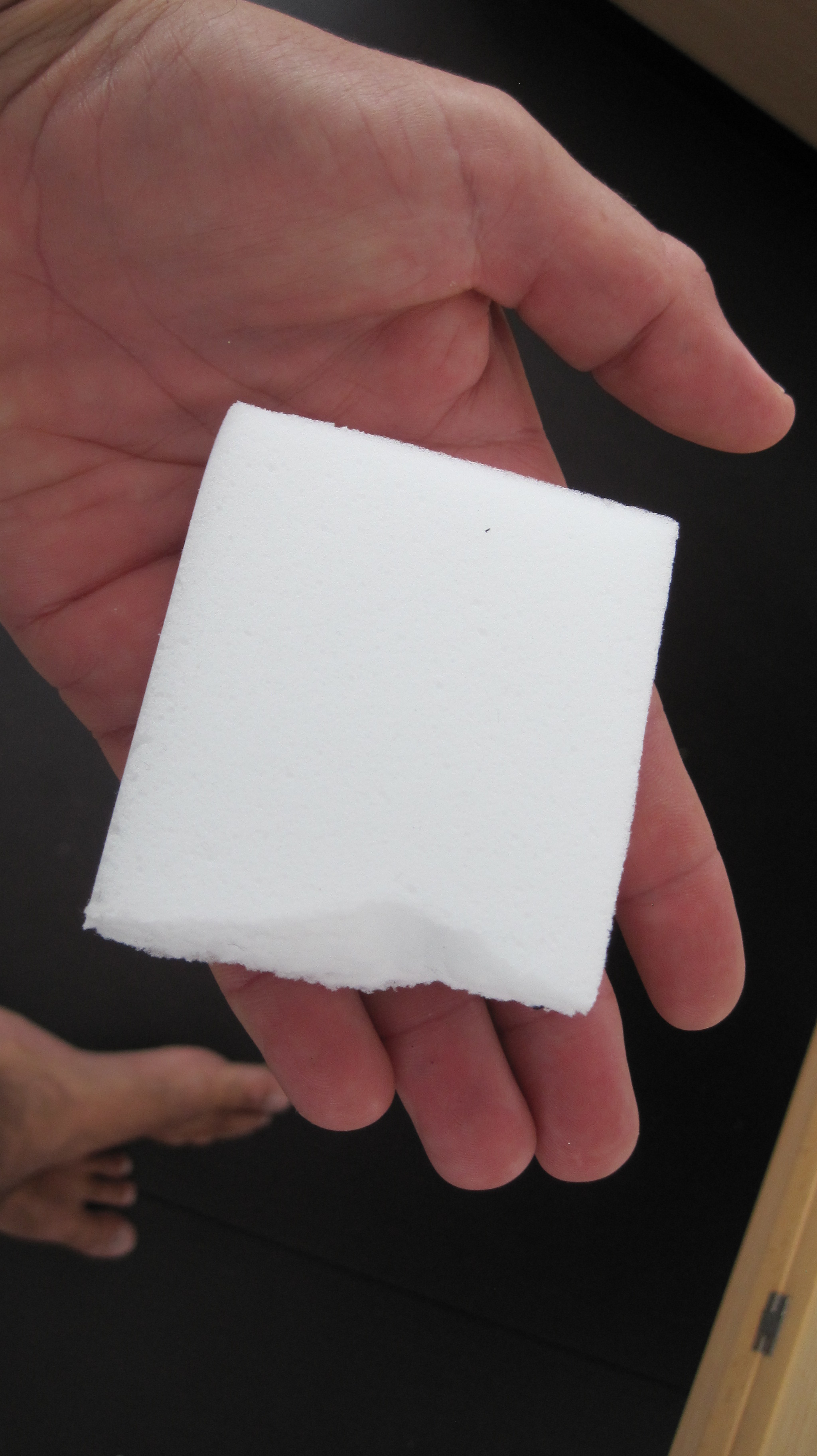
For example, it turns out that it is quite difficult to find Mr. Clean Magic Eraser pads in New Zealand, and these things are worth their weight in gold in terms of their ability to easily remove stains and moldy spots from fiberglass and rub rails.

But the TSA must have wondered why Maureen was carrying 30 of them in her luggage, because 4 of them had been neatly been torn in half, I assume during their physical inspection of her duffel bags.
IMG_0555

Nothing but solid Mr. Clean Magic Eraser magic here.

Jenna and I also want to make sure that we have the right equipment on board to maximize the “Sophie Adventure Cruises” experience for our guests, and we have made two significant additions in this department in advance of the 2014 season.

For starters, Jenna and I bought each other folding, full-sized mountain bikes for Christmas. I hauled them back from the U.S. last week. They claim to be made with something called “Military Technology”, but they seem reliable and are much faster than the small-wheeled folding bikes we had ten years ago.

They fit nicely under the hatches in each of Sophie’s engine compartments.
IMG_0538

Jenna can easily lift them off the boat and onto the dock.IMG_0557

And from there they easily snap together and are ready to go. We’ve only had them for a week, and that have already helped us immeasurably in dealing with the logistics of provisioning and getting from point A to point B.

IMG_0559

We hope that our friends and family will enjoy using them to easily explore different spots along the way of our journey.

Our second big addition for 2014? Dinghy Wheels!

IMG_0571

These babies could have come straight off of a Boeing!

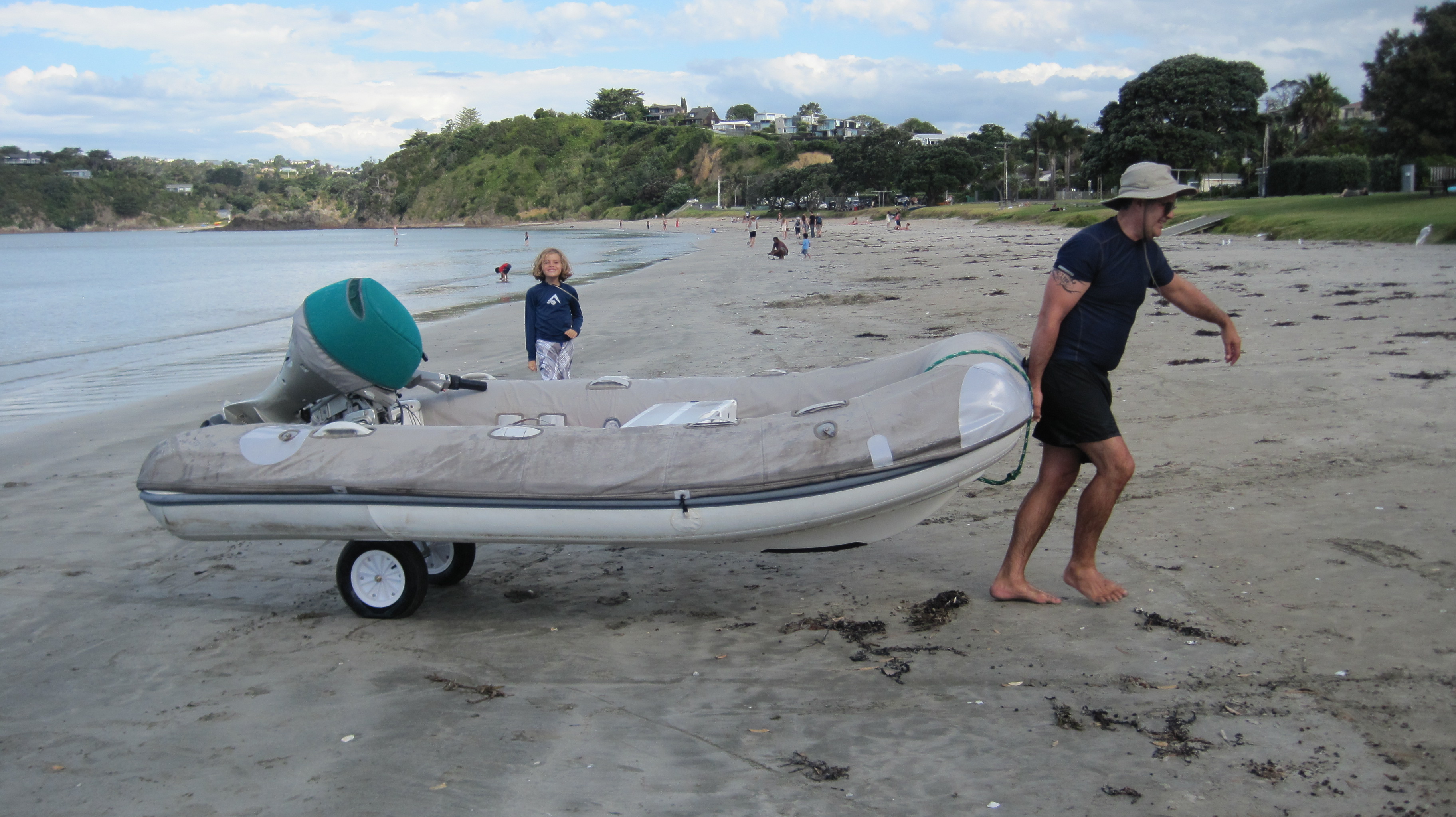
I bought them on the spur of the moment at a West Marine in Seattle two weeks ago, and they are simply awesome. We have a heavy dinghy, and we often visit beaches with a gradual slope, significant tides, or big surf. Jenna and I could barely move the dinghy by ourselves, and this eventually limited which beaches we could visit and when we could visit them. But with the new wheels, I can easily move the dinghy by myself up and down 100 feet of beach with no problem at all.
IMG_0568

We put it to good use today (and nice photo bomb there, Leo).

But the best thing about hosting friends and family from back home isn’t having a clean boat, it isn’t the receiving of loot from back home, and it isn’t the ability to play with new types of water toys. For us, the best thing about these visits is the ability to simply go out sailing with people we love, and then anchor in a quiet harbor and play in the water.

That’s what we did today with Maureen and the kids. Cora and Cole hadn’t been on Sophie for over a year and a half, but they felt right at home when they got on board last night. It was well after midnight, and they had been on planes for practically a day.

IMG_0552

They seem right at home.

Maureen has been sailing on Sophie pretty much since we got her six years ago, and it was great seeing her and Jenna work the foredeck together as we once again sailed away from Auckland on a day with weather MUCH NICER than the snow they were getting back home in Seattle.

IMG_0561

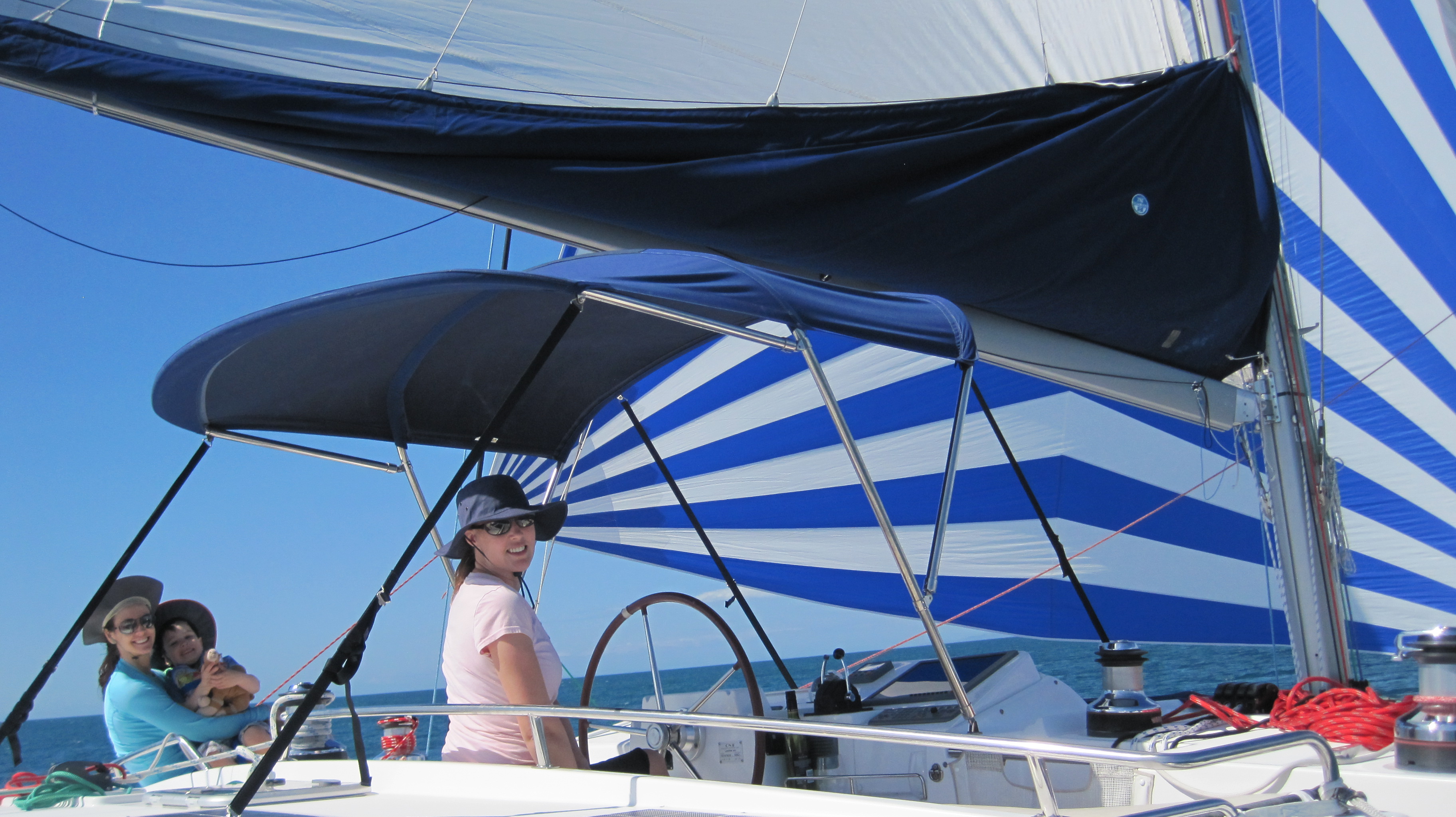
We had a nice broad reach for about 13 miles out to Waiheke Island and enjoyed the opportunity to use our favorite sail.
IMG_0566

On the way we made sure we took the time to admire some of the local Kiwi lovelies.
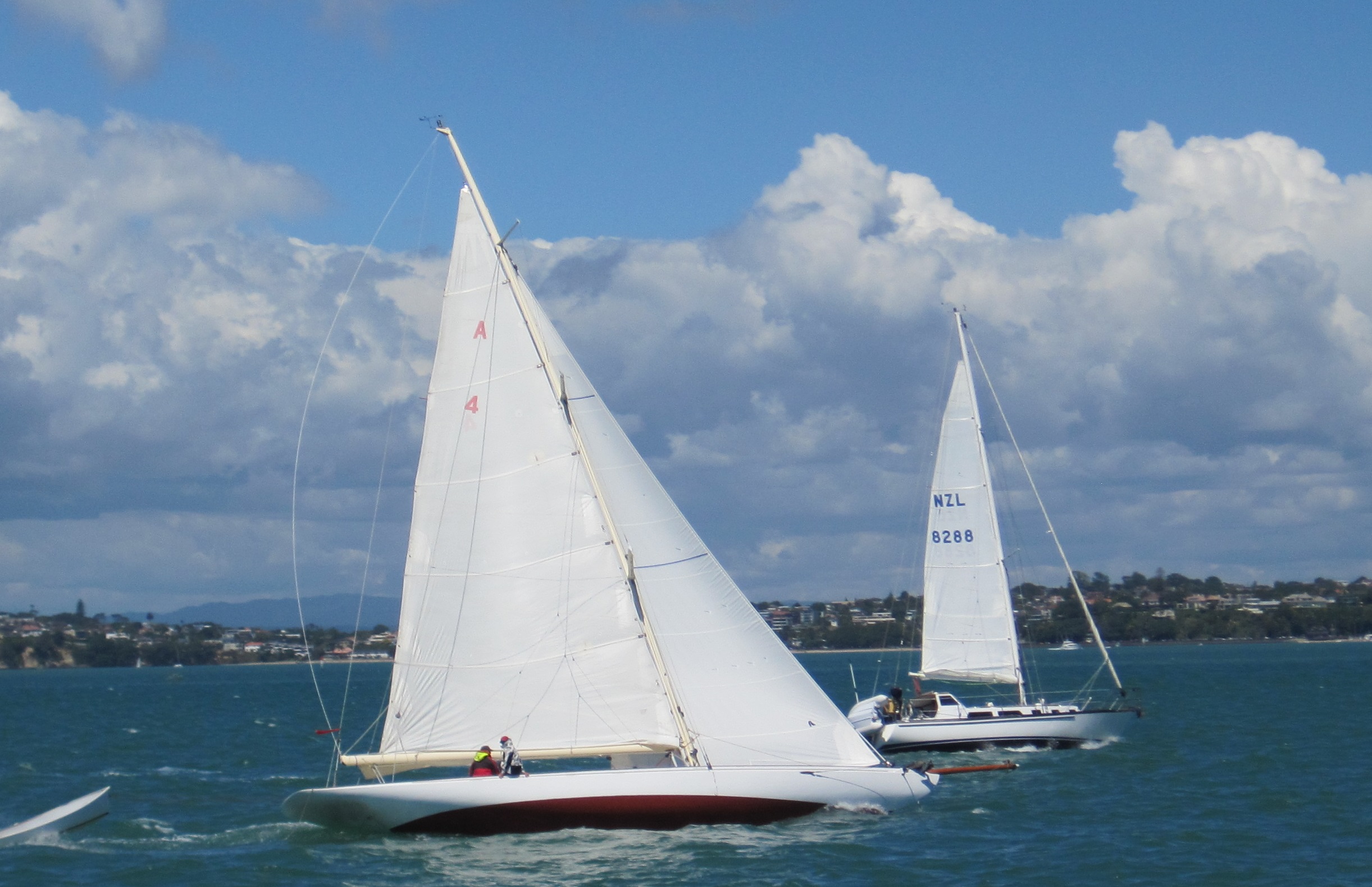
IMG_0563

As soon as we were anchored at Waiheke, we dropped our newly-wheeled dinghy into the water and headed to the beach. The kids loved the opportunity to play with their boogie boards…
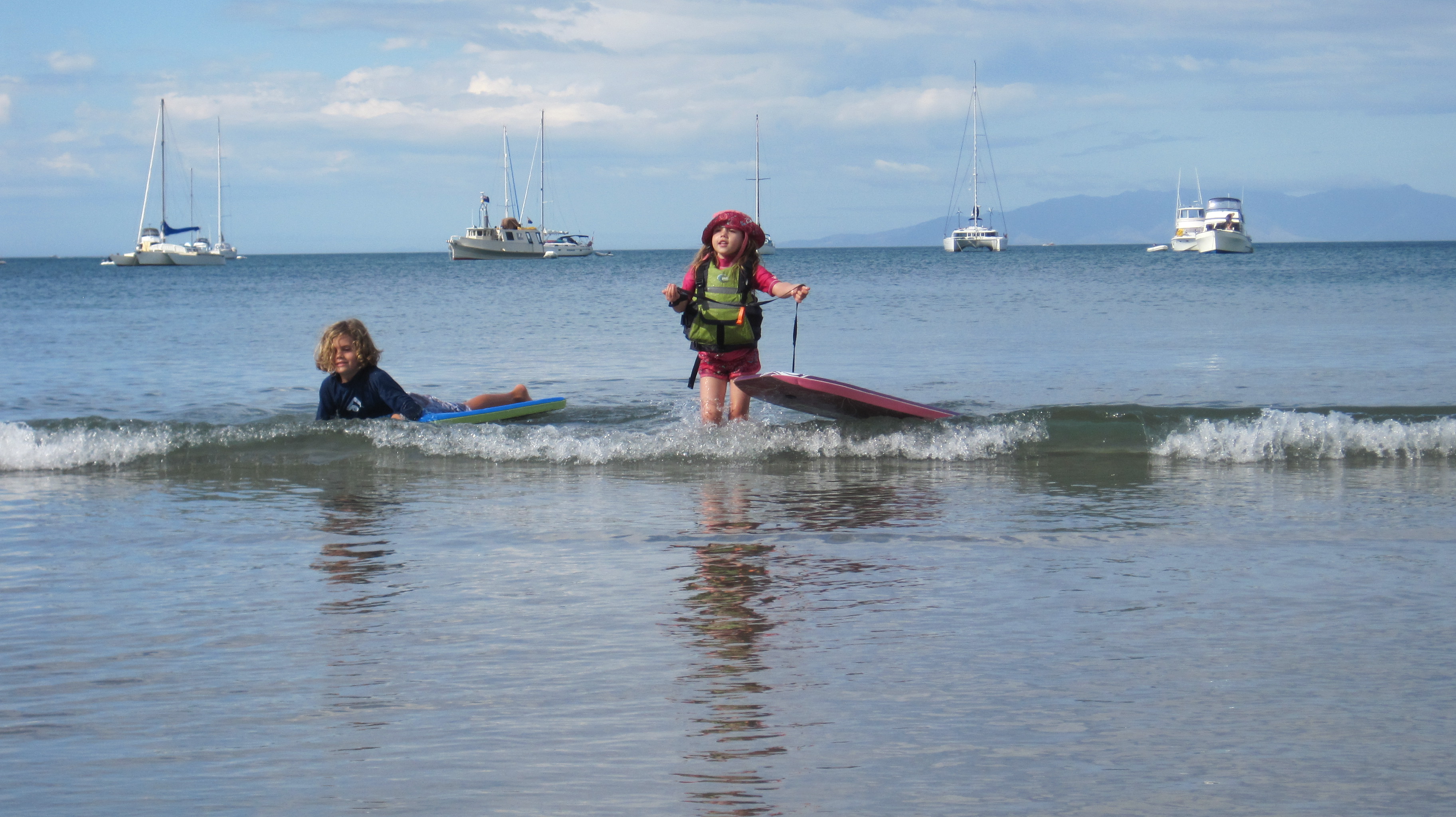
IMG_0573

… especially when they conned one of the grown-ups to play speedboat and pull them along the water’s edge so they could skim at a high speed. This was done over very short distances.
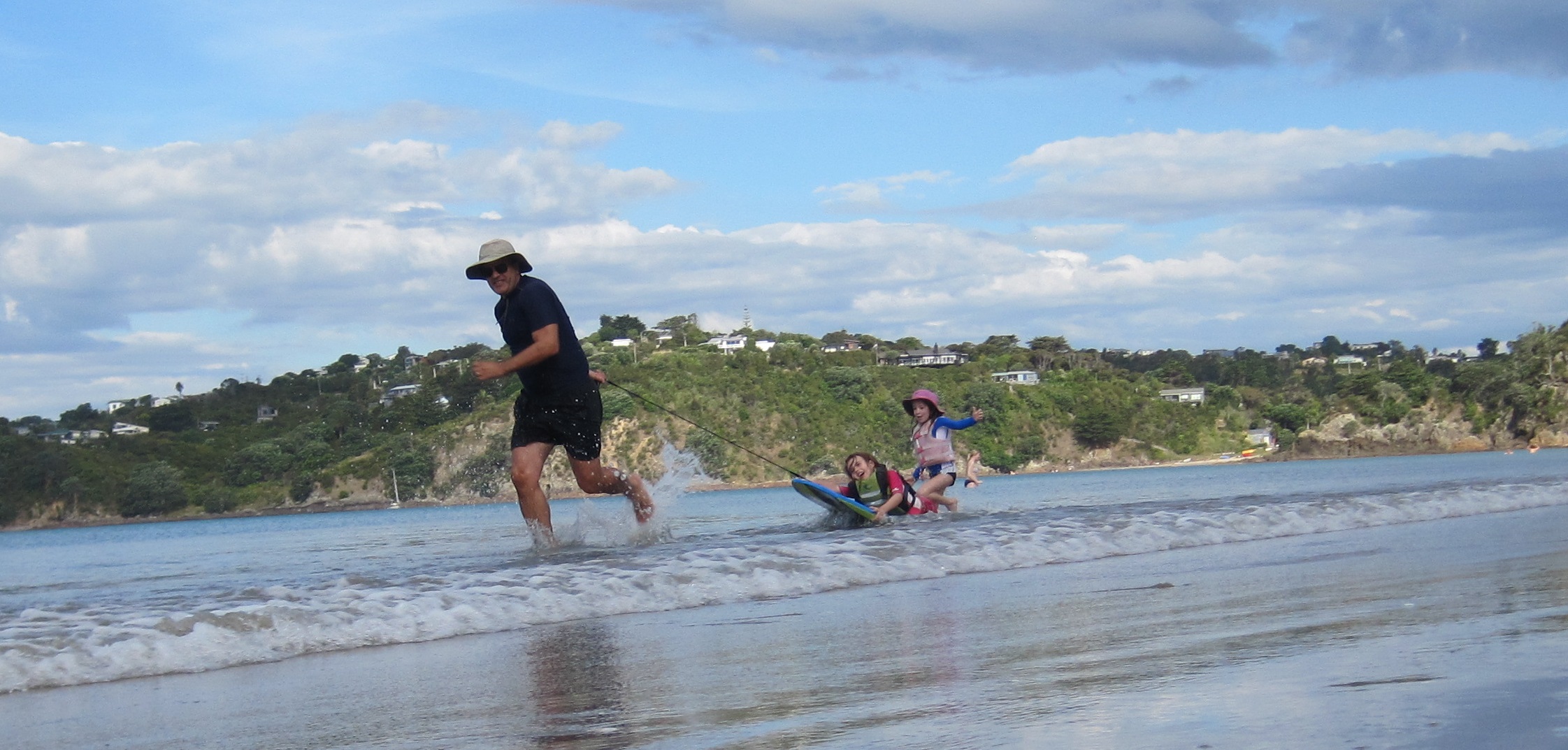
IMG_0581

By the time we got back to the boat, it was 6:30 PM. We made a quick dinner (curried chicken, rice, kale, green beans, apples, pinot noir). The younger kids crashed relatively quickly. Leo stayed up and played UNO with Jenna and Maureen while I wrote this blog.

It was a long day, but we collected our friends, got out of the city and made it to a nice anchorage. We even had a bright rainbow followed by a nice sunset. Tomorrow we’ll head 50 miles around to the other side of the Coromandel Peninsula and hang out on the beaches of Great Mercury Island. These are beaches we love, and we are with people we love.

Have I mentioned lately how lucky we are?

IMG_0584

A Day at the Races

Xmascarnival[1]

Jenna and I attended the annual Boxing Day horse races at Ellerslie track in Auckland yesterday, and we had an absolute blast. Leo kept referring to the event as the Boxer Day races, but it was more about horse racing than men’s underwear. We actually had a babysitter for the kids and spent the entire day in an outdoor summer Christmas party. What could be better?

For starters, it gave us a chance to dress up, something that we have done exactly once so far on the cruise.

1497447_10152491220592571_232039380_n[1]

I went with the same ensemble that won me the best-dressed male at the Opua School fundraising tea, except I swapped out the skinny gray tie for a wider silver checked tie from Barney’s. I also wore cufflinks fashioned from 5 cent kiwi coins that our host Misti gave me for Christmas earlier in the week. Jenna wore the coral dress she wore for my 50th birthday party along with vintage white gloves that were a gift from Becky and some Prada platform wedge stompers.

IMG_0207

We all liked the way her shoes complemented her ray tattoo.

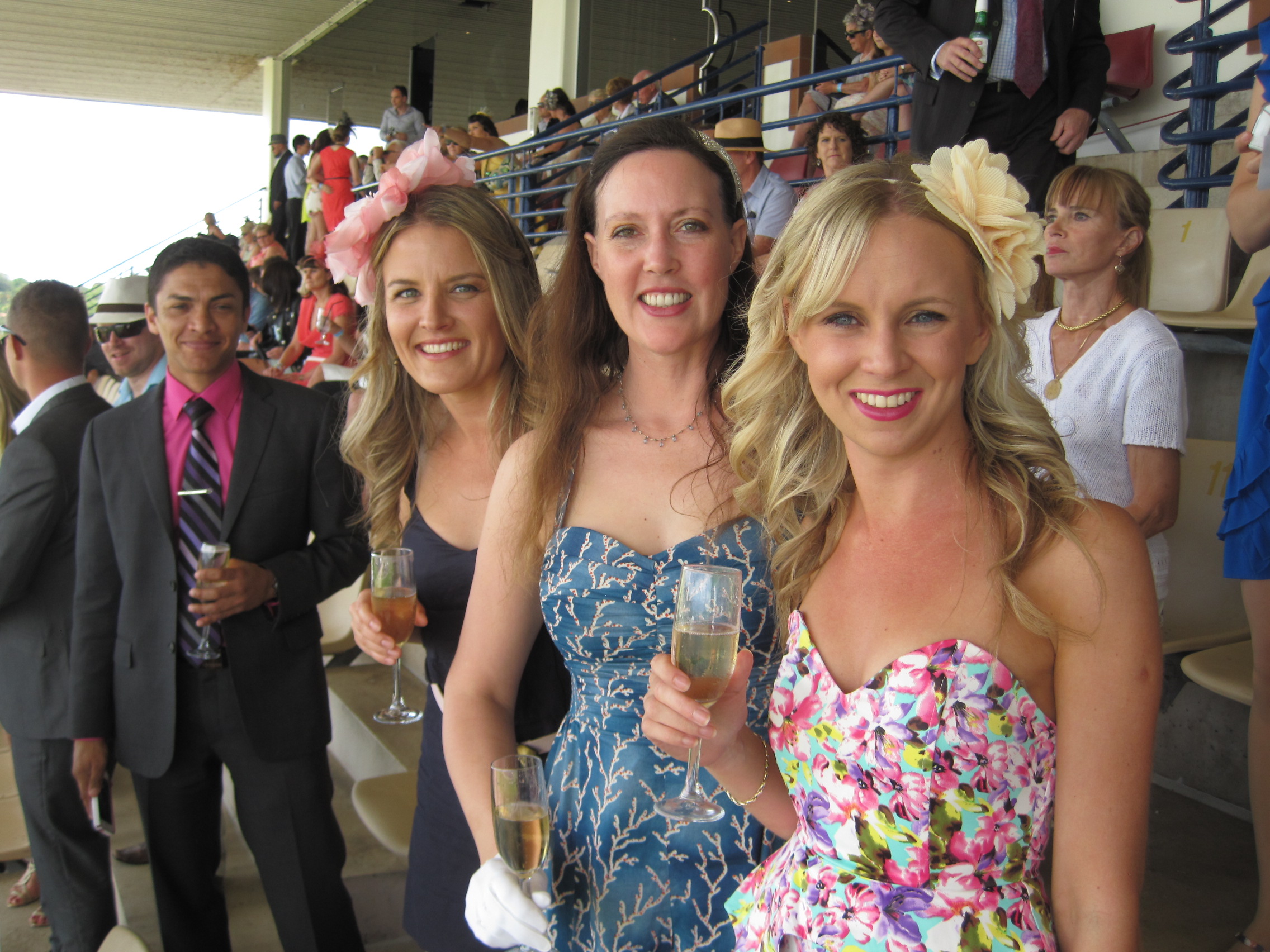
We attended with our friends Scott and Annie, and Nigel and Misti. We actually had tickets to a lounge area that featured a series of fashion contests throughout the afternoon in between the horse races.

We arrived too late to register for the competition, and which was a shame because I think my skinny jeans would have put up a decent fight in the men’s group.

1512713_10152492035677571_13606804_n[1]

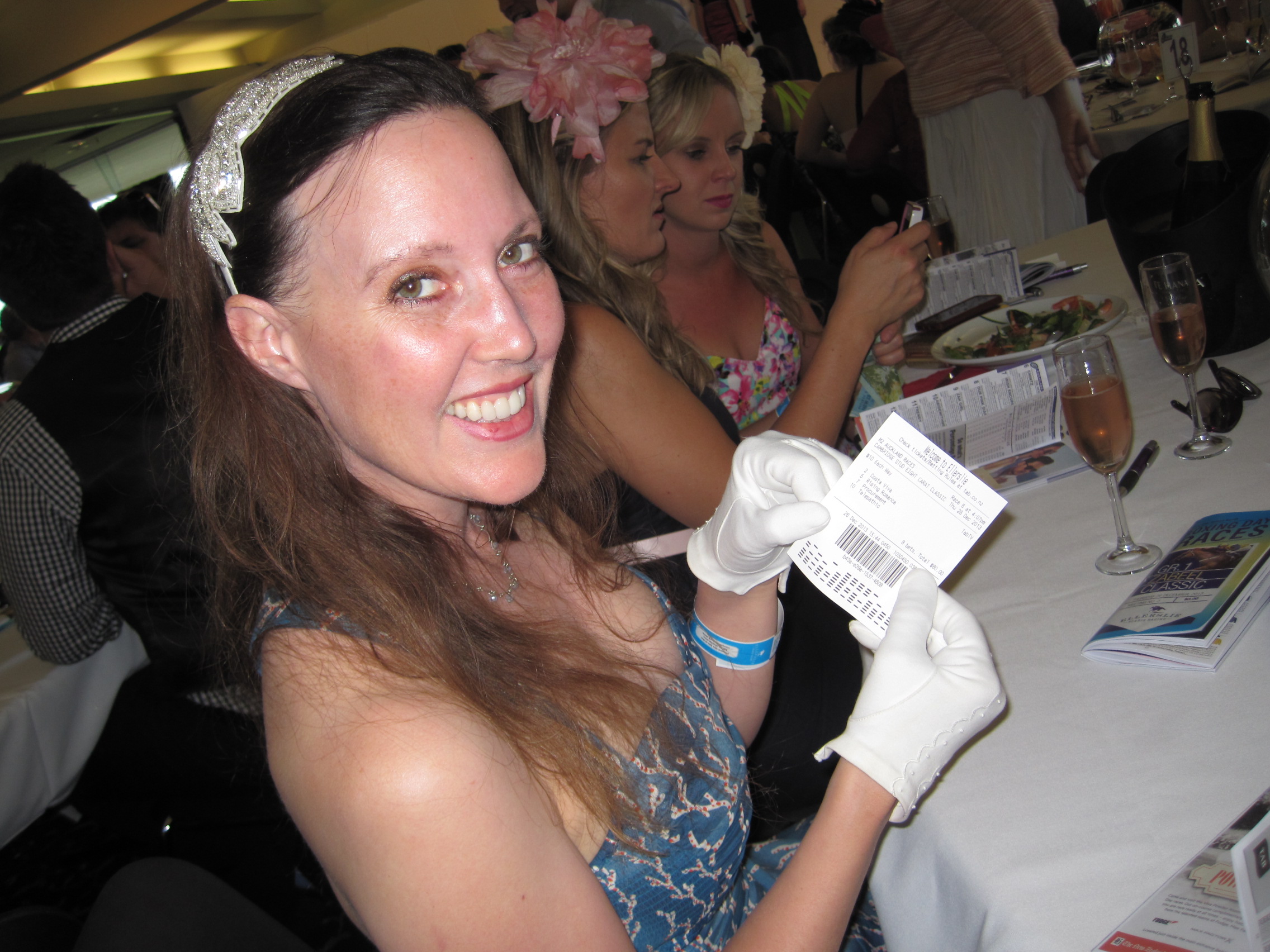
But we were really there for the ponies, and we would sit around our table and diligently go through the data on each horse and then bet on the one with the coolest name. Jenna was especially good at that. It was the gloves.

IMG_0226

We would then go outside and sit on a balcony to watch the race. We had never been to a horse race before.

IMG_0186

The races were run on grass and varied in distance.

horses

It was SO MUCH FUN. Here is what I looked like after my horse Abideswithme won his race.

IMG_0225

Any horse with a name that refers to The Big Lebowski requires a bet, and I had him to win and to place.

Jenna got into the winnings as well. She liked it.

IMG_0263

But as much as we were enjoying the horse racing, the more we were there, the more we realized that the day was all about the clothes. In the women’s fashion contests, the successful strategy was to go vertical.

IMG_0227

Those aren’t hats on their heads, by the way. They are called fascinators. Some were pretty elaborate.

IMG_0233

We are obviously a long way from Tonga.

We’ve written in these pages about our good friend Randy Daniels from Seattle. He has developed a brilliant habit of posing with interesting-looking people at parties around the world. I decided to channel Randy’s spirit and do the same. Here is a shot of me with the model who posed for the event poster at the top of this blog. She didn’t enter any of the contests, but her dress was stunning.

IMG_0234

Here is a shot of me with Paris Hilton and her friend.

IMG_0244

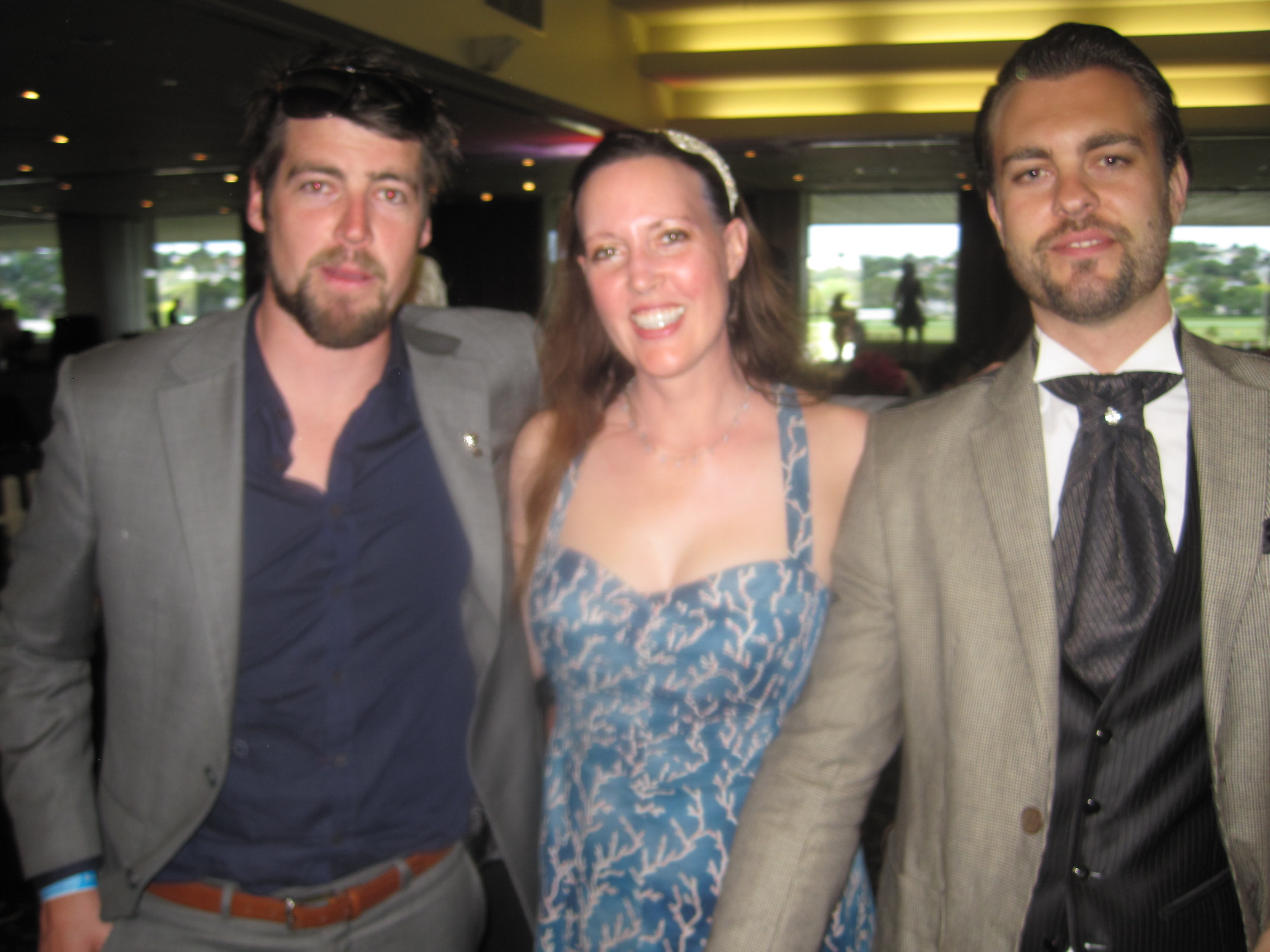
Even Jenna got into the action and posed with a couple of guys whe had entered the best-dressed contest.  The guy on the right is named James and was really bummed he didn’t win. He had a nice cane, though.

IMG_0251

All in all it was a day of silly fun, capped off with Jenna’s Minnie Driver imitation from “Good Will Hunting” She won the overall competition for best dressed at the event. At least in my view she did.

Have I mentioned how lucky we are to be on this trip?


Auckland’s Red Light District for Sailors: A Photo Essay

IMG_0012

We’ve had Sophie docked in Auckland’s central Viaduct Marina for the last few days. It’s a lovely location, and the boat is looking great. We also are enjoying our new privacy screens, because tourists seem to be stopping by every few minutes and taking our photo. We can see them, but they can’t see us.

IMG_0015

We are also enjoying our proximity to Auckland’s Central Business District, and we get to park our minivan right next to the boat.

Sophie has made some new and big friends in our marina.

IMG_0014

Some are even too big to fit into a single photo using the camera that Jenna lets me use.

IMG_0016

That is indeed a private yacht. (In the back.)

But I digress.

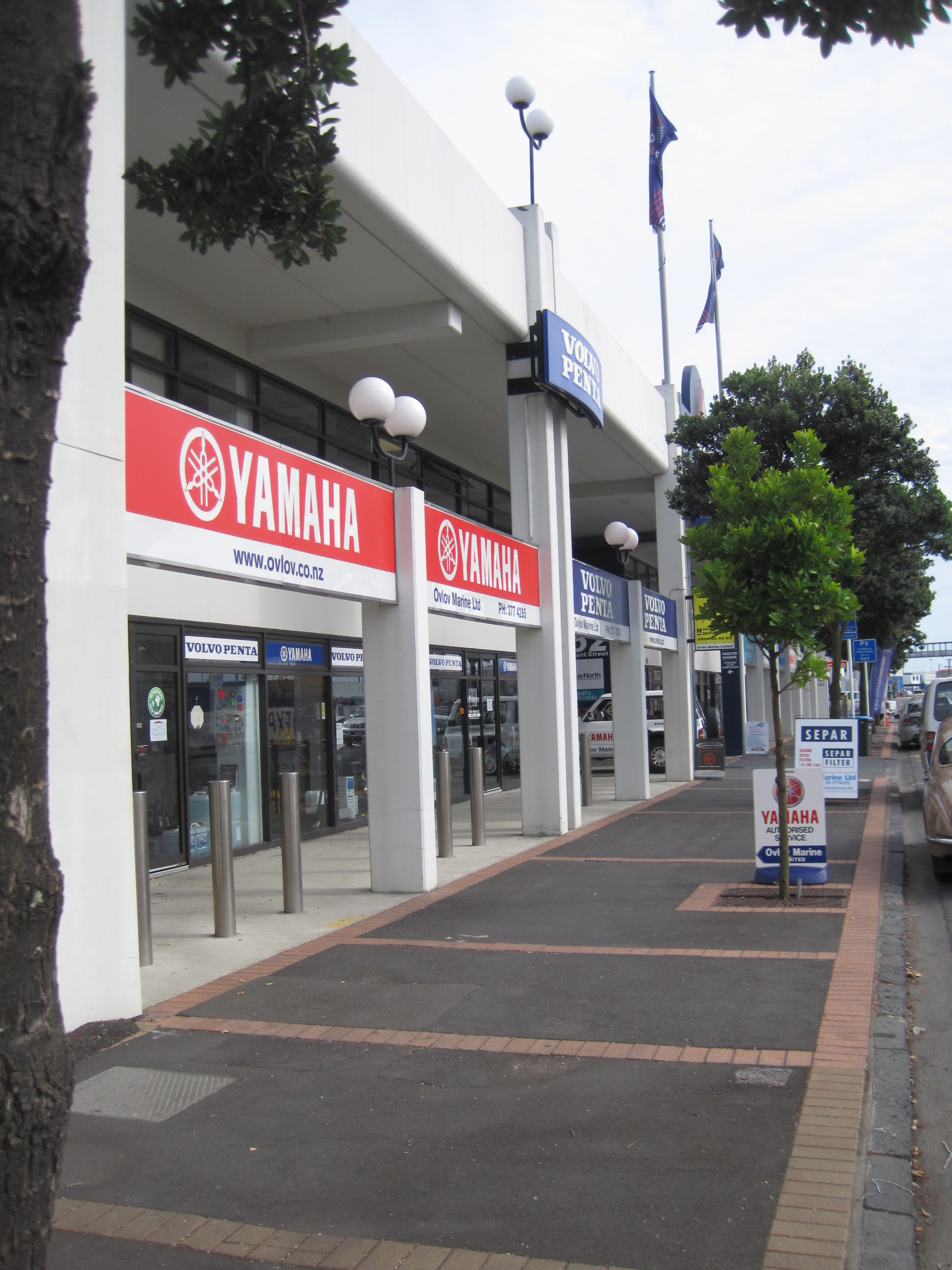
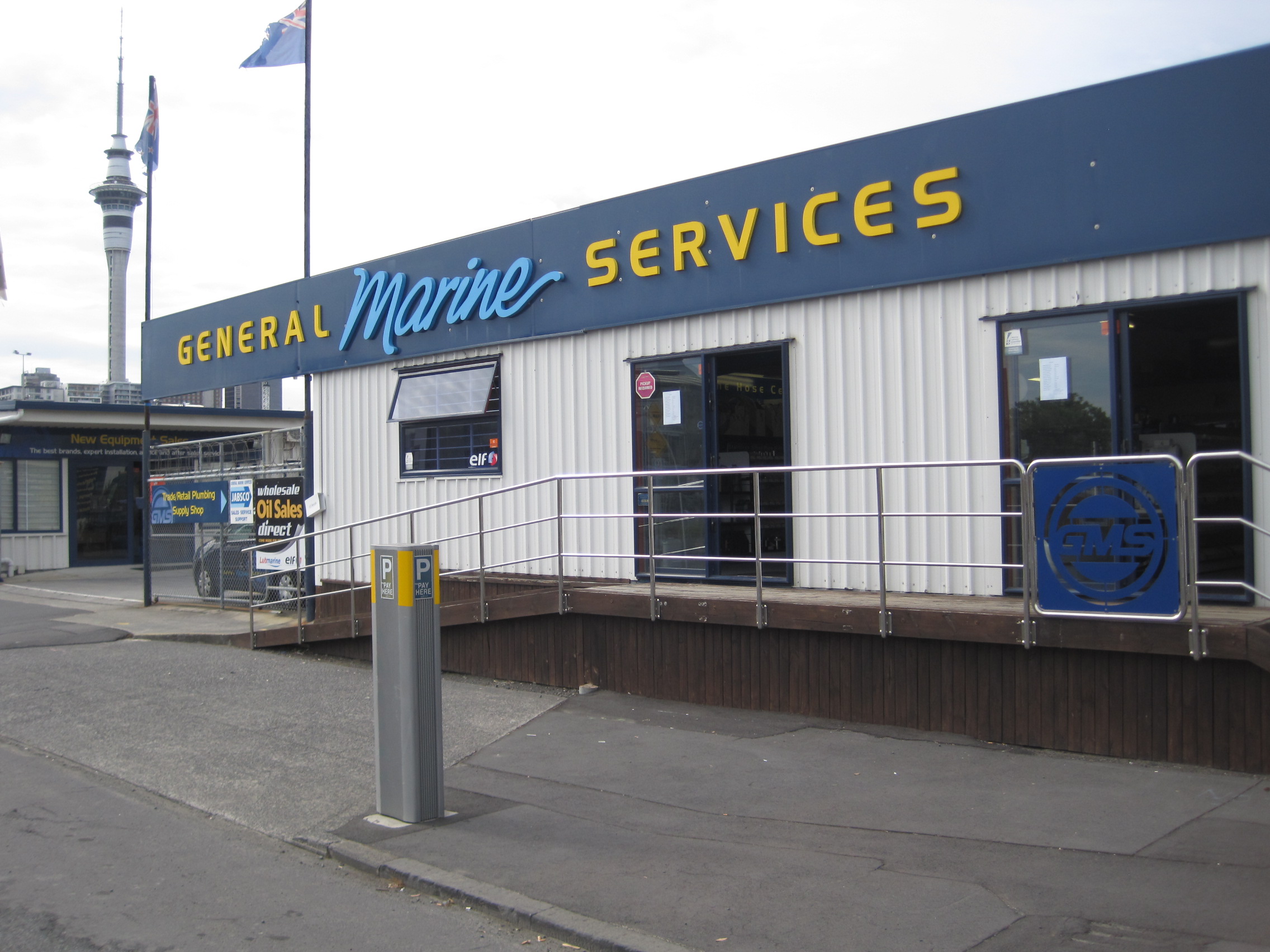
Throughout millennia, whenever a particular harbor becomes a popular destination for ships from far away, various “support industries” spring up to support the needs of the sailors onboard, usually men whose pockets are filled with cash and whose hearts are filled with loneliness. These business are usually found in seedy neighborhoods where men go without telling their wives to drink and then spend all of their money in the pursuit of pleasure.

I discovered on a walk today that Auckland is no different.

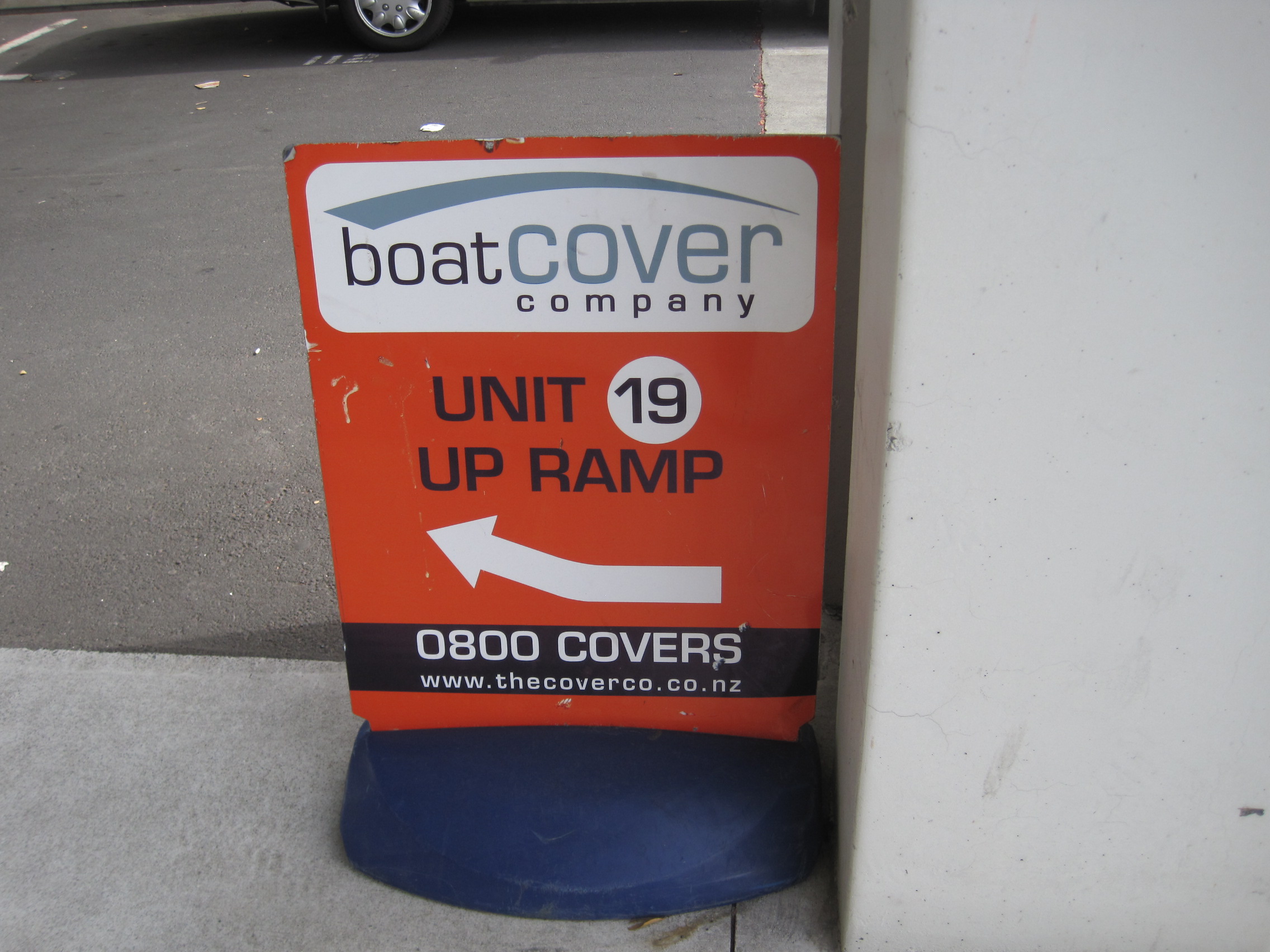
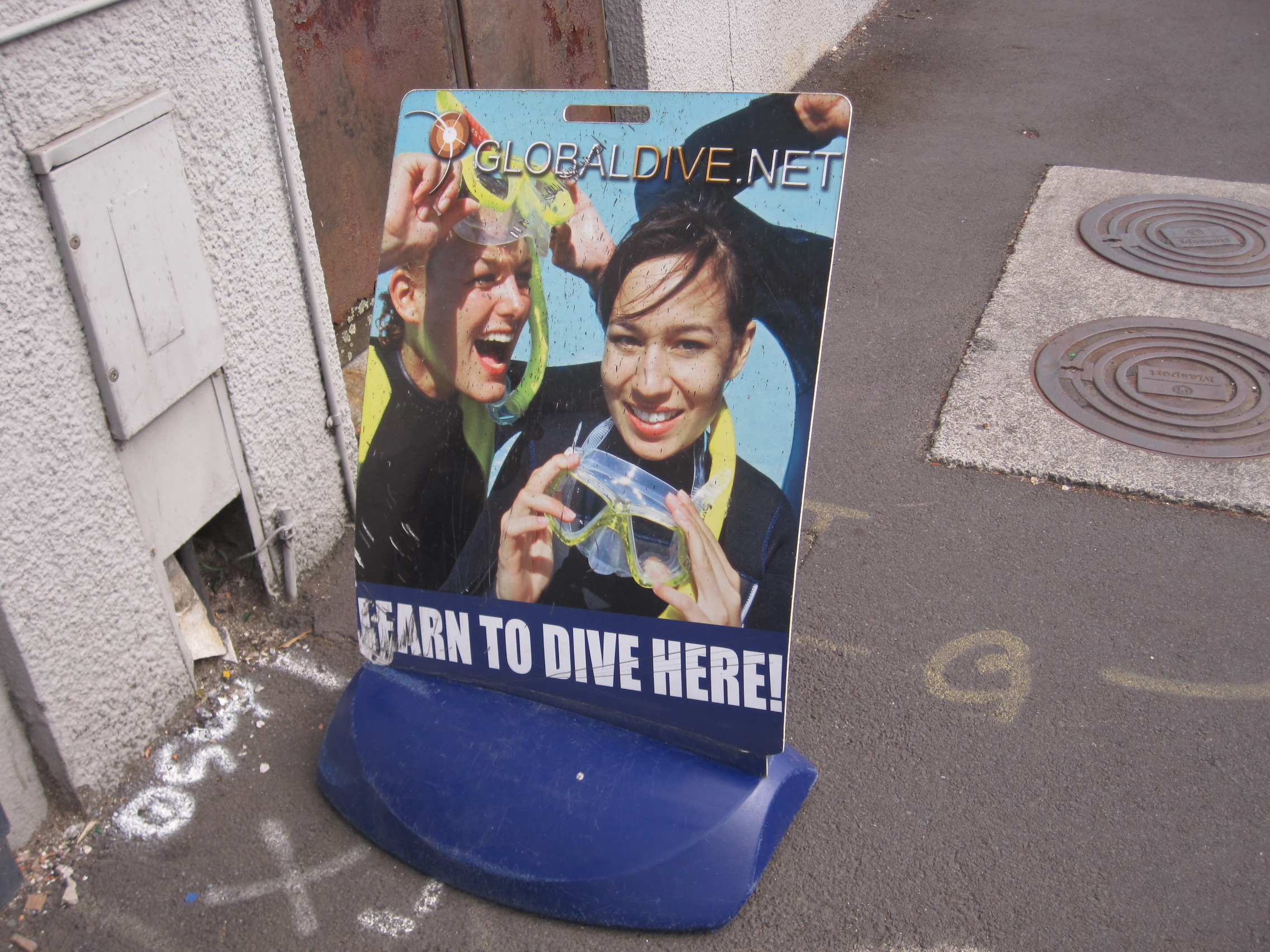
I was a few blocks away from Sophie, heading towards a park, when I stumbled into this sidewalk sign.

IMG_0019

I was immediately tempted to go in and spend all of my money. But it’s Christmas Eve, I am made of stronger stuff, and passed by the sign.  But then I turned the corner and immediately saw this:

IMG_0021

And then this:

IMG_0022

… and this

IMG_0023

… and this

IMG_0024

and this …

IMG_0026

and this …

IMG_0025

and this …

IMG_0027

and this …

IMG_0028

… all on the same block!

I turned the next corner, and there was more.

Like this

IMG_0029

… and this

IMG_0030

… and this

IMG_0031

… and this

IMG_0036

And then it dawned me!

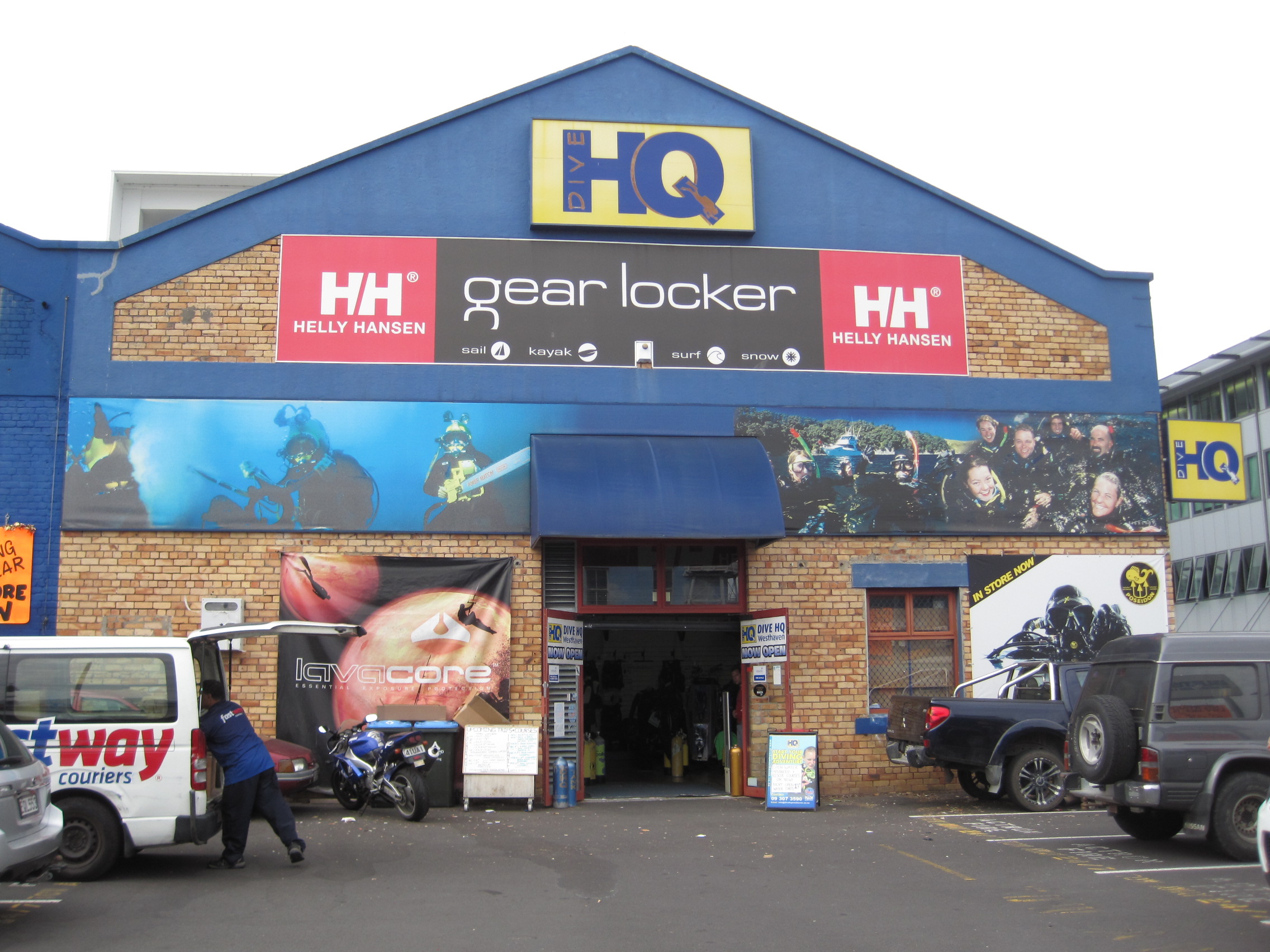
We’ve now spent 4 days in Auckland walking through the central downtown area, and I realized that I had not see a single marine, diving, or fishing store in the entire city. Auckland is the commercial center of New Zealand, and boating is a foundation for the way of life here. What was going on?

Auckland, just like Amsterdam and other forward-thinking global cities, had decided that the best way to deal with modern social issues like marine and fishing addiction was to concentrate it in a single targeted geographic area within the city. That way it is easier to manage the behavior while at the same time keeping the rest of the city clean and free of vice.

It’s brilliant urban planning when done properly, and in Auckland it appears to be working.

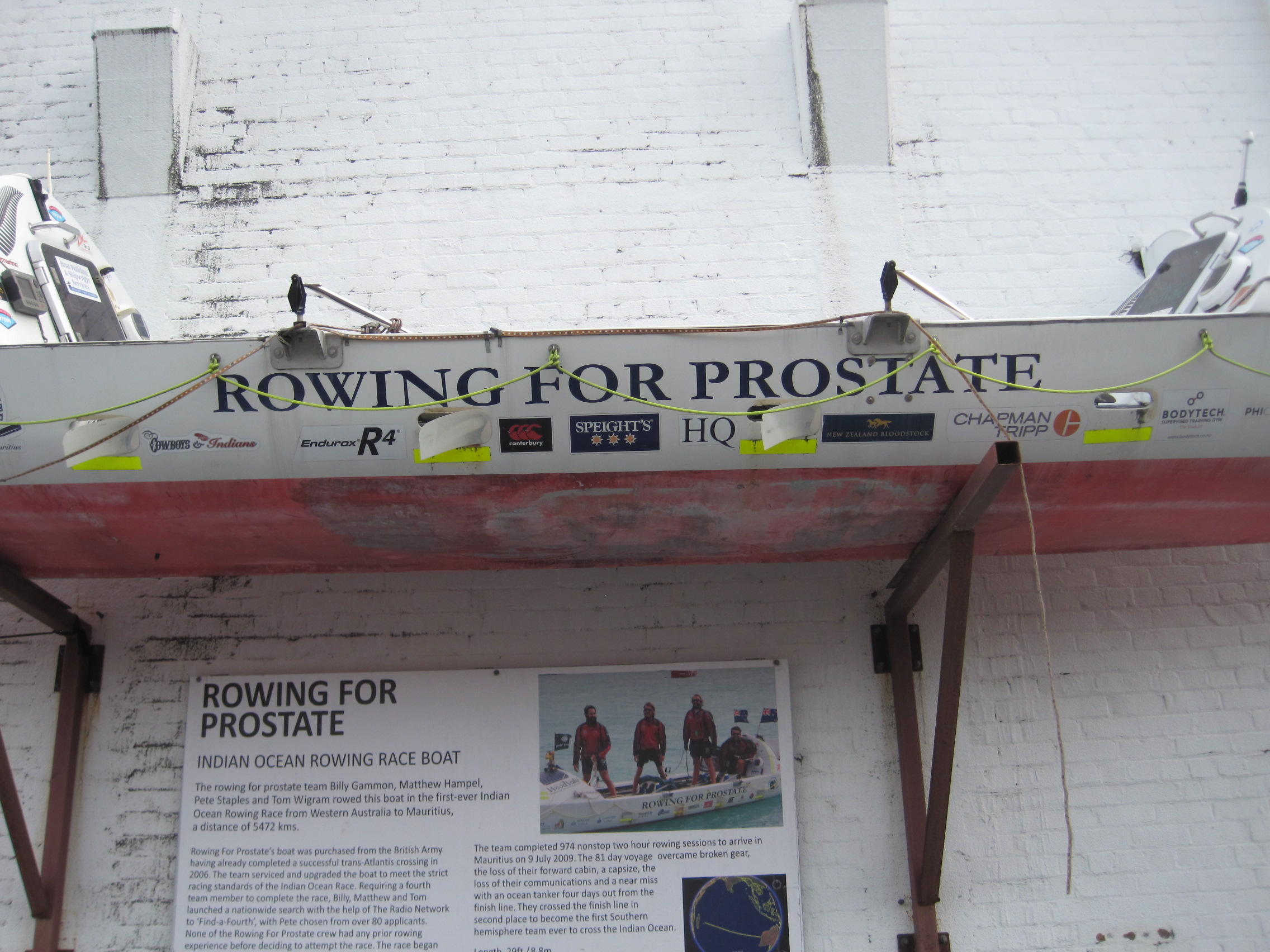
The more I walked, the more I saw how Auckland is just like Amsterdam. Some businesses in the red light district here advertise their wares in storefront windows. IMG_0067

And others practice their craft out in the open in the middle of the street in broad daylight!

IMG_0052

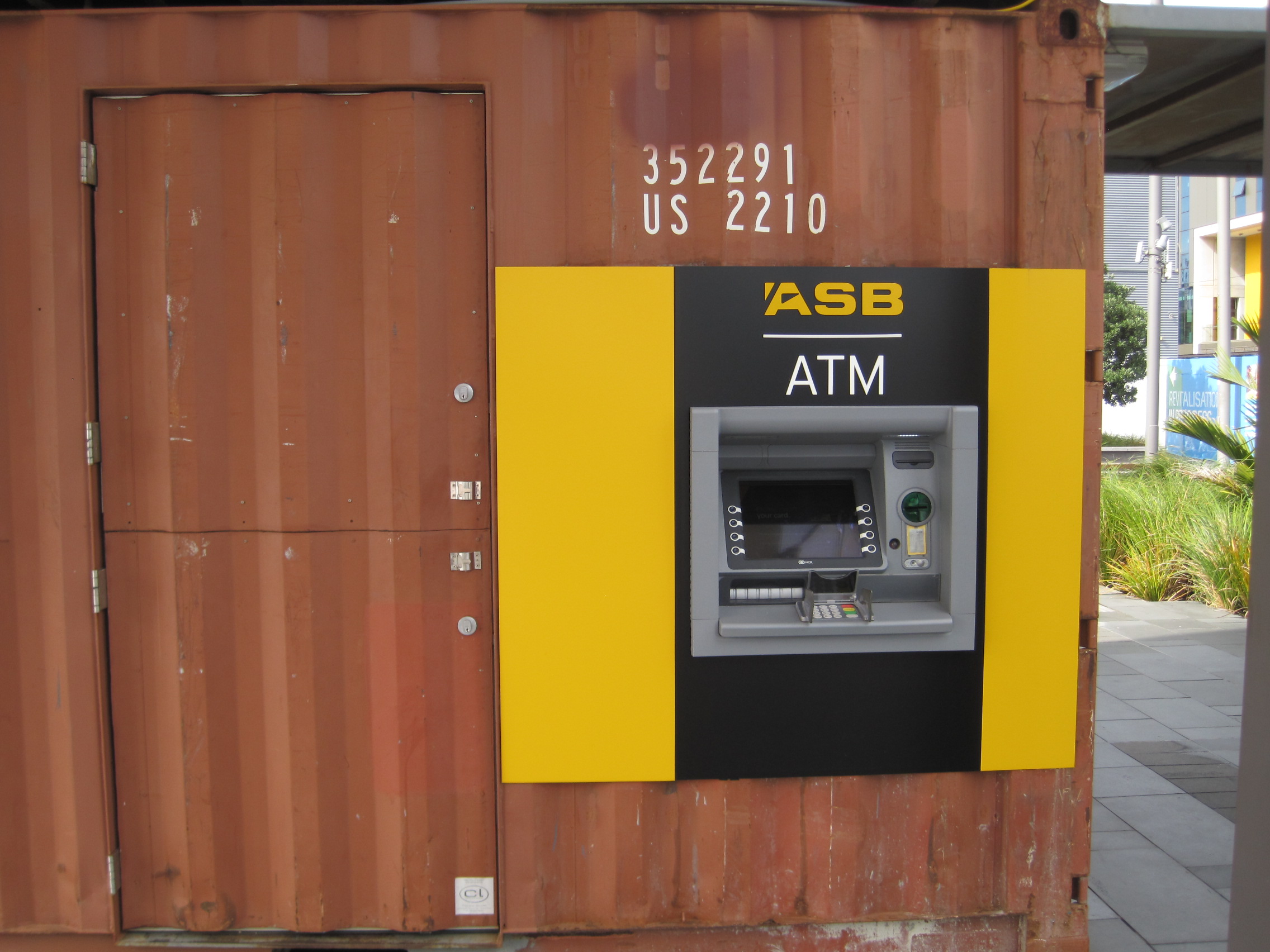
There are marine ATMs nearby so patrons don’t have to leave the district to get cash. IMG_0077

Even the public health service gets involved. IMG_0058 IMG_0059

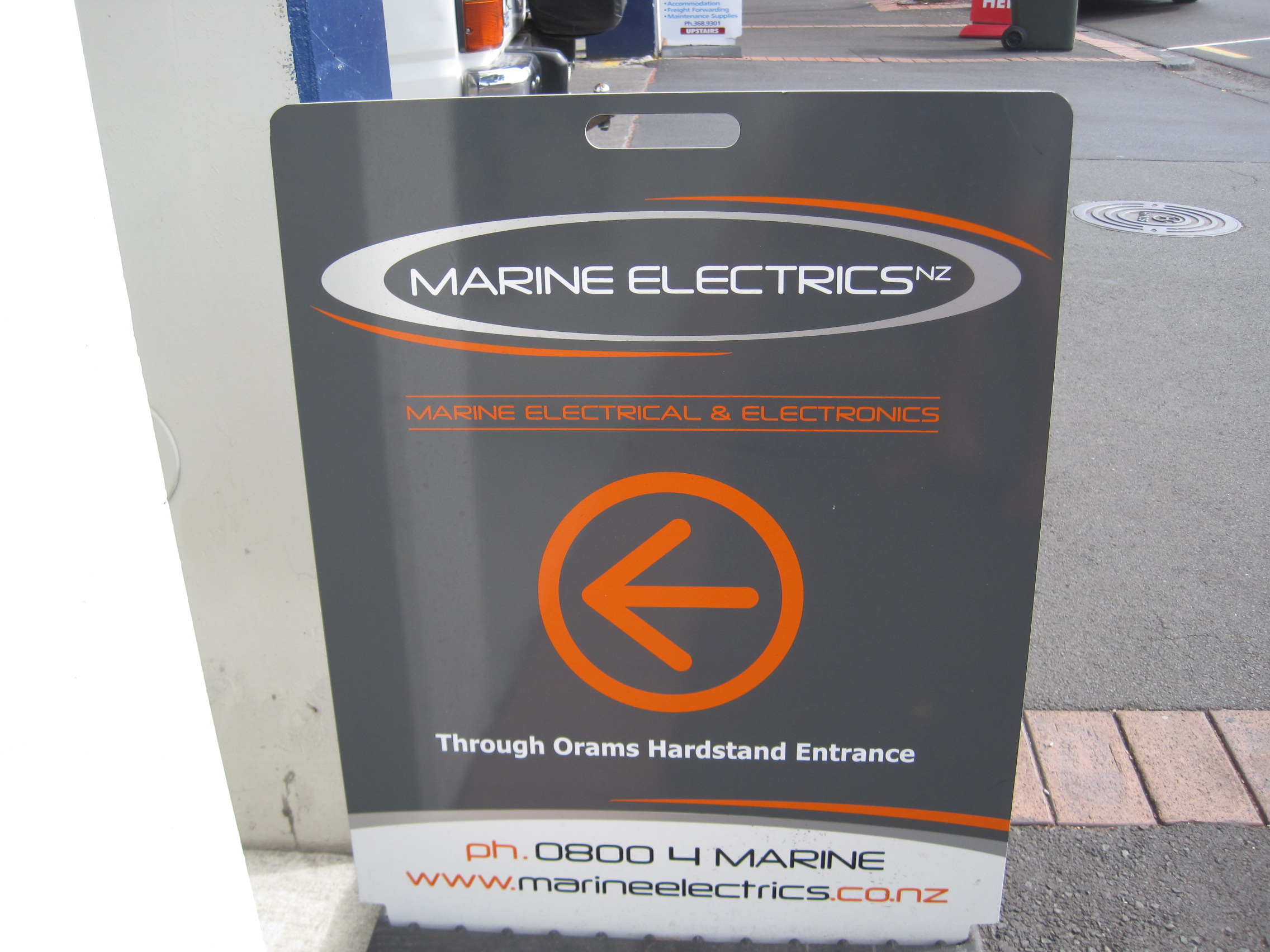
Throughout the entire district, it was impossible to avoid the quiet-yet-persistent sidewalk solicitations. They knew why you were there. It was all above board but unlike anything I’ve seen anywhere else in the world.

IMG_0073

IMG_0069

IMG_0066

IMG_0065

IMG_0055

IMG_0056

IMG_0051

IMG_0049

IMG_0042

IMG_0032

Even after a while it was still difficult for me to grasp the scale and depth of the activity and services offered here.

IMG_0064

IMG_0063

IMG_0062

IMG_0061

IMG_0070

Some of the businesses even looked like they were managed by people hailing from Massachusetts, where Jenna and I both grew up.

IMG_0037

Concentrated business districts like this one apparently can attract entrepreneurs from around the world.

But regardless of where they come from, the sailors red light district here in Auckland is a source of considerable civic pride. They have built something unique and great here.

IMG_0076

I clearly need to spend more time walking the blocks in this neighborhood — with an appropriate level of restraint — marveling about what is taking place here in this special corner of the world.

Merry Christmas, everyone!

Sophie’s Refit (addendum)

Here is a quick update on the final bits and pieces on our Opua refit.

Code Zero (one of our sails)
For starters, the local riggers at Northland fabricated a new mount for our bowsprit and then mounted the new bowsprit that Troy and Maureen hand-carried to Fiji last August. We use this bowsprit to attach the bottom of the code zero to the boat.The mount consists of a flat stainless steel plate attached to a fabricated piece of black nylon with a curve that matches the curve of the cross beam. I think this is a better design than the original.

IMG_3362

We also spent some time with Roger Hall from the local North Sails loft trying to figure out the best way to rig the sail permanently. The answer had been sitting right in front of us for the last 5 years!

IMG_3363

IMG_3364

We are going to run the continuous furler line sideways to one of our spinnaker guy snatch blocks on the starboard bow, and from there to the bow cleat. It gives us the perfect angle to keep tension on the line as we unfurl and furl the sail. We also have reconfigured how we run the line through the furler, using the correct set of line entrances and exits this time. We think this approach will eliminate all of the tangle problems we’ve had with the sail since we commissioned Sophie. We also decided that we don’t really need sun protection on the sail if we leave it out for a couple of days at a time during a passage and then put it away when we are in port. We’ll try this approach as we sail down to Auckland between now and Saturday.

The stopper block that holds the code zero halyard has not been working well, so we are going to replace it with a new stopper to make sure we have as much tension on the halyard as possible. This block has been giving us trouble since our Marquesas crossing.

IMG_3365

Luckily, we have a spare.

IMG_3366

Jib
We replaced our jib sheets. Too much chafe. Same color, size and material.

IMG_3361

(And those of you with keen eyes just noticed Sophie’s Christmas lights in this photo. Yes, we are fully decorated, and yes, Jenna’s holiday photo bog essay is on the way …)

Heater
IMG_3280
Our heater works! That’s the beautiful sight of diesel exhaust coming out of the heater exhaust vent.

It was fairly straightforward for the local sparkie to install the new heater. He had to install a new diesel return line to the tank.
IMG_3358

He also installed a new fuel-water separator to help us avoid water damage in the future.
IMG_3359

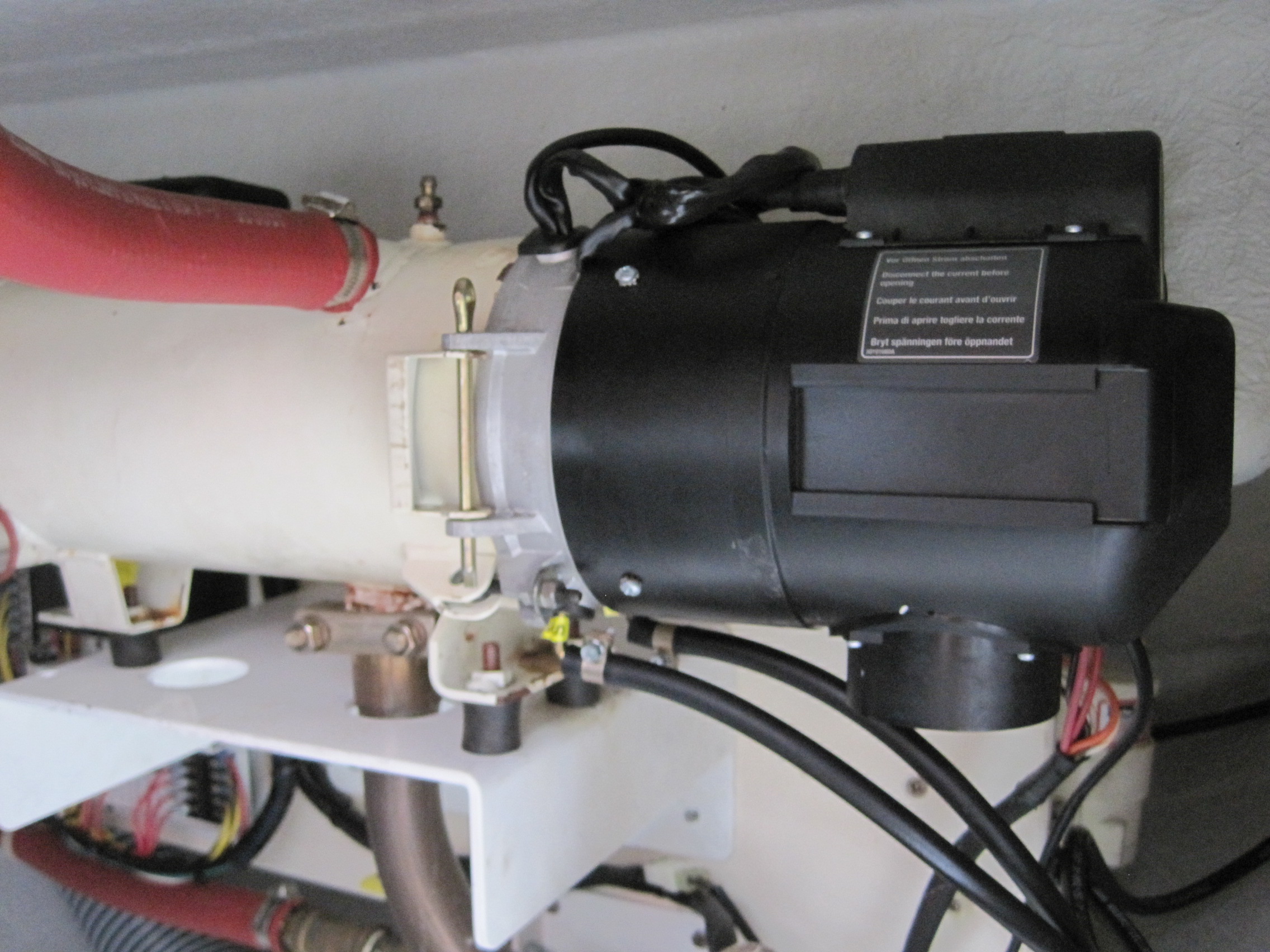
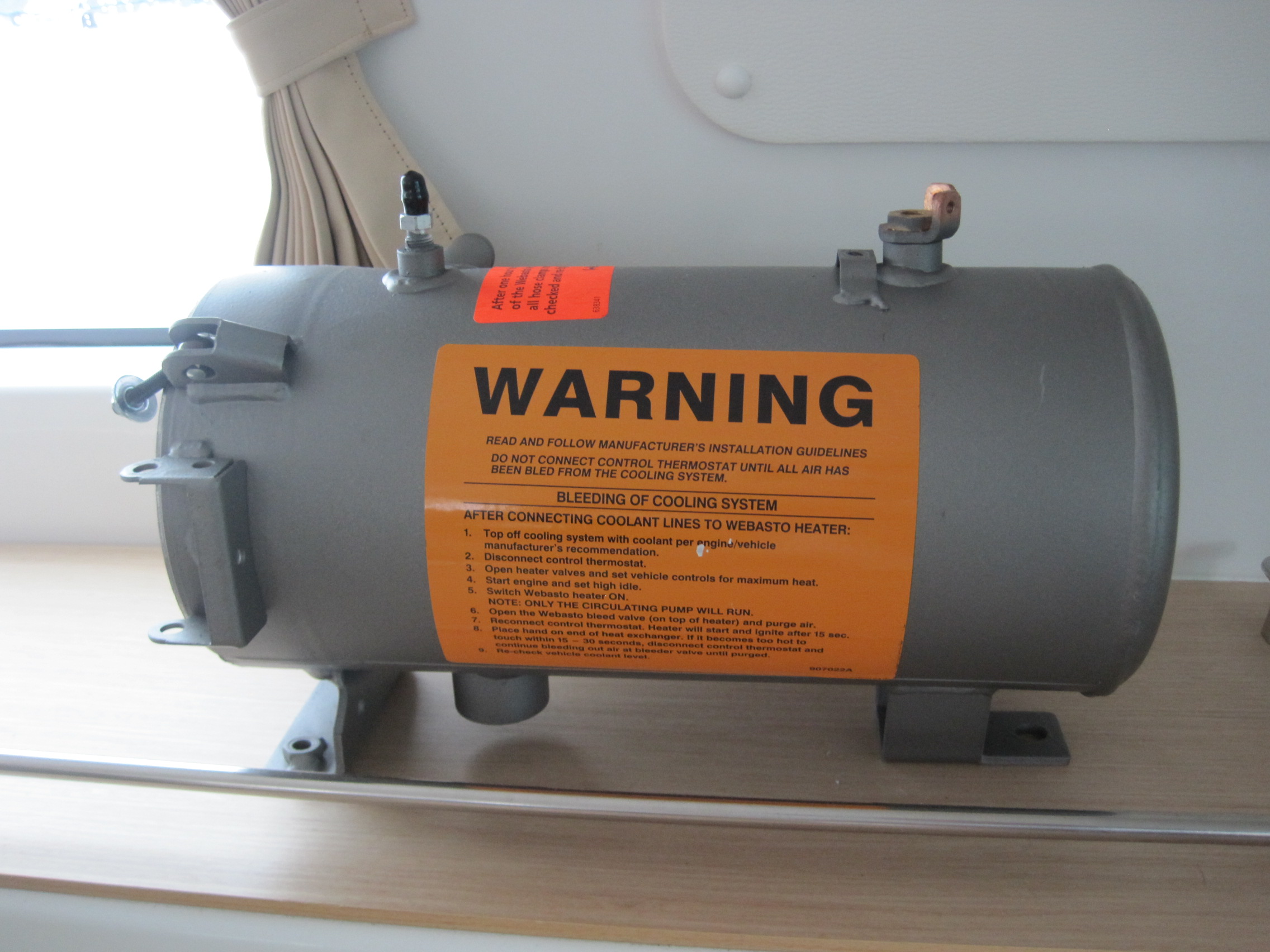
Unfortunately, the new heater’s combustion chamber did not match the fittings for our old unit, so I have to carry that part back with me when I return to Seattle for some stuff in late January. I don’t think I will disguise it as a pink purse, though. They also may not allow me to hand carry it onto the plane, given its shape and its warning label.
IMG_3341

But we understand that April autumn mornings can be quite cold in Opua, and we are very happy about this repair.

Watermaker
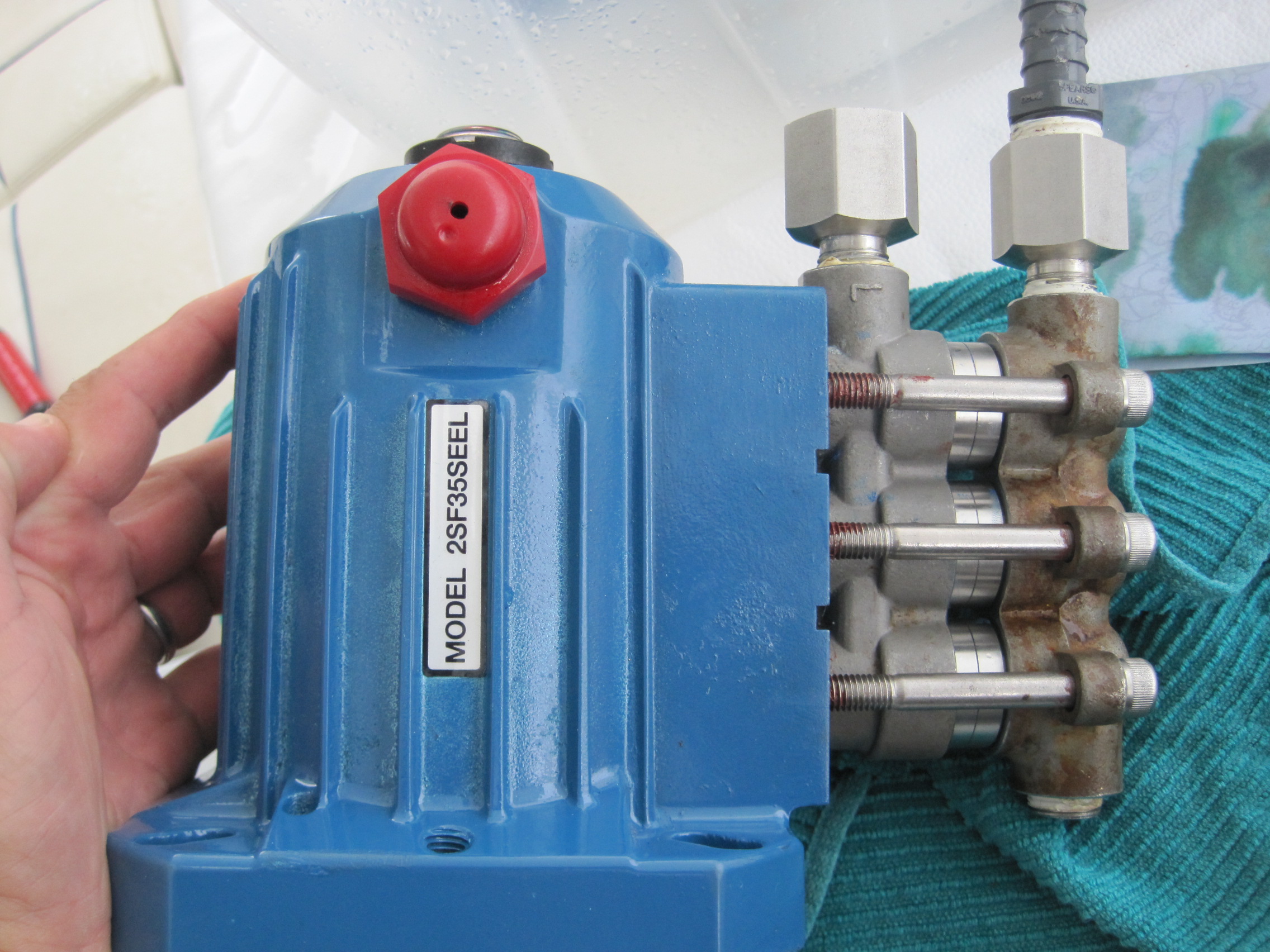
We had the rebuilt ETD and the rebuilt (and repainted) Cat Power pump installed. Here’s the pump.
IMG_3342

We still have to bleed some air out of the lines, but I assume that this will all be working tomorrow.

Leaks
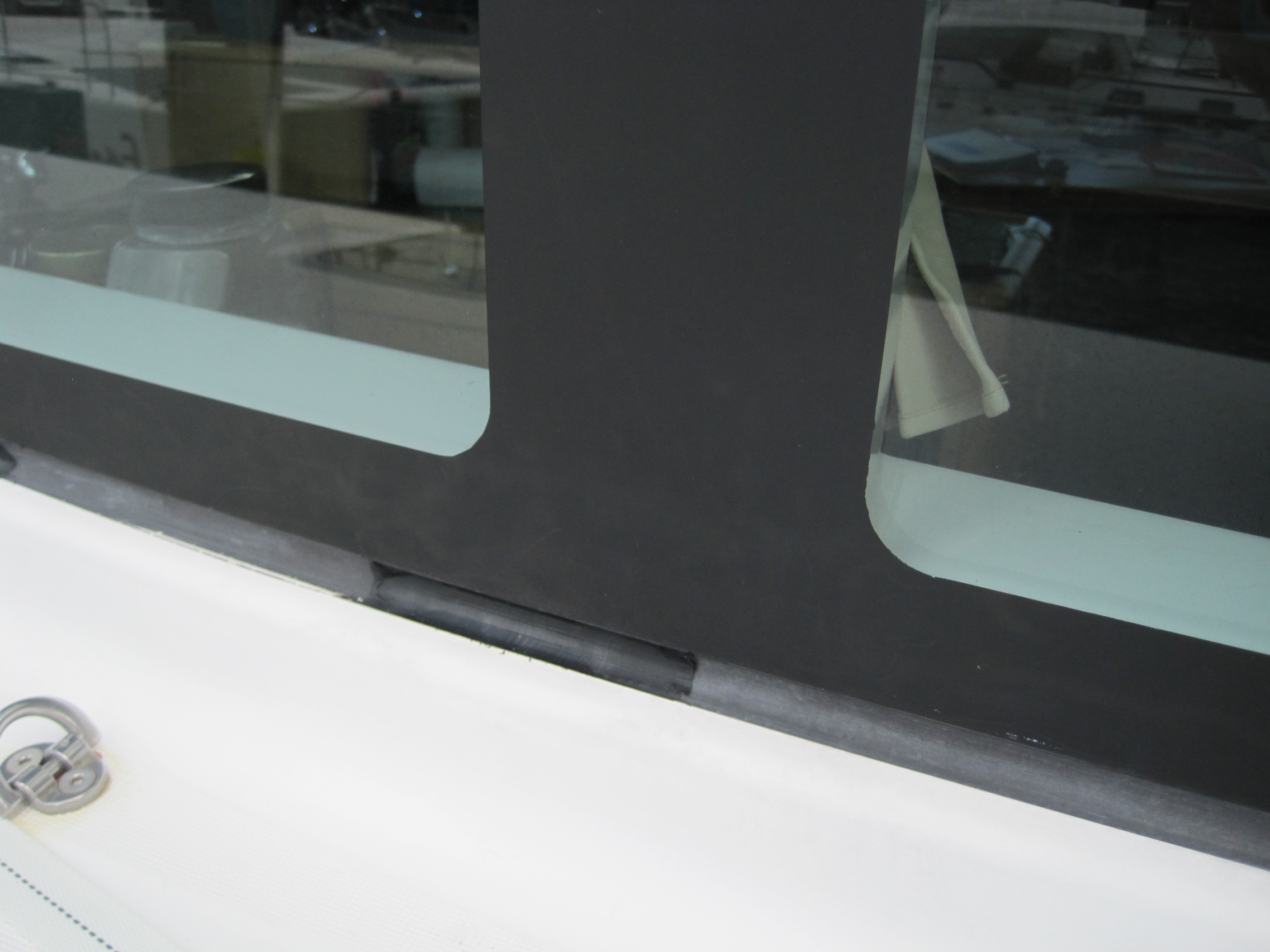
We had the guys from a local boatbuilder dig out the sealant cracks around the salon panoramic windows.

IMG_3279

They then resealed the holes using the same material that Lagoon originally used.
IMG_3360

Jenna and I then sprayed a jet of water at the repair area for 5 minutes, and not a single drop of water crept into Sophie. I think we fixed this one. A dry boat is a happy boat.

Music
Sophie has a 4 zone stereo system (salon, aft cockpit, fly bridge, forward cockpit) that stopped working during our Pacific crossing. Too much salt and wave action were the likely culprits. In hindsight, this created a great deal of stress for us because it turns out that music is quite important to our lives. We wound up using a little, battery powered speaker attached to a phone for most of the summer, and it’s just doesn’t create the same ambience we used to enjoy when 40 people danced on Sophie’s decks during the Thursday night races back in Seattle.

262885_10150247400066008_6521478_n[1]

Well, our stereo system is back in action and better than ever. I took apart all of the cabling, cleaned the connections, and then reassembled all of the leads going into the system’s main amplifier.

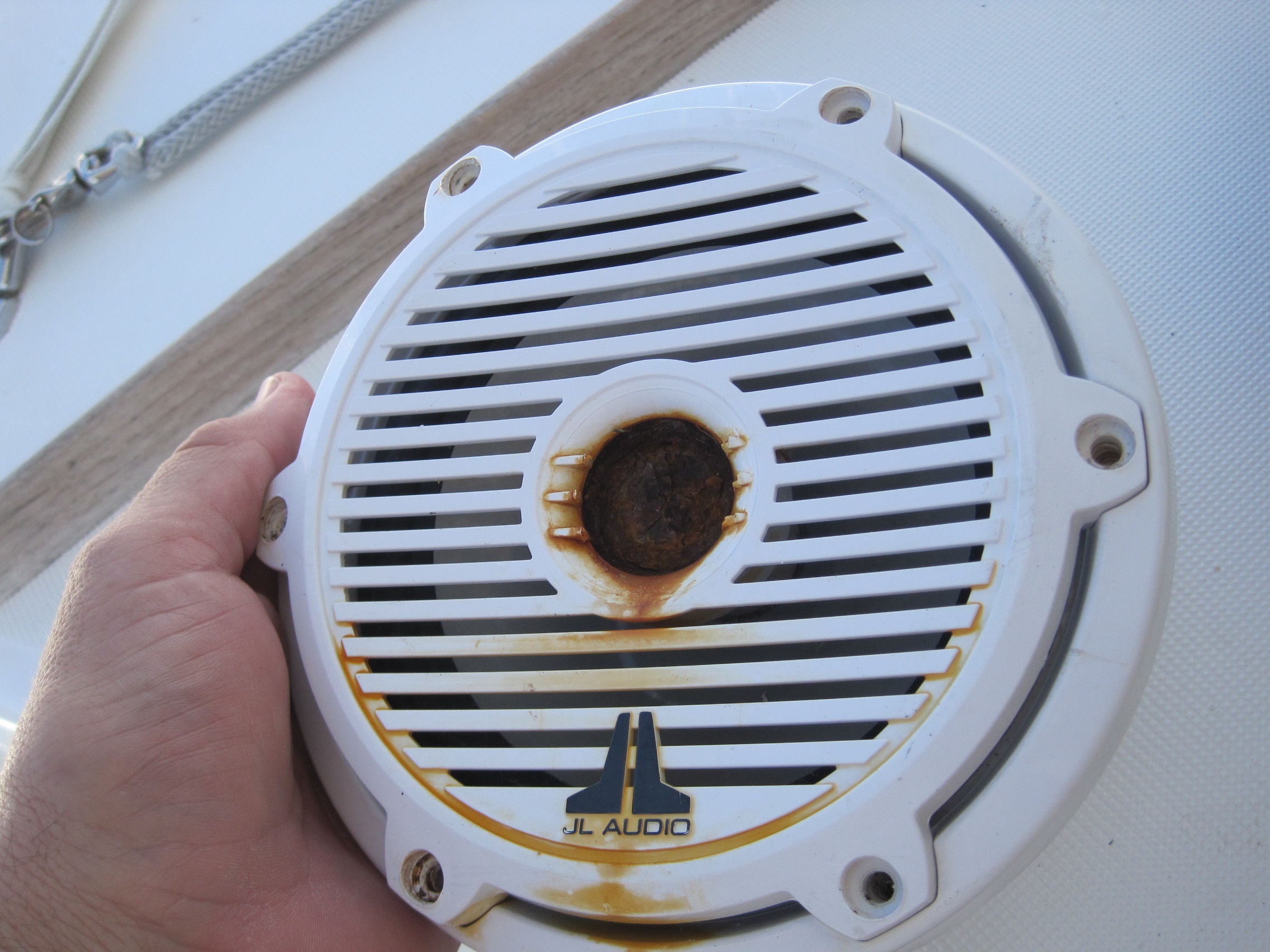
The speakers in the forward cockpit (also occasionally known as the makeout cockpit because it is a cozy spot for couples) were basically trashed.

IMG_3278

It turns out that extended exposure to green water shortens the lifespan of stereo speakers. We’ve now replaced the speakers with new ones and they sound great. We are looking forward to having Troy and Maureen give us feedback on the space’s ambience when they return for a visit in February.

IMG_3281

Aft Cockpit Enclosure
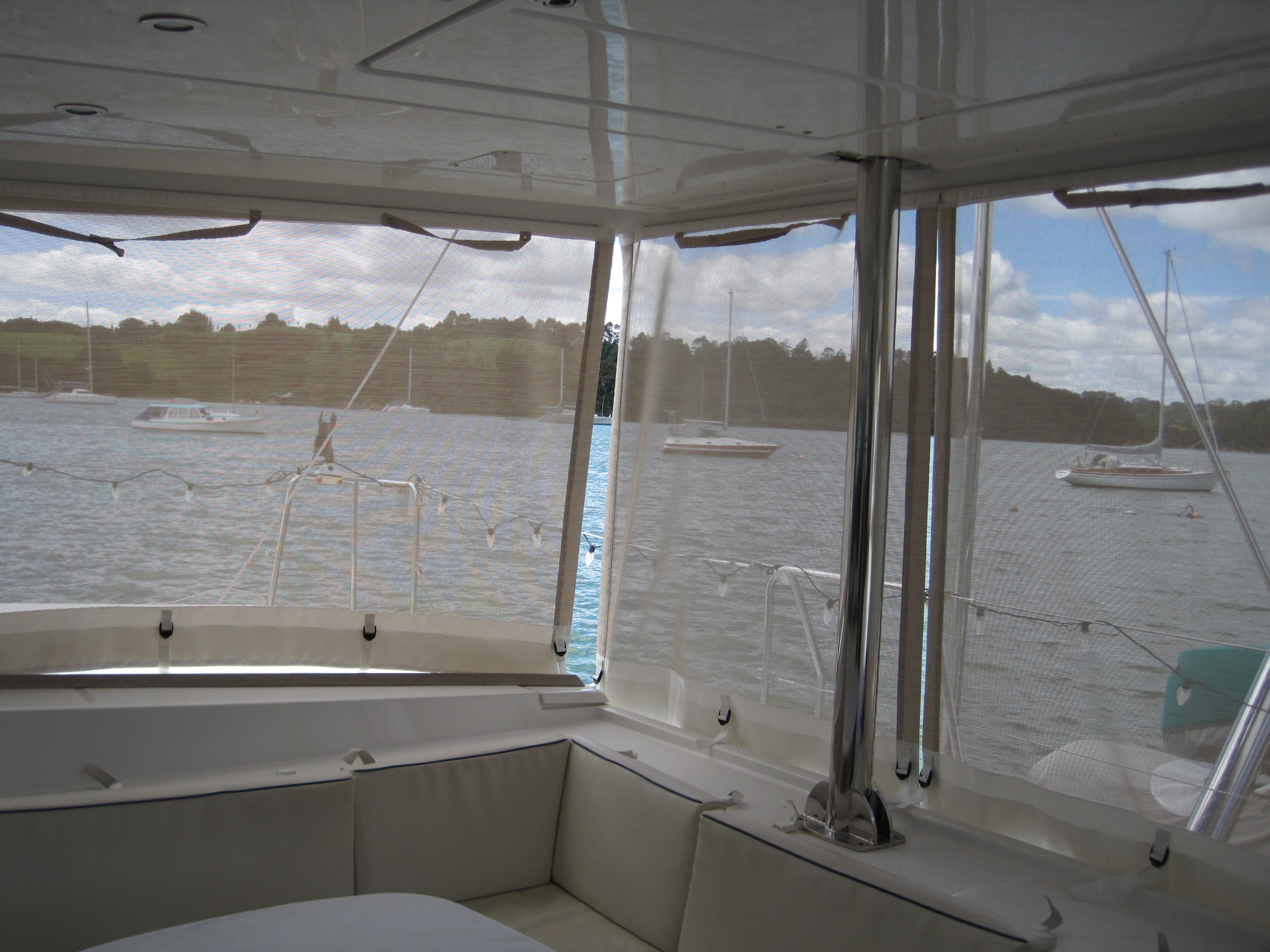
We had new sunscreens made here in Opua, and they are wonderful. We may wind up leaving them permanently installed for the next four years. The local canvas shop used the existing winter enclosure as a template, so the new screens map directly to the existing cockpit hardware.

You get a really nice view from the shaded interior.IMG_3356

But from the outside, people can’t really see in, giving us a certain degree of privacy.

IMG_3357

We will be docked in Auckland’s Viaduct Marina over the next couple of weeks, and we understand that this is a popular spot where thousands of people walk the docks during the holidays. It will be nice to be able to watch them without having them watch us.

Getting Ready for a Busy Year
It now looks like we will be having friends and family visit us in February, March, May, June, August, and September. We love the company and the opportunity to share our boat and our lives with people who are close to us. With all of the additions and repairs we’ve made here in Opua, Sophie will be ready and waiting!

Sophie’s Refit

158_9539675394_4292_n[1]

Believe it or not, it’s coming up on 6 years since we first received Sophie in a shiny new package from the Lagoon factory in Bordeaux, France. Actually, she didn’t come in a shiny new package, she came covered in soot on the deck of a freighter from Belgium. But she was new, she was ours, and she arrived the same week as Hazel.

72653_10151502595925395_1936510486_n[1]

Since then we sailed Sophie for 5 happy years in the Pacific Northwest, and after that sailed her 7,000 offshore miles from Seattle to New Zealand on the first leg of our family adventure. Over the course of our Pacific crossing we encountered in aggregate about a week and a half of heavy weather sailing involving 30+ knots of wind and 5+ meter seas.

We have met friends on other boats who did the Pacific crossing over the last year and lost things like their mast, rudder, sail drive, autopilot, self steering, windlass, and navigation systems. Sophie has held up extremely well and suffered no catastrophic damage. But now that we are in New Zealand, we decided to take advantage of the skilled local workforce and have Sophie undergo a bit of a refit after all these years. Let’s walk through some of the work we are having done.

Forward Lockers
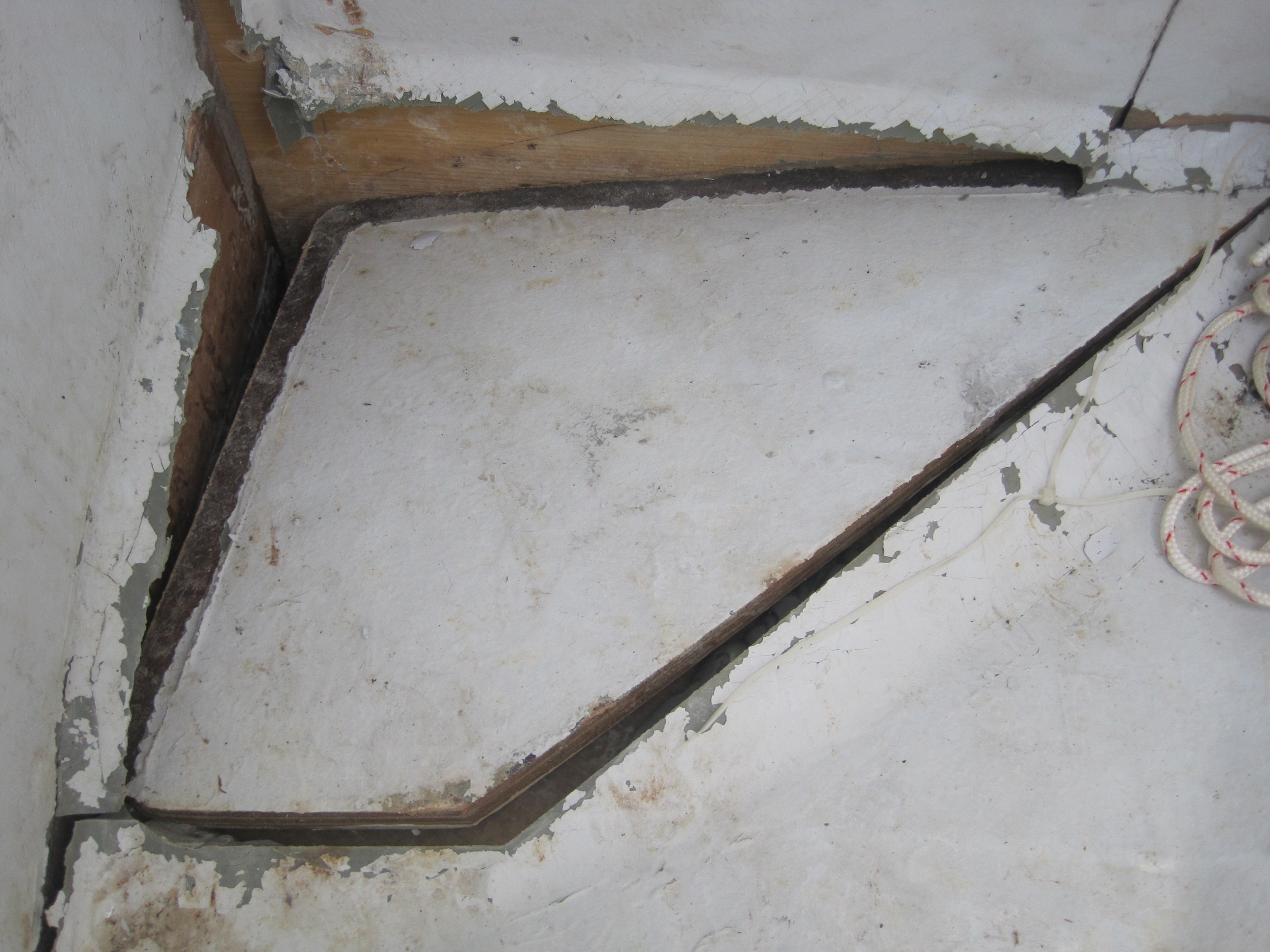
As I mentioned in a previous post, we experienced some problems with the bulkheads (walls) in the forward lockers behind each trampoline. The pounding over the course of our Pacific crossing caused the walls and floors to separate, ultimately allowing a decent amount of seawater to drain into our starboard bilge on our last passage, from Fiji to Opua. This is a phenomenon cruisers try to avoid. We use these lockers to store spare anchors, anchor chain, and piles of extra lines and rope which all became quite heavy when wet. I now believe this added weight contributed to the damage.

IMG_2931

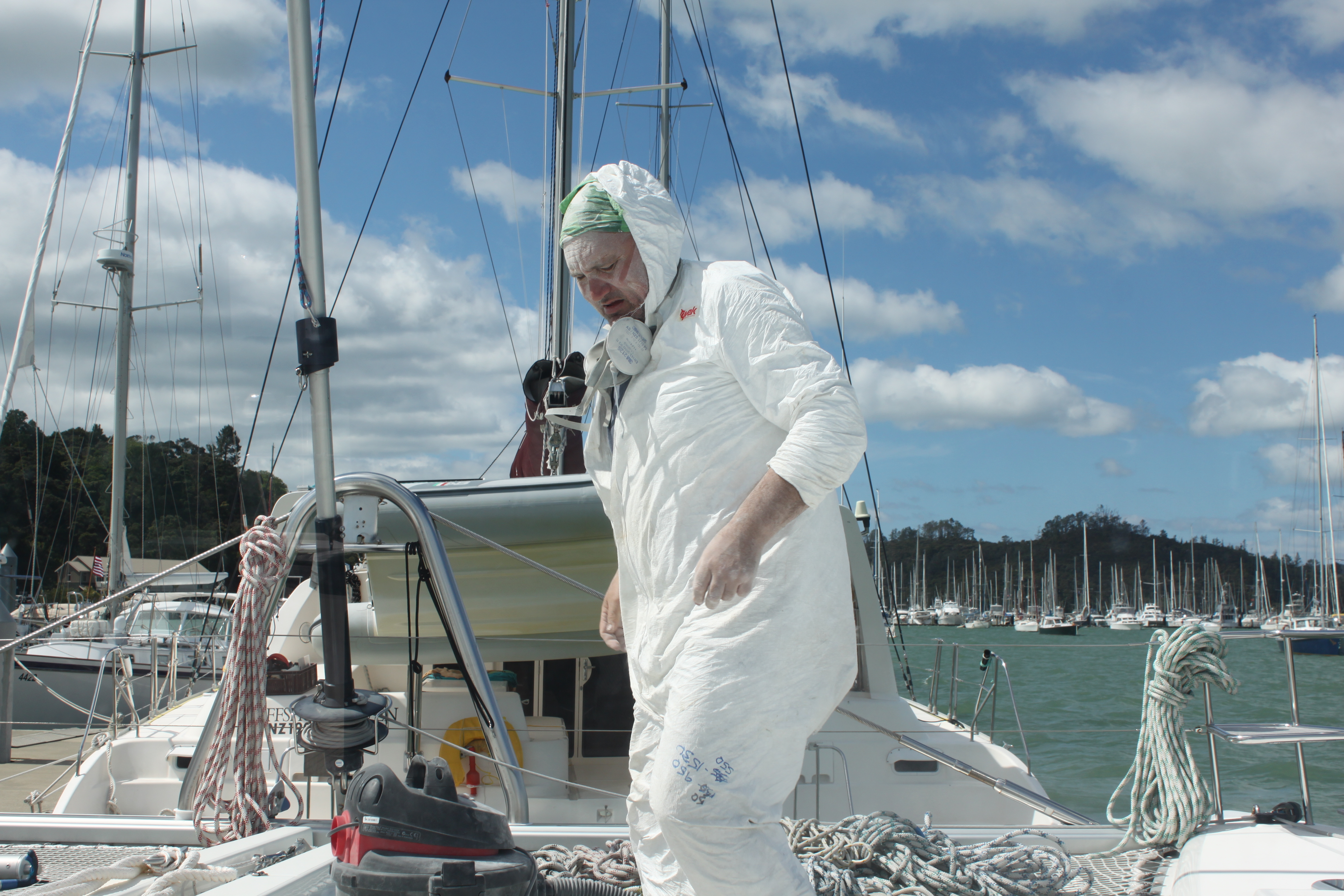
We asked a local builder, Peter Sowman, to do the repair. His guys, including “Big Rob” shown here, had to grind out the bedding and glass in the lockers to prepare them for the repair.

IMG_1143

He reglassed the walls together and sprayed hardening foam under the floor for extra support. The result is a pair of lockers that are now stronger and drier than the original.

IMG_3254

As part of this repair we asked him to fabricate and mount four stainless steel rails on each side of the lockers. These will enable us to hang lines in a manner where they will be able to stay dry (and therefore remain much lighter.) We also won’t use these lockers to store chain or spare anchors any more.

IMG_3242

Aft Vent Covers
On Sophie’s transom are 2 plastic covers that partially protect the intake for air vents that go down into each of the engine rooms. They are mostly cosmetic but unfortunately over the last 5 years had faded into two different colors. One became tan, and the other became whitish. Having two-tone rear panels became annoying, but the Pacific Ocean solved this problem for us by ripping off one of the covers on the passage from Bora Bora to Rarotonga. Peter replaced both covers in matching white.

IMG_3255

Leaks
Over the course of the journey we developed identical leaks on either side of the main salon, right where the stairs go down to the port hull on one side and to the owner’s cabin on the other side. It’s fairly normal for cruising sailboats to develop little leaks, but it can be a real pain to find them, because water can travel a long way from the hole it uses to enter the boat to the hole it uses to enter the cabin. The leak on the port side was worse and usually occurred when we had a strong wind/wave action on the beam, which happened on our passages to Rarotonga and to Opua. Just this last week we had a violent and torrential rainstorm with swirling winds right here at the dock, and both leaks occurred simultaneously. We knew we needed to get them fixed.

So the next day Jenna and I removed ceiling panels in each hull and started doing some leak sleuthing, a process involving spraying jets of high pressure water on different points of the boat while hoping to spot the hidden location where water drips in. We were relieved to see that water wasn’t coming down from the flybridge because that could have been a much bigger problem to find and fix. After a while we spotted the problem: water was coming in from the seal around the panoramic side windows in the salon and then through a bolt hole used to hold the flybridge to the deck.

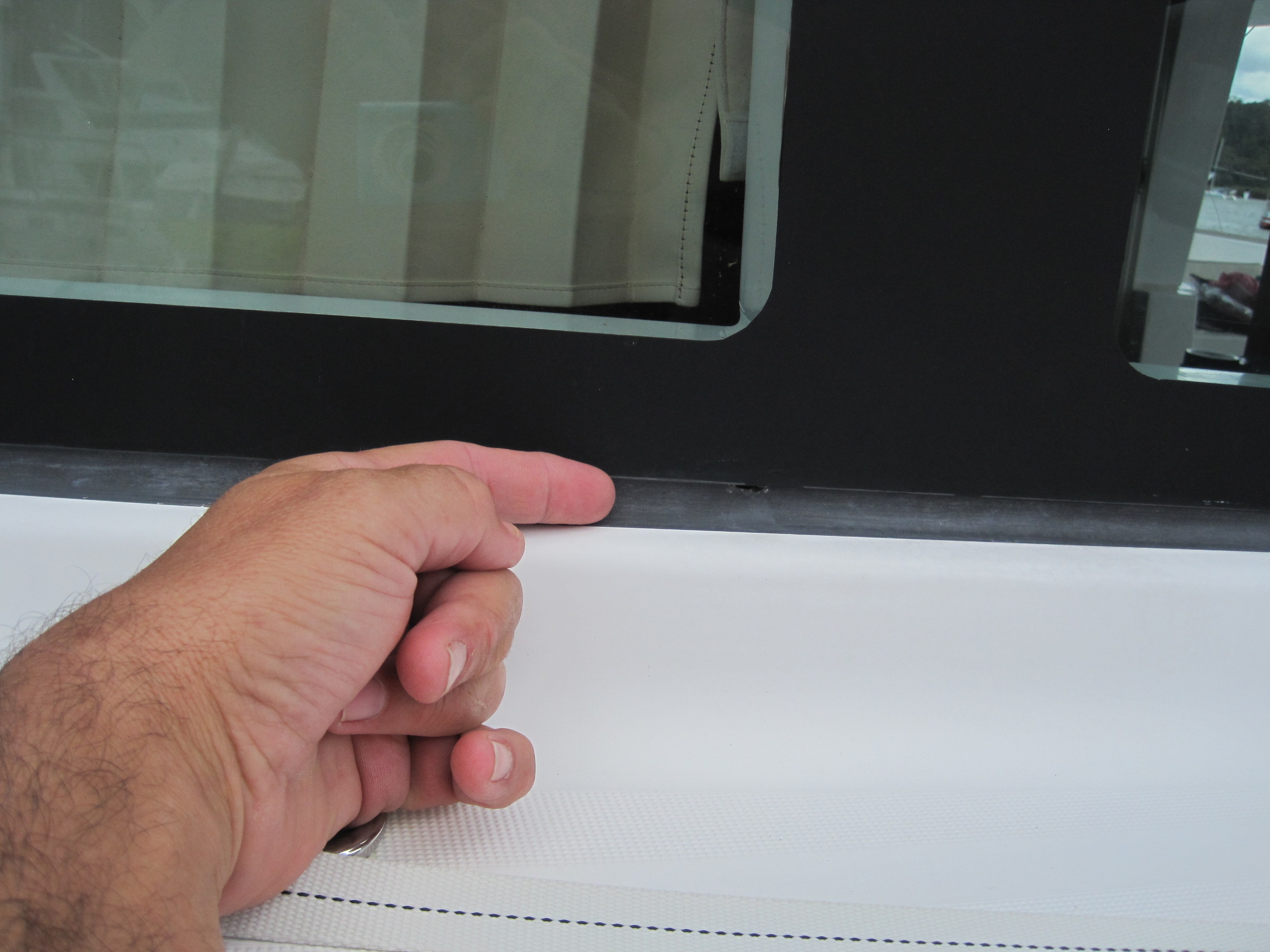
Here is the general area where the water comes in.IMG_3253

And here is a closeup of the hole in the window seal. It’s amazing how such a small pinprick in the window seal can result in such a large amount of inflow when you are offshore in beam seas.

IMG_3251

Once the water gets inside of the window seal pinprick, it travels along the fiberglass base of the window in search of any kind of opening that gives it the opportunity to enter the cabin and make the floor slippery and wet. We found a tiny hole in the seal right here, where a bolt goes through the fiberglass in order to connect the flybridge to the deck.

IMG_3252

We will have the inner and outer seals resealed this week.

Dinghy
Sophie’s tender is way more than just our “dinghy”, it’s our car, pickup truck, ski boat, and remote fishing/beer-drinking platform. We use it a lot, and it’s never let us down.

steve board

Except for when we punctured one of the air tubes by bouncing off a semi-submerged steel plate protruding from a concrete pier in Tonga. Or when the engine’s choke cable seized, resulting in our having to pull the cord 15 times to start the engine in the morning or late at night. Or when we left the dinghy in the water overnight a few times in Musket Cove, resulting in a nice shiny green undercoating on its normally bright white hull.

Back in San Diego we had a canvas cover fabricated for the dinghy. It preserves the life of the inflatable fabric. Unfortunately in the Marquesas — Hiva Oa  to be precise — I left the dinghy tied to a stone jetty, and in 10 minutes a hole had rubbed through the canvas cover on the port bow. Over the course of the summer this hole increased in size and was joined by 2 additional ones at the forward davit strap and on the starboard bow.

Needless to say there was a need for some serious dinghy love. So here in Opua we had the dinghy engine completely serviced, including re-drilling the screw holes on the bottom cover (remember those, Dan?) so we can now remove and change the oil filter. More importantly, we had the canvas cover repaired and added a new insulated canvas cover for the engine. It’s teal, matching the color of Sophie’s lettering. I also scrubbed off all of the green from the hull. Overall the dinghy is looking pretty sweet and runs great.

IMG_3256

Cockpit Table
Sophie’s aft cockpit table has been the gathering point for many really fun dinners and some late nights over the years. We use the table so frequently that we simply leave it out all of the time, and the tropical sun combined with the Pacific’s salt has not been kind to it. So here in Opua we had the table stripped and re-varnished.

IMG_3258

We will also start leaving the cover on most of the time.

IMG_3257

While we were table-less, our friends Jeff and Melody from Double Diamond came over for a drink and brought their Lagoon 440’s aft cockpit cocktail table with them. It fits in the exact same holes as Sophie’s big table and was a fun alternative, creating more of an aft cockpit lounge vibe. So we are going to look into having a small cocktail table made, either from a small surfboard or wakeboard, and use that for special occasions. We need to have this ready before Randy and Susan’s next visit.

Sails
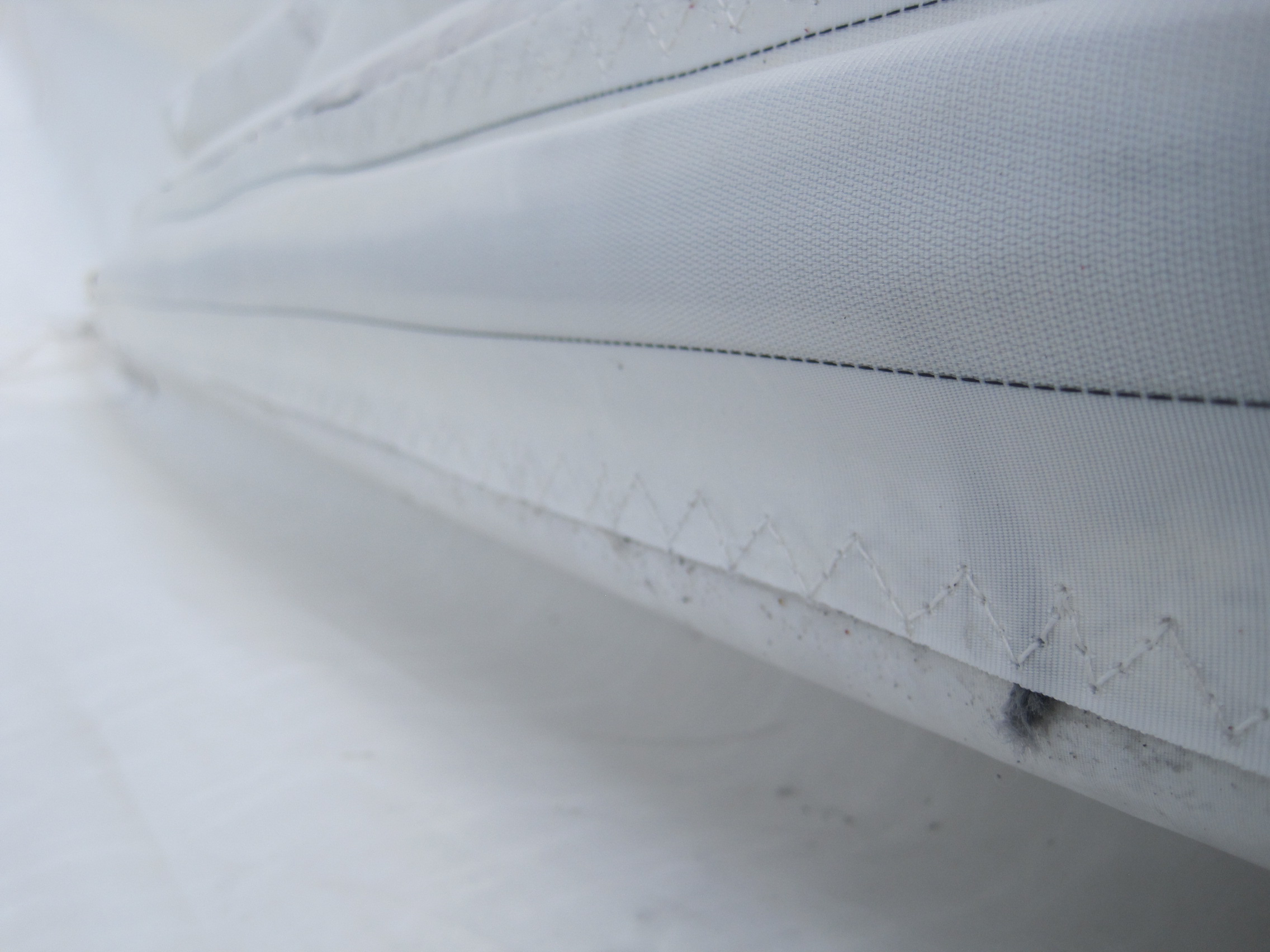
Sophie still has it’s four original sails – mainsail, jib, code zero, and spinnaker — and all of them remain in very good shape. The mainsail is big (almost 1,000 square feet) with a full roach, full battens, and 3 reef points. If you recall, we put a small tear in the main on the passage to Rarotonga, and the repair we had done there has held up well. However we did experience significant chafe along the upper batten pockets where the sail had rubbed against the shrouds while running on a reach.

IMG_3263

There is a new North Sails loft here in Opua, and they replaced the mainsail batten pockets with stronger material (above), and also added a reef block and a batten car attachment point.

IMG_3261

I am now convinced that the leading source of damage to sails offshore is the use of electric winches for reefing and trimming. All of that extra power in the wrong hands can cause things like canvas, lines and blocks to break. That’s how we lost a reefing line on the Marquesas passage, how we tore the sail on the way to Rarotonga, and how I broke a downhaul in Fiji. Personally I have become much more gentle in how I use the electric winches offshore, relying way more on a sense of touch rather than brute force.

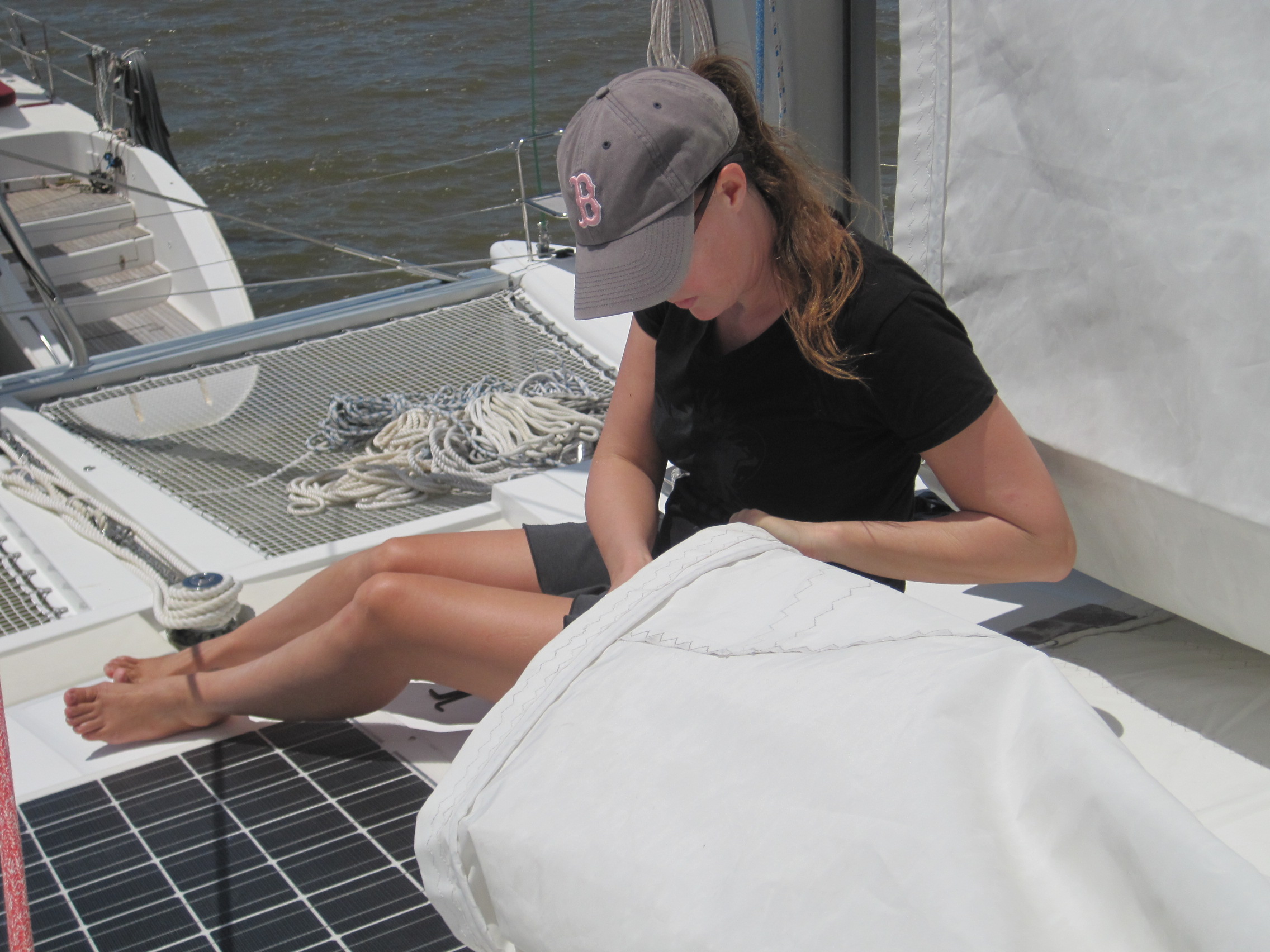
Anyway, taking down or putting back up our mainsail is a half-day job. Here is Jenna with an allen wrench and some pins.

IMG_3215

The jib needed some work as well. North Sails replaced the tape that runs along the foot and leach, repaired some damage to the sunbrella, and reinforced and enlarged a chafe patch where the sail can hit the spreaders.

IMG_3260

Later this week we will decide whether or not we will reconfigure our code zero and leave it permanently rigged to our bowsprit. Having multiple furling sails is becoming increasingly popular, including on all new Lagoons, because it provides added flexibility. For us to do so on Sophie will require at least the addition of a strip of sunproof fabric along the edge of the sail. We will also need to rig a permanent solution for the continuous furler, and some of our guest crew have given us some good suggestions on how to do this.

Our spinnaker that we have used extensively, made with love by Carol Hasse’s team up at Port Townsend Sails, needs no work and is still a wonderful sail.

Rigging
The jib is rigged with a Facnor furling system that includes an aluminum foil that extends up the entire length of the forestay.
IMG_3207

This foil is fabricated from 6 foot long pieces of extruded aluminum that are bolted together using inserts as connectors. Over the course of a lot of miles some of the holes in these forestay pieces and the holes in the inserts worked a little loose.

IMG_1161

This looseness caused some aluminum dust and stains would appear on the jib after heavy rainstorms. More importantly, looseness increases the risk that the entire furling system could break, which could result in bad things happening to Sophie in a heavy storm.

So we had some local riggers remove our forestay and furler, and then remachine all of the holes in the foil pieces and connectors in their machine shop.

IMG_1157

It’s all back together now and as good as new.

IMG_3209

I must confess it was a little disconcerting being on Sophie on a dock for a few days with heavy winds blowing and listening to our mast creaking back and forth because our forestay was in a machine shop up the street.

IMG_1159

We had 3 halyards tied to the crossbeam to help stabilize the mast, but it still wasn’t the same as having a forestay. And it wasn’t just me and Jenna feeling a bit of unease, some of our neighbors joked that they were worried Sophie’s mast could come crashing down on them. But everything worked out OK.

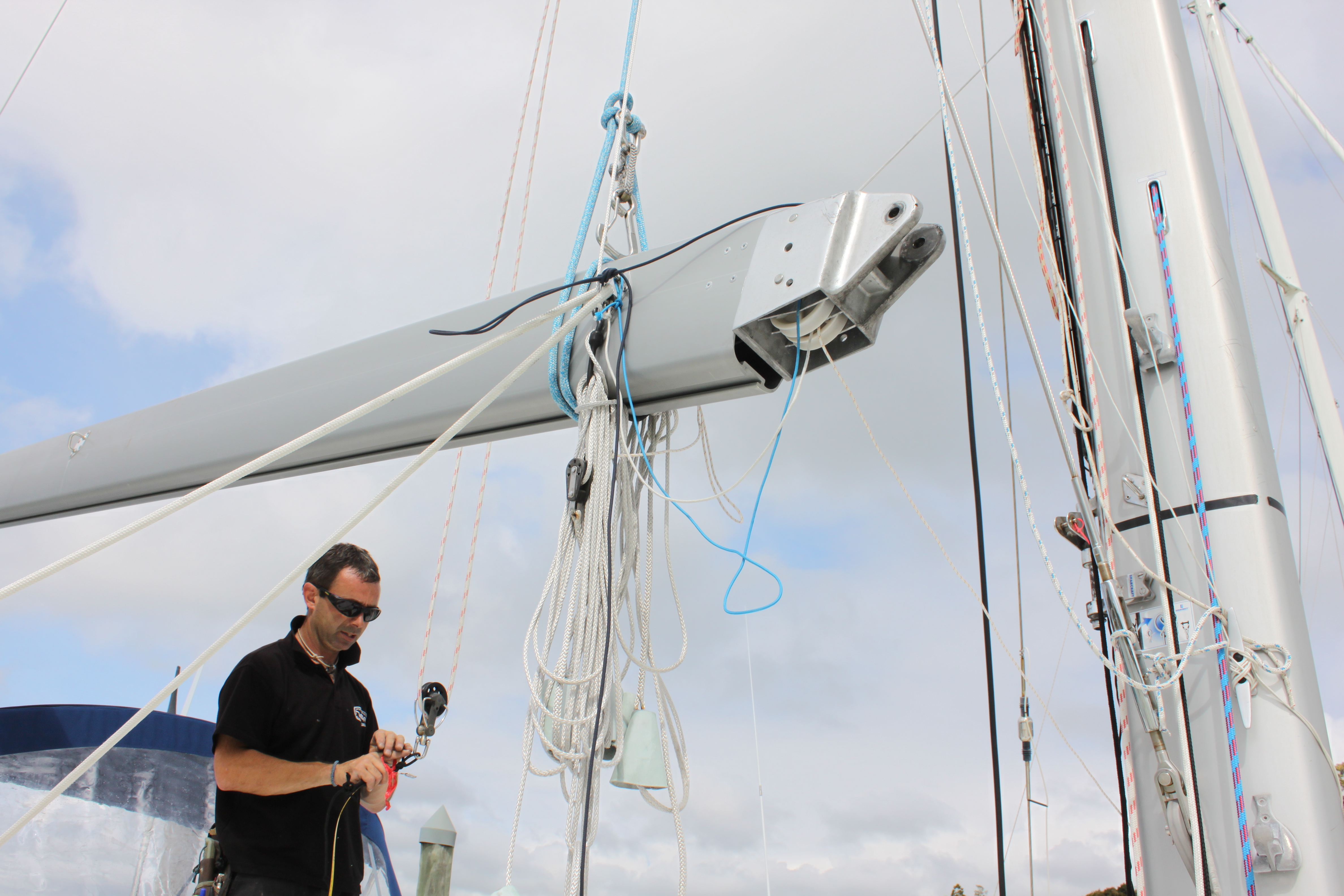
The riggers found a few more areas that needed attention. They re-machined the gooseneck fitting where the boom meets the mast, eliminating a bit of play that had developed there.

IMG_1150

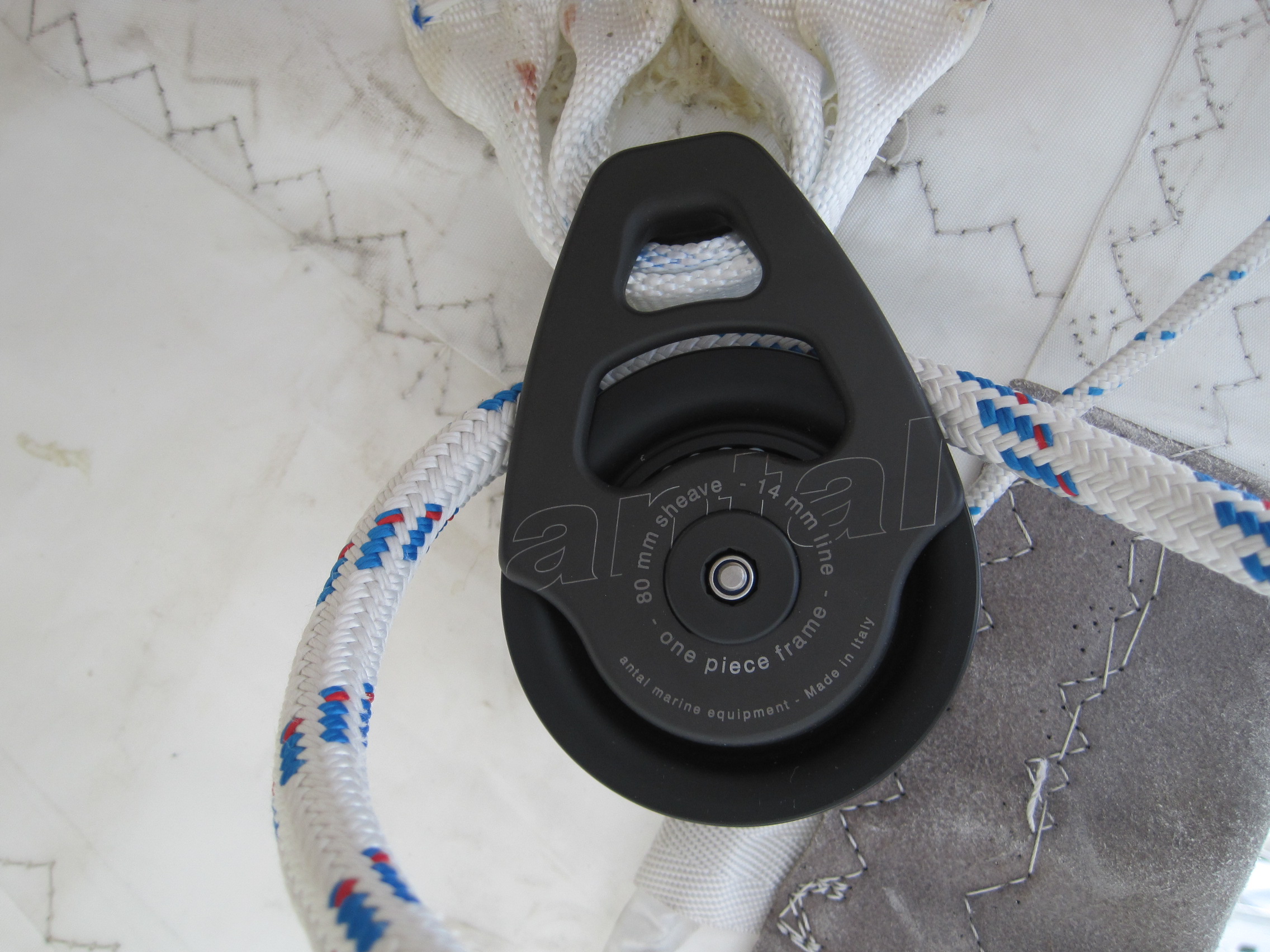
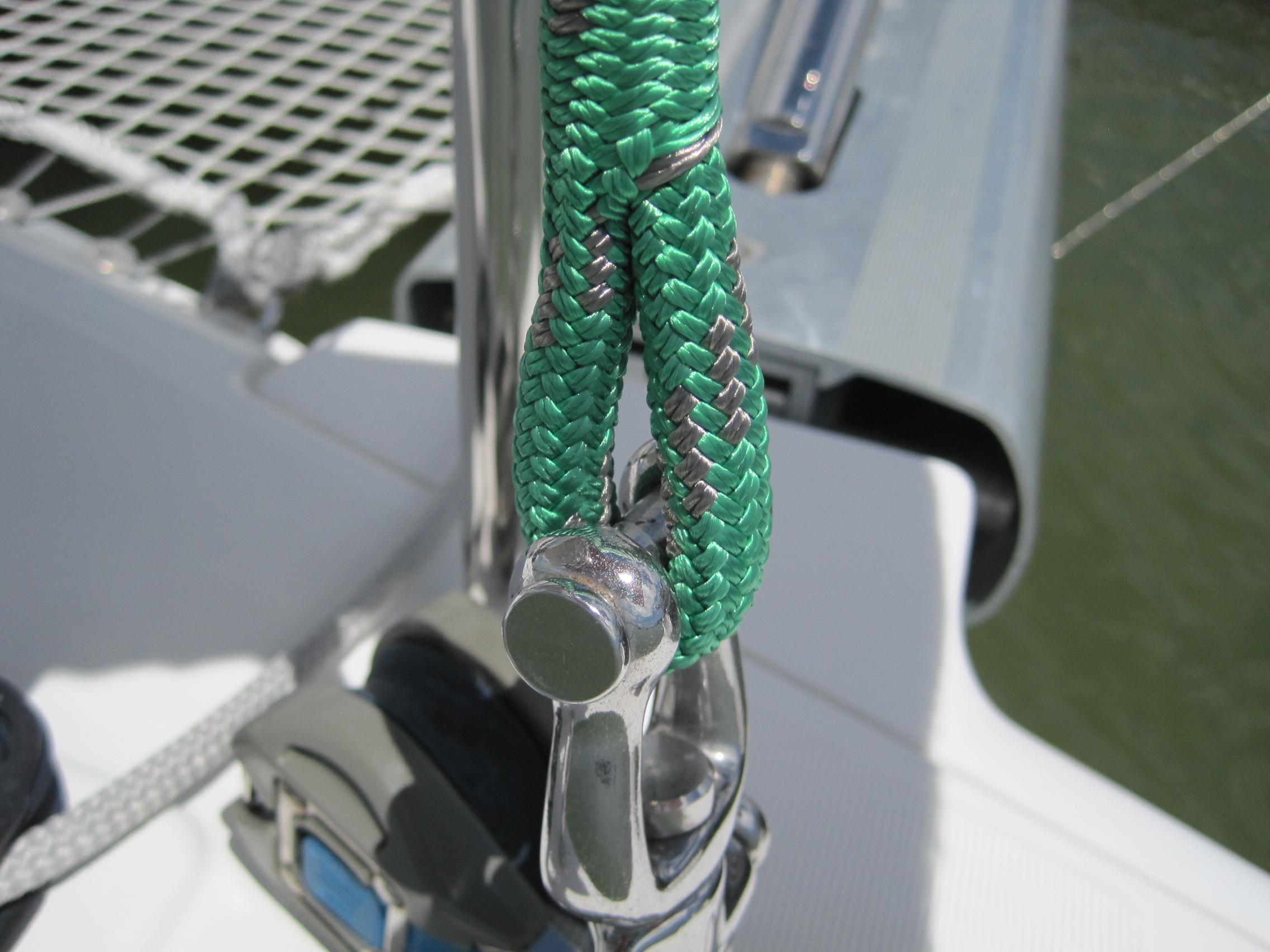
They replaced and/or repaired the sheaves at the top of the mast, at the end of the boom and on the traveler. They replaced the main halyard (chafe at the top of the mast) and the spinnaker halyard (too stretchy, especially if we are going to rig the code zero permanently). They now look nice and are Christmas colored. Here is the spinnaker halyard:

IMG_3210

And here is the main halyard (with a new block).

IMG_3217

Canvas
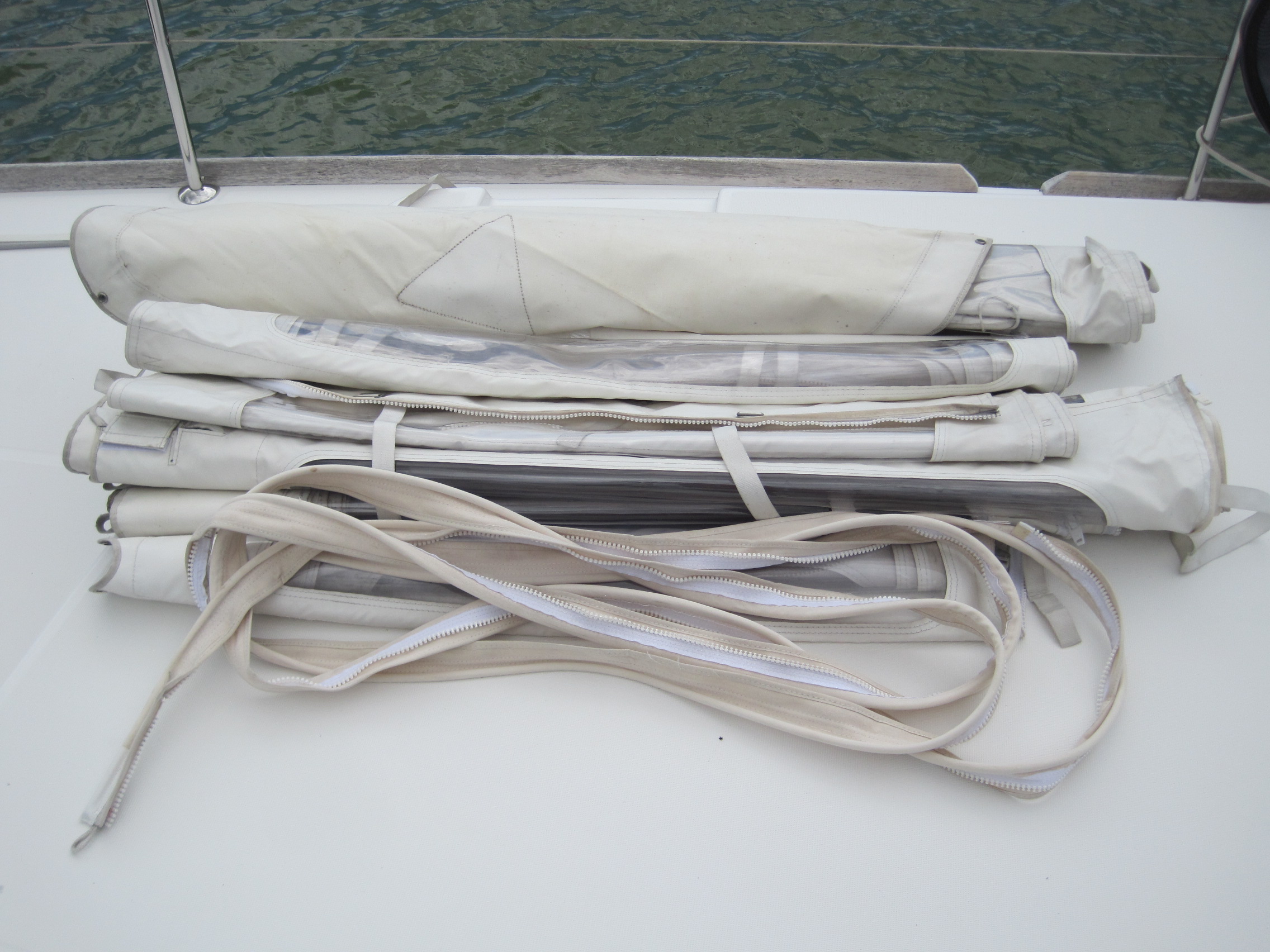
It’s amazing how prolonged exposure to the sun and salt can damage canvas. Back in Seattle, we had a canvas and vinyl enclosure for Sophie’s aft cockpit, and we would use this from late August to late June. But we put it away in San Diego, except for one small piece that protected the area directly behind the aft cockpit sink. The zipper, canvas webbing, and threads on this one piece were destroyed over the course of our crossing, so we had a local canvas shop repair the entire enclosure. We’ll probably put it away again until we return to Seattle, but we will do so knowing that it is intact and ready for to keep us warm in 10 months of cold rain per year.

IMG_3249

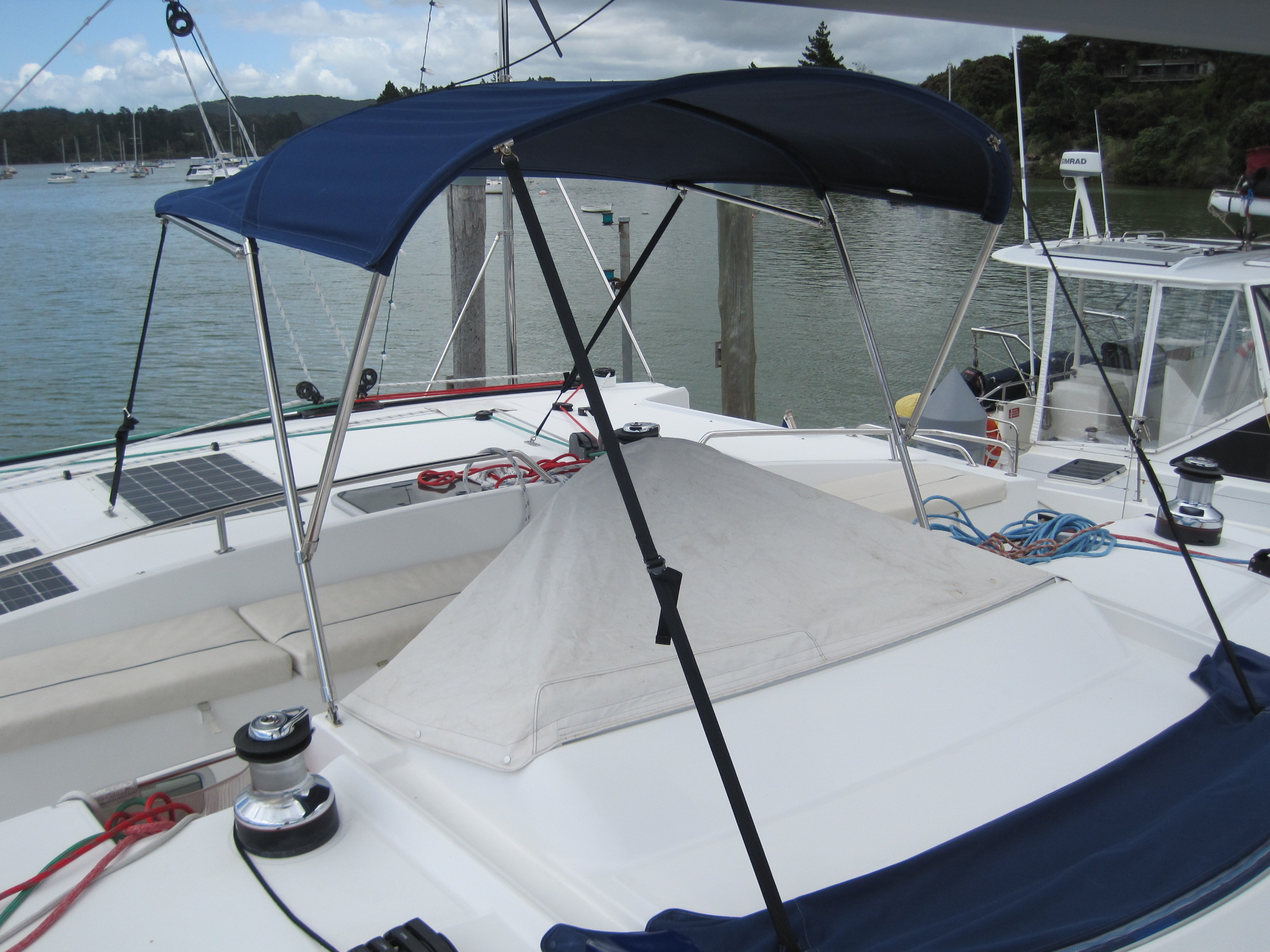
We also have a flybridge bimini on Sophie, and historically we used it from late June to early August in Seattle and then put it away for the rest of the year. Well, the bimini went up in San Diego and has remained up ever since. The tropical sun damaged some of the stitching and canvas webbing, so we had the local canvas shop replace them. The bimini is back up now and looks great.

IMG_3250

We also have a mainsail cover made from the same Sunbrella fabric as the bimini. Over the course of the crossing the cover crept forward along the boom, causing the forward edges of the cover to come in contact with reefing lines, which resulted in some significant chafe damage.

IMG_3264

We had the local North loft repair the chafe damage, and we will do a better job in the future to secure the mainsail cover to prevent creepiness.

When we were in San Diego, we went to a Home Depot and bought some inexpensive deck shading material, and en route to the Marquesas we fabricated some makeshift aft cockpit shades. These turned out to be ugly but practical, and a lifesaver during late afternoons when the temperature was still in the high 90s. We decided to splurge and have the local canvas shop fabricate some permanent sunshades using the same fittings used by our winter cockpit enclosure. We hope to have these done and in place in time for the after party we’ll wind up hosting on Sophie after we attend the Boxing Day races with in Auckland with Misti Landtroop in a couple of weeks.

Shore Power
Like most US sailboats, Sophie is a 110 volt boat in a 220 volt world. Because of this we haven’t been connected to shore power since San Diego, putting 940 hours on our genset since March. Needless to say, we enjoy the creature comforts that 110 volt electricity brings to our lives.

But we are on the dock here in Opua so we decided to save wear and tear on the genset and switch to shore power. Fortunately when we commissioned Sophie we installed an isolation transformer that protects Sophie’s metal from marina-induced corrosion while also offering the capability to convert 220 volt Kiwi shore power to 110 volt Sophie power. So we hired a mechanic to reconfigure the transformer and we assumed we were all set to plug into New Zealand’s power grid.

IMG_3194

But we weren’t all set. It turns out that New Zealand’s government requires all boats that connect to shore power have a government-issued “Warrant of Fitness” for their electrical system AND their power cable. Now back in the US I am all for liberty and freedom and all that “don’t tread on me” stuff, but it turns out in New Zealand they enjoy all of those freedoms AND have lower boat insurance rates and virtually no electricity-induced marina fires because the government makes sure that all boats are properly wired. It’s a good system and I like it. We got our sticker and plugged in.

IMG_3239

But our problems didn’t end there. We kept tripping the circuit breaker on our transformer when Sophie asked for too much power from the dock, something that usually occurs when we turn on the clothes drier, dishwashers, or Nespresso machine. We used to encounter this problem on the floating docks at Point Hudson Marina back in Port Townsend and would simply adjust down the amount we would draw from shore until the transformer would stop tripping. Except that here in New Zealand we tripped the transformer so often that we wore out the transformer’s circuit breaker in a couple of days. It turns out that part wasn’t designed to trip more than a handful of times.

It was clear that our isolation transformer was undersized, limited to just 16 amps  @240 volts. The local sparkies (Kiwi term for marine electrician) offered to upgrade our transformer to a 32 amp version of the same unit and install it at a good price, all on the next day. We agreed, but when the sparkies inspected the new part they realized that it wasn’t internally configured according to the documentation and the model number painted on the outside of the box. Victron Energy, the manufacturer, has recently relocated their manufacturing to China and are experiencing some teething pains as a result. It also turns out that the local sparkies are really really good  at what they do. They got a loaner part from the manufacturer for us to use for a few months, installed a separate galvanic isolator, and we no longer lose shore power when we brew a long shot. Our new permanent and properly configured replacement is on order, to be installed after the holidays.

Watermaker
We used Sophie’s watermaker to produce all of the fresh water we consumed from San Diego to New Zealand, with the exception of one tankful in Rarotonga (dirty harbor) and then another right before we left Fiji for Opua. The general view held by all of the cruisers we meet out here is that it’s not a question of whether or not your watermaker will break, it’s a question of when. Overall we are extremely happy with the performance of our system, and the need to make fresh water is a main reason why we ran our genset so frequently. But as we prepared to leave Fiji for New Zealand, the throughput of our watermaker fell from 22 gallons per hour down to 8 gallons per hour and then it basically stopped working. Its “energy transfer device” — a system of pistons that low-power watermakers like our’s use create enough pressure to strip the salt from salt water as it is forced through a series of filtering membranes — wore out and needed to be rebuilt. That’s been done. We also needed to rebuild the 110 volt Catpower pump that drives the water into the system. It turns out that it suffered salt and sediment damage, and we will install an additional 25 mm prefilter in front of the 110 volt pump to prevent that from happening in the future. All of this should be up and running by the end of the week.

Diesel Heater
We have a Webasto diesel cabin heater that we ran for 4,000 hours over our 5 happy years in Seattle, and it stopped working the day we left San Diego for the South Pacific. This wasn’t an immediate problem for us when we were sweating in the Marquesas, but it was COLD when we reached New Zealand a month ago and we missed our heater. We thought it was simply an electrical problem, but the local sparkies took it apart and learned that the burners had basically worn out due to 4,000 hours of usage combined with some water damage. We had installed the heater without a fuel-water separator (Racor filter) in the fuel line between the tank and the unit, and water from the fuel tank occasionally wound up getting mixed with the fuel that was being burned, and this is apparently not good for a diesel furnace.

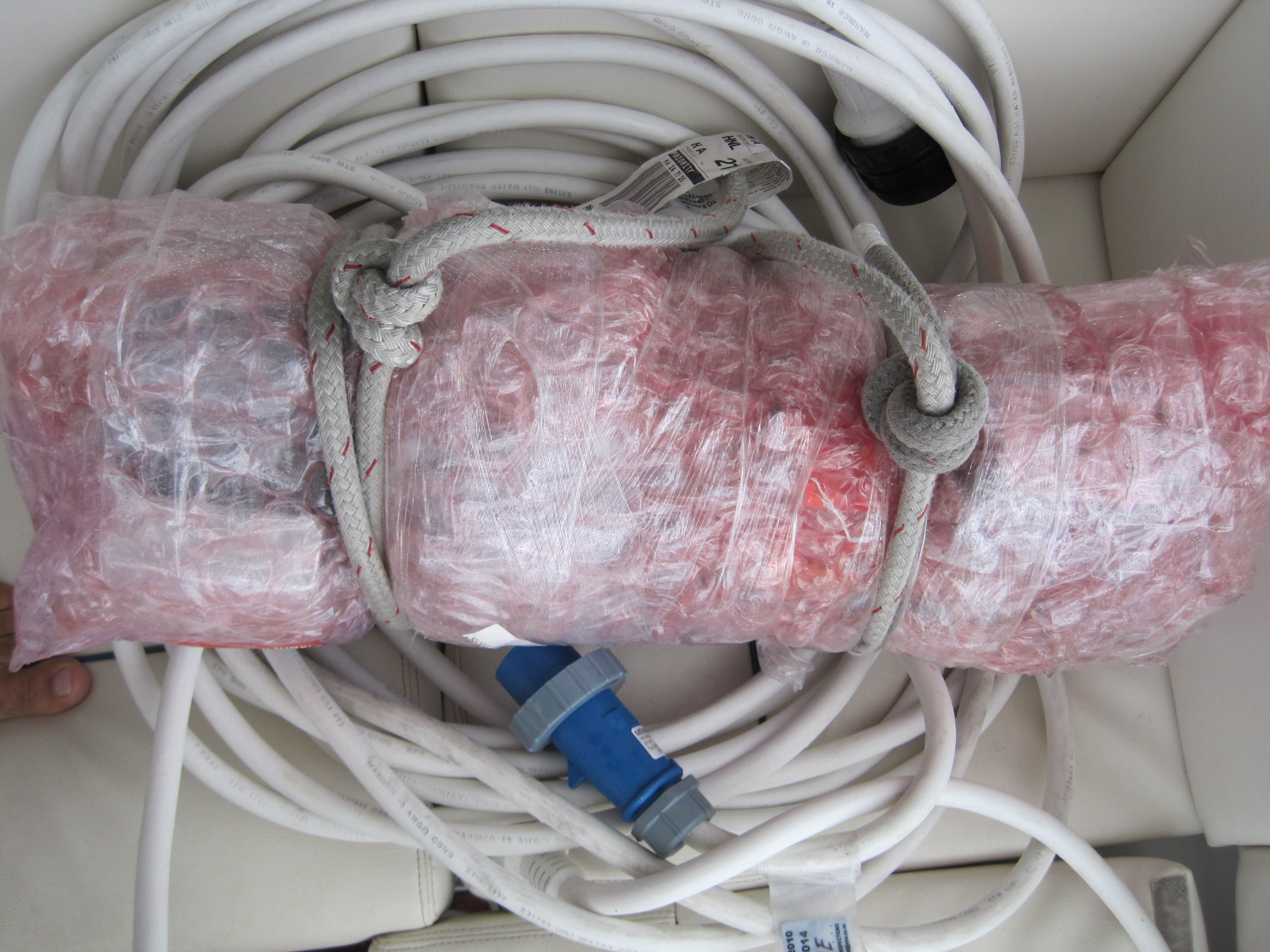
Since there is no one in New Zealand who can rebuild these systems, it wound up being easier for us to simply (and reluctantly) order a new unit from Seattle. Our friends Ian and Becky hand carried the diesel furnace on their flight to Auckland, cleverly disguising the unit as a pink handbag.

IMG_3193

We are having the new heater, along with a new fuel-water separator, installed this week.

Dishwasher
We love our Fischer & Paykel dishwasher, and Kiwis love them as well because they happen to be designed and manufactured right here in New Zealand. We also looked forward to using it every day in New Zealand, now that we were going to be attached to shore power and shore water for a few weeks.

IMG_3259

Unfortunately, the day we arrived in New Zealand was the day Hazel engaged in some liquid soap/jewelry making/stuffed animal parade game, and to clean up her mess she inadvertently put her liquid soap covered cups into the dishwasher. As the dishwasher began to run, it produced a funny noise, wouldn’t turn off and displayed an “F1” error message.

I looked it up on the web, and the F&P F1 error message indicates machine flooding, and some life hacker sites described how you could fix the problem with a hair drier. So I took the drawer out, dried it with a hair drier, and the error persisted. After a day or two, I called Fischer & Paykal customer service. When I described the problem to the woman who answered the phone, she said “Oh, it’s flooding. You’ll need to get a technician out there with a hair drier to fix it.”

She referred me to a couple of local firms, and we finally got one of them to come out to the boat. (Their appointment was conveniently scheduled right as some of their friends next door were about to go out fishing, and they finished on Sophie at the exact same time as when the beer arrived on the neighboring boat. Kiwis have a high quality of life, you know.) Anyway, there were two repairmen, an older guy and his apprentice. They disassembled the dishwasher drawers (turns out more could be disassembled than what I had done), looked at the pumps, then looked up at me and asked “Have you got a hair dryer, mate?” They pulled out a circuit board, used the hair dryer to dry it off, then put it back into the machine. Repair done, and no new parts. I now know how to repair an F&P F1 error.

A Better Boat
That wraps up the main list of things we had addressed here in Opua over the last month. We also had the boat detailed, polished and waxed. We did a thorough spring cleaning of the interior and examined the contents of every cabinet on the boat. We reorganized how we store food and spare parts. All of the wine and liquor now fit in just one of the forward bilges — there has been some shrinkage, as they say in the retail industry. Most importantly, we feel that we know the boat much better now than we ever have in the past and are learning how to live on her full-time.

We are so lucky to be doing this trip, and to have a boat that holds up so well. Next stop, Auckland!

Hooked

????????????????????????????????????????m three

Every fishing trip is a composite of all other trips, and it holds irresistible promise for the future. That cup cannot be drained. There are always greater fish than you have caught; always the lure of greater task and achievement; always the inspiration to seek, to endure, to find; always the beauty of the lonely stream and the open sea; always the glory and dream of nature.

Zane Gray, Angler’s Eldorado

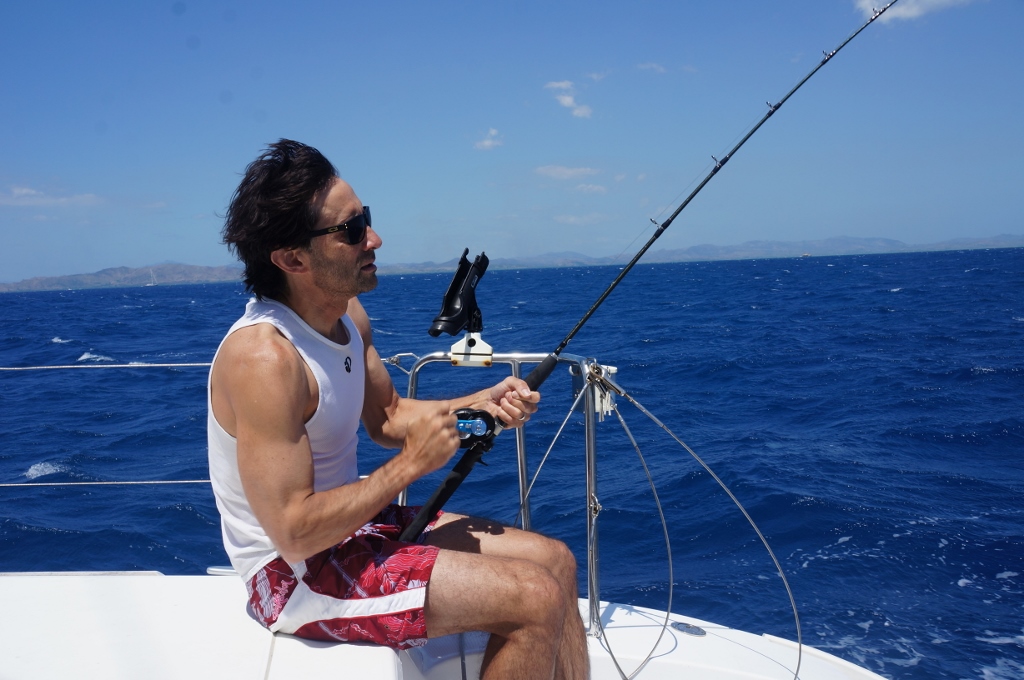
Zane Gray wrote these words after spending a year fishing for marlin off the North Island of New Zealand over 90 years ago. Today the Sophie crew is located in the exact same spot in the world, and I am sitting here marveling at how the lure and excitement of fishing has became such a central, foundational experience for everyone we’ve had the pleasure of hosting on our boat over the last year. Not just for my long-time fishing buddies like Dan Rogers and Steven Fell (both pictured above) — they’ve known the secret their entire lives — but for everyone who has spent time with us over the last year.

I knew when we planned this trip that fishing would be an important and fun and protein-necessary part of our life offshore. But I never anticipated the shared sense of emotional power and emotional connection it would create across all of the different people who were able to join us on our adventure. And it had a cumulative effect, a variation on the cumulative effect that Gray writes about, because it was shared by different people, many who didn’t have a connection with each other except that they were our friends or our family. But as more and more people joined us and caught fish on this trip, more and more people who subsequently joined us really wanted to catch fish on this trip. There was a connection. People were getting hooked.

I guess it started with my brother Rich, whom I love but never really thought of as a guy who was into fishing, but man did he become so happy when he won the fight against a 20 pound yellowfin tuna at sunset 1,500 miles offshore on our passage to the Marquesas, doing so at the exact same time that Dan was pulling in that tuna’s 15 pound little brother. This resulted in Sophie’s first ever “double takedown”, and I now realize that Rich’s fish is the model for the tattoo that graces both my right arm and all Sophie fish photos that grace this blog. It was a physical manifestation of the shared sense of excitement that has become a part of the life we share with others.

And this shared sense of excitement spread. It spread to our friend Rebecca, who landed and dispatched a coral trout outside the reef at Moorea with a surprising and somewhat alarming sense of vigor and glee. It spread to our friend Karl, who could transform albacore on-the-line into sashimi-on-the-plate with world-class speed. And it spread to North Dakota Troy, whose grin at catching his first saltwater fish, in Fiji no less, was as big as his home state. And it spread the next week to our friend Randy, whom we normally think of as a funny, well-dressed triathlete-kind-of guy. But all he wanted to do when he joined us was fish, fish, fish. And he was so happy when he reeled in a couple of tuna as we traveled back and forth between Malolo and the Cloud 9 floating surf break lounge scene and nightclub.

DSC01327 (1024x680)

So it shouldn’t have surprised us when it happened again last week with the arrival of our friends Ian and Becky. But it did.

We first met them through the Seattle Yacht Club, and they quickly became good friends because they shared our love of sailing, wine, food, and adventure. Becky even joined us on our passage from Seattle to San Francisco.

1472863_10152020529407710_993661518_n[1]

But we never really thought of them as a couple who were into fishing. We had never discussed the topic with them back in Seattle, and it didn’t come up in the planning emails and Facebook messages we exchanged in advance of their visit.

They had already spent a week in New Zealand by the time they had joined us in Opua and had done things like mountain luging, airplane fjord tours, vineyard visits, and fine dining in Auckland. So our plan for their visit to Sophie was to spend a couple of days doing more of the same followed by a couple of days anchoring out in the Bay of Islands to celebrate the American Thanksgiving holiday. Sophie is undergoing a bit of a refit right now and has no sails, and besides, the kids are in school. So unfortunately we couldn’t spend the entire time with them cruising.

As Jenna mentioned in her blog this week, on the first day of their visit she took Ian and Becky on tours of the big trees, and on the second day we all hiked a waterfall. On both nights we ate well and stayed up way too late. So I was a little surprised on the morning of the third day when I asked Ian and Becky what they wanted to do, and they both answered at the exact same time “I WANT TO GO FISHING!”

Hmmmm. That would require motoring 5 miles down the river and out into the actual Bay of Islands in a Sophie covered with spare lines and parts boxes, and then go drift fishing for snapper, something I had never done before. In the rain. But Ian and Becky were adamant that they wanted to go fishing, so I walked the kids up to school and then stopped at Cater’s Marine to buy a 2kg bag of frozen herring along with some ice and snapper hooks, and we took off.

I have to confess it felt good to be driving a boat again, and the Bay of Islands are beautiful. Once we got out to the fishing area we had 3 lines in the water, each baited with a frozen herring using 2 hooks in a rig similar to what we sometimes use to catch salmon (and always use to catch dogfish) back in Seattle. We drift fished for the next 3 hours, in what basically turned into a futile exercise of fish feeding. We kept losing bait and sometimes bait and hooks, oftentimes without even feeling a tug on the line. But Ian and Becky were having a fabulous time, and with each lost herring their level of excitement increased, even as the rain picked up.

Personally, as their host and guide I was starting to feel some pressure to actually deliver. I decided that the current rig simply wasn’t working, so I switched to a marlin hook (much bigger and sharper) attached to a steel leader (so fish can’t bight it off) and a heavier weight (so the bait can fall deeper into the current).

IMG_3195

Within 2 minutes I got a hit, and although the fish didn’t fight like a tuna or mahi mahi, it was beautiful and soon in the boat. That’s what counts. Cue the obligatory fish shot:

IMG_1243 (1024x683)

I was happy, but Ian and Becky were ecstatic. I handed my pole to Becky, re-rigged Ian’s, and their lines soon went back into the water. Even as it rained Ian and Becky continued to work their poles from the shelter of the aft cockpit. When time ran out and we had to head back to the dock in order to collect the kids from school, Ian insisted on trolling on the way back just in case. They had that “glory and dream of nature” going, and they had it bad. But we landed no more fish that afternoon.

The next day was Thursday, and we headed out for an anchorage in the Bay with the kids on board this time. We didn’t fish for snapper on the way, but I did fry up the previous day’s catch in gluten-free bread crumbs and served it with a trio of dipping sauces. It was excellent. Once we had the anchor down in a nice cove we went out for a hike, played on the beach, paddle-boarded, and collected oysters. Ian and Leo had every pole on Sophie working along with a couple of hand lines in the water. We tried herring, artificial lures, different sized hooks, even casting with bobbers but had no luck other than a couple of very small fish that Leo caught. We were anchored in only 15 feet of water, and the fish in the bay were clearly too clever for us.

The next day was Friday in New Zealand, meaning Thanksgiving Day back in the US. Our plan was to motor 3 miles back out into the Bay, drift fish for snapper, then head over to another anchorage to cook some roast lamb for our Kiwi version of a Turkey Day celebration.

It was sunnier but much windier than our previous day on the Bay. I had marlin hooks rigged on all three poles this time, but we still had a problem with bait falling off. At one point I was reeling in my line to check the bait and saw a big fish following my hook. I stopped and jigged 5 feet below Sophie’s transom steps, and then wham Wham WHAM he finally took the bait. It turned out to be a four foot-long shark! I fought him back and forth on our trolling pole with the 80 pound braided test line, and he kept running and fighting for 10 minutes. It was a blast. I wasn’t quite sure what to do, but we took a couple of photos and then he eventually solved the problem by biting through the line and swimming away, quite angry with me.

DSC_0371

At this point Ian and Becky were in a complete fish frenzy. We moved the boat a couple of times, tried different combinations of bait while watching the clock with the shared understanding that at some point we would have to stop fishing, drop an anchor, and start cooking.

We continued to lose bait and were down to our last 3 herring. Finally, I decided to use a short length of 10 pound test line to tie a herring up and down the shaft of Becky’s marlin hook. She dropped it 20 feet directly below the transom step and then stopped.

Tug. Tug Tug. Tug Tug Tug.

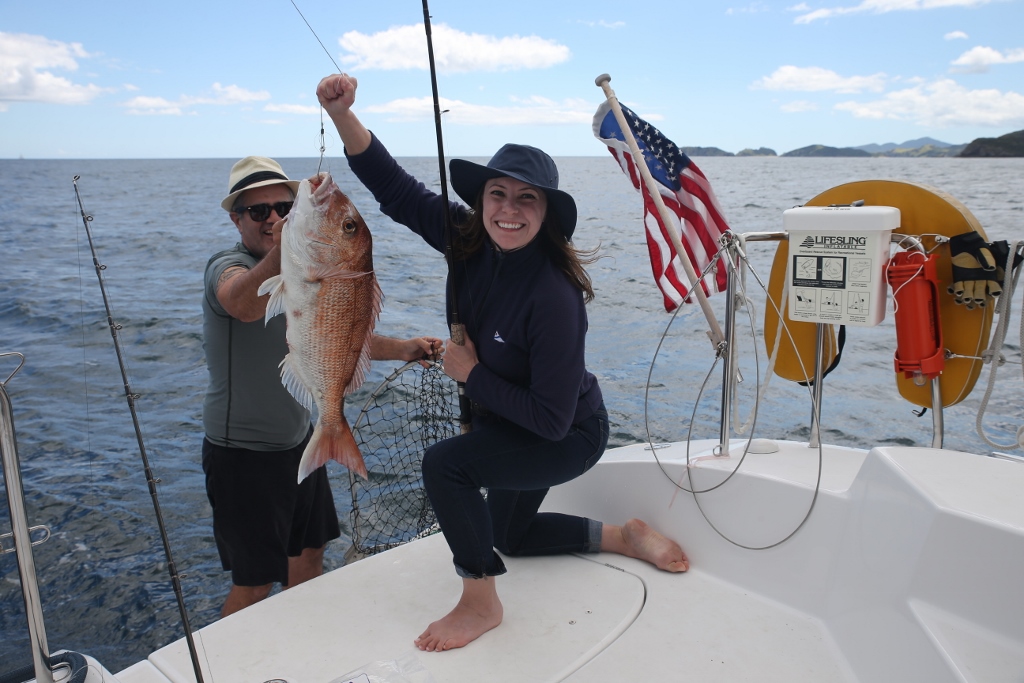
“I’ve got a fish … I’ve Got a Fish … I’VE GOT A FISH!!!!” Becky slowly reeled up her snapper while I worked the leader, and the result was this 10 pound beauty.

NZ1_1916 (1024x683)

For the next 10 minutes Becky was kicking her feet on the deck like a 3 year-old girl eating her first lollipop. “I caught a fish! I caught a fish! I caught a fish! I want to go fishing again! I want to go fishing in Seattle! I want to go fishing with Dan! I caught a fish!”

It was pretty funny.

We loaded the fish in Sophie’s new fish box (under the grate in Sophie’s aft cockpit … thanks for the suggestion Jeff in Kirkland!) and doubled down on our efforts to help Ian land his fish.

fish well

No one likes getting skunked, especially when it’s the wife having all the fun. But we were out of herring, the wind and waves were building, and Jenna still needed to start work on our Thanksgiving stuffing, kumara pie and apple crisp. (I was going to do the lamb). So we reluctantly turned the corner and headed for the next cove.

Once the anchor was down, we had four lines back in the water. Ian really wanted his fish. Becky and I cleaned the snapper, which attracted a 10 foot shark who swim past Sophie a few times. There was also a big dolphin sleeping nearby. But no fish. We ate the snapper for lunch, went to shore, cooked, played games, ate our feast, talked, drank wine, and hung out. The whole time we left the four lines in the water, but still no fish.

The next day was our last with Ian and Becky. The plan was to go to shore for a hike, collect some oysters, then motor the 5 miles to Paihia and put them on their bus to Auckland. And hopefully help Ian catch his fish.

We all hiked and took photos on the shore, then Ian dropped me off to snorkel by the oyster beds while he rejoined the rest of the crew. As I swam back to Sophie with a couple of dozen oysters and a conch shell, I spotted a stingray laying on the ocean floor 15 feet down. I yell out if anyone wanted to come and see it, assuming Jenna and Becky would simply get in the dinghy carrying a couple of masks and come over. But apparently Becky still had the adrenalin surge from the previous day and asks Jenna if it was too far to swim there. “Of course not,” says my adventuress wife.

So Becky grabs the wetsuit, grabs fins, grabs a mask and jumps in. I’m 100 meters away. She starts swimming a very splashy stroke, and Jenna starts waving her arms yelling “NO! STOP!” From my perspective in the water, I assume Jenna is simply telling Becky to not attract the shark that was giving us indications of interest in that exact same spot 24 hours earlier. Eventually Jenna stops yelling, and Becky arrives. I assume everything is all right.

The splashing had apparently convinced the stingray that it was a good idea to fly away, which is always a very cool sight, but Becky didn’t get a chance to see it. We proceeded to swim around for a bit and soon spotted another one. In Becky’s haste to leave Sophie she forgot to bring a snorkel, so we swap masks and she gets to enjoy the experience of floating directly over a stingray, an experience that scientists now believe produces the exact same endorphins as those produced while landing a fish. Needless to say, Becky is in a good place. Or so we think.

We swim around for a bit more and then swim back to the boat. Becky gets out first. When I pull my head out of the water, I hear Jenna saying “Are you alright?” while I realize I am at eye level with Becky’s ankle pierced by a brand new 1 cm barbed bait hook attached to 5 cm of 20 pound test line. It turns out that in her rush to get into the water and over to the stingray, Becky snagged one of the hand lines and proceeded to stretch it tight and then snap it without ever feeling a thing. A horrified Jenna got to watch the whole experience and had been yelling to Becky “No! Stop! You’ve snagged a fish hook!” Becky never heard Jenna and never felt a thing the entire time she was chasing stingrays.

So I am still halfway in the water while Jenna and Becky discuss what we should do next. They decide we need to push the barb all the way through Becky’s skin, cut the hook in half (the eye of the hook was to large to push through the hole created by the pointy end) and then pull the remaining hook out.

But Becky, who is back in her endorphin-induced three-year-old-with-her-first-lollipop mode, screams “Get the camera! Jamie, roll up your sleeve! We need a shot of my foot with the fish tattoo!” Jenna gets the camera along with some wire cutters, and takes some photos.

NZ1_2095

I am a surgeon’s son and veteran pig stitcher, and I am also closest to Becky’s foot, so I do the procedure. I must confess that pushing the hook through her skin looked exactly like pushing a curved surgical needle through the skin of a pig when preparing it for a pig roast. Becky never stops smiling, but she does urge me to do it quickly.

I get the hook out without any tearing, and we all look at the wound wondering if we should irrigate it or apply medicine or some herbal therapy. It looked kind of like a snake bite, but none of us felt like sucking out the poison. We wiped it up instead.

The smiles never left, and the adrenalin along with Sophie’s magic healing power helped keep the situation pain-free. A big irony here is that when we first met Becky on her birthday at the SYC’s Port Madison outstation two years earlier, she was hobbling down the dock with a sprained ankle, looking for some Advil to help alleviate the pain. She is now the first person in the world who can tell a Sophie story about each one of her ankles.

NZ1_2093 (1024x683)

Meanwhile, Ian was down below in his cabin taking a shower, oblivious to all of the activity taking place. Hazel was feeling mischievous and decided to pay him a visit, saying “So Ian, why are you down here taking a shower WHILE YOUR POOR WIFE IS UP ON DECK WITH A FISH HOOK STUCK IN HER FOOT!!!” I am certain Hazel had her hand on her hip while she asked the question.

(I have no idea what we are going to do with that girl in ten years, and welcome any and all advice from my mother or anyone else on how we can best prepare.)

We proceeded to shower off, drive Sophie through a 25 knot chop for 6 miles over too Paihia, drop a hook and then ate a nice, typical Sophie lunch (fresh oysters, marinated green lipped mussels, and organic pumpkin and leek (gluten free) risotto, all washed down with a chilled rioja.) Then I took Ian and Becky into town, put them on their bus to Auckland, from where they flew on to Seattle. It was a great visit, we have new stories to tell, and we miss them a lot.

For me, sharing the “irresistible promise for the future” is what drives us to do this journey, and doing it with friends makes it more meaningful for us. Fishing is now core to this shared experience, and we look forward to having more of our friends and family joining us and “getting hooked.” But if you are planning to do so, please don’t take this suggestion quite so literally. We promise to do our part and will try to no longer leave unattended fishing lines in the water while at anchor. Because we’re all for experiencing the glory and dream of nature, but we want to continue doing so without anyone getting hurt in the process.

Have we told you lately how lucky we are to be on this trip?

10 Thoughts After Arriving in New Zealand

h

We have great boat kids. Hazel and Leo now think that doing a 1,000 mile passage is no big deal. They sleep all night. They hold their bowls patiently on their laps when they are feeling queasy. They focus on their work when Sophie school is in session. They can share a cabin and bed when we have guest crew without (much) fighting and yelling. They get incredibly creative and funny. Leo yesterday jumped 2,500 times on the trampoline, and Hazel thinks its a blast when the wind off the jib makes her hair go straight up. 500 miles from the nearest land.

IMG_2910

Only Jenna and Hazel (and maybe the ice princess Caroline Sollenberg) would think that a good way to kill time on a passage would be to braid a bikini strap into your hair.
I love Leo’s sense of ridiculousness. (Look again at the photo).

We REALLY need to get our Webasto diesel cabin heater fixed. Immediately. A week ago it was too hot for a blanket at night, and this morning it’s 53 degrees in our cabin. For us right now that is REALLY COLD!!!!!

fuel pfuel s

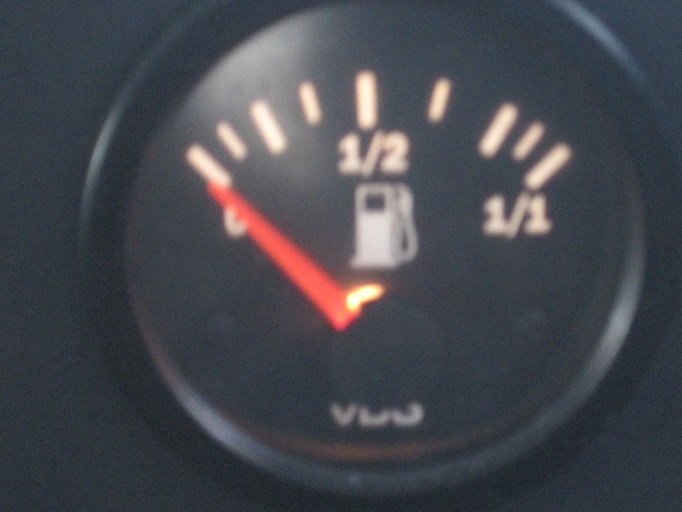
Throughout the last 3 months, I joked with people at the various cruising bars that our strategy for arriving in New Zealand was to hit the customs dock with one gallon of fuel left in Sophie. (The theory being you use all your fuel to outrun fronts and storms). I think we succeeded in our strategy. The left photo shows what’s remaining in our port fuel tank, and the right photo shows what’s left in the starboard tank (and the tank is empty when the needle hits the 1/8 mark). Have I mentioned lately that we averaged 8.33 knots over a 1,000 mile passage? Also, there is a fuel dock 30 meters from us.

water

For what it’s worth, this photo shows what’s left in our port water tank. The starboard tank is empty, and our watermaker has basically stopped working. The fuel dock apparently has water as well.

We had a wonderful time in Fiji over the last 2 months, but over the last week Jenna and I both remembered how much we love sailing offshore. We’ve now sailed around 7,000 miles over the last year. And the fact that we are doing it together makes it special.

I am a much, much better sailor now than I was a year ago.

opua2

The Bay of Islands is stunning. We are going to spend the next 6 months in New Zealand, and Sophie will spend most of that time here. I can’t wait to get started. We have already started spotting the boats of friends we’ve met over the summer. The people are all the same, they’re just now a lot colder.

The adventure continues. We are blessed to have the opportunity to do this with our lives.

Hello Opua!

opua

We tied up at the Customs Dock in Opua, New Zealand at 8:42 PM local time, a little under an hour after sunset (above). I am not sure if the highlight of the day was motorsailing at 9+ knots in spectacular sunshine in a 5 knot southwesterly throughout the afternoon, or Jenna braiding a bikini string into Hazel’s hair (photo tomorrow.) All I do know is that Sophie covered 1,072 nautical miles in 5 days, 9 hours. Our average speed over this period was 8.33 knots. Fred and Frank were great crew. We are thankful for so much on this trip and appreciate all of your good wishes and prayers. We made it to New Zealand!

Fiji – Opua, Day 5

We are most definitely in the home stretch. It’s 10.30 AM local time, 28.10.13. Happy New Zealand Labor Day everyone! Current position is 34.01 S, 174.05 E. Winds are 13 knots from the south, and there is a 1-2 meter chop we are plowing through in the bright morning sunshine. Boat speed is 7.5 knots @ 155m with a reefed main and both engines running @ 2800 RPM. We covered 186 miles over our last 24 hours from yesterday’s waypoint. We actually sailed over 200 miles, including a 90 mile tack to the west yesterday afternoon to get a better wind angle after we ran into the southerlies. We have 79 miles between us and the dock, and the last 10 of that is in the shelter of the Bay of Islands. The wind is forecast to swing over to the southwest and drop to 3.5 knots before midnight. We are not quite sure how much fuel we have left on the boat. I am certain we have enough to get all the way to Opua at our current RPMs (and I’ve only been wrong once before in this situation!) On the other hand Jenna is not so sure, so we will spend the afternoon closely monitoring the fuel gauges while engaged in open and polite conversation on the topic. Another key issue we face is New Zealand Biosecurity Hazard compliance. We are not allowed to bring into the country any of our bacon, sausage, parma ham, eggs, fruit, vegetables, and other good stuff. We may have to eat four meals between now and bedtime, and at least some of them will be healthy. Last night we dined on spaghetti with imported Italian pesto and parmesan cheese accompanied by roasted Italian sausage. The movie was “The Pink Panther Strikes Again”, and Hazel almost hurt herself she was laughing so hard. Nothing has broken in the last 24 hours, although I lost the SYC hat the Wickmans gave me when I ran outside to see if the four frigate birds chasing us were going to strike at our lures. Overall the crew is happy, wearing another layer of fleece, and looking forward to sleeping on a dock tonight.

Fiji – Opua, Day 4

So when I was tucking the kids into bed last night (after they had finished watching Roger Moore ham is way through “The Man With the Golden Gun”), I turned to Hazel and said we needed to be thankful that Sophie was so fast throughout the entire day that we had successfully outrun the danger of all the storms chasing us from behind. She paused, smiled quietly, and said “Whoa!” That’s pretty much all we need to say. It’s 10.30 AM local time, 27.10.13. Current position is 30.58 S, 174.57 E. Winds are 6 knots from the east, and the seas are flat. Boat speed is 7.5 knots @ 174m with a full main and jib and one engine running @ 2800 RPM. We covered 210 miles in our last 24 hours, meaning that over our first 4 days we are now officially averaging over 200 miles per day. We could have covered more, but Jenna convinced me at 3:00 AM this morning to turn off a motor to conserve fuel. But overall we succeeded in our strategy of outrunning the front behind us, and that makes us all very, very happy. The GRIB (weather) charts we downloaded all day showed nasty weather (30-40+ knot winds) coming south just 50-100 miles behind us. We had some gusts touching 20 knots in the afternoon, but by last last night it was very calm with an easy sea motion and lots of phosphorescence in the water. We are now protected by the ridge of high pressure extending across New Zealand, the front (now a low) has slid off to the east, and we have just 250 miles left before we tie up to the customs dock at Opua. We still have over half of our fuel left and know we will need to motor into a 10+ knot headwind during our last day, but the big question on Sophie now is whose arrival estimate will be the most accurate. We’ll let you know tomorrow. 🙂 From a boat perspective, nothing broke except one of the main salon forward opening hatches which developed a 2 inch crack. We’re not sure if it was caused by a flying fish (we decked 5 plus one squid the other night) or by a sheet, but it’s an easy repair. The engines sound great. Fred is still raving about last night’s boef a la bourgognon. The temperature is expected to drop 20 degrees by the end of the day, and the fleeces and wool hats are coming out. But we are safe and heading for the barn.