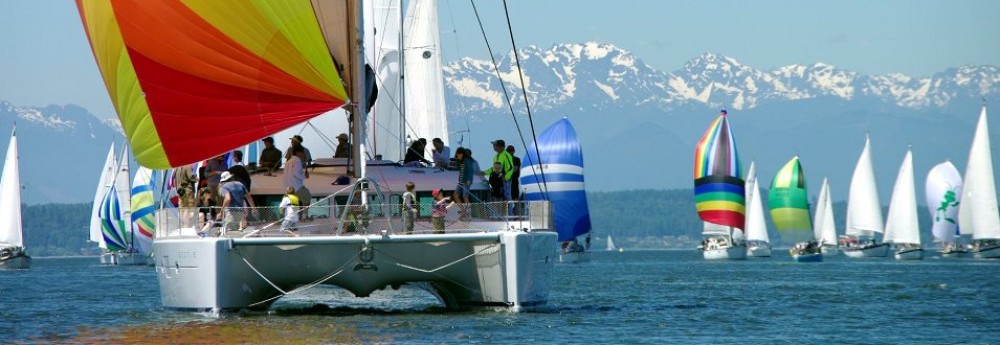
Nambas

We’ve spent our second night anchored behind Awei Island in the Maskeylines. According to the grib weather files, the wind has shifted up to the east, which for us now means that there is no wind in the harbor. Two other boats — Flour Girl and Octurus II — joined us and Firefly in the anchorage yesterday. This morning the boats are lazily swinging around at anchor in little wind under a leaden sky. Firefly just left 30 minutes ago and reported from the entrance of the channel that it was blowing 25 knots from the southeast. We are quite happy to sit tight here for another day or so.

Flour Girl and Octurus are both boats cruising with kids, and it is quite nice for Leo and Hazel to have playmates in the harbor again. We assumed when we took off from the States two years ago that we would encounter lots of other children on boats, but outside of Opua and Musket Cove it hasn’t happened that much.

We started our day yesterday with Jenna leading Sophie school and me doing chores. Our water maker had shut down the other day due to a low pressure sensor reading. This usually happens when the filters get clogged and is not that big of a deal. So I cleaned out all the filters, which were quite icky, and ran the system again. I kept getting a low pressure fault accompanied with an automatic system shutdown. I flushed the system multiple times with no luck. Same error. I finally disconnected the hose that leads into the fitting that houses the low pressure sensor, and was proud to see an enormous amount of water gushing through the hose at high pressure. I reconnected everything and opened up my beloved Sea Recovery watermaker control panel. Much to my surprise, I saw that the wire leading from the low pressure sensor was not even connected to the system’s circuit board. Some other sensor wire — most likely the lead from either the old or the new high pressure sensor — was plugged in there instead and it was telling the system to shut down. Since we weren’t having a high pressure problem — I could tell by reading the gauges — I bypassed the low pressure sensor leads on the circuit board, started the system up, and it ran just fine. I’ll spend some time debugging the new pressure sensors, but many of my friends out here in watermaker survival land have ditched electronic sensors altogether. We still have one that checks for salinity in the water, which is important. But simple is better.

Meanwhile, while all of this was going on, the other boats in the anchorage were preparing for the 2:00 PM dance performance the local village on Avokh Island had scheduled for us. It was a big village with 2,000 people, but they didn’t have as much money as the village in Lameh and were still learning how to work with tourists. The crews from the four boats piled into 3 dinghies and motored for over a mile through some sloppy waves and around a mangrove island to get Avokh. As we stepped ashore, a group greeted us with necklaces made from palm fronds ad a flower. We were then led by Kaiser, our guide, on a path along the shore to the performance area. At one point, he asked us to duck as we walked under a tree branch that was well above my head, because Michael Jordan had bumped his head there last year. He has visited this village twice in the last three years and has promised to return. He must be very tall.

The most visually significant aspect of the native Vanuatu dances are the costumes the men wear as they perform. It consists of a palm frond tied around their waist like a belt, a palm frond wrapped around their penis like a sock, with enough extra frond at the end to pull the sock up and attach it to the belt. Everything else on them was left to freely swing in the wind. They used mud to draw shapes all over their skin. Some of them had another leaf hanging from the belt over their butt crack. A few were adorned with feathers. One had some leaves braided into his beard. They all had bracelets on their ankles that made a maracca noise as they danced.

Needless to say, Jenna was impressed and took many photos. And I now know what I am going to wear as my Halloween costume this year!

They called the dance they performed for us “Nambas”, and I believe it is a variant of the Vanuatu dance unique to their area and dialect. We were arranged in a clearing away from the village, and 4 older men plus a drummer, all in costume, marched down a path and started singing in front of us. Soon they were followed by 18 young men carrying sticks. They stamped, chanted, and marched around for 15 minutes. They performed 2 songs and then they were done. Afterward, we posed for photos with some of the performers. Hazel refused.

We then walked back to the village, ducking under the Michael Jordan branch, and gathered in their community center hall where they served us a snack of nuts, baked cassava wrapped in island cabbage, smashed breadfruit covered in coconut milk, and kava. Vanuatu kava is much stronger than Fiji kava, and just one cup gave me a bit of a buzz.

We then had a very wet dinghy ride back to the boats and invited the three kids — Zach, Khan, and Jarah — over to Sophie for a play date. We told their parents that their presence was optional, and all 4 parents chose the “we will enjoy a kid-free boat for a while” option. Our guests brought over a couple of bags of popcorn, and Jenna made 2 batches of kumara fries. The kids had a great time, playing with Lego around the salon table and then watching The Lego Movie.

It was after 8:00 when the movie ended and the kids returned to their boats. Jenna and I were ready for bed, and Hazel asked us “Mom, what are we going to eat for real dinner tonight?” We gave her a snack and all tucked into bed after a busy and memorable day.

Awei Island

Sophie is currently anchored at Awei Island, which is part of the Maskelyne Islands on the southeast corner of Malakula Island in Vanuatu. 16.32.055S 168.01.112E for all you geography buffs. (Which mainly means my father.) We crossed over here yesterday afternoon from Epi Island and plan to sit here for a couple of days as another low pressure system passes over the area. The forecast is for 20-25 knots of wind and lots of rain. The anchorage seems nice and protected here, and we are surrounded by 2 islands, a reef, and a mangrove. There is another boat (Firefly) in the harbor with us, and we have invited them over for coffee later this morning.

Once again we are in an anchorage with no Internet coverage. Our cell phones can pick up a data signal when we are on passages between islands but the signal seems to get blocked as soon as we drop the hook. We can use our single side band radio to receive detailed weather forecasts and update the blog, so we haven’t completely cut the cord with the outside world.

Lameh Bay in Epi was a wonderful place to visit. It is shallow bay with sea grass on the floor and hosts a colony of sea turtles and a dugong, the South Pacific cousin of the manatee. Yesterday morning we started the day with a visit to the village. The chief, a guy named Willy, greeted us on the beach and helped us haul our dinghy up the sand.

Another guy walked over and asked if he could give us a little tour. 200 people lived in the village, spread out over an area of 200+ acres in clusters of huts organized by family. We agreed! He started by taking Leo and Hazel into a kitchen hut and explained how people in the village had to prepare every meal over a fire, and because it sometimes got very smoky they needed a separate place for cooking. Our tour guide had lived in Australia for 2 years and said it was so much easier there to turn on a machine that instantly cooked your food. Here, they had to use fire.

He showed how they had toilets (outhouses) 100 meters away from the sleeping huts. I told him how clean I thought everything here was compared to villages in Fiji and Tonga. There was not a scrap of garbage to be seen anywhere, and people raked the yards and roads every day. He laughed and said he thought the village looked really dirty right now, a thought shared by all compulsively neat people throughout the world. He also said they needed to keep the ground clear of leaves and garbage in order to keep the mosquitos at bay when it rains. This is malaria country.

He took us to the local primary school, and we got to see all of the little kids running around in their uniforms. About half of the village was school-aged. Like most of the schools here, it consisted of a cluster of buildings arranged around a grass field large enough for a full-squad soccer game. This school also had a playground and a basketball court. One of the buildings was made from concrete and contained 6 classrooms. It was built by a Rotary club from Japan and was another example of how small, locally-funded foreign aid projects from the first world can have a massive impact on the lives of people in villages out here.

He said the village couldn’t survive without the skim from New Zealand and Australia. This was the word he used to describe the money sent back home from locals who go abroad to work. For example, his brother went to New Zealand to pick kiwis (fruit from trees, that it) and came back with enough money to build a couple of concrete houses, a stone well that captured rain water from a roof (and featured small fresh water fish swimming around, eating the mosquito eggs), and a store equipped with solar panels to power a refrigerator.

Given there lack of money, they have to be as self-reliant as possible. He showed us the food his family grew: coconuts, bananas, mangoes, papayas, avacados, grapefruit, cassava, kava, “island cabbage” (a type of kale they eat every day), green beans, cucumbers, squash, and herbs. He took us to the local fish market, where they sell fresh yellowfin tuna to the yachties for ~$3/kilo. (Unfortunately they were out.) He showed us a couple of women who were weaving room-sized straw mats from dried grass, using die to color some of the straws to create geometric patterns. He showed us his family’s bread oven. Everyone in the town worked. Everyone in the town seemed happy even though they possessed very little. Our guide wanted no money or food or gifts in return for the tour. He was just happy to share with us. The walk through town took less than an hour, but we’ll all remember it for a long time.

So we then went back to Sophie, donned our snorkel gear, and swam with turtles. We dinghied around a bit to find them, but over the next hour Jenna and I spotted about 20 of them underwater. She took photos with her Go Pro, and at one point I went down 20 feet and touched the back of one. She didn’t seem to mind.

Soon it was noontime, and we decided to leave Epi for the 20 mile sail west over to the Maskelynes. There is some more culture to explore over here, and Lameh Bay can get rolly if the wind picks up. Our sail started in very light air, and we were making 4-5 knots with just the code zero up and 4 lines in the water. There were tuna jumping in schools all around the harbor entrance, including a group that looked like they were attacking a large floating tree branch. I had even seen a yellowfin while swimming with the turtles, but I didn’t have my speargun on me at the time. Didn’t think it was a good idea.

No luck with the tuna, and we were soon out of the lee of Epi and the wind picked up to 20 knots with steep 10 foot waves. It was more from the beam than from the stern, and the motion was uncomfortable. Our initial plan was to visit Uliveo Island, but this would involve riding the surf through a 30 foot wide opening in a reef to get there. Plan B was to turn north and enter through the East Channel where we could have a protected approach to our anchorage.

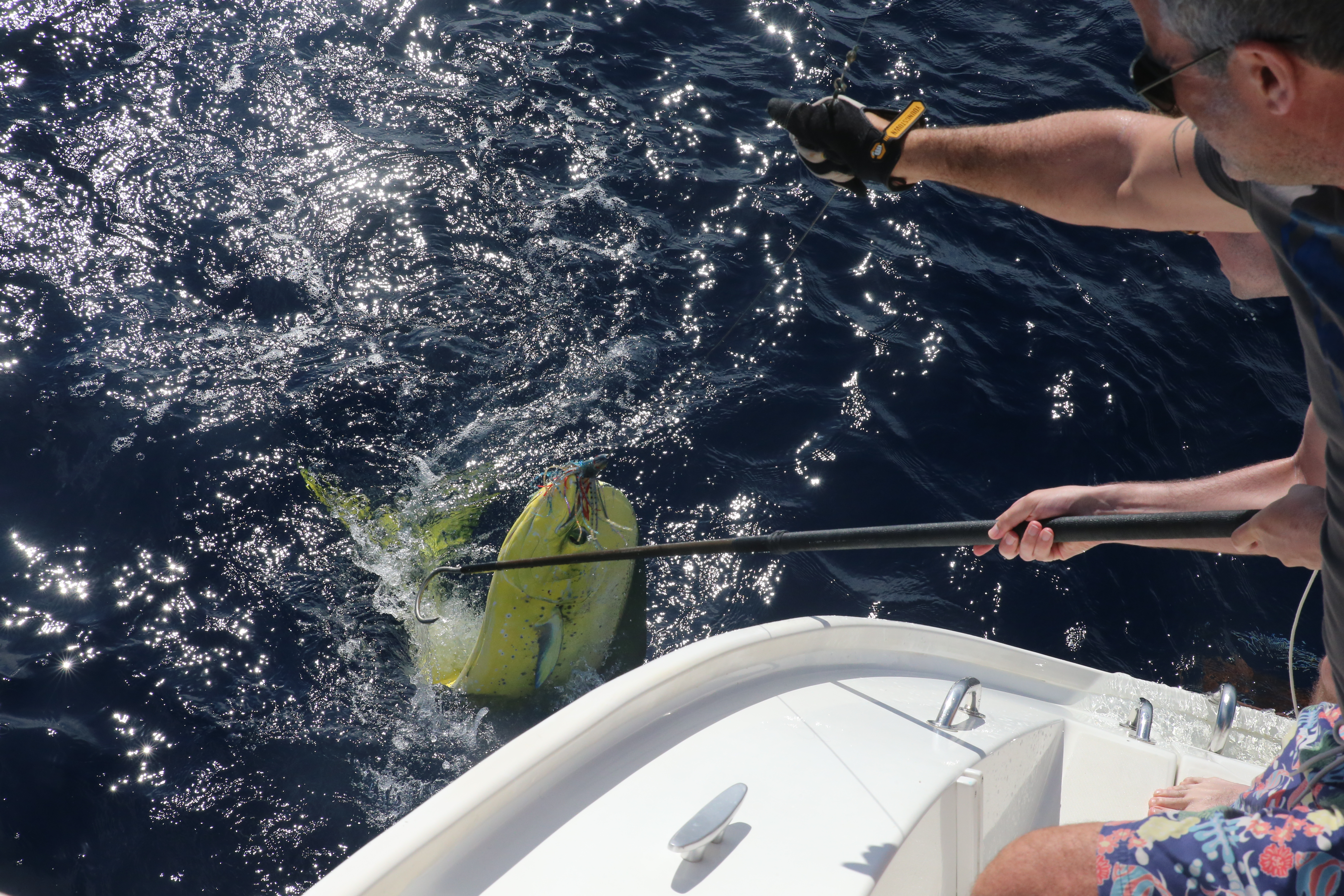
While executing Plan B, a mahi mahi hit the Riebling lure trolling off our fishing pole. We were still in the steep waves, Jenna furled in the jib, but Sophie continued surfing at 4 knots under bare poles and no engine. The fish fought hard but spat out the Riebling while airborn on the top of the wave just 10 feet from our stern.

That was it for adventure yesterday. We motored to our anchorage, dropped a hook, and were greeted by a local chief and some other fishermen in their dugout canoes. They invited us and Firefly to attend a performance of a local dance ritual that will take place this afternoon in a nearby village. I think this is the dance where 20 men stomp around wearing nothing but some dried grass tied around their privates. I am sure Jenna will bring her camera.

Dinner was pasta bolognese. The Friday Family Movie was the Tim Burton/Michael Keaton Batman. We slept soundly, the wind howled, and the anchor didn’t budge. It’s early morning now, and it is starting to rain. The luck continues.

Let the Northing Continue

Sophie is currently underway in Vanuatu from Port Vila, Efate to Lameh Bay, Epi. It’s about an 80 mile run, and we left the dock at 5:00 this morning. The boat is happy, sailing north at 9 knots under full main and jib in a 15 knot easterly with 1 meter seas and sunny skies. 2 lines are in the water, and I saw a marlin go vertical about 100 meters from our starboard side.

We had a very successful visit to Port Vila over the last few days. We reconnected with our travel companions Colin and Mercedes on Segue and spent a day with them in a rental car doing a lap of Efate. Efate is beautiful, clean, and friendly — the Segue crew are seriously considering buying property here. We did our “booze, eggs, and cash” provisioning and also loaded another wheelbarrow full of produce onto Sophie.

Most importantly, we talked with a lot of people here with extensive cruising experience in Southeast Asia, and this helped us firm up our cruising plans for the next couple of months. There was a cruisers potluck at the Internet Cafe here on Monday night, and most of the boats were either heading to Indonesia or had been there multiple times.

We are now planning to explore Vanuatu for another 3 weeks, slowly making our way north. Jenna could spend another 2 months here, but we have cyclone season here and a northwest monsoon up there to deal with, so we can’t stay here as long as we would like. (Note to cruisers following us across the Pacific: please plan to spend 2 days in Vanuatu for every day you spend in Fiji. It’s that much better here, and Fiji is very nice.)

We will leave Vanuatu from the Torres Islands and make a straight run of ~670 miles to Gizo in the Solomon Islands. We’ll clear customs there and hang out at Liapari Island, which is 13 miles away from Gizo and has a secure marina where we will feel safe on the boat. We’re torn about our visit to the Solomons. It’s supposed to be beautiful with incredible diving of sunken WWII wrecks. It also has many dangerous areas, and we’re simply not interested in being in harbors where guys with machetes can climb onto the boat at 4:00 AM. Liapari is right where John F. Kennedy lost his PT boat, and we do plan to do some local touring and diving there.

After a few days in Liapari, we will make another 500 mile passage to Kavieng, Papua New Guinea, sailing to the east of Bougainville and New Ireland islands. We’ll clear customs there and then hang out nearby at Nusa Island Retreat (www.nusaislandretreat.com.pg), which is a secure anchorage across the harbor from the government wharf. It’s a situation similar to Gizo, where we have decided to sacrifice some local connection in order to reduce the risk of being boarded by “raskols”.

At this point, we will be at 2 degrees south latitude, the weather will be hot and sticky, and Sophie will be doing a lot of motoring. After a week or so in Kavieng, we’ll make a 600 mile run west to Jayapura, Indonesia, hopefully getting there around November 15. (We WILL be flexible in our schedule when it comes to weather, though.) We also will most likely use our air conditioners more here than we did in Seattle.

We don’t plan to do much in Jayapura other than clear customs and refuel, because there is some political unrest there. We’ll make another 300 mile jump west to the Padaido Islands, which is supposed to be lovely and tropical. We’ll then do another 300 mile jump west to Raja Ampat, a natural park and world heritage site. We could easily envision spending a month there before crossing the Flores Sea and hitting Flores, Lombok, and Bali.

The best thing about this increasingly clear itinerary? We’ve found yet another boat who plan to follow the same basic route that we will follow, and they have kids the same ages as Leo and Hazel! “Per Ardua” is a cutter from New Zealand with a 9 year old boy and girls aged 6 and 7. They will do the same Vanuatu->Gizo->Kavieng->Jayapura route that we will do, with the same shared goal of reaching the Indonesia border around November 15. We’ve hung out with them for the last couple of days, including a 4 hour play date yesterday on Sophie followed by an evening concert in the park featuring local string bands and an MC discussing the benefits of combining kava with marijuana. We all got along great are quite happy to now have a 3 boat flotilla doing this 2,000 mile passage into Southeast Asia.

We seem to be getting luckier and luckier.

Rainy Havannah Harbor

(This is our first blog update posted directly to WordPress over our SSB radio. It will allow us to keep you up to date on our adventures when we are away from the Internet, but we won’t be able to easily post photos.)

We’ve been hanging out on the western side of Efate Island in Vanuatu for the last week. For three days we anchored inside a coral reef at Fultok Bay on Lelepa Island. Jenna was able to do some excellent Sophie school sessions with the kids, I was able to get some serious boat cleaning and other projects done, and Sara and Julie relaxed on a tropical vacation. On our second day there I was swimming the reef and spotted a spiny lobster in a little hole in the coral. This was my first lobster siting in the Pacific. I just had my bare hands and couldn’t get this one out. But, man was I hooked. I spent the next day and a half scouring the reef and island rock wall looking for lobsters. I was joined at various points by Lauren (our guest crew), Leo, and then Suzy and Phil from our fellow cat Morrigan who joined us in the anchorage. I found another lobster lodged in the wall 20 feet below the surface and made seven attempts to get him but failed. I even tried to use my speargun but soon realized it was the wrong weapon. Back on Sophie I made a couple of lobster snares from PVC tubing and heavyweight fishing line and am eager to try them out on my next reef.

Soon it was Sara and Julie’s last night on Sophie, and we invited the Morrigan crew over so we could all watch Leo attack the lion head pinata he made as part of his birthday celebration. Afterwards we grilled a big chunk of scotch fillet and ate it with a potato dauphinois that Lauren whipped up.

The next morning we headed back into Havannah Harbor to drop Sara and Julie off at a hotel so they could catch a ride back to the airport and then home. We hope they had a nice vacation with us. Lauren stayed on Morrigan to do a couple of days of scuba diving. So suddenly it was just the four of us again on a big and quiet Sophie. We had heard there was a bar near the hotel, and I scouted around in the dinghy until I spotted some Aussie guys hanging out on a big deck with a fishing boat in front of them. “Is this a bar?” I asked them. “Only one worth going to in the whole harbor, mate.”

So we found a place nearby where we could drop a hook and dinghied over to “Wahoo”, an outdoor bar and restaurant overlooking the bay. It was so relaxing to just sit and veg out. The beer, pina coladas, and basketball-sized cheeseburger (“Vanuatu’s Largest!”) helped.

After lunch we mosied up to the end of Havannah Harbor to a very protected spot where we are currently sitting out a tropical low that is passing over us. Lauren and Morrigan joined us here yesterday. Dinner last night was kumara gnocci (I love my wife) accompanied with a beef masala stir fry. It’s lunchtime right now, and Lauren has whipped up some beef and pork Texas chili. It is DUMPING rain, school is in session, and all systems are working.

Tomorrow morning we’ll leave early to return to Port Vila. We’ll spend a day there topping off our provisions (mainly booze, eggs, and cash). We will also connect with our friends Colin and Mercedes on Segue, who will buddy boat with us as we explore northern Vanuatu over the next month or so.

Vanuatu is turning out to be our favorite tropical country on this trip so far. We are indeed lucky to be doing this.

Leo’s Tenth

IMG_20140921_194139We celebrated our beloved Leo’s tenth birthday in style tonight at anchor in gusty Havannah Bay in Efate, Vanuatu.

Jenna prepared duck confit pasta (his request) along with home baked cherry and apple pies, all washed down with the bottle of red that Hazel won in the speech contest 2 weeks ago.

WE HAVE SO MUCH FOOD ON SOPHIE RIGHT NOW! Jenna and I provisioned at the Supermarche in Port Vila yesterday, and it was our biggest provisioning run since San Diego. The food here is half the price of food in Fiji, with greater variety and a lot more Frenchness.

The day started in Port Vila with Leo waking up at 5:00 in anticipation of the big day. By 7:30 everyone else was up and Leo was hard at work on the Lego sets his brother and sister gave him.

Overall it was kind of a slow, cloudy, showery birthday Sunday. Leo and Hazel hung out in the salon watching movies and playing. Jenna and Lauren stowed our new mountain of food. We did the birthday phone calls back to the states. We even discovered that one of our marina neighbors used to live on Mercer Island and had a son who graduated from Mercer Island High School in Sara’s class.

It is a small world, indeed.

We left Port Vila around noon for the 20 mile trip up to the north side of the island. The wind was blowing 20-30 knots, and Sophie was surfing nicely with just a single reef in the main.

Jenna baked the pies during the run north, I had 4 lines in the water, but we caught no fish. We had the hook down and set by 4:00, relieved to be at anchor while celebrating with some birthday cocktails.

Dinner was a huge success, and Leo had no clue about the surfboard that was stashed on the boat.

It looks pretty good with his hair. He said it was his best birthday ever.

Have we mentioned lately how lucky we are?

Chilling in Port Vila

WIN_20140919_144111

Sophie is currently on the wall at Port Vila, Vanuatu. It’s a rainy Friday and very warm. Jenna is doing Sophie school in the main salon with both air conditioners running, courtesy of some nice shore power. The girls are off at a bar somewhere. I am writing this at an internet café.

Here’s a quick update on our last week. Apologies for the lack of communication. After a year of continuous Internet service in Tonga, Fiji and New Zealand, it’s a little weird to be off the grid.

We cleared customs at Vuda Point, Fiji a week ago Friday. On board were me, Jenna, Leo, Hazel, and our new best friend Lauren Bowes. She has joined Sophie for a month or two after quitting her job as a professional chef on a luxury catamaran. So far she has cooked stuff like mahi mahi cakes; a mahi mahi stew (using the face and spine) with beans, corn, sausage and ono; eggplant quesadillas; plaintain chips; and a plaintain mash. She also likes to take watches, detail the boat, drink beer, fish, and chill out. Consider her a female version of Karl Riebling.

My daughter Sara had flown ahead of us on the Friday we left in order to join her partner Julie on her flight to Vanuatu, and my cousin Birgit decided to do a tour of the Yasawas in Fiji because our water maker repair-induced late departure from Fiji made it impossible for Birgit to make the passage with us.

So the five of us did the 465 mile passage to Port Resolution on the Island of Tanna in Vanuatu in 2 and a half days. We had planned for a 3 night, 2 day passage with an arrival in Port Resolution on Monday morning. The first 2 days were easy and slow, but then on Sunday morning we saw grib weather files showing a black, icky-looking front over Vanuatu on Monday morning. Jenna and I decided to step on it and try to beat the front by running both engines at 2800 RPM for 12 hours. We failed, but the wind never got above 25 knots.

We anchored in Port Resolution at 2:00 AM Monday, which was our first nighttime arrival in a new harbor in the tropics. The harbor entrance was pretty open and we had some good waypoints, so we thought it was worth the risk. It was. There were 3 other boats anchored there, and we could see their lights as we approached. But it was raining and windy when we set the hook, and we were tired and happy to be there.

During the passage we had 5 fish strikes and got a 10 pound mahi mahi and a smaller ono into the boat. We released the ono but ate ALL of the mahi mahi, thanks to Lauren and her creativity in the galley.

We hung out on Sophie in Port Resolution for most of Monday, waiting for officers from Customs, Immigration, and Biosecurity to clear us into Vanuatu. They finally showed up after a 2 hour drive over a rutted jungle track from Lenakel, the main port on the other side of Tanna. They were delightful and joked with each other a lot. Once we were cleared into the country, Sara and Julie were able to join us on the boat.

On Tuesday, we had a couple of locals come up to us in their dugout outrigger canoes. One asked if we could charge his cell phone for him and offered us 8 lemons in return. Deal! Another told us that his daughter was celebrating her 10th birthday that afternoon and wondered if we would be kind enough to bake her a cake. Jenna and Lauren whipped up something from bananas, coconut, flour and sugar. We got a pumpkin, papayas, and a LOT of bananas in return.

At 4:00 PM Tuesday we set out on the adventure that brought us to Port Resolution in the first place. The 7 of us from Sophie, along with 3 people from other boats and a surfer dude, climbed into the back of a diesel 4 wheel drive pickup for the 45 minute drive through the jungle and up to the rim of Mount Yasur, an active volcano that spews lava up into the air 100-300 meters away from you stand.

It was pitch dark. The ground trembled under our feet as the earth spat fire into the sky and howled in a way that sounded like a cross between surf crashing and a large jet taking off. We sat there for an hour and a half, posing for photos. Jenna had her big gun on a tripod and was very, very happy.

Needless to say, we have some of our Christmas card photos in hand.

We got back to Sophie later that night and had a bit of a volcano party. Two of the other boats in the anchorage the next day described it on VHF as “carousing.” But hey, we just stood on the rim of a volcano and survived. With Hazel trying to cartwheels, no less.

We left the next morning for the 60 mile sail northwest to Dillon’s Bay on the island of Eromango. Our overall plan for Vanuatu is to cruise the islands in the country from south to north as we make our way to the Solomons and beyond. Dillon’s Bay was on the west side of the island with good protection from the easterly trades. It was a lovely 7 knot sail in bright sunshine and gentle seas. No fish, though.

Yesterday at Dillon’s Bay we visited the village, met the chief’s wife, and toured the school. Jenna brought a small bag of school supplies to give them. In the afternoon a local named David took Jenna, Leo and the girls on a tour of some caves where local chiefs were buried with the skulls of their brides and families. Hazel and I stayed behind on Sophie to fix things and practice our ballet moves.

Last night we departed Dillon’s for the 80 mile sail up to Vanuatu’s capital Port Vila on the island of Efate. It was pretty much the easiest, most gentle night sail we’ve done in a long time. If anything, we had to slow Sophie down, but she politely refused and was doing 8-9 knots in a 15 knot wind slightly ahead of the beam with a reef in her main. I had the 3:45 -8:00 AM watch and had 4 lines in the water while watching bigeye tuna swimming among our lures but there were no takers. I think at that our 4-5 knot boat speed at that point was too slow to troll.

So here we are in Port Vila, a very large and clean city filled with polite and warm people. We plan to do some major provisioning, top off our diesel tanks, and then head to the north side of Efate to enjoy beaches and snorkeling until Sara and Julie leave us next week.

Then it’s north, north, north. We are currently at 17 degrees latitude south, and we plan to head to Kavieng PNG which is at 2 degrees south before hanging a left and heading west to Indonesia.

Overall I have to say that we’ve finally escaped the resorts and partying part of our Pacific trip and are back to Adventure. Sophie is running well, nothing major has broken, and we are SWIMMING in fresh water from our new water maker. I couldn’t be happier.

Have I told you lately how lucky we are?


We Fixed the Watermaker!

IMG_1872

This is the happy sight that greeted me mid-afternoon today, a gauge indicating that our water maker was producing 42 gallons of sweet, tasty water per hour, a 75% increase over the machine’s throughput before it broke down 15 days ago.

This wound up being the longest, most complex repair job we’ve done to date on Sophie. Needless to say, I was an extremely happy man this afternoon.

IMG_1626

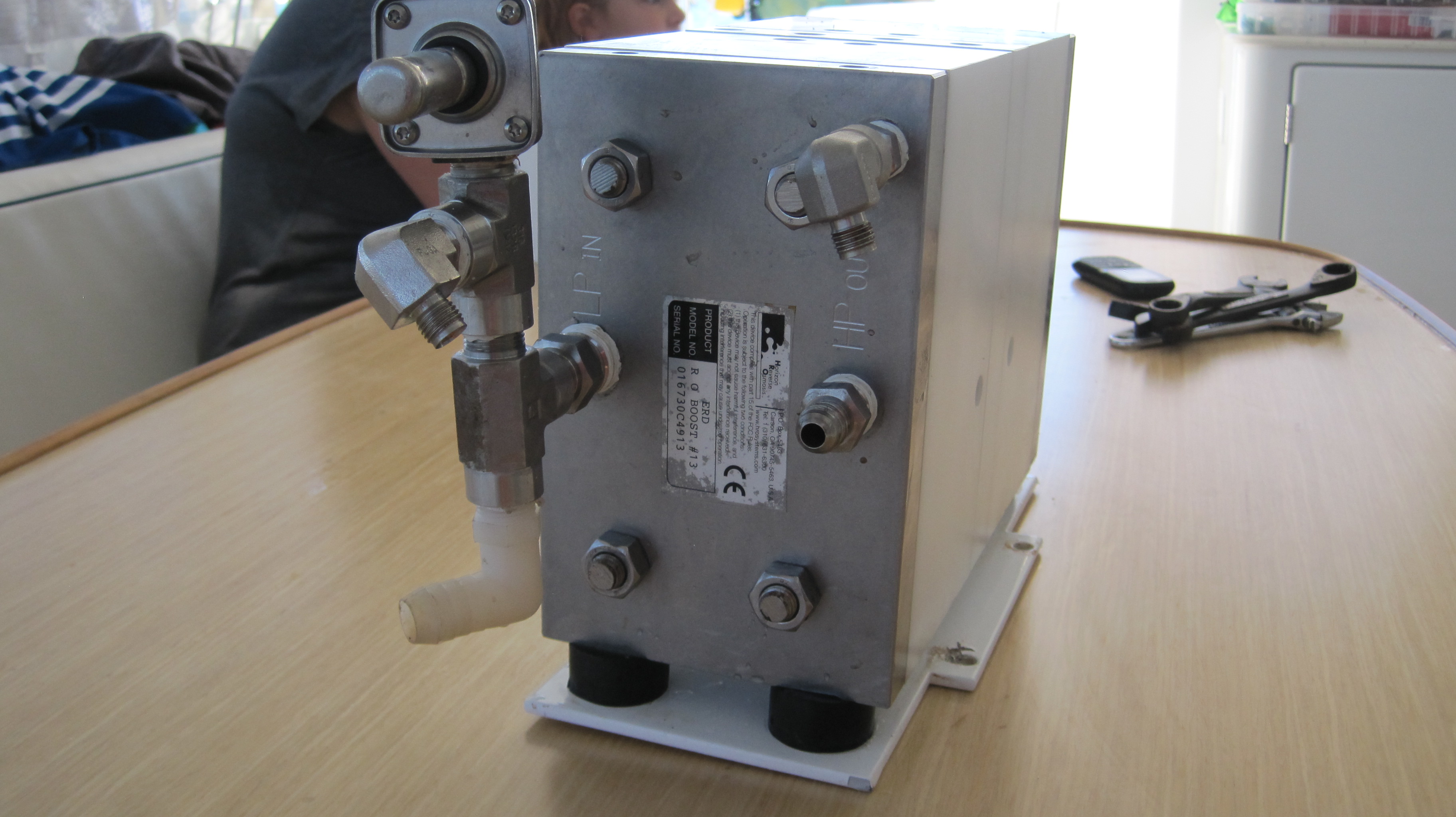
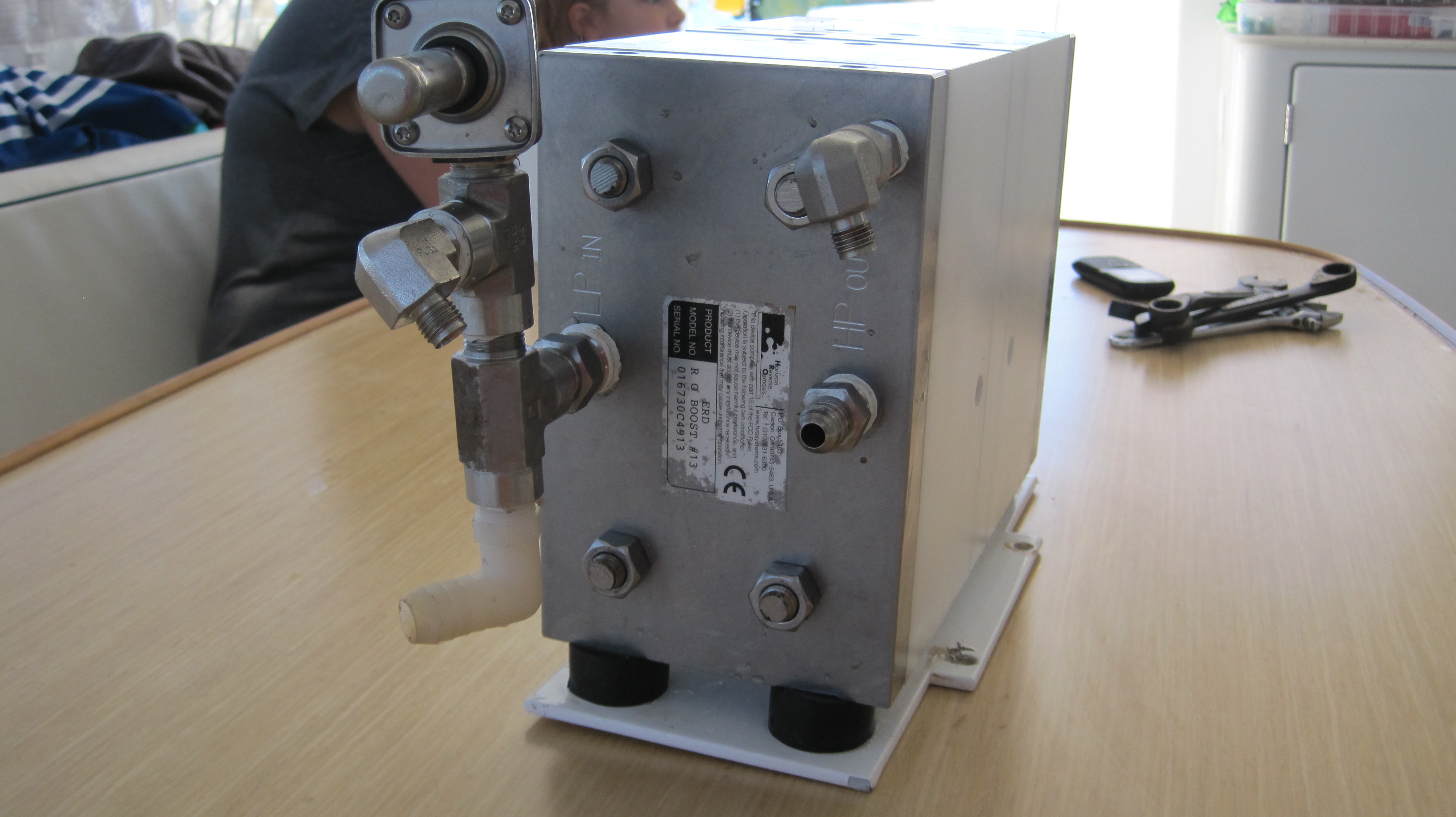
As I have mentioned in previous posts, the culprit behind the machine’s failure was this little black box, manufactured from white polycarbonate, called an “Energy Transfer Device (or “ETD”). It takes a stream of water coming out of a pump at 150 Pounds per Square Inch (PSI) and increases it to 650 PSI, which is enough force to strip the salt from salt water as the water is pushed through a special type of membrane. The good thing about this ETD approach is that it enables a cruising family to make water on their boat with a relatively low amount of power consumption. The bad thing is that it is a complicated design that is easily prone to failure and potentially quite expensive (or impossible) to repair. These are not good water maker design characteristics for a family that is about to embark on a 4,500 mile passage across some remote cruising grounds.

This last week we met a family that is cruising across the Pacific, and they had gone through five (5!) Sea Recovery water maker ETDs before they decided to ditch the design and head in another direction.

Jenna and I decided that after 2 ETDs we were ready to move on. Chris Dent, the Kiwi who installed our most recent ETD in February, suggested we redesign out water maker by replacing the ETD with a powerful pump that can push the seawater at a high pressure directly into the membrane, eliminating the need for a fancy and complicated set of pressure-increasing valves. It turns out that this big pump/simple design approach is what most boats out here do for their water makers. Since Sophie already has a 9kw diesel generator, we had the power plant to support this big pump approach.

IMG_1894

Chris was very cool and helpful and gave us a credit on the ETD we bought from him in February and then shipped up to Fiji a 2.5 horsepower high pressure pump, a new feed pump to supply water to the high pressure pump, along with some new sensors, coils, and valves. He also provided some design guidance on how to modify our existing Sea Recovery unit to support this new approach.

One of the challenges we faced is that the new high pressure pump has to be located right next to the membrane and the watermaker, and both of these are mounted behind Sophie’s starboard engine on a special shelf and mount under the aft transom steps.

IMG_1874

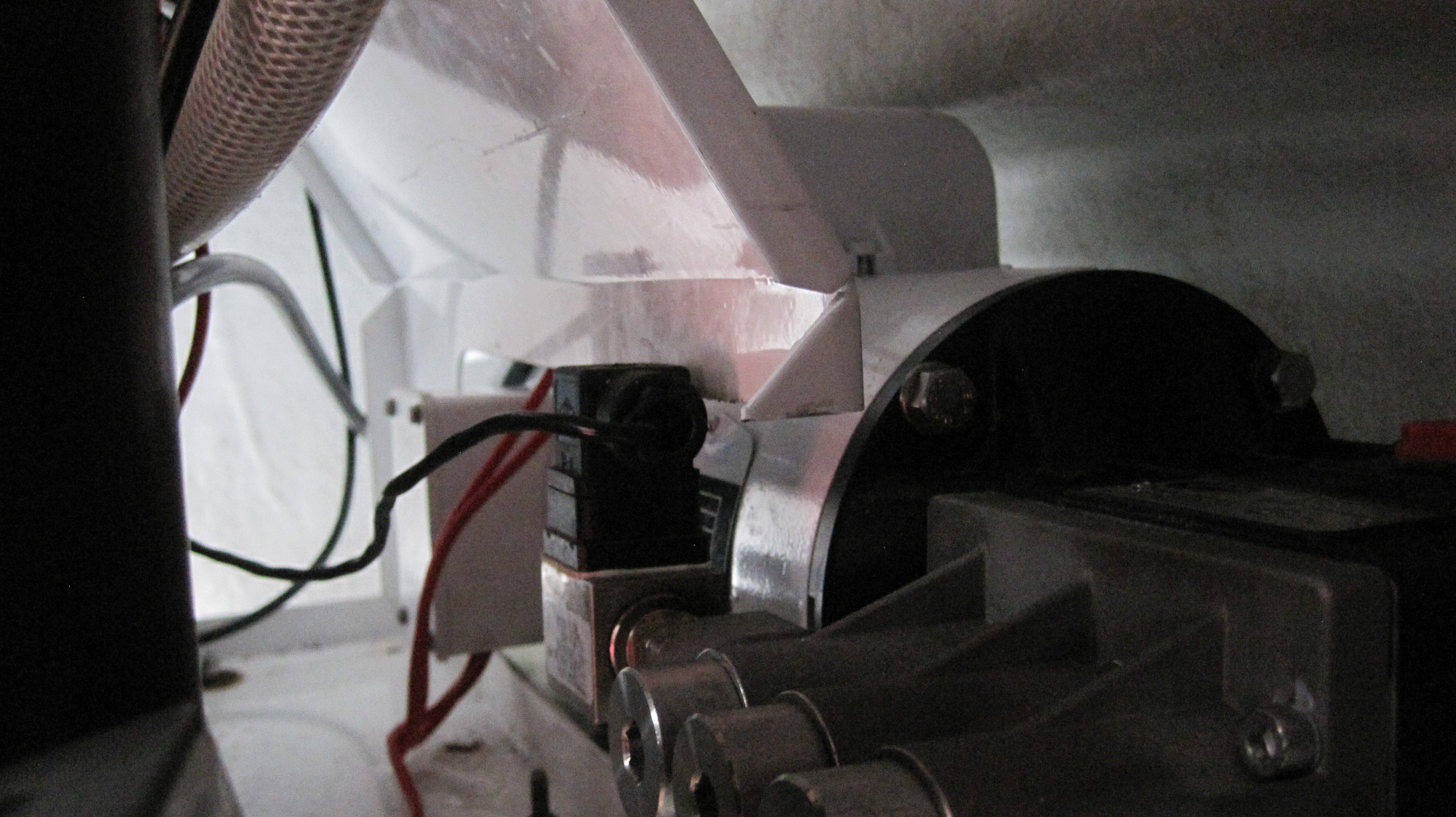
So we removed the ETD from the old water maker housing, moved the housing 6 inches forward on the shelf under the transom steps, and then mounted the new high pressure pump (which weighs about fifty pounds) on the back end of the shelf. To get it all to fit, I had to take a Dremel with a ceramic metal cutting blade and cut a hole in the back of the old water maker housing in order to create space for the new pump. I had to do all of this with my abdomen wedged under the shelf that is located under our transom steps.

Good thing I wasn’t alone.

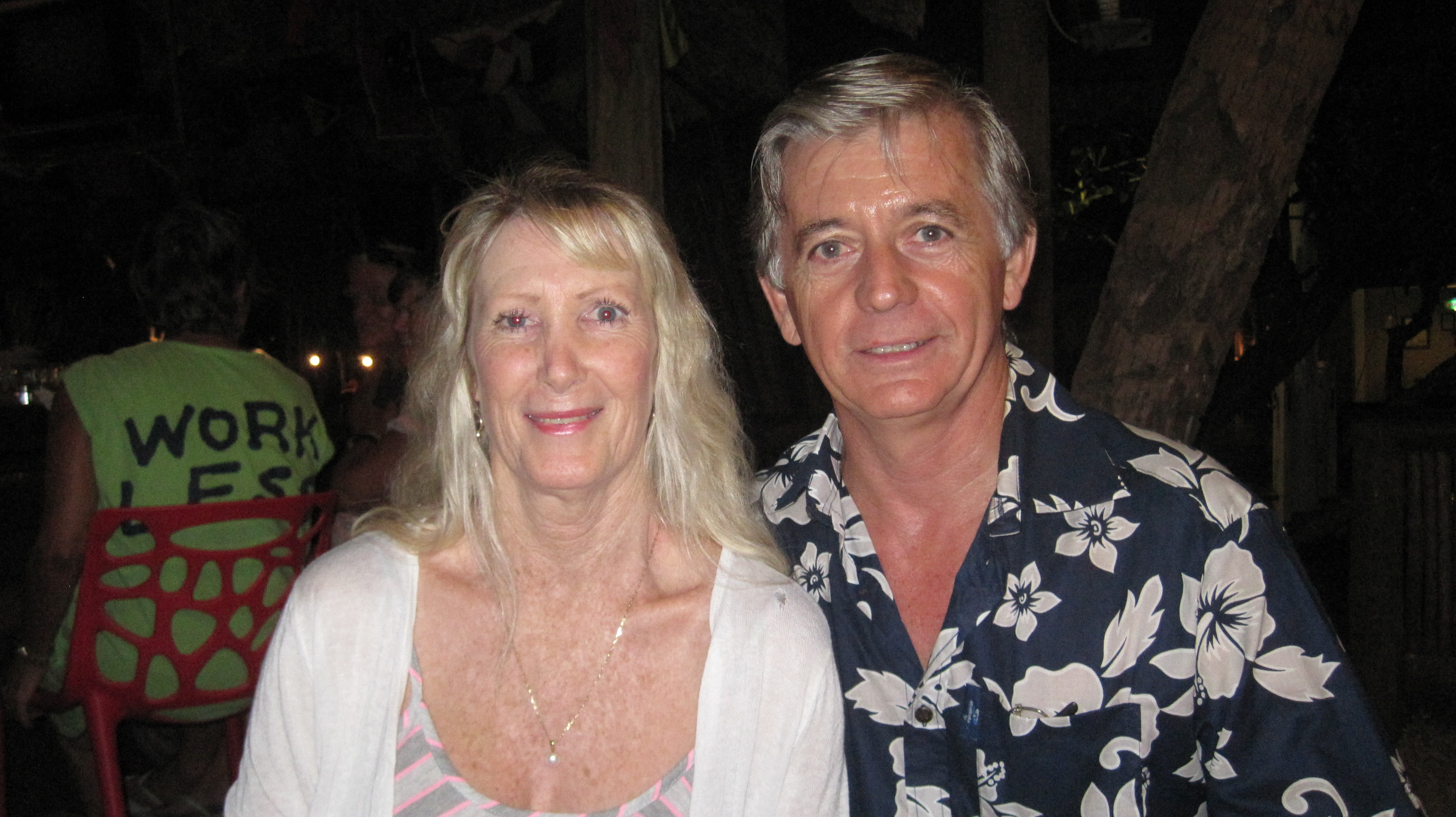
IMG_1891Neil Towner, shown here with his lovely bride Wendy, was down there with me for a couple of days. He’s the Managing Director of Oceania Water Group in Fiji and supports most of the desalinization plants at the big resort hotels here. Neil and I were crammed together doing bilge yoga poses in an area about the third the size of a Gemini space capsule trying to get all of this stuff installed. (And if you are encountering water maker problems in Fiji, don’t waste your time. HIRE HIM.)

Installing the new feed pump was easier, because it could go into the bilge in our stateroom where the old feed pump was located. The new pump’s mounting plate fit directly onto the old pump’s mounting bolts.

Once we had everything mounted, it took us a while to get the wiring right. By using the old Sea Recovery’s electronics, we were adopting an approach where both pumps would try to start at the same time. This required too large on an electrical load from Sophie, and at various points during our testing we brought down our AC circuit breaker, our inverter, and even our generator.

IMG_1873
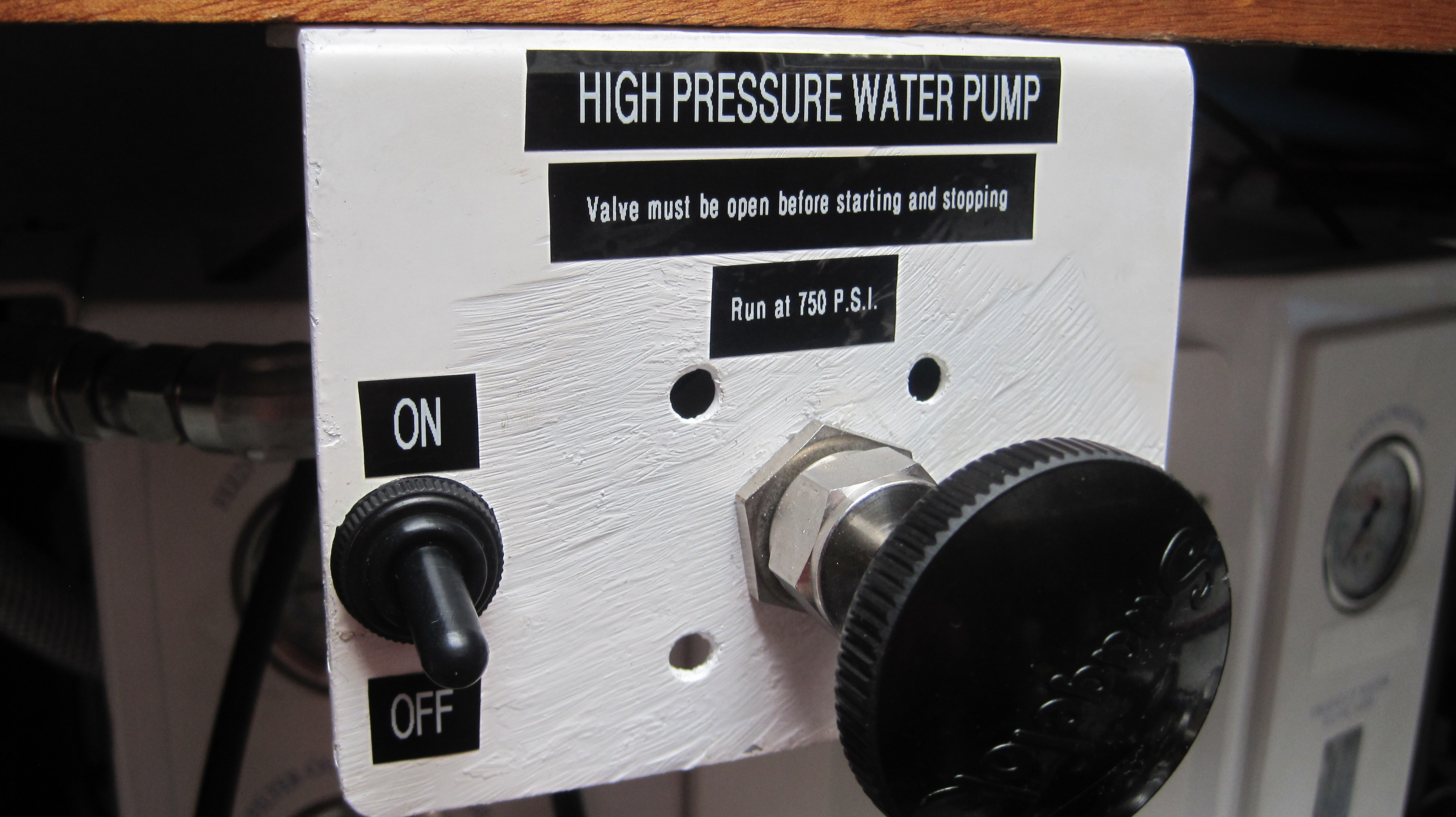
So we decided to deploy a staged approach where we turn on the water maker and feed pump first and THEN turn on the high pressure pump. I even installed a switch to do so. Problem solved. We also installed a manual valve that enables us to directly manipulate the amount of water the high pressure pump pushes through the membrane. At 750 PSI we were getting the 42 gallons per hour depicted above.

This was a really hard problem for us to solve. I feel bad for our friends Cathy and Melissa who had to endure a water-deprived Sophie Adventure Cruise, and for my daughter Sara and cousin Birgit who both had to change their travel plans due to our delayed departure for Vanuatu.

But all’s well that ends well. And the best thing about all of this?

I now know water makers.

Have I told you lately how lucky we are?

Back in Fiji!

IMG_4143

Hello everyone.

After a 7 week whirlwind tour of the United States, the four of us returned to Fiji and our beloved Sophie in the middle of August. It was the longest we had ever been away from the boat in over 6 years, and we were more than a little nervous when we arrived back at Musket Cove to check out how our home fared during our absence.

Fortunately, Sophie was moored exactly where we had left her! More importantly, the battery bank measured 13.3 volts, which is a bigger charge than when we left. It means that the solar panels and windmills worked really well and that we didn’t lose the freezer full of fish that we had left behind.

The boat had a bit of a musty smell. The watermaker wouldn’t start, the genset stopped with a low oil pressure fault, and the electric water heater didn’t work. Fortunately, we were able to sort most of these out right away. The water maker had some clogged filters, the genset diesel engine had a pinprick-sized hole in its oil filter, and the electric water heater was blowing fuses and I believe has suffered from internal corrosion. The first two were easy repairs, and we switched over to using our diesel heater to heat water. (Yes, Sophie has 2 water heaters.)

We also had a laptop whose battery melted during our absence. In hindsight, this was pretty scary because it could have easily started a fire. We will take better care of our NiCad batteries during future trips away from the boat.

IMG_4058

We got through most of this stuff in our first morning back. Jenna then made grilled cheese sandwiches for lunch, we all went down for naps, and we subsequently woke up at 7:00 AM the next morning. It had been a long trip from Boston, and we were all quite tired.

We then proceeded to get back into a boat rhythm over the next few days. Jenna and the kids would do Sophie school in the morning, I’d do boat projects, and we’d all head over to the Musket Cove pool for an afternoon swim. It was great to be back on the boat and in the tropics.

After a few days we headed back over to Denarau Marina to collect our long-time friend Cathy and our new friend Melissa along with their daughters Penny and Greta. They were joining us for a week-long Sophie Adventure Cruise. Our plan was to spend some low-key time hanging out at Musket Cove with some day trips over to Cloud 9 and maybe to the island where the film Castaway was shot.

Little did we anticipate how low-key the trip would be! On the way over to Denarau the water maker stopped working again. At the time I didn’t think it was a big deal because it usually means there is a clogged filter somewhere. Remember, we had the “Energy Transfer Device” (ETD) replaced in New Zealand and had the high pressure pump rebuilt there as well? It was supposed to last us the next 5 years, right?

Nope.

Over the next 5 days I spent about 27 hours debugging and disassembling the system, and we still couldn’t get it to work. The problem was that the ETD wouldn’t create  enough pressure to force the saltwater through the membrane, which is how these machines create fresh water.

IMG_1626

At one point I even pulled the ETD, pictured above, out of the watermaker housing and disassembled the little b*tch (somehow I keep singing an Elton John song over and over to myself while I am working on it) to see if there was something clogging it.

IMG_1635

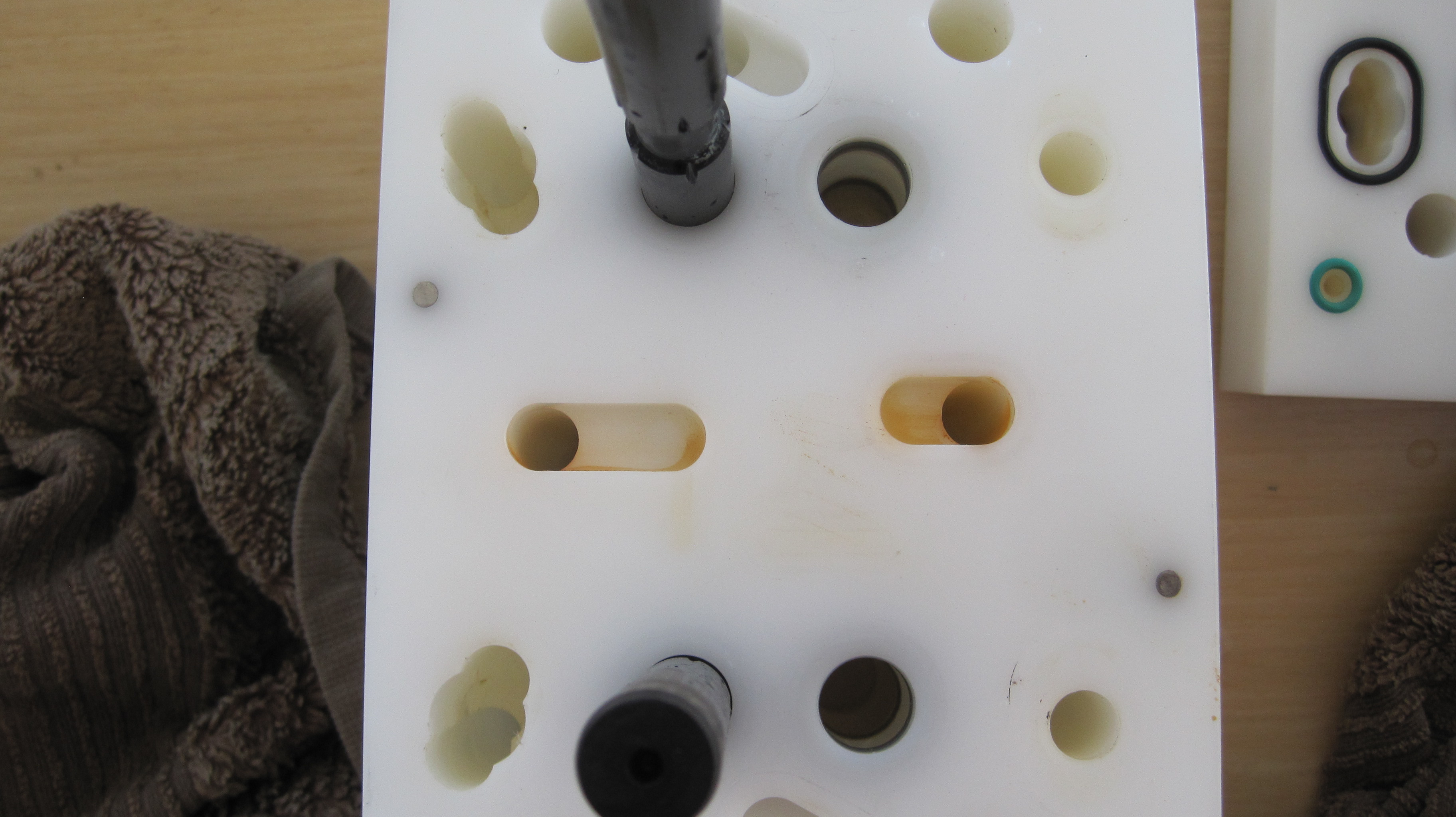
I found some rust in its valves and cylinders, which was interesting because this device has no internal metal parts. I used Q-tips to clean out the rust as best I could, reassembled the ETD, got it back into the water maker, reconnected all of the hoses and wiring, and turned the machine on and got the exact same result as before.

IMG_1638

We are planning to leave Fiji soon for a long stretch of remote cruising, and we need a reliable water maker. The folks in New Zealand offered to fix the ETD if we shipped it back to them or even try to get a warranty replacement from the manufacturer (Sea Recovery) in the US but that could potentially take a month or longer. Besides, we don’t know why this particular ETD failed after such a short period of time. So we decided to rearchitect the watermaker, ditching the ETD for a higher pressure pump that feeds directly into the membrane. This is a much simpler design and is how 99% of the other boats out here cruising go about making water. While we are at it we will add another membrane and increase our fresh water production to 70 gallons per hour. This new approach means we will have to run our genset when we produce water, but we almost always do that anyway so it is not much of a sacrifice. The parts are allegedly arriving in Fiji today and we hope the install will be a straightforward process early next week.

Meanwhile, while all of this was going on, we had 4 guests to entertain, and it turns out that Sophie Adventure Cruises requires a lot of water for things like doing dishes, washing clothes, and taking long lingering post-swim showers on the aft steps.

But Cathy and Melissa were very, very cool about doing their visit with us in water conservation mode. It didn’t hurt that we were in Fiji with spectacular weather in a harbor with a 100 foot infinity pool. Even though Jenna was doing daily Sophie school and I was practicing my advanced water maker bilge yoga poses, we were able to get our guests out on activities including a rollicking sail in 25 knots of wind, coral snorkeling, a trip to Beachcomber resort, and multiple trips to Cloud 9.

IMG_4136

They especially liked Cloud 9 because the kids could chill out on the day beds while the grown ups chilled out all over the place.

IMG_4096

We also had the requisite Sophie dance party one night, complete with some new songs we picked up at a family wedding in July. It was a lot of fun.

IMG_4078

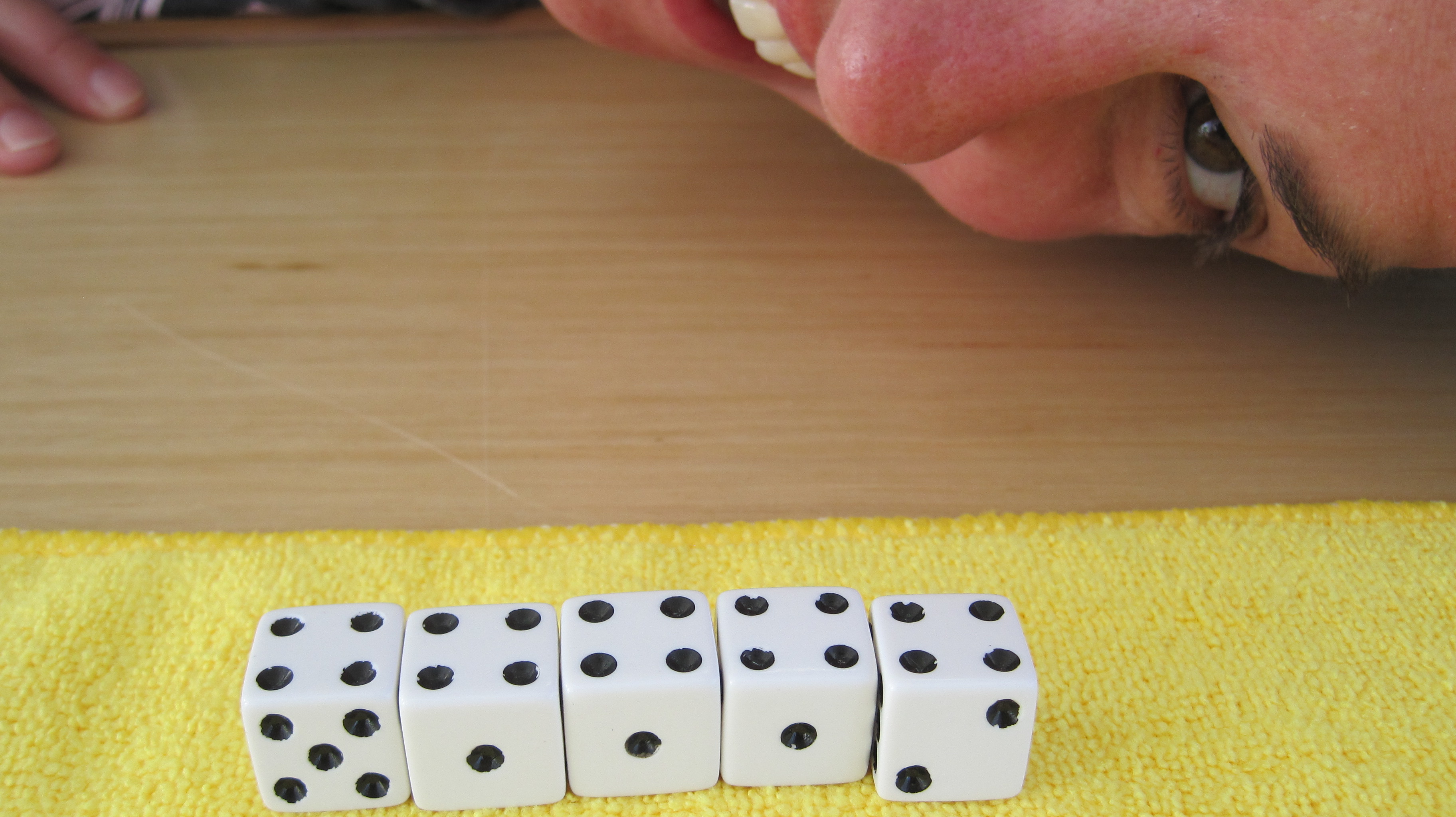
One of the best ways to cope with a low water situation on Sophie with guests on board is to play Yahtzee. A lot of Yahtzee. We introduced Cathy and Melissa to the game midway through the trip, and they were hooked. Cathy in particular was very, very proud of some of her rolls.

IMG_1666

One night Melissa and I thought it was a good idea to do a shot of tequila after every Yahtzee, and I immediately proceeded to roll a 3 Yahtzee game. Needless to say, it was a fun night.

IMG_1657

Cathy, Melissa, and the girls were wonderful guests despite our need for water rationing, and their week with us went by much too quickly. We miss you, and you are always welcomed back.

On their last night here, I drove them to the airport in a borrowed car in the pitch dark on roads with no signs while driving past burning sugar cane fields.  I think Cathy was thrilled and terrified at the same time; she kept suggesting that I could pursue a second career as a third world taxi driver. Personally I prefer my current career as a boat driver.

At the airport Cathy and Melissa were told that the plane was in an oversold situation, and they were each offered $850 Fijian plus a $750 airline voucher if they stayed another couple of days. Cathy really wanted to get back to see her boys, Melissa wavered, there was too much momentum, and they both went ahead and boarded the plane. Two days later they each told us that they regretted the decision. Seattle is still there. Good life lesson for everyone: if an airline offers to PAY YOU to stay in paradise for another couple of days, then always TAKE THE CASH!

The day after Cathy and Melissa left, my daughter Sara arrived. She is the last member of the family to join us on the trip, and we are so happy that she will be spending a month with us, including our passage from Fiji to Vanuatu next week.

WP_20140904_001

Leo and Hazel adore Sara, she’s been sailing for 15 years, and she will fit right in to the Sophie lifestyle.

In addition to Sara, we’ll be joined this weekend by my German cousin Birgit and next week in Vanuatu by Sara’s partner Julie. And we are in full blown planning mode, because our year in Fiji and New Zealand is rapidly coming to an end. Once the water maker is fixed, we will head off to Tanna in Vanuatu to check out the volcano there. It’s a 465 mile trade wind sail from Vuda and should take us 2-3 days. We’ll then hang out in Vanuatu for a few weeks before proceeding north and then west through the Solomon Islands, Papua New Guinea, Indonesia, Singapore, and Thailand.

Singapore is “only” 4,500 miles away. We’re pretty excited to get back into adventure mode, and we still have a lot to do before we leave.

Have I told you how lucky we are?

What a Birthday! (so far …)

FJ_20135

It has been almost a week since I returned from the U.S. back to Fiji. There has been a strong easterly blowing all week, which made us a little reluctant to depart the Savusavu area. Also, our friends Misti and Abbie were scheduled to leave on a plane from Savusavu yesterday, so we wound up spending the last 3 days back at anchor off the Cousteau resort.

I shouldn’t complain. We went swimming every day, we deployed the Relaxation Station V2, and we had one of our better dance parties on the eve of Misti and Abbie’s departure. Max, who spent some time on a collegiate swing dancing team, helped Hazel transform her skill at doing a yoga bridge into an outstanding dip.

IMG_1573

Hazel then tried to teach Max some advanced moves she learned from the playgrounds of New Zealand, but I think they may still need a little work before Caroline and Alex’s Maine wedding in July.

IMG_1579

Meanwhile, Misti stepped in and taught Leo that there are actually more dance moves than simply standing in the middle of the dance floor, karate chopping invisible assailants on either side of you. I often dream of fixing things with someone, but I am really glad Misti stepped in and started the process of fixing Leo’s approach to wedding dances.

IMG_1576In case you are wondering, Leo is completely set for the dancing that will take place AFTER the reception.

But once again, I digress. I had planned to write a post about Sophie’s history of dance parties, a history that goes back six years, a history that even had Hazel asking me yesterday about exactly when we were getting our disco ball. But the events of my birthday, which is taking place today in Fiji, has given me much better things to write about.

Because when Jenna and I woke up this morning, we saw that there was no wind. We had assumed we would be heading west, with the strong easterly wind at our backs, towards a bay called Mbua and then on to the iguana sanctuary of Yadua. Our friends Jeff and Melody made it to Mbua last night, and they said there was nothing there except for a lot of wind and a large number of blue jellyfishes. Jenna and I had wanted to head east to the Lau Group since we arrived in Fiji a month ago, there was no wind this morning, so we looked at each other and said, basically at the same time, “Let’s go east”.

And we did.

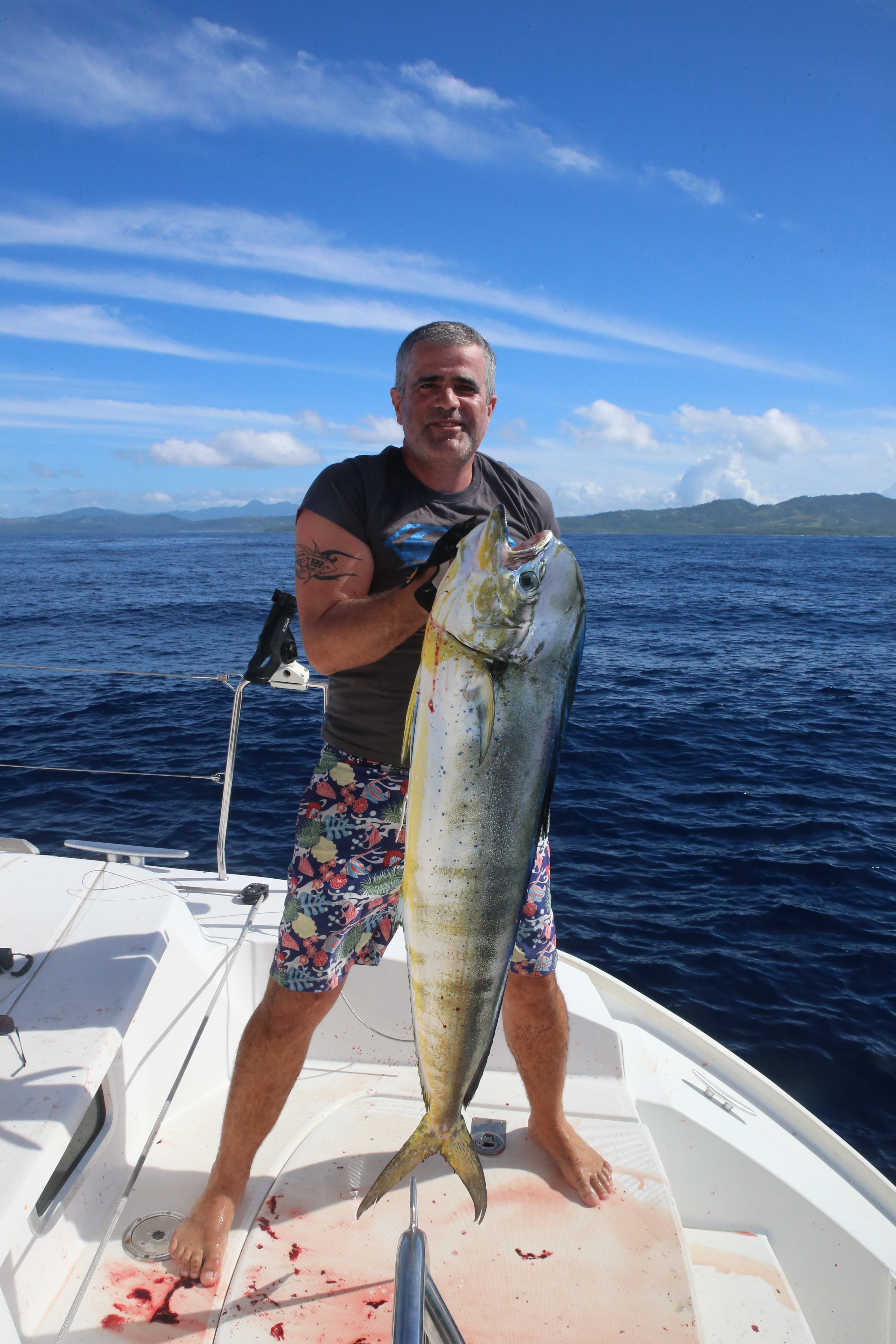
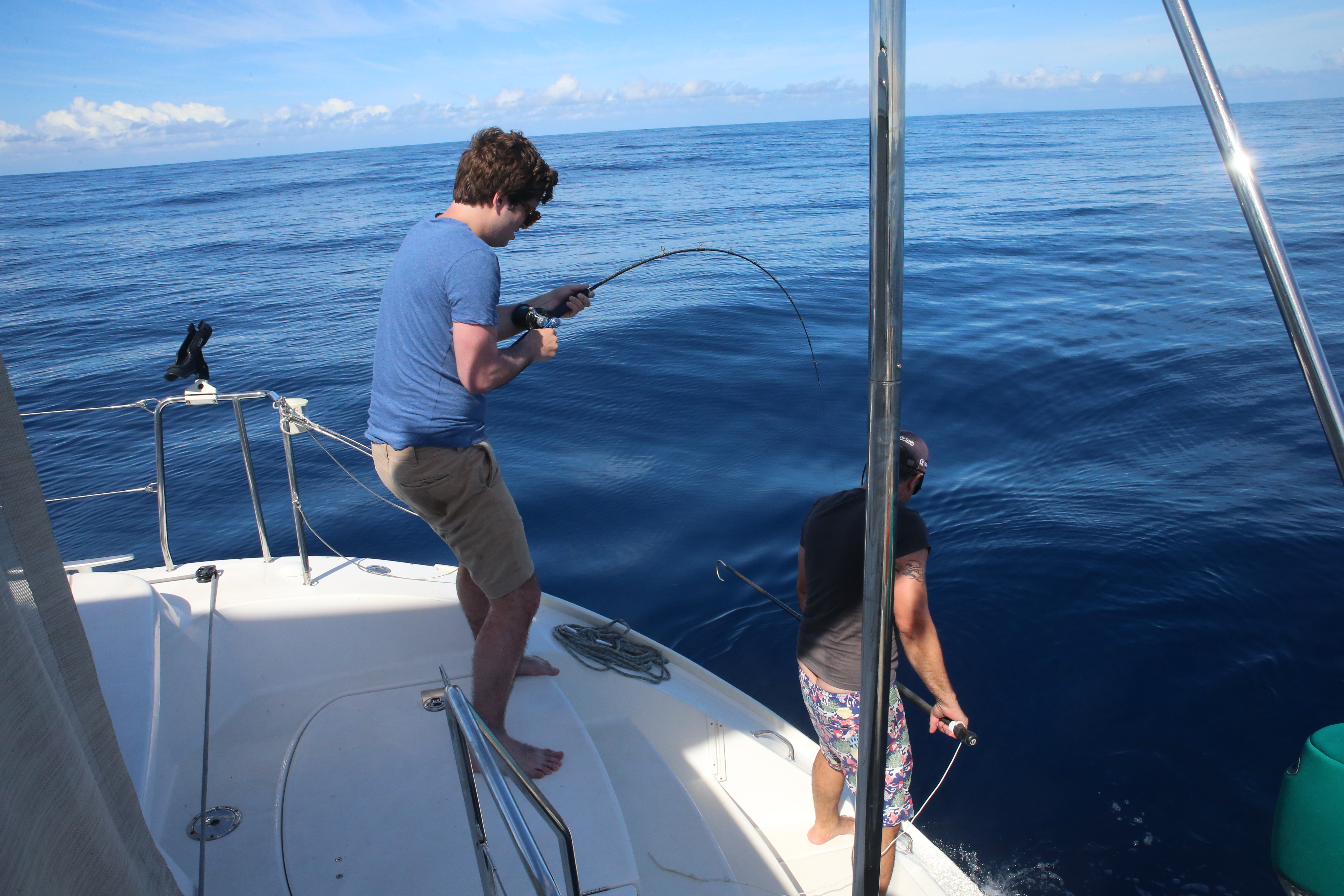
It was bouncy for the first hour but then smoothed out as we got inside the lee of Taveuni. We had 3 meat lines out along with the trolling rod, it was a beautiful sunny morning, and then Max and I saw a school of fish going nuts 200 meters a way. We saw one of them destroy one of our lures (goodbye, Cougar, we will miss you) and then a fish hit the lure on the rod. 10 minutes later, we had Sophie’s biggest mahi mahi ever on the boat.

FJ_20151

That’s 30 pounds, baby.

What a birthday present! I fileted the fish and was in the process of vacuum sealing it’s chunks when the trolling rod exploded again with another fish hit!

This one was all Max’s. Jenna got some good airborne shots.

FJ_20173

FJ_20187

We had to use the gaff on both of the fish, and Max’s fish actually pulled the gaff from my hand as it dove under the boat. Good thing our friends on Muk Tuk in Nuku Hiva a year ago taught us to but a rope on the end of the gaff.

FJ_20162FJ_20143But the important thing is that we got Max’s Mahi Mahi into the boat, and we could get the father-son trophy shot.

FJ_20201There was enough room in the freezer to store 28 pounds of filets, and that was after setting 5 pounds aside for my birthday lunch and dinner.
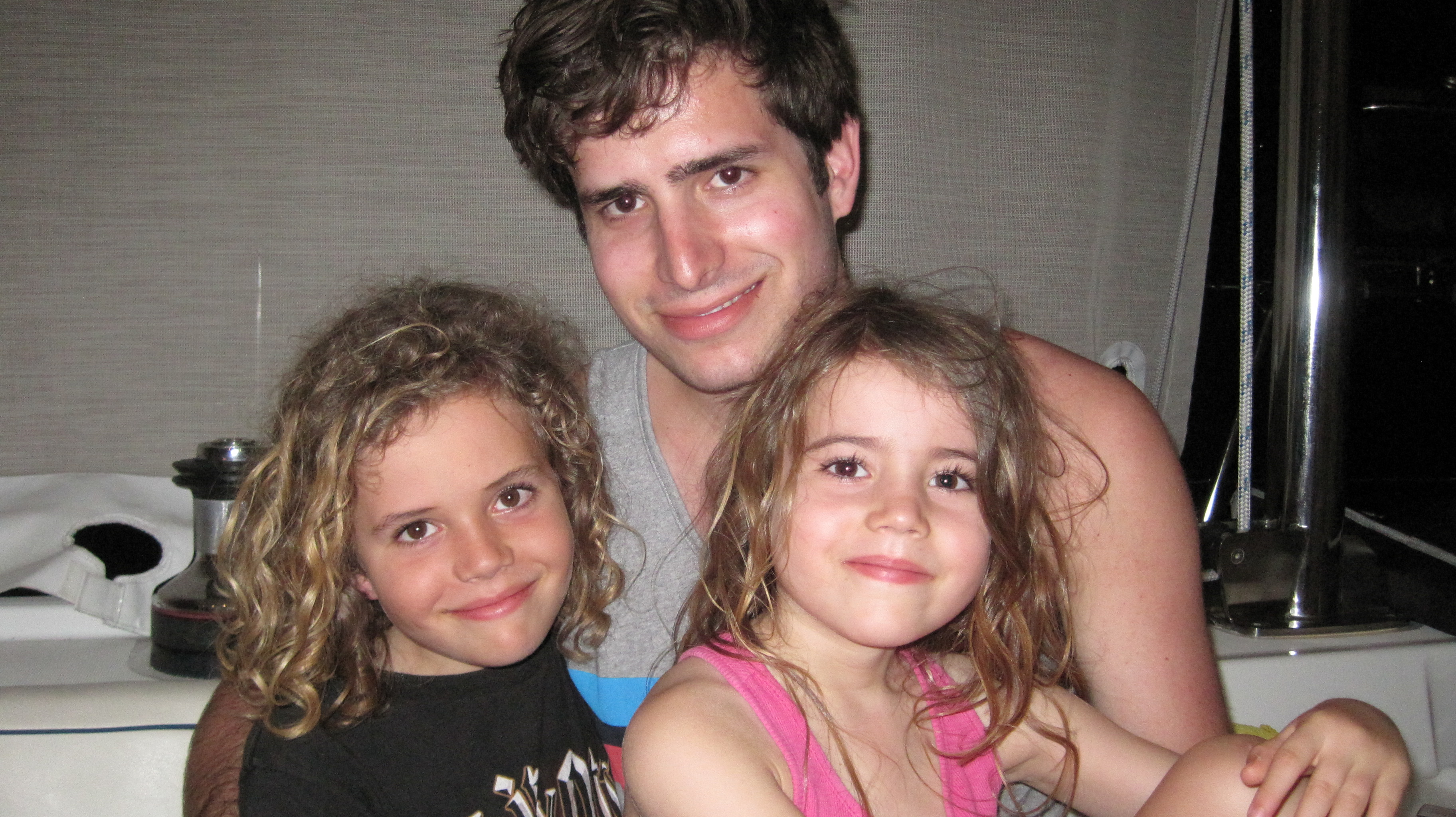
FJ_20203

And to think a week ago I was hanging out in Washington DC with friends I hadn’t seen in 30 years, and now I am back in the tropics on the other side of the world surrounded by family and connected with friends, doing what I love. I am wicked lucky.

IMG_1562


Eating Stateside

IMG_1364

I left Fiji a week ago for a quick trip to the US. The main purpose of my visit was to attend my son Max’s graduation from law school in Boston. It was a great ceremony, and he flew back to Sophie with me today and will spend a month with us on the boat. This will be Max’s second visit with us since we left San Diego last year.

The thing that struck me the most about this particular trip to the US is the quality, price, and sheer volume of food that my fellow Americans eat. Granted, I was there for a week of celebrations and a bit of a homecoming, but for lack of a better word the overall experience was remarkable.

IMG_1387

My food trip started last Monday at my parent’s house in Shrewsbury, Massachusetts. I had completed a simple 3 leg, 28 hour journey to get from Sophie in Savu Savu to Logan Airport in Boston, and it was 3:00 AM by the time I snuck into their guest room and touched my head to a pillow.

I had a quiet morning reconnecting with my parents and ate a Sophie-like breakfast of fruit and toast. But then my brother John swung by with his family on their way back from Cape Cod, and to celebrate my arrival brought with them some takeout lobster rolls. These are considered a New England delicacy, and the ones John brought with him were ENORMOUS. That monster in the photo at the top of the blog is just HALF a lobster roll.

In case you missed it, please let me share it with you again.

IMG_1364

Of course I ate it. It was delicious.

Earlier in the day I had gone with my father to a seafood market and bought 8 lobsters along with some clams for steaming. My mom wanted to have some extra food “just in case” anyone happened to drop in. She made a good call, because my daughter Sara was driving down from Maine with her partner Julie, and I had my second lobster meal of the day. The lobsters were OK, but I had never met Julie before and she seems quite nice.

IMG_1380

The two of them will be joining us in Vanuatu in September.

The next day I wandered around Shrewsbury visiting some of my old haunts. This included a long walk with Sara.

IMG_1369

This is the house I lived in from birth through age 2. I have no memory of it, but it now seems a little small for 2 adults and 5 children. Heck, it seems around the same size as Sophie.

IMG_1388

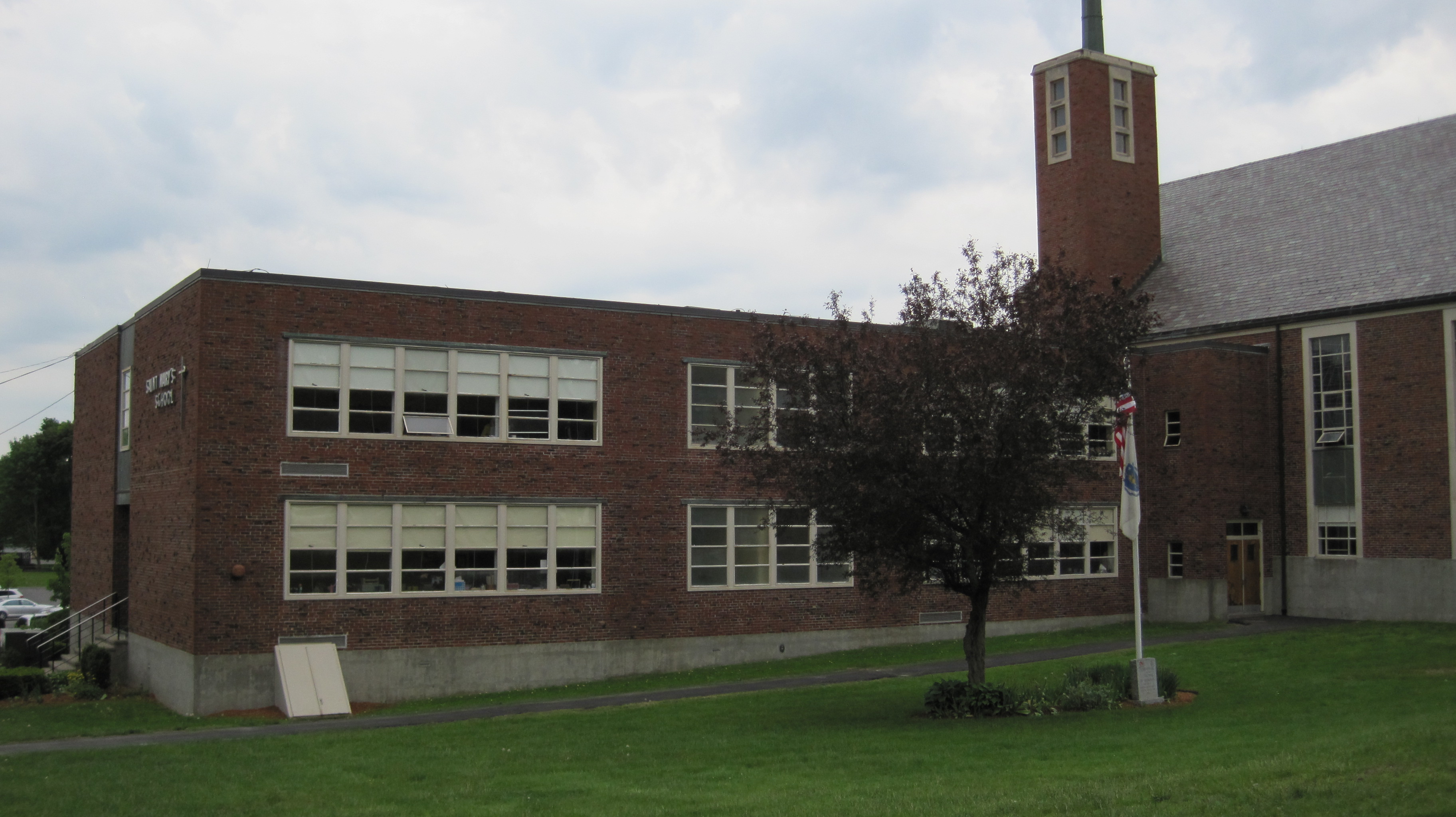
This is Saint Mary’s, the catholic grammar school that I attended from first through eighth grades. I even worked as janitor there for a couple of years, cleaning the classrooms and bathrooms after school. When Sara and I walked past last week, there was a funeral taking place. In addition to being a janitor, I also used to be an altar boy and loved weekday funerals because it gave me a chance to get out of class.

IMG_1390

After the school, we walked up the hill to visit the public library. My mom told me they bought a house in the center of town so that we could walk there every day. I did so.

IMG_1396

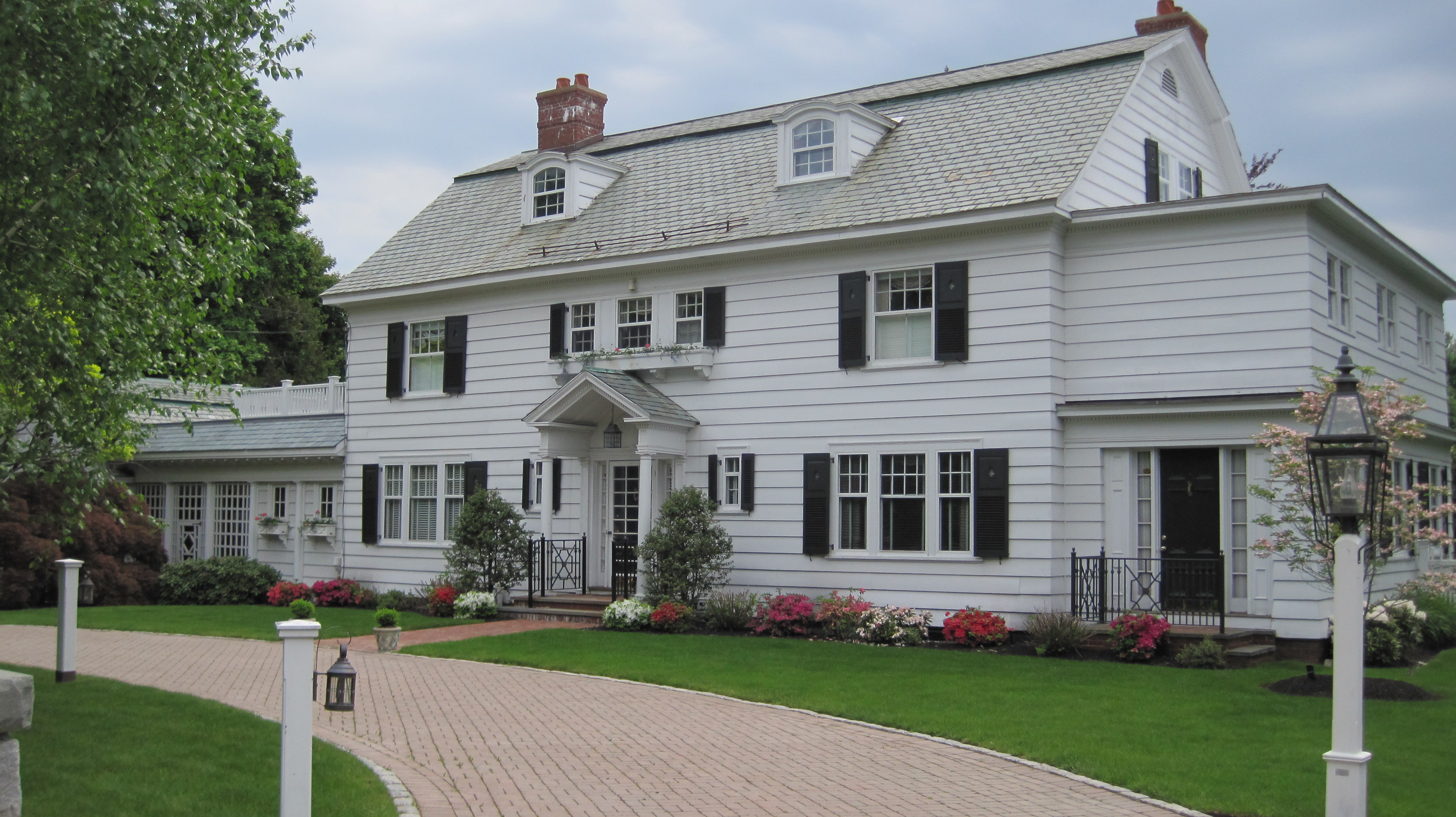
Here is the house I lived in for 16 years. It’s up the street form the library and looks WAY fancier today than it did when I was a kid. The woman who bought it from my parents 14 years ago installed things like the brick driveway, iron railings, lampposts, rooftop patios, and an addition out back. When I lived there it was a great home for my parents, their nine children, and my grandmother. It also required a lot of work, and we had to do chores every day. We did so because it was the right thing to do and also because there was an occasional threat of a wooden spoon.

IMG_1384

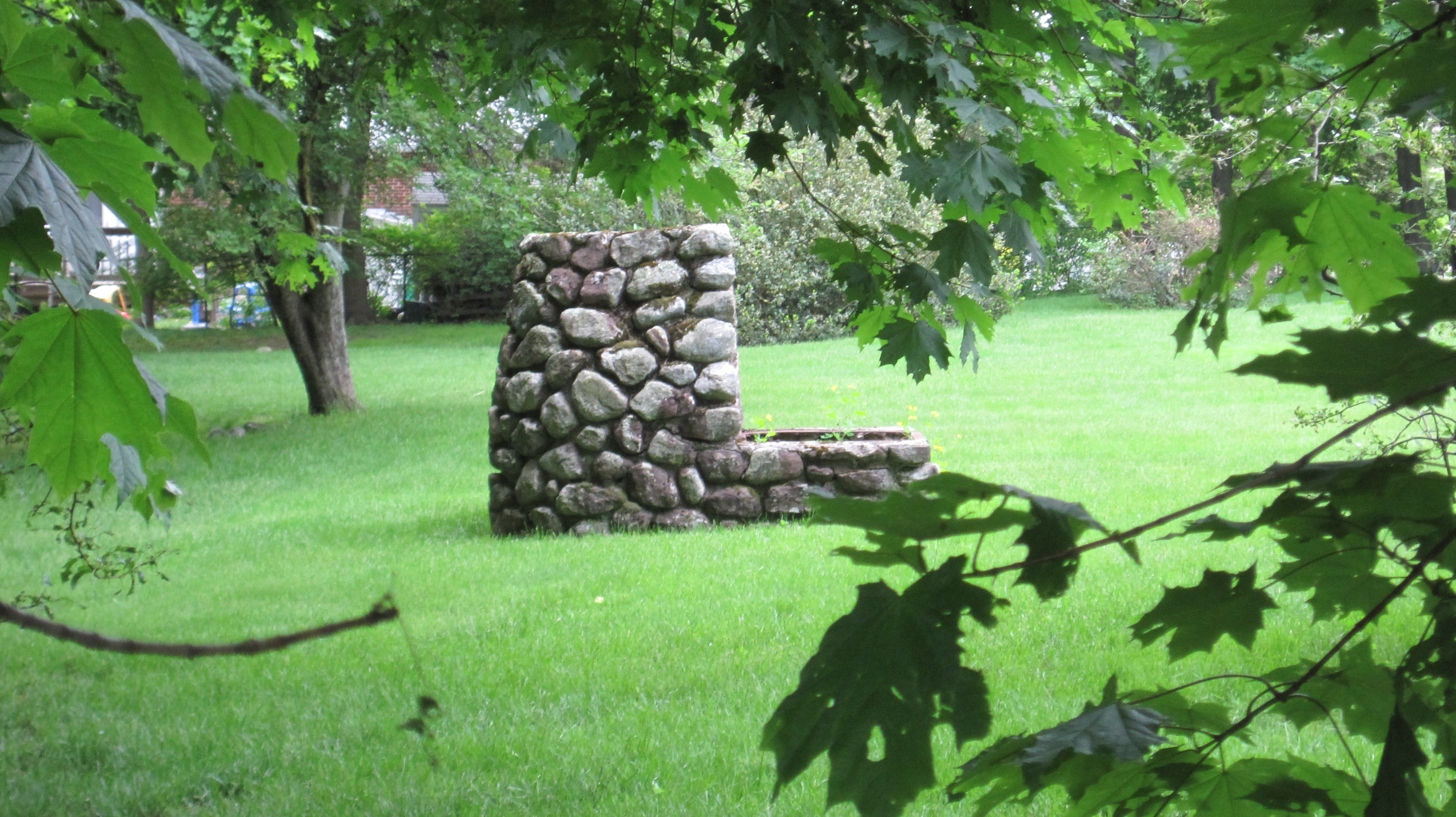
It was also the source of a LOT of fun. I wrote last year about how we had a pig roast in Tonga with some other boats. Well here is a photo of my parent’s first pig roast in our back yard. They used a fieldstone barbecue that must have been there since the house was built over a hundred years ago. (Please note the wooden keg of beer next to a rhubarb patch in the background of the photo.)

IMG_1403

As part our reconnaissance mission, Sara and I snuck into the church parking lot next door and were pleased to see that the old pig roast barbecue is still there.IMG_1399

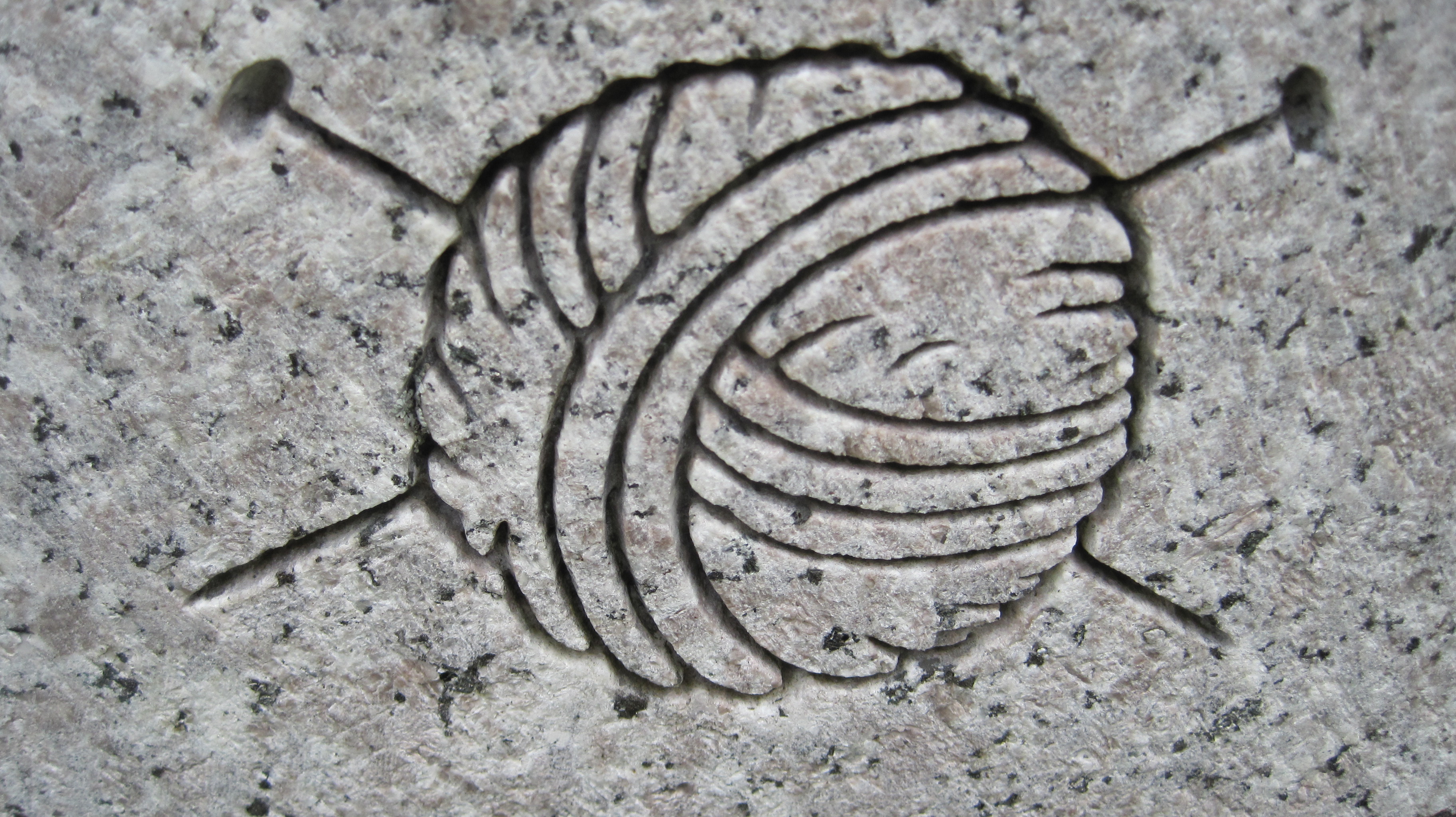
After visiting the old homestead, Sara and I walked another couple of blocks to visit my grandmother’s grave. She grew up in Newfoundland, which is now part of Canada. The grave is made from granite. This is where my parents will be buried when they die.

IMG_1401

As part of her enscription, she has this ball of yarn and crossed knitting needles carved into the headstone. I am not sure what my parents will want as their headstone icons, and I should probably ask them.

OK, I hate being chided about anything, especially going off topic in a blog. Please forgive me for sharing this little walk down memory lane. Let’s get back to food.

IMG_1405

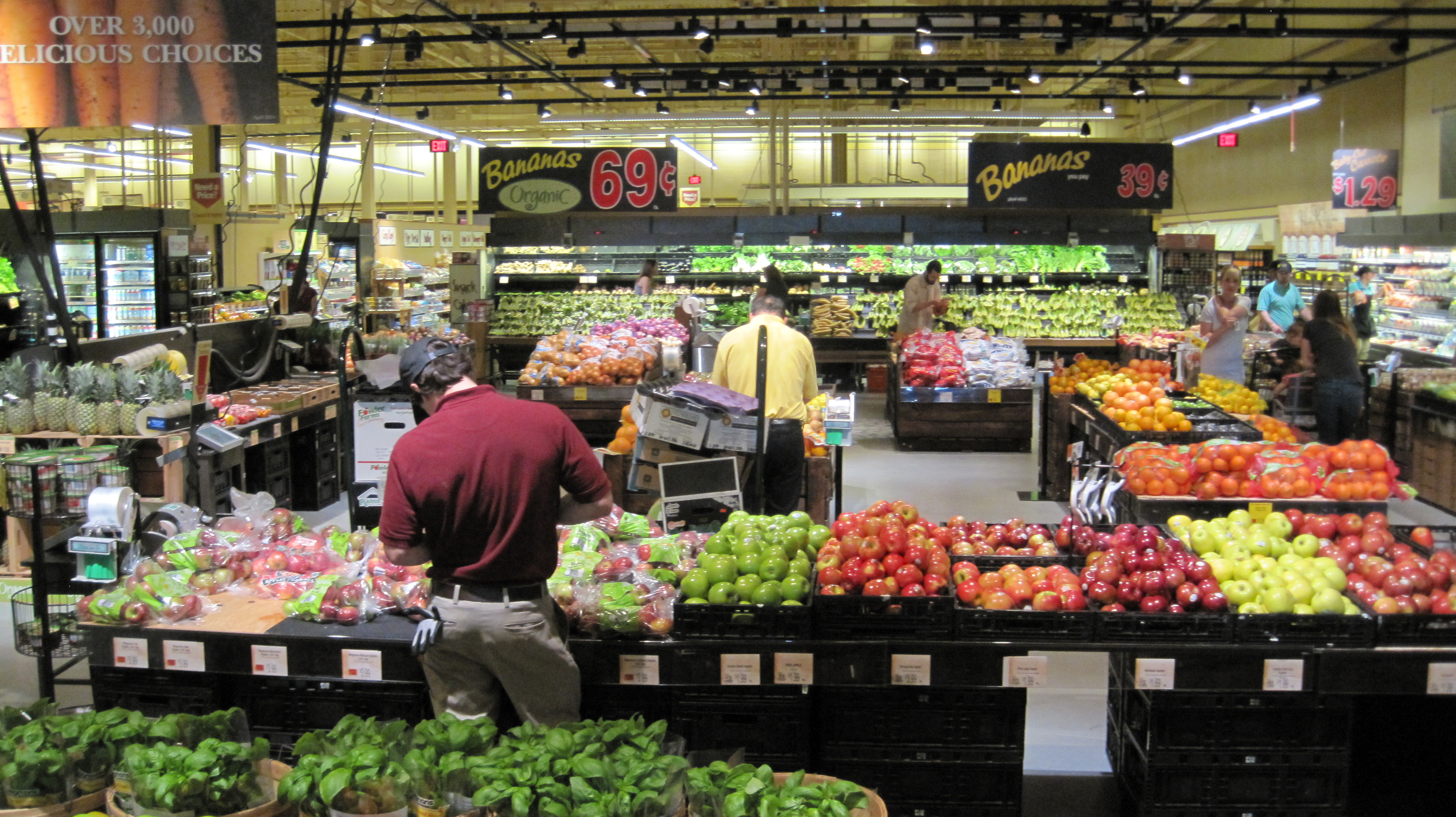
That afternoon, Sara and went to Wegman’s, a local gourmet mega-supermarket in the nearby town of Northborough, in order to stock up for a family barbecue that night. In general, I found Wegman’s to be 3 times the size of the largest grocery stores in New Zealand with food that was half the price. I think most people in the U.S. don’t appreciate how inexpensive food (and beer) is there compared to most of the rest of the world. I was a little overwhelmed, especially after spending 6 months in New Zealand where food is expensive. We wound up getting 6 racks of ribs (at $4 a pound!), vegetables, berries, beer, wine, shortcake, whipping cream, and other assorted barbecue stuff. I cooked the ribs in tinfoil on the grill for 5 hours at ~140 degrees F, and they were falling-off-the-bone awesome.

(Jenna just pointed out that you can buy onions here in Fiji for $4 a pound).

IMG_1438

The next stop on what was quickly becoming my stateside eating tour was the Boston steakhouse Grill 23 for a Wednesday night pre-graduation celebratory dinner with Max. Back when I worked in the business world, it seems like I would have meals like this once a week. What you are looking at here are 10 oz. filet mignons with buttered mashed potatoes and sides of mac and cheese, asparagus, mushrooms — all preceded by New England seafood chowder and followed by a bourbon apricot crisp. (I also feel like I weighed like 69 pounds more back then compared to know … and “he still lives” to tell about it!)

Anyway, in case you are keeping track, in my first three days in New England I had lobster rolls, lobsters, ribs, and a decadent filet mignon restaurant meal.

For the morning of Max’s graduation I was still able to squeeze into my suit and head over to Harvard Yard with Max’s girlfriend Becca to watch the morning commencement exercise.

IMG_1452

Unfortunately, a proud parent standing next to us decided to record the entire 2 hour parade ceremony on her iPad and blocked our view of Aretha Franklin (and lots of other people) as they walked by. Later on the Law School had a luncheon ceremony where they awarded individual diplomas to all of their graduates. The boxed lunch contained a grilled chicken breast with fried plantains, fruit, and rice. It was excellent, Sophie-like food on a beautiful late spring New England day.

IMG_1467

Needless to say I was very proud of my son.

Later that evening we prepared for a celebration barbecue at Max’s apartment on the Cambridge-Somerville line. Earlier in the day his sister and his mom drove out to a German butcher for some sausages, a very Utzschneider thing to do. We had all of our Boston cousins coming over and wanted to celebrate in style with 2 types of bratwurst, Nurenburger wurst, Weiss wurst, and excellent sauerkraut.

IMG_1490

To kick things off, Max’s cousin Danny, also known as “the wingman” for his ability to be there when you need him whether it’s a bar or an Oktoberfest tent, took care of the fire. In real life Danny is a biologist in Switzerland.

IMG_1491

Once the coals were ready, the brats went on. Here we go again …

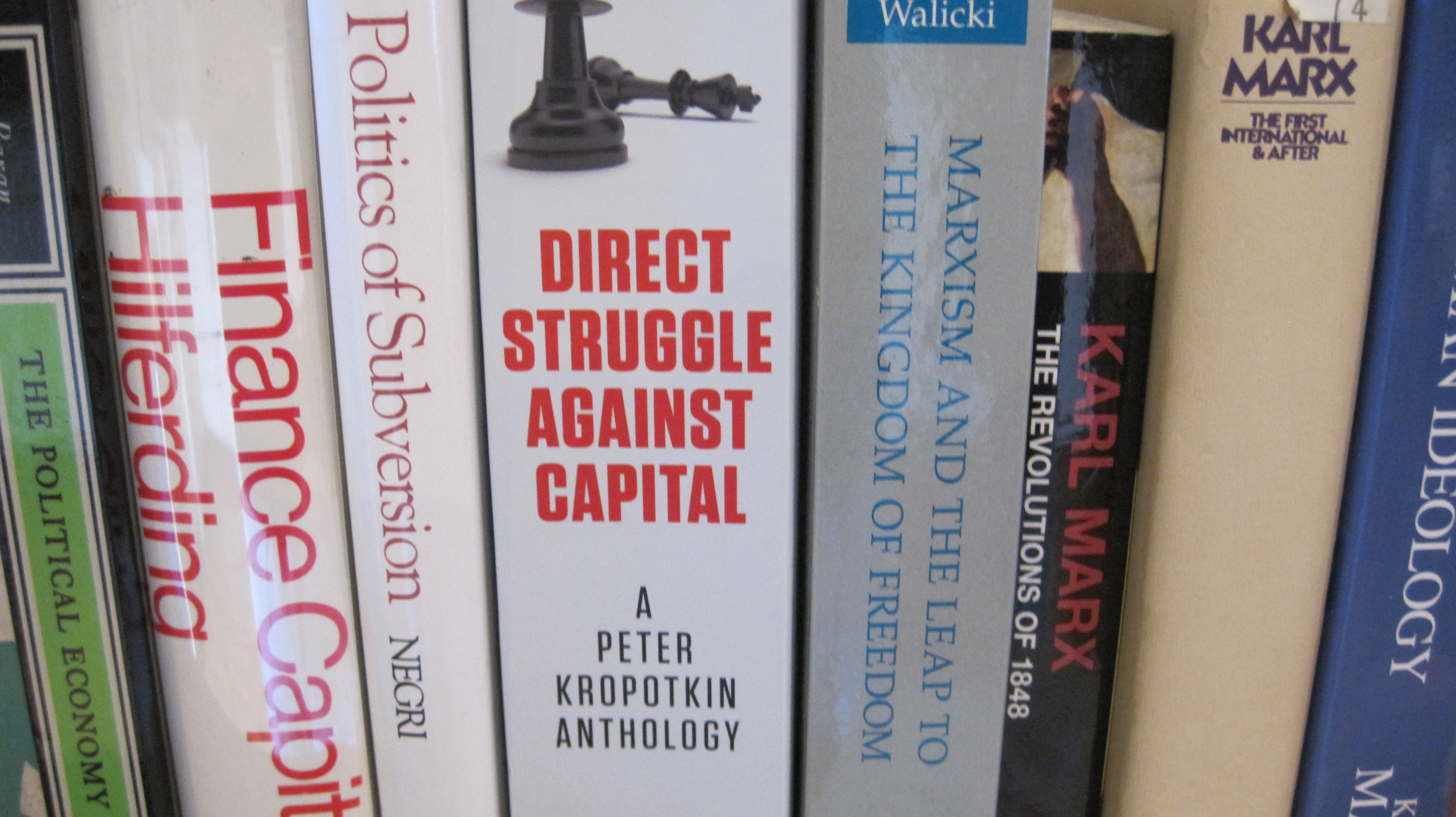
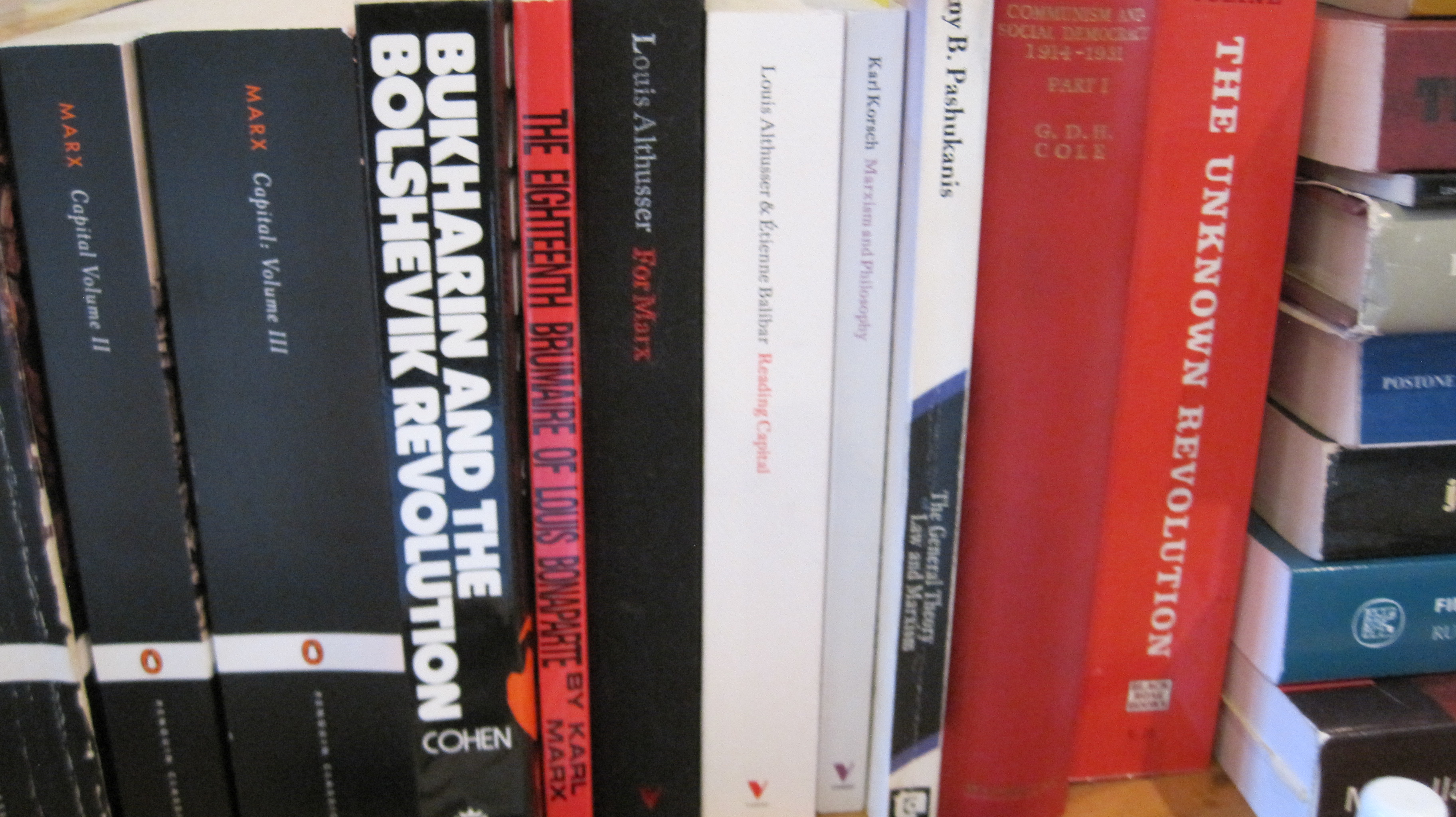
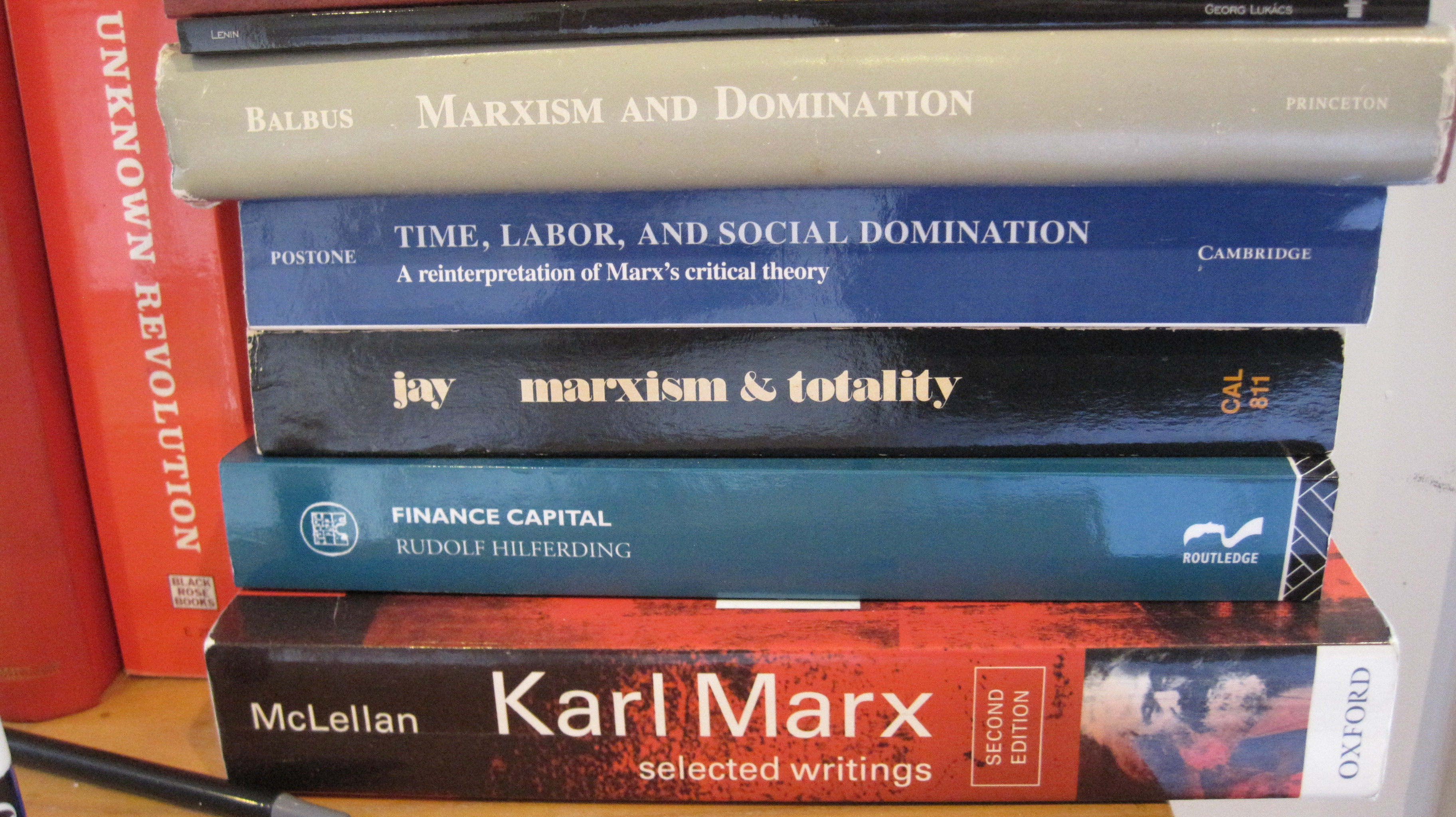
While the meat was cooking I took a moment to peruse the bookshelf immediately inside Max’s door. Here is what I found.

IMG_1487 IMG_1486 IMG_1485 IMG_1484 IMG_1483 IMG_1482 IMG_1481

In case you haven’t figured it out by now, Max is going to be a labor lawyer. Like I said, I am very proud of him.

IMG_1493Soon the sausage was ready and the beer was flowing. Here is Max and my brother John talking about life with an admiring Sara in the background. John is a successful corporate lawyer, and Max is, well, Max. Nothing like beer and sausage to help bridge any type of ideological and generational divides. If only real life could work this way.

It was a fun party, we stayed up late, and I even got to see my niece Caroline and her fiancé Alex. They are getting married in Maine in July, and the Sophie crew plans to be there. Here is Caroline’s ring.

IMG_1497

But all good things have to come to an end, so on Friday morning I woke up at 6:00 in order to take my eating tour down to Washington DC for my 30th college reunion. I said goodbye to Danny and Sara and headed on my way.

IMG_1507

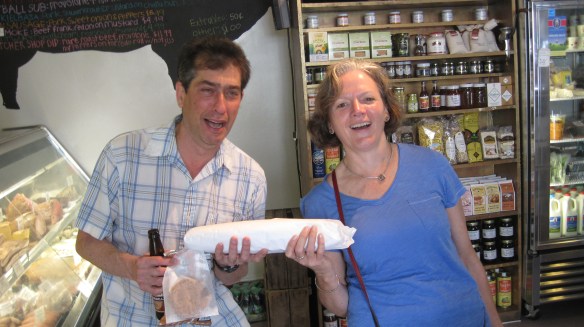
Fortunately I made my flight and was at my hotel in Arlington just in time for lunch. I met up with some of my old Georgetown friends and we decided to walk around DC for a bit. Phil suggested a butcher that sells really good deli sandwiches, so off we went. We ordered our lunch, and it seemed to take an extremely long time to be prepared. We soon would understand why. IMG_1508Phil and his wife Alice ordered a “4 Meat Grinder”, and the result was a sandwich almost a foot and a half long and weighing nearly 5 pounds. (“Grinder” is a northeast US term for a foot and a half long, 5 pound sandwich). This thing was even more impressive when it was laid out on a picnic table.
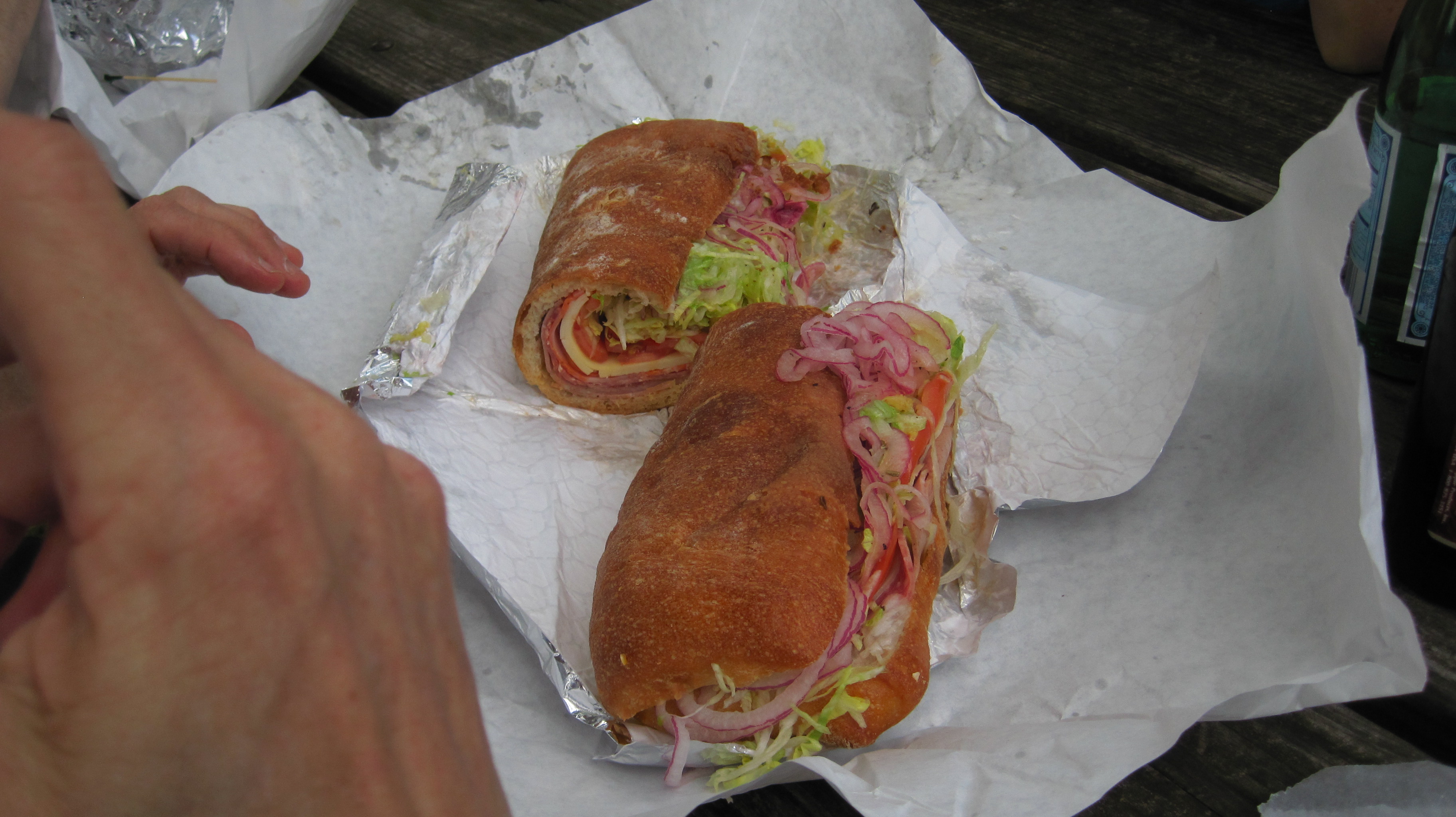
IMG_1510

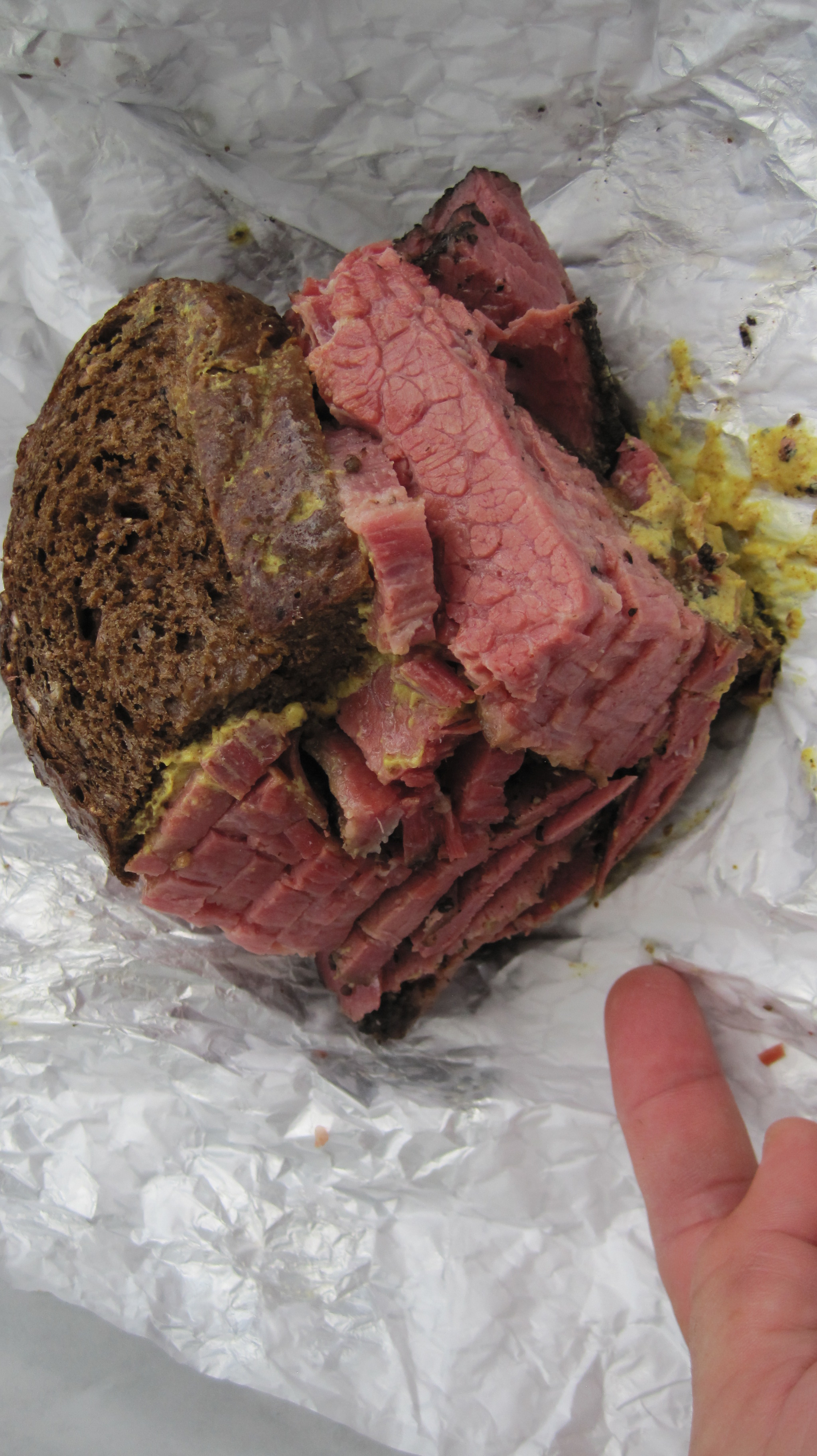
I decided to be much more subdued and ordered a simple pastrami sandwich, one that I agreed to split with my classmate Laura. Well, this is what HALF a sandwich looked like:
IMG_1509

I think the same people who measured John’s lobster roll measured this sandwich. My guess is that this half weighed in at 2-3 pounds, which is more than what we would cook for dinner for Sophie’s crew of 4 back on the boat. But the meat had been wood smoked to perfection.

Of course I ate all of it. It was delicious.

Later that afternoon we walked around our old neighborhood and stopped off at the various houses we lived in. Here is a photo of me, James, and Maureen (who joined us in New Zealand in February) hanging out on the stoop of the “2114” house we lived in for 2 years.  The house is looking much fancier today than it did back in the 80’s.

IMG_1522

It was a fun walk.

Later that night there was a class reunion reception that ran late. The food was reasonable: sliders, salmon skewers, salad skewers, and what seemed to be fried mac and cheese cakes. (I skipped those but overall I was surprised I could move after the pastrami).  But it was a lot of fun to reconnect with many people I hadn’t seen in 30 years.

We all stayed out until 3:00 AM, but I was able to wake up in time to make my 8:30 AM flight to Boston where I hooked up with Max, Becca, Sara, Danny and my father for a dumpling lunch in Boston’s Chinatown. Then Max and I headed for the airport and Fiji (where I am right now.)

So over the course of the week we had lobster rolls, lobsters, ribs, steak, sausages, pastrami ballast, cocktail food, and dumplings. I saw family, friends, and a memorable academic ceremony. I’m full and I am tired and I am glad to be back on Sophie.

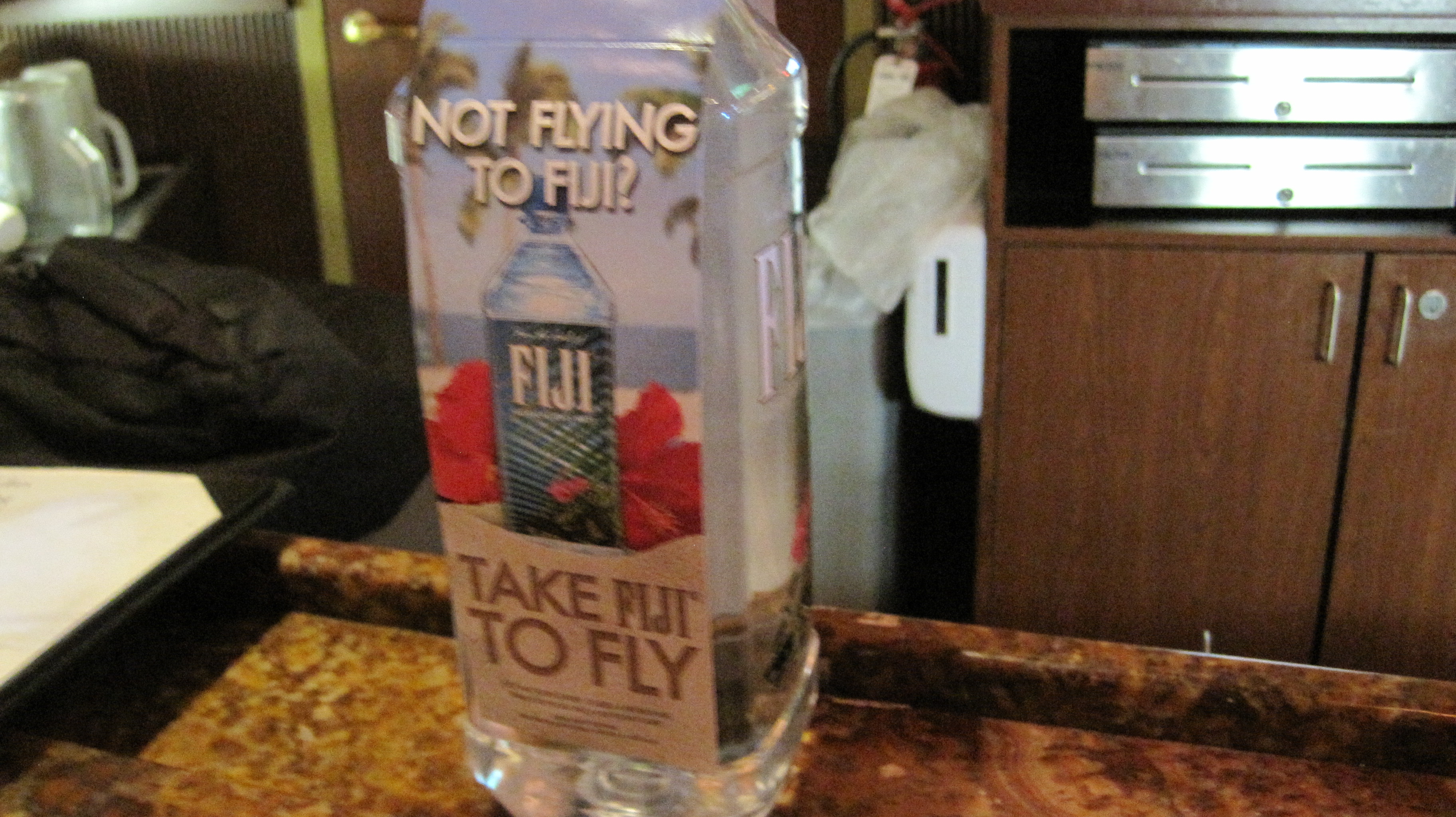
At the bar at Logan Airport there was a display advertising Fiji Water.

IMG_1532

Since we actually were flying to Fiji, we decided to pass.

Still pretty lucky.